
ElPais
Ukrainian Drones Slip Through Moscow’s Defensive Rings





Arizona
Generational Rejection Of AI? Why Are University Students Booing Big Tech At Graduation Ceremonies?

Africa
Neanderthals Consumed Mollusks As Early As 115,000 Years Ago, Especially During The Colder Months

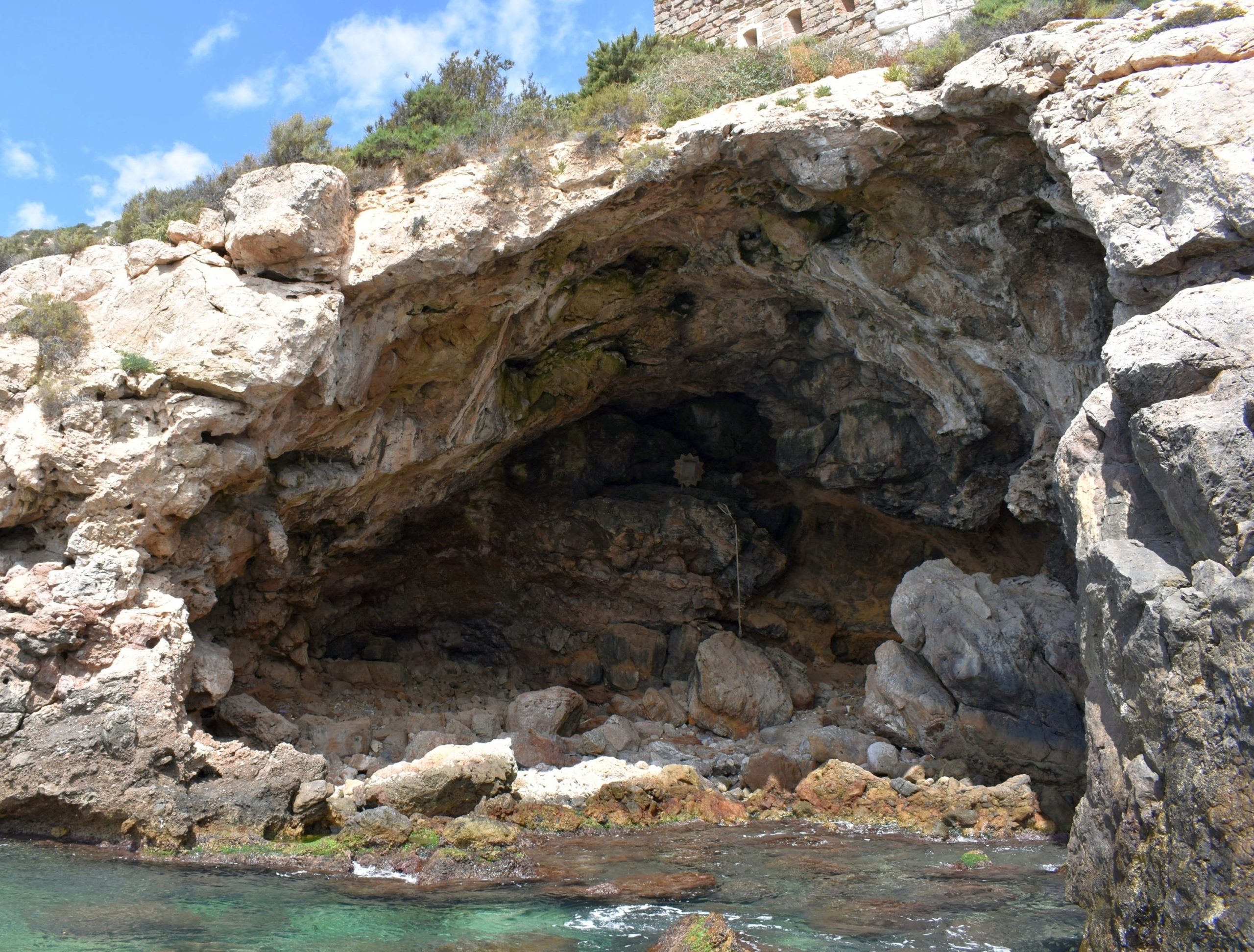
There was a time when researchers doubted that Neanderthals liked the beach. There was no trace of them in marine environments. It was suggested then that these were more complex ecosystems, requiring skills that only Homo sapiens, modern humans, possessed. Several studies have dismantled this ethnocentrism: Homo neanderthalensis had been feeding from the sea for many millennia before Homo sapiens arrived in Europe. Now, a new study published in PNAS shows that, around 115,000 years ago, in a Mediterranean cave, they used strategies that Homo sapiens would employ much later, such as gathering mollusks in the colder months, when the risk of contamination was minimal and their flavor at its peak.
“The Los Aviones cave was occupied year-round; we don’t know if permanently or not, but most likely not,” says Asier García-Escárzaga, a researcher at the University of Burgos and lead author of the study. The cave, near Cartagena (Murcia), now threatened by rising sea levels, was a refuge for Neanderthals for millennia. “There is exploitation throughout the year, but most of the mollusks, most of the shells, are collected during the colder months, that is, from late autumn, around November, until early spring, around April,” García-Escárzaga adds.
The dating of the stratum from which dozens of remains of two mollusk species were recovered indicates that they were collected approximately 115,000 years ago. The exact year cannot be determined, but the approximate month can be. Thanks to the analysis of oxygen present in the calcium carbonate that forms the shells, researchers were able to determine that, although harvested year-round, around 80% of the Mediterranean snails (Phorcus turbinatus) were consumed between November and April, and only 5% during the summer months. The percentage is similar for the ferruginous limpet (Patella ferruginea), the other mollusk included in this study.

“What’s relevant here is that this seasonal pattern is identical to the one we have for Homo sapiens populations in the Mesolithic and Neolithic periods, in the Mediterranean basin and the European Atlantic, 100,000 years later,” García-Escárzaga points out. For the authors, once the ornamental use of shells is ruled out (“There are no perforations or ochre remains, nor did they use these species,” the researcher adds), the key is that Neanderthals gathered these food resources according to the season.
Looking back, it seems logical that harvesting took place during the colder months. Today, in the southern mid-latitudes, this pattern is still followed for many mollusk species and most hard-shelled shellfish. Summer, with the rise in temperatures, brings algal blooms, such as the dreaded red tide, which makes harvesting mussels, for example, impossible. In the warmer months, in addition to the risk of algal or bacterial contamination, there’s the issue of preservation. But there’s another factor: they taste better in winter.
“The reproductive cycle of Phorcus turbinatus may have had significant implications for its seasonal exploitation,” notes Arnaldo Marín, a marine biologist at the University of Murcia and co-author of the study. The maturity of the Mediterranean snail’s gonads reaches its peak during the colder months, “a time when the digestive gland-gonad complex exhibits high development and a high accumulation of energy reserves, especially lipids and proteins associated with gamete production,” Marín adds. Conversely, at the end of spring, after spawning, the individuals experience a marked reduction in gonadal content, coinciding with the warmer months, leaving the reproductive system practically empty and decreasing the animal’s nutritional value. “These seasonal variations suggest that the harvesting of P. turbinatus by Neanderthals may have been concentrated primarily in the periods prior to spawning, when energy and nutritional yields were at their highest,” he concludes.

There is no direct evidence that Neanderthals ate mollusks in the colder months because they tasted better, but there is no evidence to the contrary either. And what is known points to the former. In Mediterranean snails, their high fat content and flavor are closely linked to the reproductive cycle. “This pattern is also known in other marine mollusks, such as oysters, mussels, and sea urchins, where they are traditionally considered better before the breeding season,” the biologist notes. In fact, many traditional fishing practices and shellfish harvesting seasons coincide with these periods of peak physiological condition.
According to Miguel Cortés, professor of prehistory at the University of Seville, there is an alternative hypothesis to explain seasonal consumption: “In these latitudes, such as the region of the Los Aviones cave, Neanderthals could have gone up into the mountains in summer and, in winter, gone to the coast to avoid the cold and ate whatever was available,” he suggests. 115,000 years ago, the climate was similar to today’s, although the beginning of the Würm glaciation, the last Ice Age, was already approaching.
Cortés was one of the authors of a paper that caused a stir among scholars of human evolution. In 2011, they published a study on mollusks collected in a cave on the Málaga coast. They were over 150,000 years old. This implies that Neanderthals were consuming marine resources in Europe at least at the same time that modern humans were doing so in southern Africa. “It was very difficult for us to get it published. The [paleoanthropological] community, dominated by Anglo-Saxons, didn’t buy it,” Cortés recalls. In their then-dominant thesis on human origins, “the consumption of seafood could have helped the development of the modern human brain and its evolution,” he adds. And the findings in several caves over the last two decades, all on the Iberian Peninsula, of Neanderthals collecting shellfish and mollusks have dismantled their narrative.
Sign up for our weekly newsletter to get more English-language news coverage from EL PAÍS USA Edition

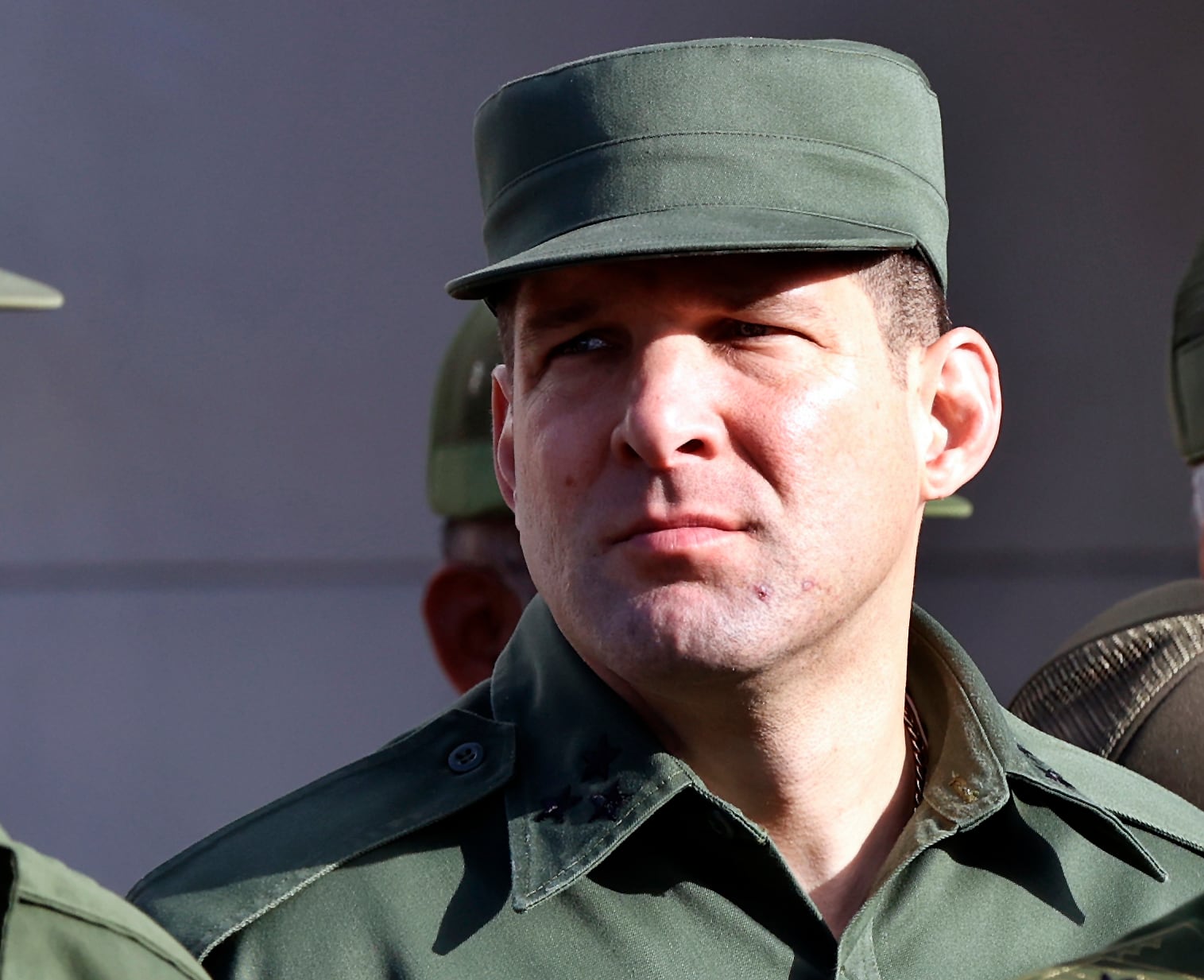
There is a man who whispers in Raúl Castro’s ear. He speaks to him during the May Day parade in Havana or puts his arm in the way if a woman tries to take the former president’s hand—as though she needs reassurance that he is still alive. When Castro delivered speeches in Revolution Square—always less fiery than his brother Fidel’s—this man stood behind him, steadfast in the scorching tropical heat. When Raúl received Pope Francis in the Cuban capital, the same man was there, watching his every move. Those who know him say he is Castro’s “darling.” They also say he has an extra finger due to a congenital condition, and that his inner circle has given him a nickname: El Cangrejo—The Crab. His name is Raúl Guillermo Rodríguez Castro; he is Raúl’s grandson and his bodyguard. For months now, however, he seems to be guarding something far larger: not just his grandfather’s back, but the fate of his country.
Rodríguez Castro has become the bodyguard not only of Castro but also of the negotiations between Cuba and the United States. El Cangrejo has been present at the talks that have been taking place since the start of the year—talks Cuba initially denied were happening. El Cangrejo traveled to the Caribbean Community (CARICOM) summit to meet with advisers to Secretary of State Marco Rubio. When President Miguel Díaz-Canel acknowledged for the first time in March that they were negotiating with the Trump administration, El Cangrejo was there. El Cangrejo was spotted in a solemn position at the farewell ceremony for the Cuban military personnel killed during the operation that captured Nicolás Maduro. El Cangrejo took part in the visit of U.S. officials to Havana on April 10, during which Cuba was presented with an ultimatum to release political prisoners—one it failed to meet. And this past Thursday, when the head of the CIA landed on the island to “seriously address economic and security issues,” El Cangrejo could not be absent.
Even so, almost no Cuban today can explain what role Rodríguez Castro plays at the moment of greatest tension in decades between Washington and Havana. People barely know how he speaks, what his voice sounds like, or what he thinks or believes. “El Cangrejo matters because he is family, not because he has any individual political capital of his own, beyond being a trusted member of a family clan,” says Cuban intellectual Alina Bárbara López.
Once, in 2017, a young man was spotted on a platform at Varadero beach, sweating, singing, and dancing to the reggaeton beat of the popular duo Gente de Zona. He would have gone unnoticed were it not for what was written on his shirt: he was wearing a New York Yankees jersey with the words “El Cangrejo” emblazoned across it in large letters. Other extravagances from those years also drew attention: yacht trips, lobster fishing, VIP parties, flights on private planes.
Yet people still know very little about Rodríguez Castro beyond what he and his family have chosen to reveal. Juan Almeida García, son of the late Cuban Vice President Juan Almeida Bosque, who grew up in Raúl’s household as a child, says that El Cangrejo is without question “his favorite grandson.” Being the firstborn grandson, combined with the insecurities he carried from being born with a sixth finger, led Castro to be fiercely overprotective. “Raúl Castro has always been very attached to him, and the boy grew up with a rather exaggerated degree of protection from his grandfather,” says Almeida, who was present on the day of his birth—March 24, 1984.

Now 41, Rodríguez Castro is the son of Raul’s daughter Deborah and the late General Luis Alberto Rodríguez López-Calleja, the man who built the GAESA military and economic conglomerate and who died suddenly in 2022. Rodríguez López-Calleja was a figure who was widely considered a potential future leader of Cuba. He studied at the Los Camilitos military academy, graduated with a degree in Accounting and Finance from the University of Havana, and in 2016 was appointed lieutenant colonel in the Ministry of the Interior and head of Castro’s Personal Security Directorate.
Although Castro made him his bodyguard, in reality, “the grandfather is the one who takes care of the grandson and not the grandson who takes care of the grandfather,” says Almeida, who assures that El Cangrejo cultivated a “quite egocentric” personality.
For a long time, people couldn’t guess who the young man who was always seen guarding Raúl was. Today, he is invisible to no one. Maidelys Solano, who is currently desperate because of the power outage in her Bayamo neighborhood, has heard a lot of talk lately about El Cangrejo. “People know who he is, and many say he’s the one who’s going to lead the transition in Cuba; that’s what everyone’s saying. But I think he has to go too, because he’s also benefited from all this,” she says.
Amidst negotiations that escalate and de-escalate each month, where Havana denies details that Washington asserts and where secrecy keeps Cubans on edge, many questions arise surrounding the figure of El Cangrejo: What is the role of someone who holds no institutional or political office, at least not publicly? Or why is he a constant presence in the dialogues with Washington, in which, for example, Díaz-Canel has never been seen, nor has his uncle, Alejandro Castro Espín?
For Cuban historian and writer Enrique del Risco, several possibilities exist: “The most obvious is that El Cangrejo is a frontman for Alejandro Castro Espín, until a few years ago Raúl’s clearest successor,” he maintains. Espín, Castro’s only son, mediated during the talks with the Barack Obama administration that led to the reestablishment of diplomatic relations, but disappeared from public view after the so-called Havana Syndrome affair.
The other possibility del Risco sees is that El Cangrejo “is being groomed as the true successor to the dynasty, and despite never having held any government position, they want to present him to society as a new figure of power.” “His presence in the dialogues would be justified by the need to invest him with an authority he hasn’t acquired until now as a member of the Castro regime. The fact that no one within the regime dares to question the decision to make him a representative of the Cuban government without ever having been part of it gives us an idea of the absolute lack of judgment of a regime that a family runs as if it were their own private business,” the historian asserts.
The hidden power in Cuba
The CIA arrived in Havana with a mission: to personally convey President Trump’s message that the United States is willing to seriously address economic and security issues, but only if Cuba makes fundamental changes, an agency official told Fox News, adding that El Cangrejo had participated in the meeting.
Although it has been confirmed that Castro’s grandson is part of the negotiation process, the image released by the CIA focuses on Ramón Romero Curbelo, the head of intelligence services in Cuba, a face that Cubans barely recognize or wouldn’t imagine could be the one calling the shots in the country. The image has brought to the forefront of public debate a question that remains unanswerable: Who really runs the island today, or is the power structure even identifiable?
The intellectual Alina Bárbara Rodríguez, who has directly faced repression, claims to have noticed what she calls “a formal and an informal power” on the island. The former is occupied by President Miguel Díaz-Canel, along with Prime Minister Manuel Marrero, and others who hold positions in the government or the Communist Party. The latter power is unnameable. “It’s that hidden, deep, informal state; it’s difficult to know because it’s not designed for us to know. But it’s clear that there’s a very close relationship between them, one that involves family, patronage, and a technocratic military structure. And Curbelo’s figure is fundamental to that apparatus. That’s why none of the people connected to the formal state are present at the most important meetings,” Rodríguez maintains.
Beyond the statement from the Communist Party of Cuba, which insists that the meeting with the CIA made it clear that Cuba does not represent a threat to U.S. national security, the encounter with the agency’s director, John Ratcliffe, leaves several implicit messages. “First, it confirms that there is an effort on the part of the U.S. government to produce some kind of change in Cuba, beyond what previous administrations have done,” asserts historian and political scientist Armando Chaguaceda. “Whether that change translates into an economic shift, a step toward capitalism, with a political realignment in favor of the U.S. without democratization—which is not the goal for which we Cubans have fought—remains to be seen.”

S

S
KEY POINTS: What Changes About Life In Spain In June 2026


-

 Competiciones3 weeks ago
E
-
Costa del Sol3 weeks ago
Why home care is the new gold standard for living well in Spain
-
blackout April 20252 weeks ago
Insurance company Mapfre decides to pay out €14 million compensation for 2025 blackout
-
 Foreign demand2 weeks ago
Who Bought Where In The Second Half Of 2025?
-
Bullfighter injured4 weeks ago
Second serious injury in Spain’s La Maestranza bullring reignites controversy
-
 %4 weeks ago
Gibraltar Sees Surge In Residency Applications After Border Agreement
-
 %3 weeks ago
Portugal Confirms High-Speed Rail Link
-
Animal protection law3 weeks ago
Spain moves to redefine legal pets as draft law raises wider welfare concerns