Connect with us

%

Booking.com Faces EU Fraud Probe

Published

on

booking.com-faces-eu-fraud-probe

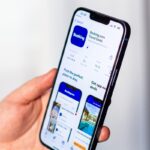
Booking.com faces an EU investigation into fake listings and phishing scams Credit : Krievietka, Shutterstock

Booking.com is facing a formal European Union investigation over fake accommodation listings, phishing scams and paid search rankings that may not be clearly identified as advertisements. Brussels wants to establish whether the popular travel platform is doing enough to protect customers from fraud and comply with European rules on online transparency.

The European Commission announced the investigation on Wednesday, October 21, under the Digital Services Act (DSA). It will examine how Booking.com handles fraudulent accommodation listings, protects reservation information from being exploited by scammers and identifies properties that pay for greater visibility in search results.

Booking.com has not been found to have breached EU law. However, if violations are established, the company could face substantial fines and be required to change certain aspects of its platform.

For travellers booking hotels and holiday apartments in Spain and across Europe, the investigation raises questions about the safeguards behind accommodation listings and payment communications.

Why Brussels has launched a formal investigation into Booking.com

The Commission suspects that Booking.com may not have adequately assessed or mitigated the risks associated with fraudulent listings and phishing scams.

The first concern involves listings for properties that do not exist, accommodation offers involving impersonation and listings that fail to comply with applicable requirements.

The Commission will examine whether Booking.com has properly identified these risks and introduced effective measures to address them, including detecting and removing fraudulent listings.

The investigation into these issues comes as concerns about fake accommodation advertisements continue to attract attention in Spain.

Earlier this month, hundreds of tourists were left without accommodation after they booked a holiday apartment in Madrid that didn’t exist. The listing appeared on Booking.com with hundreds of reviews before it was removed.

The case of Madrid is an example of the kind of consumer risk under consideration here, although the Commission has not indicated this case as a particular basis for its investigation.

The second concern involves phishing attacks exploiting reservation and guest data

The Commission will investigate how Booking.com shares customer data with accommodation operators, and whether its message system provides sufficient safeguards against misuse of that data.

Fraudsters can use genuine reservation data to create a credible appearance for their fraudulent messages, sometimes asking travellers to give them their credit card details or transfer money.

Earlier this year, Booking.com customers were warned that their travel details could be in the wrong hands following unauthorised access to reservation information.

But the latest EU proceedings go well beyond individual incidents. The authorities are examining whether the platform has adequately assessed these risks and whether its protections are adequate to the standards imposed on major Internet companies.

Henna Virkkunen, Executive Vice-President of the European Commission for Tech Sovereignty, Security and Democracy, said that holidaymakers in Europe should be able to book a trip without fear of being scammed.

She pointed out that the new law on digital services places the responsibility of avoiding such risks on the platforms and that the big intermediaries must take this obligation seriously.

Paid accommodation rankings are also under investigation

The third part of the investigation concerns something travellers may not immediately associate with online fraud: how accommodation appears in Booking.com’s search results.

If a hotel or other place to stay wants to promote its entry, it can pay a higher commission.

The European Commission is examining whether these commercially promoted services are clearly identifiable as advertisements, as is required by the new Digital Services Act.

A property appearing near the top of search results may have achieved that position through a commercial arrangement rather than solely because it is the most relevant option for a traveller.

Under the Digital Services Act, users must be able to recognise advertisements and understand who paid for them and why they are being shown.

The Commission will also examine whether Booking.com [booking.com] gives the users enough information about the settings which determine which ads they see.

Paying for greater visibility is not, by itself, a suspected irregularity. It is a question of whether the transparency requirements pertaining to the placing of advertisements on Internet platforms are fulfilled.

The proceedings relate to possible breaches of Articles 34 and 35 of the Digital Services Act – which require very large online platforms to assess and mitigate systemic risks – and Article 26(1), which establishes the transparency obligations in advertising.

It should be pointed out that Booking.com was designated a Very Large Online Platform under the DSA in April 2023, bringing it within the EU’s stricter regulatory framework for major digital services.

The Commission based its decision on a preliminary study of the Company’s risk assessment reports for 2023 to 2026, on information published in its reports on transparency, and on the answers to its information requests of September 2025 and May 2026.

The announcement of 21 October was therefore not the beginning of Brussels’ interest in the platform, but rather the opening of formal proceedings following an earlier examination.

What happens next and could Booking.com face a fine?

The European Commission has opened a detailed investigation, gathering further evidence through information requests, interviews and potentially inspections

Having begun a procedure against a company also enables authorities to take further steps, such as issuing an interim order or making a finding of non-compliance with the Digital Services Act.

The Commission may also accept commitments proposed by Booking.com to address the concerns raised during the investigation.

There is no deadline set for the completion of the proceedings, and it remains unknown when the authorities will arrive at a decision.

Under the Digital Services Act, the European Commission can impose fines of up to 6 per cent of a company’s worldwide annual turnover if violations are established.

Booking.com has said it is engaging constructively with the European Commission.

The company, as reported in a Reuters article of October 21 said that security, trust and protection of personal data were a priority.

The immediate implications for travellers are therefore limited. Anyone receiving an unexpected payment request is nevertheless advised to check independently before providing card details or sending money, but the measures do not introduce new booking requirements for travellers.

Depending on the outcome of the investigation, Booking.com could be required to strengthen measures against fraudulent accommodation listings, improve safeguards around reservation information or make paid accommodation promotions more transparent.

The fundamental question for Brussels is whether one of Europe’s largest accommodation platforms does enough to protect its users from fraud, and whether it offers a clear picture of how accommodation listings are ranked and promoted.

%

Axarquia Support Bancosol Food Drive 2026

Published

on

axarquia-support-bancosol-food-drive-2026

A small donation at the supermarket till this weekend could help ensure families across Malaga have food on the table this winter. Bancosol, the Costa del Sol Food Bank, is holding its Great Food Collection, or Gran Recogida de Alimentos, on Friday, November 13, and Saturday, November 14. Residents throughout the region are being encouraged to take part.

Andalucia’s delegate for Social Services, Families and Equality, Laura Valle, has called on people across Malaga and the Axarquia to show commitment, generosity and solidarity.

How residents can donate

It is easy to take part. Shoppers can visit a participating supermarket and ask staff to add a donation to their receipt. Contributions start from just €1, making the campaign accessible to anyone who wants to help but cannot give a large amount.

Bancosol is encouraging monetary donations rather than physical food this year. Money allows the charity to purchase exactly what its partner organisations need, while helping it manage stock, storage and distribution more efficiently.

People who prefer to give from home can use Bizum, Spain’s instant mobile-payment service, with the code 00887. Donations can also be made at the checkout in participating supermarkets across the province.

Support for vulnerable families

Bancosol hopes to raise more than €450,000 during the two-day campaign. Funds will help the organisation continue providing food support to 20,589 vulnerable people through 129 social organisations across the area.

Nearly a third of those receiving help are children or young people. Bancosol says rising living costs and ongoing hardship mean public generosity is essential to maintaining supplies for families who might otherwise go without.

A community effort in the Axarquia

Volunteers will be at collection points to explain the campaign, encourage donations and thank shoppers for their support. Around 4,000 people are expected to help across Malaga province, including students from the Santa Rosa de Lima education centre.

Local organisations in the Axarquia have long played an important role in the annual collection. Past campaigns have involved town halls, charities and volunteers from local towns including Nerja and Velez-Malaga, helping bring the province-wide effort closer to neighbourhoods across the region.

Last year’s Great Food Collection raised €450,000, and Bancosol is hoping the community will help it surpass that total in 2026. Every donation, however small, contributes to a wider network of support for households in need.

Supermarkets joining the appeal

Major supermarket chains are taking part, including Grupo MAS, Carrefour, El Corte Ingles, Alcampo, Eroski, Dia, El Jamon and Mercadona. With 285 stores involved, shoppers in Axarquia towns and villages should easily be able to find a nearby collection point.

Bancosol says there is no minimum donation and no pressure to give more than a person can afford. Every contribution helps the charity continue its work supporting vulnerable households who need it most.

Continue Reading

%

Elche Basilica Hosts Two Free Concerts

Published

on

elche-basilica-hosts-two-free-concerts

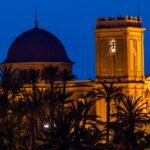
Basílica de Santa María, Palmeral de Elche. Credit: tolobalaguer.com / Shutterstock.com

Music lovers can enjoy two free organ concerts in one of Elche’s most beautiful buildings this November, with internationally acclaimed musicians performing at the Basilica of Santa Maria. The concerts form part of the 13th International Organ Festival, La Musica del Cielo (Music from Heaven), bringing leading European organists to the city for two special Friday evening performances.

International Organ Festival brings world-class musicians to Elche

The 13th International Organ Festival, La Musica del Cielo, continues this November with two concerts featuring musicians who have performed at some of Europe’s most prestigious churches and cathedrals.

Both performances take place at the Basilica of Santa Maria in central Elche, giving audiences the opportunity to hear organ music in a historic setting.

Admission is free, with both concerts beginning at 9:00 PM and no advance tickets required.

The programme offers music lovers the chance to experience the basilica’s magnificent organ, an instrument closely connected to the city’s religious and musical heritage.

November 13: Polish organist Michal Markuszewski performs

Polish musician Michal Markuszewski performs on Friday, November 13.

A professor at Warsaw’s Fryderyk Chopin University of Music, he has given around 800 concerts across Europe, America and Asia, including performances at Notre-Dame Cathedral in Paris and St Paul’s Cathedral in London.

His international experience brings an impressive musical background to the Elche festival, with audiences able to enjoy his performance without an admission charge.

The concert begins at 9:00 PM at the Basilica of Santa Maria.

November 27: Milika Radovanovic closes the festival

The final concert, on Friday, November 27, features Serbian-born organist and pianist Milika Radovanovic, who lives in Norway.

Her performances have taken her to Westminster Abbey and several major European cathedrals, with music ranging from Bach to contemporary compositions.

Radovanovic’s appearance will bring the 13th edition of the festival to a close, offering another opportunity to hear an internationally experienced musician perform in Elche.

The concert begins at 9:00 PM, with free admission.

Continue Reading

%

Decathlon Shoppers Told To Stop Using Sports Bottle That May Release Aluminium Into Drinks

Published

on

decathlon-shoppers-told-to-stop-using-sports-bottle-that-may-release-aluminium-into-drinks

Owners have been told to stop using the bottle straight away. Credit: Mo Photography Berlin / Shutterstock

Anyone who’s been filling up an 800ml Vital Sport aluminium bottle bought through Decathlon in the last 14 months should stop using it straight away. The bottle may release aluminium into whatever’s inside it, and the barcode is the quickest way to tell whether yours is one of them.

Buyers told to stop using the bottle immediately

Shoppers who picked up the Vital Sport aluminium bottle, an 800ml sports bottle with a safety cap, have been told to stop using it immediately as it’s been withdrawn from sale over a risk of the metal moving from the bottle into the drink.

A black aluminium water bottle with a clip on it's lid.
The Vital Sport bottle in question. Credit: Decathlon.

The warning was flagged by FACUA-Consumidores en Acción, the Spanish consumer rights organisation, on Tuesday November 10, which said the aluminium released into the contents could be harmful to people’s health.

The bottles affected were sold between Friday August 1 2025 and Thursday October 1 2026. So anyone who’s bought one in the past year or so could well still be reaching for it today, whether that’s at the gym, on the bike or at their desk.

Check the barcode on yours 

The bottle to look for carries the EAN code 8437021197198 under the barcode. If the numbers match, it’s one of the bottles affected.

Vital Sport isn’t one of Decathlon’s own in-house brands, though. Its bottles have been listed on Decathlon’s online marketplace, where independent sellers trade through the retailer’s website, and the withdrawal notice names Soluciones Técnicas 2000 SL as the business that detected the safety problem.

Owners are being asked to contact the company at administracion@soltec2000.es for information on the withdrawal and how each case will be handled. The notice doesn’t mention refunds, and it doesn’t say whether any of the bottles were sold in Decathlon’s shops either. 

Why aluminium in your drink is a concern

Neither Decathlon nor the seller has explained what went wrong with the bottle or how much aluminium could end up in a drink.

Aluminium bottles are normally coated on the inside so the liquid never actually touches bare metal. A good bit of info to know is that acidic drinks pull far more metal out than plain water does, which matters for anyone filling up with fruit juice, lemon water or many sports drinks.

The body holds on to aluminium, which is why the European Food Safety Authority (EFSA) sets its safe limit as a weekly one: 1mg for every kilo of body weight. It’s also said many Europeans may already go over that through their normal diet, with children and young people the most exposed, before a drinks bottle adds anything at all.

Animal studies have linked high exposure to effects on the nervous system, although EFSA said it didn’t consider aluminium in food to be a risk for Alzheimer’s disease.

Now, researchers at Germany’s Hessian State Laboratory found in their worst-case scenarios that tea kept in an aluminium bottle could be enough to take a small child weighing 15kg past that weekly limit. Those tests weren’t carried out on this bottle, but they show why a faulty one isn’t something to shrug off.

What to do if you’ve got one at home

First of all stop filling it, even with plain water, until you’ve heard back from the seller. The notice also asks people to pass the warning on to family and friends, particularly if the bottle was given as a present, lent out or sold on second-hand. Sports bottles are an easy thing to hand down, so it’s worth a quick message to anyone who might have ended up with yours.

Those who bought online should dig out their order confirmation before emailing, as it’ll show exactly when the bottle was bought and who sold it. It’s the latest in a run of product withdrawals in Spain this autumn, after an urgent recall of a children’s mouthwash in September and teeth whitening products found to be far over the legal peroxide limit in October.

Anyone with one of these bottles at home should put it aside today and email the seller to find out how the withdrawal will be handled for them.

Continue Reading

Trending

Copyright © 2017 Spanish Property & News