Connect with us

%

Brit Pensioner, 74, Saved From Heatstroke In Mazarron

Published

on

brit-pensioner,-74,-saved-from-heatstroke-in-mazarron

Brit found 3 days after collapsing with heatstroke. Credit: GC

Neighbours’ sharp eyes and quick thinking by Guardia Civil officers pulled a British man back from the brink in a Mazarron urbanisation after he spent two to three days alone and unresponsive from severe heatstroke.

Local residents grew worried when they realised they had not seen the 74-year-old for several days. One pointed out that his car had sat motionless outside the property the whole time. He suffers from diabetes, which raised extra concern among those living nearby. An alert went through to the emergency 062 operations centre, sending a security patrol from Totana straight to the address.

With the man’s life clearly at risk, they forced a window mosquito net, retrieved a set of keys from inside, and opened the front door. Inside, on the floor of an upstairs room, lay the man. He still had a pulse but showed no response to voices or touch. Medics on scene put the state down to heatstroke that left him without the ability to react for days. An ambulance raced him to Hospital Santa Lucia in Cartagena, where he arrived in a very serious condition and spent several weeks fighting for recovery.

Back home after weeks in hospital

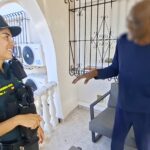
Discharge came after that long spell in Cartagena. The man is now back home and doing well. Officers who carried out the rescue kept tabs on his progress and recently called round for a warm reunion at the house. Guardia Civil shared the positive update, praising both the neighbours’ solidarity and the daily commitment of those who keep communities safe.

Similar rapid responses by Guardia Civil in the same town have made a difference before, including an off-duty officer who pulled a woman from a house fire last year. Other emergency teams have also stepped in for people in difficulty around Mazarron, from sea rescues to helping British couples stuck in ravines.

Keeping an eye on vulnerable neighbours

Cases like this go to show why checking on older residents living alone matters during Spain’s hot summers. Groups such as Age Concern Costa Calida and local volunteer first-aid teams in the Camposol area work to support over-50s and those who might struggle in a crisis. Heatstroke can strike fast, especially with conditions like diabetes, and early action by neighbours often makes all the difference.

Anyone worried about a neighbour who has gone quiet and does not answer their door should contact emergency services without delay. Official advice from Murcia health authorities stresses drinking plenty of fluids, staying cool indoors during peak heat, and watching for warning signs such as confusion or lack of response.

This Mazarron rescue shows how community watchfulness and professional response can turn a potential tragedy into a recovery story.

🚨👏 La rápida actuación de la Guardia Civil salva la vida de un vecino de Mazarrón

Un hombre de 74 años, de nacionalidad británica, fue rescatado por agentes de la Guardia Civil tras permanecer varios días aturdido en el interior de su vivienda a causa de un grave golpe de… pic.twitter.com/RHph2hGzqb

— Guardia Civil (@guardiacivil) August 21, 2026

%

Ryanair Flight From Hell: Will They Ever Get To Crete?

Published

on

ryanair-flight-from-hell:-will-they-ever-get-to-crete?

Ryanair flight at Vienna. Credit: Roman HRA – Shutterstock

Holidaymakers heading from Vienna to Crete on a Ryanair jet faced a right nightmare start to their break on Friday. The plane took off around 12.30pm but then unexplainably, oxygen masks suddenly dropped from the cabin ceiling half an hour into the flight. The crew turned the aircraft round and headed straight back to Vienna Airport.

Technical checks followed on the ground. A passenger video showed adhesive tape being used on the affected area, which made everyone feel better (sarcasm). The pilot then announced to the passengers that a new departure was lined up for 3.40pm. That left travellers stuck on board waiting.

Passenger asks for water, and row kicks off

The long, frustrating delay brought about a second drama. One man asked a flight attendant for a free bottle of water, saying he felt unwell. An argument broke out over whether it should be free of charge or not, and witnesses say he muttered the English insult “bitch”. Tempers flared and police were eventually called.

Seven officers boarded soon after and the man and his partner were ordered off. He repeated that he only wanted water because he was feeling ill. Hand luggage checks followed in the overhead bins to make sure nothing belonging to the pair stayed behind on the plane.

Then, another dramatic turn came next. The man collapsed on the tarmac. Emergency crews rushed in, and nearly an hour later he left the ambulance. The pair were taken away from the apron by bus.

More than four hours stuck on board and no take off

Police involvement had cost the flight another departure slot. The new takeoff time then slipped to 4.30pm. The remaining passengers sat through the long wait with one Viennese traveller telling the Austrian media outlet Heute that everyone still had to pay for food, drinks and water after more than four hours on the plane. The toilets were out of action at times too. That same passenger said it was definitely his last trip with the budget airline.

Whose law applies when you are up in the air?

Planes are not law-free zones, even if they feel like a bubble cut off from the world. Clear rules cover crimes, medical emergencies and injuries once the doors close.

The passenger rights platform Flightright points out several little-known points. Legal expert Lucia Cegarra explains that travellers need to know crew powers, their own duties and the legal limits that apply on board.

Crimes and disruptive behaviour on flights

Anyone causing trouble, threatening crew, attacking other passengers, refusing safety instructions faces real consequences, or even insulting cabin crew. Territoriality normally applies, and a country continues to enforce its laws inside its borders, even if it is in the air. International flights make that tricky, so the “law of the flag” comes into play. Rules of the state where the aircraft is registered can apply. In this case, the Ryanair flight might carry an Irish or Maltese flag, and so generally adheres to the laws from those states.

Several legal systems might get involved depending on the facts: the country whose airspace the plane is flying through, the state of registration, or the place where it lands. The captain holds special powers. He or she must keep order and safety and can take any steps needed if people or the aircraft are at risk. That covers aggressive passengers, those ignoring crew orders or anyone putting safety in danger.

The crew can move people to different seats, calm things down or order an unscheduled landing in an emergency. Passengers must follow crew instructions. Refusal risks trouble on the plane and probable legal action once it lands.

Injuries during a flight

Turbulence, a fall in the aisle or spilt hot coffee can leave someone hurt. An airline may be liable in certain cases. The Montreal Convention covers many international flights on this point.

Report the incident straight away to the crew and gather evidence. Photos, witness names and a written confirmation help. Claims can be assessed later depending on the exact cause and circumstances.

Continue Reading

%

Ronda’s September Feria Returns

Published

on

ronda’s-september-feria-returns

Ronda Town Hall has confirmed the full programme for its annual Feria de Pedro Romero, marking the first year since the Plaza de Toros closed for repairs that bullfighting returns to the historic ring.

Six packed days of traditional festivities

Celebrations transform every corner of the historic mountain town from Tuesday, September 1 through to Sunday, September 6 2026. Official opening begins on Tuesday night at 8:30pm with a parade of colourful floats and marching bands setting off from Calle Jerez towards the fairgrounds for the main light switch-on.

Concert lovers can head down to the main marquee venue on Wednesday, September 2 at 11pm to catch Spanish artist Miguel Campello performing live. Horsey traditions will wow the crowds on Thursday afternoon at 3pm with the 17th Contest of Dress and Horse Tack, followed by ring events on Friday at 6pm with a novillada display, a bullfight for up-and-coming young matadors — fought without picadors.

Saturday, September 5 will host two ring events inside the historic Plaza de Toros. Horseback riding enthusiasts can watch the 42nd Corrida Rondeña de Rejones (bullfighting on horseback) at 11:30am, before top matadors Morante de la Puebla, Jose María Manzanares, and Juan Ortega feature at 6pm. Festival week comes to a close on Sunday, September 6 as the Carriage Exhibition heads down Calle Virgen de la Paz at 10am before entering the arena ring at midday. A controversial sport, but a deep, meaningful tradition for many in Spain.

Family fun, fairground rides, and central street parties

Its not all horse and bulls, during the daytime the city plazas will spring to life as outdoor venue terraces around Plaza del Socorro serve local wine, fresh cured ham, and fried tapas while spontaneous flamenco dancing fills paved walkways. Local ambassador women known as Damas Goyescas stroll through central avenues wearing traditional 18th-century dress throughout the week.

Children and thrill-seeking teenagers can head straight to the Angel Harillo fairgrounds, where a carnival zone opens every evening. Youngsters can enjoy bumper cars, mini rollercoasters, traditional carousels, and sweet stalls, while older kids ride high-flying attractions and a big wheel offering views across the town.

Travellers driving must budget extra time for delays, as local traffic officers will strictly enforce access controls around the Puente Nuevo bridge throughout the entire six-day fiesta.

Continue Reading

%

A €305 Payment From Social Security? The Text Scam Targeting Bank Cards In Spain

Published

on

a-e305-payment-from-social-security?-the-text-scam-targeting-bank-cards-in-spain

Beware the ‘pending update’ text from Social Security, it wants your card, not just your data. Credit: Perfectwave / Shutterstock

A fake text claiming to come from Spain’s Social Security does not instantly ask for money. It offers some instead, a payment towards rising energy bills, which cybersecurity officials say is designed purely to get hold of a bank card.

How the initial message reels you in by offering you money

Spain’s National Cybersecurity Institute (INCIBE) issued an alert on Wednesday August 19 about a new wave of fraudulent text messages impersonating the Tesorería General de la Seguridad Social (TGSS), the body that manages Spain’s pensions, benefits and social security contributions. The message reads: “Seg Social: Tiene una actualización pendiente. Consulte su información y gestione el trámite correspondiente” (Social Security: you have a pending update, check your information and manage the procedure), and includes a link to a convincing copy of the real Social Security website.

INCIBE says anyone who receives the text should delete it without clicking the link. Genuine Social Security business should only ever be carried out through the official Sede Electrónica portal, sede.seg-social.gob.es, or the IMPORTASS app, never through a link sent by text message.

How the fake Social Security page tries to win trust

Clicking the link opens a page copying the real TGSS site’s logo and layout closely enough to pass a quick glance. The consumer group OCU, which flagged the campaign this week, said the page even asks visitors to confirm they are not a robot, a small touch designed to make the process feel like a genuine government procedure.

Only after that does the page ask for a full name, national ID number (DNI) and home address, framed as steps needed to check the user’s record.

A €305.85 ‘energy payment’ seals the trap

Once those details are entered, the page tells the visitor they are owed a specific benefit: a payment called “Asistencia para la adaptación energética 2026” (energy adaptation assistance 2026), worth €305.85 in one version seen by INCIBE. 

To “receive” that payment, a final page asks for the visitor’s full card number, expiry date and security code. In reality, no such benefit exists, and providing card details this way hands scammers everything needed to make unauthorised charges.

What to do if you have already handed over your details

Anyone who has entered card information on the fake site should contact their bank immediately to block the card and watch for unauthorised transactions. INCIBE also recommends keeping screenshots of the message and the fake website as evidence.

A report can be filed with the Policía Nacional or Guardia Civil, and separately with INCIBE itself, either through its free 017 helpline or its online incident form. INCIBE suggests checking periodically afterwards for any sign personal data has been used or published elsewhere online.

Staying safe if a similar message arrives

Foreign residents registered with Spain’s Social Security, whether through employment, self-employment or reciprocal healthcare arrangements, are just as exposed as Spanish nationals, since the messages are sent out in bulk rather than targeted at a particular profile. 

The safest response to any unsolicited text mentioning a pending update or payment is not to click the link at all, but to log in directly through the Sede Electrónica website or the IMPORTASS app to check whether anything genuine is outstanding. Legitimate Social Security communications never ask for bank card details by text.

Related: What to do if you get a suspicious bank text in Spain | Spain alert: fresh SMS bank scams

Continue Reading

Trending

Copyright © 2017 Spanish Property & News