Connect with us

%

British Tourist, 75, Dies In Lanzarote Beach Drowning Tragedy

Published

on

british-tourist,-75,-dies-in-lanzarote-beach-drowning-tragedy

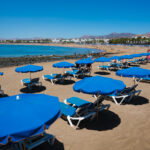
A 75-year-old British tourist tragically drowned off a Lanzarote beach. Photo Credit: Lanzarote Department of Tourism

A 75-year-oldBritish holidaymaker has passed away in a suspected drowning while swimming off the coast of Lanzarote. The tragic incident occurred on the afternoon of Wednesday, September 2, at Los Pocillos Beach, a popular coastal stretch located in the bustling resort town of Puerto del Carmen on the island’s southeastern coast.

Emergency response launched at popular Lanzarote resort

The alert was raised at around 2:15pm after the victim’s wife lost sight of him in the ocean and notified nearby lifeguards. What began as a routine afternoon swim quickly escalated into a major emergency search operation; emergency services deployed a rescue helicopter, alongside local police, coastguard teams, and firefighters to survey the surrounding waters.

Firefighters eventually located and retrieved the man’s body from the sea, but despite the swift deployment of emergency personnel, responders were unfortunately unable to save him.

‘Safe’ waters, hiding unexpected coastal hazards

Los Pocillos Beach on Lanzarote, renowned for its wide sandy shoreline, warm climate, and typically calm, shallow waters, spans a broad area along Avenida de Las Playas. The area attracts thousands of British families and elderly tourists each year. Because of its gentle conditions, the location is generally considered one of the safer swimming spots in the region.

However, drownings in Spain have become increasingly frequent, and holidaymakers were issued an official warning this summer as 13 people drowned in a single weekend in June. Holidaymakers and residents often take a dip in the cool waters as an effort to escape the Spanish summer heat. However, currents, wind fatigue, and suddenly turbulent waters can make it difficult for holidaymakers and residents to swim back to shore, leading to a spike in drownings and emergency situations.

Some beaches in Spain are also quite remote and do not have a lifeguard or emergency services immediately at their disposal, making them dangerous to swim in, despite their unassuming waters.

Heightened concern over holiday water safety: Holidaymakers be warned

This tragic loss marks the second severe water-related emergency involving a British holidaymaker on the Canary Islands within days. It follows a separate incident in Playa Blanca, a resort further south, where a five-year-old British boy was left in critical condition after nearly drowning in a hotel swimming pool. The back-to-back incidents have raised alarm and concern over water safety during peak holiday periods across the island and across Spain as a whole.

Holidaymakers should take extra care not to swim when the waters are rough, when the weather is poor, and when there are no lifeguards or emergency personnel present.

%

Not Even One Beer: Spain’s 0.2 Drink-Drive Limit Could Finally Come Into Effect

Published

on

not-even-one-beer:-spain’s-0.2-drink-drive-limit-could-finally-come-into-effect

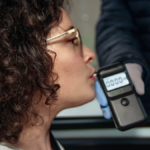
Spain’s proposal would cut the general blood alcohol limit from 0.5 to 0.2 grams per litre. Credit: AlvaroRT / Shutterstock

A small beer with lunch would be enough to put most drivers over the line, and the bill that would do it is back on the table. It lost by a single vote in March, and it returns to Congress with nothing changed.

Interior Minister Fernando Grande-Marlaska confirmed on Monday September 7 that the government will again push its proposal to cut the blood alcohol limit for drivers from 0.5 to 0.2 grams per litre, in the parliamentary session that has just begun. He was speaking at DGT headquarters in Madrid while presenting Spain’s summer road-safety figures. 

Nothing changes at the roadside for now. The 0.5 limit stays in force unless Congress votes for the change, and the last attempt failed by the narrowest margin possible.

What a 0.2 limit would mean at the wheel

The proposed rate is 0.2 grams per litre in blood, or 0.1 milligrams per litre in exhaled air. Pere Navarro, director general of the DGT (the Spanish traffic authority), was blunt when the plan was first put forward: at 0.2, a driver cannot drink absolutely anything. He has described the figure as close to zero tolerance. A single glass of wine or a caña before driving would no longer leave any dependable margin.

Most drivers in Spain are currently allowed 0.5 grams per litre in blood, or 0.25 milligrams per litre in breath. Novice drivers in their first two years and professional drivers, including lorry, bus and taxi drivers, are held to 0.3. The bill would remove that split and apply 0.2 to everyone.

The vote that was lost by one

The proposal was defeated on Wednesday March 18 in the Congress Interior Committee, sitting with full legislative powers, by 19 votes to 18. PP, Vox, ERC and UPN voted against it. Their reasons differed. PP argued the change belonged in traffic regulations rather than in the law itself, Vox called the measure revenue-driven, and ERC withdrew support after its own amendments on traffic examiners in Cataluña were rejected.

Marlaska asked on Monday that no parliamentary group subject the bill to what he called unmentionable political horse-trading, saying the debate was about saving lives and nothing else. 

Sharing the location of an alcohol check would become an offence 

The returning text carries more than just the headline number. It would also ban spreading, by any public or private means, information on where police alcohol and drug checkpoints are set up, which covers social media posts and navigation apps that flag them to other drivers. Individual users who share those locations could be sanctioned.

The penalties are graded, running from two licence points for a reading between 0.2 and 0.5 up to six points and a €1,000 fine at the top band. The law would take effect two months after publication in the Boletín Oficial del Estado, the state gazette.

The summer figures behind the new push

Marlaska raised the bill while reporting that 240 people died in 218 fatal crashes on Spanish roads in July and August, 10 more than in the same period last year and an average of four deaths a day. Roughly half of the drivers killed on Spanish roads last year had alcohol, drugs or prescription medication in their system, according to the DGT toxicology report published in July. Alcohol alone was found in about a third of the cases analysed.

That report also feeds the opposing argument. Among drivers who tested positive for alcohol, a large share were well beyond the current limit rather than fractionally over it, which critics have used to question whether a 0.2 threshold would reach the drivers doing the most damage.

The numbers haven’t changed, and the same result could be looming

The bill has to be registered and taken into consideration again before it can reach another committee vote, and Marlaska gave no date beyond the current session, which runs to December.

The numbers in the committee remain the same since March, and unless one of the four parties that blocked it decides to have a change of heart, the same outcome could be waiting on the other side, while drivers may still keep their slightly wider leniency during a test. 

Continue Reading

%

Nerja Choir Coral Alminares Calls For New Voices

Published

on

nerja-choir-coral-alminares-calls-for-new-voices

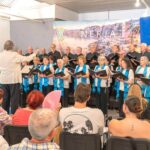
Nerja choir Coral Alminares. Credit: Lucia Muñoz FB

A much-loved Nerja choir is inviting new members to join its ranks, with Coral Alminares encouraging anyone who enjoys singing to give it a go, even if they are complete beginners.

Founded in 1984, the choir has spent more than four decades performing across Spain and abroad, performing everything from classical and sacred music to opera, zarzuela, film songs, habaneras and popular favourites.

Current recruitment is deliberately open to people without previous choir experience, and can even include non-Spanish speakers. There is no need to read music or have a powerful singing voice, with newcomers receiving personalised guidance and attention as they learn.

No experience needed to join Nerja choir

What matters most is having a musical ear and being willing to work as part of a team. Different voices fit different sections, allowing singers to find where they are comfortable.

Rehearsals take place every Monday and Thursday from 8pm to 9:30pm at Sala Mercado in Nerja. Anyone interested can attend, meet the singers and see what the group is like before deciding whether to join.

Music, however, is only part of the attraction. Coral Alminares also organises social activities, celebrations and trips, giving members plenty of opportunities to make friends away from rehearsals. This could be your chance.

Coral Alminares has performed across Spain

Coral Alminares has performed at prestigious venues including the Cueva de Nerja, Teatro Cervantes in Malaga, Gran Teatro Falla in Cadiz, the Reales Alcazares in Cordoba and Auditorium Manuel de Falla in Granada.

International trips have taken the choir to countries including Romania, Sweden, Scotland and Italy, while collaborations have included orchestras from Malaga, Seville, New York and Los Angeles.

Recent activity has included a concert during Nerja’s 2026 Semana Santa programme, while September has seen members gather for their traditional social day after more than 40 years together.

Anyone interested in joining can contact Coral Alminares on 652 818 852 or email jlmedolm@gmail.com.

Continue Reading

%

ADANA Dog Charity Coffee Morning

Published

on

adana-dog-charity-coffee-morning

ADANA, dog rescue charity based near Estepona, has issued an appeal to local baking enthusiasts ahead of its Charity Coffee Morning at Frankie’s Bar in Sabinillas on September 11.

Volunteers hope home bakers all along the coast will step up and donate cakes, loaf cakes, fruit cakes, flapjacks or brownies, with proceeds from every slice sold going directly towards the dogs currently in ADANA’s care.

Why grabbing your rolling pin helps the rescue dogs

Rescuing an abandoned or injured animal costs money, and plenty of it. Vet bills, vaccinations, food and daily shelter upkeep all fall on ADANA, a non-profit that receives no government funding and depends entirely on public generosity to keep going. A homemade bake might feel like a small gesture, but organisers say it makes a genuine difference to dogs still waiting for a family to call their own.

Given the region’s late-summer heat, ADANA has asked bakers to think practically. Recipes that hold up well without refrigeration, such as banana loaf, fruit cake, oaty flapjacks and rich brownies, are especially welcome, since they’ll stay fresh without needing anything creamy.

Can’t drop it off? ADANA will collect

Not everyone has time to deliver a cake in person. Volunteers have offered to collect donated bakes directly from supporters, so a lack of transport is no reason to sit this one out. Anyone keen to help just needs to get in touch via Frankies Sabinillas FaceBook beforehand to arrange a pickup.

Go along and enjoy the bakes

Set on the seafront Paseo Maritimo, Frankie’s Bar is a regular meeting spot for ADANA’s community events. Guests attending on September 11 can enjoy good coffee, plenty of cake, and great chat that.

Money raised on the day goes towards feeding, vaccinating and treating dogs that often arrive at the shelter sick, injured or just abandoned. Organisers are thanking everyone who bakes, donates or turns up on the day, calling the community’s support a truly pawsome contribution to the charity’s work.

Continue Reading

Trending

Copyright © 2017 Spanish Property & News