Connect with us

%

Cádiz Hospital Rat Incident Raises Fresh Questions Over Spanish Hospital Hygiene

Published

on

cadiz-hospital-rat-incident-raises-fresh-questions-over-spanish-hospital-hygiene

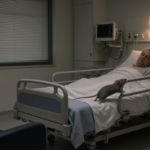
The union also says it identified a possible entry and exit point near the hospital garden. Photo credit: Ai generated image

If I was to ask you where you would expect to see a rat, I’m sure a Spanish hospital bed would probably be one of the last places you would say, particularly when you are recovering from an operation. Yet one patient in Cádiz had a very different kind of visitor during his stay, turning what should have been a routine night in hospital into a rather extraordinary encounter.

It is the latest in a string of unusual incidents involving unwanted creatures at Spanish hospitals, from insects turning up where they really should not be to reptiles making their way into patient areas. So, quite apart from the immediate disgust factor, it raises an uncomfortable question: are Spain’s hospitals doing enough when it comes to pest control and sanitation?

Rat jumps onto patient’s bed

The incident happened during Friday night, September 18, at Hospital Puerta del Mar in Cádiz. According to the patient’s relatives, a large rat somehow made its way into a third-floor hospital room. The animal initially hid behind the chair being used by a family member accompanying the patient. It did not stay there for long.

The rat eventually jumped onto the patient’s bed, where it was filmed by the family before they managed to get the animal out of the room. The patient was recovering from an operation at the time, making the unexpected visitor particularly disturbing for those present. But the incident has taken on a different significance because concerns about rats at the hospital had already been raised weeks earlier.

Staff had already sounded the alarm

UGT says it warned hospital management in August after rodents were reportedly seen in several areas of Puerta del Mar. Those areas included the kitchen, pathology, nuclear medicine and radiotherapy departments, according to the union, which also pointed to areas of the hospital basement. UGT says it identified a possible route through which the rodents could enter and leave the building, involving a drain close to the hospital garden.

Following the warnings, additional pest-control and monitoring measures were activated, with the hospital also coordinating with Cádiz City Council. The union says the checks carried out at the time found a low level of rat activity.The appearance of one inside a patient’s bedroom has therefore prompted UGT to call for the existing measures to be reviewed and for the hospital to establish exactly how the animal managed to reach the ward. There is no evidence from this incident alone that Puerta del Mar has an infestation, and UGT has not claimed that it does.

Not the only recent hospital visitor

The Cádiz rat is also not the only recent case in which an unwanted creature has found its way into a Spanish hospital. In August, two snakes were reportedly found inside the Hospital Alto Guadalquivir in Andújar, Jaén. One was discovered underneath a patient’s bed. The incidents prompted an investigation into how the reptiles had entered the hospital, involving the regional authorities and environmental officials.

Then there was a cockroach in a patients food at the Hospital Clínico de Santiago in Galicia. That incident happened on August 4 and was reported publicly in September. CCOO subsequently demanded explanations and action, while hospital management described the discovery as an isolated and exceptional incident. Additional pest-control measures were carried out afterwards.

Are standards slipping?

Three incidents at three hospitals alone do not establish that sanitation standards across Spain’s healthcare system are slipping, but it is sure enough makes you question them. Each hospital has also reported having pest-control procedures in place, and there is no evidence that these cases represent a nationwide deterioration. But the incidents do raise an awkward question for patients.

Hospitals have strict hygiene requirements precisely because people receiving treatment can be particularly vulnerable to infection and other risks. That makes the appearance of rodents, reptiles or insects inside patient areas, kitchens or food particularly uncomfortable.

In Cádiz, the most obvious question is now how a rat managed to get from wherever it entered the building to a third-floor hospital room, especially after concerns had already been raised. For the patient who was trying to recover from an operation, though, the issue was considerably simpler. He went into hospital expecting treatment and ended up with a visit from a rat and this one wasn’t there to collect his teeth!

%

The Supermarket Chain With 268 Stores Taking On Mercadona That Could Reach Andalucía

Published

on

the-supermarket-chain-with-268-stores-taking-on-mercadona-that-could-reach-andalucia

Despite its size, Froiz is still concentrated in a relatively small number of regions. Photo credit: VicVa/Shutterstock

If you have ever walked into a supermarket in Spain and wondered why the same handful of names seem to be everywhere, a new contender may be worth keeping an eye on. One Galician supermarket chain has quietly grown into a sizeable national business, with hundreds of shops, thousands of employees and plans that have taken it well beyond its home region.

And if you are wondering whether Froiz could eventually arrive in Andalucía, there is a catch: the chain is expanding, but there is currently no confirmed announcement of a new Froiz store in the region.

From Galicia to 268 stores

Froiz has its roots in Pontevedra, Galicia, where the family-owned company began in 1968. More than half a century later, it has become one of Spain’s larger supermarket groups. The company finished 2025 with 970 million in net sales, up from €943 million the previous year, according to its latest figures. It now operates 268 company-owned outlets across Spain and Portugal. 

That figure includes 249 Froiz supermarkets, seven Hiper Froiz stores and 12 cash-and-carry outlets operating under the Ekomax and Cash Froiz names. There are also 80 franchised shops operating under the MercaMas, MercaExpress and Atlántico brands.  The group employs around 7,000 people and describes itself as a supermarket focused on proximity, fresh produce, national brands and its own Froiz products. 

Where can you find Froiz?

Despite its size, Froiz is still concentrated in a relatively small number of regions. In Spain, the chain currently operates in Galicia, Castilla y León, Castilla-La Mancha and the Community of Madrid. It also has shops in northern Portugal, including the districts of Viana do Castelo, Braga, Porto and Aveiro.  Its expansion has not simply consisted of opening small neighbourhood supermarkets.

In 2025, Froiz acquired three Masymas stores in León from Hijos de Luis Rodríguez, with the existing employees retained. The move helped increase its presence in Castilla y León.  The chain has continued opening stores during 2026, including a new supermarket in Sanxenxo, Pontevedra, in June. That 2,125-square-metre store includes fresh food counters, prepared meals, a café, free parking, home delivery and online shopping. 

What about Andalucía?

This is where shoppers in southern Spain may have to wait, there is currently no confirmed Froiz expansion into Andalucía. The company’s own current list of operating regions does not include Andalucía, and its 2026 news and openings published so far show activity concentrated in areas where it already has a presence, rather than announcing a move into the south.  That does not mean Andalucía is permanently off the map. Froiz has demonstrated that it is willing to expand beyond Galicia, including into Madrid, Castilla-La Mancha and Castilla y León.

But there is no announced date, city or confirmed project for an Andalucía opening at present, so claims that the chain is about to arrive in the region would be premature. There is another reason the south could be an interesting market to watch. Froiz already has experience competing outside its traditional territory and has been gaining ground in Madrid, where its expansion has been noted alongside other regional supermarket operators. 

Could Froiz take on Mercadona and Carrefour?

Froiz is nowhere near the scale of Spain’s biggest supermarket chains, but it is increasingly competing for the same shoppers . Mercadona, Carrefour, Lidl and Aldi dominate much of Spain’s grocery market, while regional chains have also been expanding and gaining ground. Froiz is among those regional operators benefiting from the continued strength of supermarket groups with a more local presence. 

Its strategy is based heavily on fresh food, proximity and a broad range of products rather than trying to copy the country’s biggest chains. For shoppers, that means another supermarket name is becoming increasingly familiar outside Galicia, and with 268 stores already operating, Froiz is no longer a small regional player. For Andalucía, however, there is nothing to add to the shopping list just yet. Froiz is expanding, but the arrival of its green-and-red signs in southern Spain has not been announced.

Continue Reading

%

Male Contraceptive Pill Moves Closer As WHO Backs New Birth Control Options

Published

on

male-contraceptive-pill-moves-closer-as-who-backs-new-birth-control-options

Research into male contraceptives has been taking place for decades. Photo credit: Chay_Tee/Shutterstock

If you have ever had to make decisions about contraception with a partner, you will know it is rarely a responsibility that belongs neatly to one person. But men have had far fewer options than women, with condoms and vasectomy still the main choices available. For decades, women have carried most of that responsibility, now that could finally start to change.

The World Health Organization has published its first set of guidelines for developing new male contraceptives, setting out what future products should look like and pushing researchers and pharmaceutical companies to develop options that are effective, safe, affordable and reversible.  This does not mean a male contraceptive pill is about to appear in Spanish pharmacies. But after decades of research, several possible methods are now being developed, and the WHO wants to give them a clearer route towards becoming real products.

What could men actually use?

The WHO’s new framework covers three different ways of preventing pregnancy. One approach would suppress sperm production, another would interfere with how sperm function, while a third would prevent sperm from being transported through the reproductive system. That could eventually mean products such as daily pills, injections, gels or implants, depending on which candidates successfully pass clinical trials.

The WHO says future products should be highly effective, safe, reversible and affordable. Its target profiles set a minimum desired effectiveness of around 90 per cent, while also taking into account whether people would actually be willing and able to use them.  The distinction between this announcement and a product launch is important. The WHO is not approving a particular contraceptive. It is setting standards for researchers and manufacturers developing the next generation of male birth control.

The research has been going on for decades

Male contraception is hardly a new idea, scientists have been investigating hormonal and non-hormonal methods for more than 50 years, but development has repeatedly stalled. The WHO says men’s contraceptive choices remain largely limited to condoms, vasectomy and withdrawal.  One of the problems has been the question of whether there would actually be a market for male contraception.   Would men take it? Would women trust their partners to take responsibility for preventing pregnancy? Would pharmaceutical companies be able to make enough money from a new product to justify the cost of developing it?

Recent research is providing some striking answers.  A global study involving couples in Ghana, Togo, Morocco and Colombia found that more than 75 per cent of couples surveyed would be willing to use a new male contraceptive. More than 85 per cent of women questioned said they would trust their male partner to take responsibility for contraception.  That suggests the potential demand may be considerably greater than some developers previously assumed.

European men are interested too

The interest is not limited to countries where access to contraception can be more difficult. A separate survey of 14,000 men across Germany, France, Italy, Poland, Sweden, Türkiye and the UK found that more than half in every country said they would start using a new male contraceptive within 12 months if it were approved.

Only 9 per cent said they would never use one. In the UK, the proportion saying they would start using a new method within a year reached 69 per cent, according to the survey reported by Euronews. The methods being considered include an on-demand pill taken before sex, a daily hormonal gel and a thermal silicone ring. But they are still experimental products, not alternatives that can currently be bought from a pharmacy. 

Why the WHO wants more options

The WHO’s argument is not simply that men deserve another contraceptive choice. It says expanding male contraception could allow couples to share responsibility for preventing pregnancy rather than leaving women with most of the available options, and their associated decisions, costs and potential side effects.

The organisation says developing additional methods is important for allowing people to make choices about whether and when to have children, while reducing the disproportionate burden of family planning currently carried by women.  That could be particularly significant for women who cannot tolerate existing hormonal contraceptives or who do not want to use them for years at a time. It would also give couples another option when condoms are unsuitable or when one partner cannot or does not want to use a female contraceptive.

You will have to wait

Despite the excitement around the announcement, there is no immediate male pill arriving on pharmacy shelves. Several candidates are already in advanced clinical trials, but they still have to demonstrate that they work, are safe and can be used reliably before regulators could approve them. The WHO says new reversible male contraceptives could potentially reach the market within five to 10 years, although the timeline will depend on the individual products and their clinical development. 

For now, the biggest change is that male contraception has moved another step away from being a laboratory idea and towards something researchers, manufacturers and regulators have a shared framework for developing. After decades in which contraception has largely been something women have had to manage themselves, the next generation could finally give men a much bigger role in preventing pregnancy.

Continue Reading

%

Deadly Crash And Landslide Chaos Wiped Out 800,000 Málaga-Madrid Journeys

Published

on

deadly-crash-and-landslide-chaos-wiped-out-800,000-malaga-madrid-journeys

Rail travel between Málaga and Madrid has had a difficult year. Credit: Colinmthompson / Shutterstock

“Who guarantees it won’t happen again?” a survivor of January’s Adamuz crash asked months later, and plenty of former passengers clearly felt the same way. More than 800,000 journeys between Málaga and Madrid never happened in the first half of 2026, new figures show. 

More than 800,000 journeys never happened 

Just 635,000 passengers travelled between Málaga and Madrid between April and June 2026, 313,000 fewer than the same three months the year before. The large dip in passengers comes on top of an even steeper collapse in the first quarter, when the route was shut for most of the period. Put together, more than 800,000 journeys between the two cities didn’t happen in the first half of the year.

On the wider Málaga and Granada corridor to Madrid, 1.049 million passengers travelled between April and June, down 30 per cent year on year. Even Renfe’s grip on the route slipped slightly, though it still carried 72 per cent of passengers despite newer rivals Iryo, Avlo and Ouigo all competing for the same seats. 

Why the closed tracks explain more than just lost confidence

The line was completely closed until April 30 and then, once it reopened, ran on a single track through the repaired stretch near Álora until July 17. That meant fewer trains and fewer seats for months, not just fewer people willing to book them.

Occupancy on the trains that did run stayed strong at 78.9 per cent, almost identical to the year before. So capacity, not confidence, looks like the biggest main reason for the fall. Average fares also dipped slightly to €39.90 before IVA (VAT), down three per cent on 2025. 

The fear that also lays behind the figures

Even so, capacity alone does not explain everything. The closure followed one of Spain’s worst rail disasters in decades. An Iryo train derailed near Adamuz in Córdoba on January 18 after a rail break, and a Renfe train travelling on the parallel track struck it roughly 20 seconds later. Forty-six people died and 292 were injured. 

In the days afterwards, passengers who regularly used the Madrid-Andalucía route spoke openly about how hard it would be to get back on. “The first time I get on, I won’t stop turning it over in my head,” said Isa Molina at the time. Marta P. said she expected to feel “sad and worried” the first few times she travelled again, and Jessica Flores admitted “it’s going to be hard for me to make the decision to travel.”

Months later, some of that fear naturally remained in those affected . One survivor, speaking in a video released in May by the Asociación Víctimas Descarrilamiento Adamuz (the crash victims’ association), asked who could guarantee it won’t happen again. 

When the direct service finally returned on April 30, passengers boarded with a sense of respect and slight trepidation, with memories of the January accident still fresh. Not everyone felt the same way. Some described relief and total confidence in the AVE drivers, alongside others who admitted the day brought lots of nerves and uncertainty.

More trains are coming 

Adif restored the second track on July 17, since then Renfe has laid on extra high-speed services to rebuild frequency on the route. Iryo has gone further than that, confirming plans to expand its Málaga-Madrid timetable significantly from 2027.

Continue Reading
Advertisement
Advertisement

Spanish Real Estate Agents

Tags

Trending

Copyright © 2017 Spanish Property & News