
Health and Beauty
Male contraceptive pill moves closer as WHO backs new birth control options


Research into male contraceptives has been taking place for decades. Photo credit: Chay_Tee/Shutterstock
If you have ever had to make decisions about contraception with a partner, you will know it is rarely a responsibility that belongs neatly to one person. But men have had far fewer options than women, with condoms and vasectomy still the main choices available. For decades, women have carried most of that responsibility, now that could finally start to change.
The World Health Organization has published its first set of guidelines for developing new male contraceptives, setting out what future products should look like and pushing researchers and pharmaceutical companies to develop options that are effective, safe, affordable and reversible. This does not mean a male contraceptive pill is about to appear in Spanish pharmacies. But after decades of research, several possible methods are now being developed, and the WHO wants to give them a clearer route towards becoming real products.
What could men actually use?
The WHO’s new framework covers three different ways of preventing pregnancy. One approach would suppress sperm production, another would interfere with how sperm function, while a third would prevent sperm from being transported through the reproductive system. That could eventually mean products such as daily pills, injections, gels or implants, depending on which candidates successfully pass clinical trials.
The WHO says future products should be highly effective, safe, reversible and affordable. Its target profiles set a minimum desired effectiveness of around 90 per cent, while also taking into account whether people would actually be willing and able to use them. The distinction between this announcement and a product launch is important. The WHO is not approving a particular contraceptive. It is setting standards for researchers and manufacturers developing the next generation of male birth control.
The research has been going on for decades
Male contraception is hardly a new idea, scientists have been investigating hormonal and non-hormonal methods for more than 50 years, but development has repeatedly stalled. The WHO says men’s contraceptive choices remain largely limited to condoms, vasectomy and withdrawal. One of the problems has been the question of whether there would actually be a market for male contraception. Would men take it? Would women trust their partners to take responsibility for preventing pregnancy? Would pharmaceutical companies be able to make enough money from a new product to justify the cost of developing it?
Recent research is providing some striking answers. A global study involving couples in Ghana, Togo, Morocco and Colombia found that more than 75 per cent of couples surveyed would be willing to use a new male contraceptive. More than 85 per cent of women questioned said they would trust their male partner to take responsibility for contraception. That suggests the potential demand may be considerably greater than some developers previously assumed.
European men are interested too
The interest is not limited to countries where access to contraception can be more difficult. A separate survey of 14,000 men across Germany, France, Italy, Poland, Sweden, Türkiye and the UK found that more than half in every country said they would start using a new male contraceptive within 12 months if it were approved.
Only 9 per cent said they would never use one. In the UK, the proportion saying they would start using a new method within a year reached 69 per cent, according to the survey reported by Euronews. The methods being considered include an on-demand pill taken before sex, a daily hormonal gel and a thermal silicone ring. But they are still experimental products, not alternatives that can currently be bought from a pharmacy.
Why the WHO wants more options
The WHO’s argument is not simply that men deserve another contraceptive choice. It says expanding male contraception could allow couples to share responsibility for preventing pregnancy rather than leaving women with most of the available options, and their associated decisions, costs and potential side effects.
The organisation says developing additional methods is important for allowing people to make choices about whether and when to have children, while reducing the disproportionate burden of family planning currently carried by women. That could be particularly significant for women who cannot tolerate existing hormonal contraceptives or who do not want to use them for years at a time. It would also give couples another option when condoms are unsuitable or when one partner cannot or does not want to use a female contraceptive.
You will have to wait
Despite the excitement around the announcement, there is no immediate male pill arriving on pharmacy shelves. Several candidates are already in advanced clinical trials, but they still have to demonstrate that they work, are safe and can be used reliably before regulators could approve them. The WHO says new reversible male contraceptives could potentially reach the market within five to 10 years, although the timeline will depend on the individual products and their clinical development.
For now, the biggest change is that male contraception has moved another step away from being a laboratory idea and towards something researchers, manufacturers and regulators have a shared framework for developing. After decades in which contraception has largely been something women have had to manage themselves, the next generation could finally give men a much bigger role in preventing pregnancy.





ALS treatment advances
Motor neurone disease breakthroughs: Why research offers new hope for the future
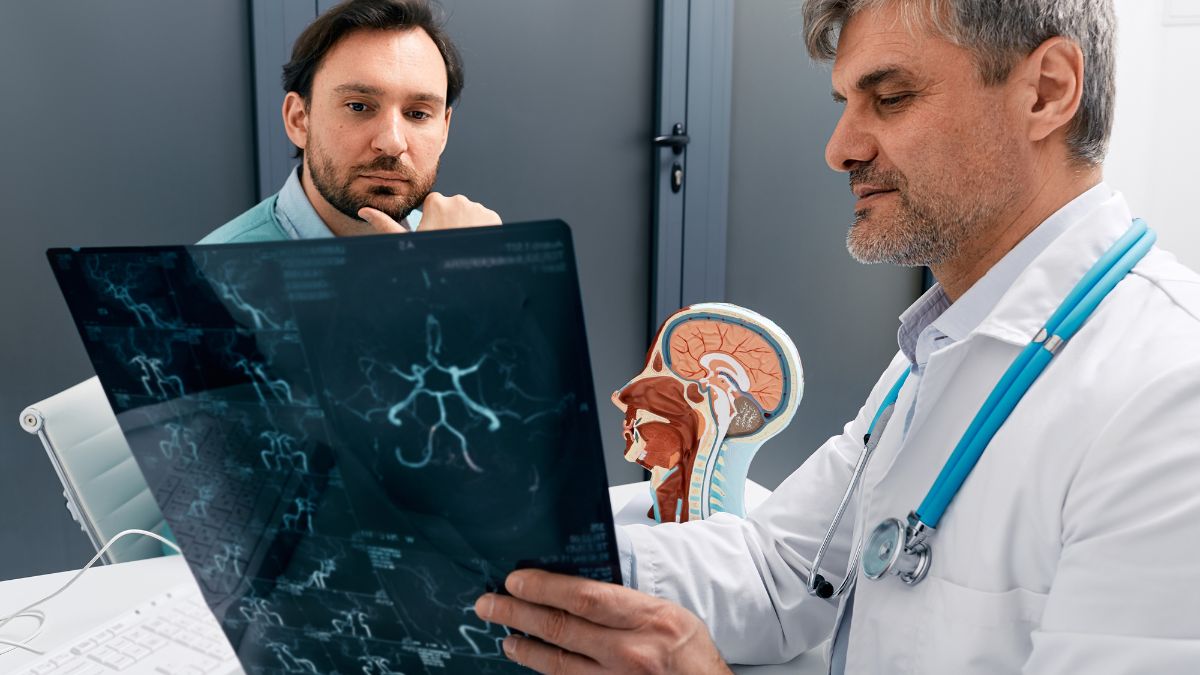
Medical imaging and diagnostic breakthroughs continue to improve early detection and care pathways for complex neurological conditions. Credit: Peakstock/Shutterstock
Motor neurone disease (MND) has long been regarded as one of the most heartbreaking diagnoses in modern medicine, gradually robbing individuals of their physical independence while leaving memory and cognition untouched. However, international research is entering a revolutionary new era. From groundbreaking gene-silencing therapies and AI-assisted drug discovery to early-detection blood tests and stem cell studies, scientists are shifting their focus from merely managing symptoms to targeting the root causes of the disease. These clinical advances provide genuine, evidence-based optimism for patients and families worldwide.
For many years, motor neurone disease (MND) has been regarded as one of the most heart-breaking illnesses in medicine. It gradually robs people of their ability to walk, use their hands, speak, swallow and eventually breathe, while often leaving their thinking and memory untouched. It is a cruel diagnosis, not only for those living with the disease but also for their families and loved ones.
Shortly after I graduated in the late eighties, I had to watch my grandfather die from motor neurone disease. At the time it wasn’t making headlines, and to be honest not many people had even heard of it. I had to pull some textbooks to try and understand the pathology, but even then, I was left much in the dark. I can remember thinking how little we really understood many conditions that affected us, and no amount of training can prepare you to witness something so horrid.
Since that time, we have learned a lot.
Researchers around the world are making faster progress than ever before. New discoveries about what causes MND are leading to treatments that target the disease itself rather than simply helping to manage its symptoms. There is still no cure, but many experts believe we are entering a new era in MND research.
What Is Motor Neurone Disease and How Does It Progress?
Motor neurones are the nerve cells that carry messages from the brain to the muscles. Every time you smile, lift a cup of coffee or take a step, these nerves are doing their job.
In people with MND, these nerve cells gradually stop working and die. As fewer signals reach the muscles, they become weaker and waste away. Everyday tasks become increasingly difficult, and as the disease progresses, patients often need more help with even the simplest activities.
Most people who develop MND have no family history of the condition. However, around one in ten cases are inherited, and understanding these inherited forms has opened exciting new avenues for research.
Targeted Gene Therapy: Stopping MND at Its Genetic Source
Perhaps the biggest breakthrough has been the development of treatments that target faulty genes.
Scientists have identified several genes that can cause inherited forms of MND. Instead of treating the symptoms, researchers have developed medicines that switch off these faulty genes before they can produce harmful proteins that damage nerve cells.
I know this all sounds a bit science fiction, and these treatments are only suitable for a small number of patients at present, but they prove that it is possible to slow the disease by tackling its underlying cause. That is a huge step forward and offers hope that similar treatments could eventually be developed for many more people.
How Artificial Intelligence Is Accelerating Medical Drug Discovery
Artificial intelligence, apparently it could put an end to all of us in the next ten years if you believe that, but the truth is that it is helping researchers make discoveries at an astonishing speed.
By analysing enormous amounts of medical information, AI can spot patterns that would take humans years to identify. It is helping scientists discover new drug targets, identify existing medicines that might be useful for MND, and even match suitable patients to clinical trials more quickly.
Of course AI doesn’t replace medical researchers—it simply gives them a remarkably powerful new tool.
Stem Cell Research: Protecting Healthy Nerve Cells
Stem cell research has attracted headlines for years, although the reality has often been less dramatic than the publicity suggested.
Today’s research is much more realistic. Scientists are no longer expecting stem cells to magically replace damaged nerves. Instead, they hope stem cells can protect the healthy nerve cells that remain by releasing substances that reduce inflammation and support nerve survival.
Early studies are encouraging, but much more research is needed before stem cell treatments become widely available. Unfortunately, political decisions still block this type of research in some regions.
Controlling Inflammation: Protecting the Nervous System
One of the biggest discoveries in recent years is that MND is not just a disease of nerve cells.
The body’s own support cells, which normally protect the nervous system, can become overactive and accidentally contribute to further damage by producing harmful inflammation.
This has led researchers to investigate medicines that calm this inflammation, potentially slowing the disease while leaving the immune system able to fight infections normally.
Earlier Diagnosis: The Role of Biomarkers and Blood Tests
Doctors are also getting better at diagnosing MND earlier.
Researchers have identified substances in the blood that can act as warning signs of nerve damage. One of the most promising is a protein called neurofilament light chain, which is released when nerve cells are injured.
A simple blood test may help doctors confirm the diagnosis sooner and monitor how quickly the disease is progressing.
This is important because many of the new treatments are likely to work best before too many nerve cells have been lost.
Multidisciplinary Care and Assisted Technology
While everyone hopes for a cure, improvements in everyday care have already made a real difference.
Patients today often benefit from specialist clinics where neurologists, physiotherapists, speech therapists, dietitians, respiratory specialists and nurses all work together. This team approach has been shown to improve both quality of life and survival.
Modern breathing support, nutritional advice and communication technology are also helping people remain independent for longer.
Eye-controlled computers, for example, allow many people who have lost their speech to continue communicating with family and friends using only their eye movements.
International Collaboration and Global Clinical Trials
One reason progress has accelerated is that researchers are no longer working in isolation.
MND is a relatively uncommon disease, so international collaboration has become essential. Scientists across Europe, North America, Australia and Asia are now sharing information and working together on large clinical trials, despite political interference.
Patient organisations have also played a vital role by funding research, raising awareness and encouraging people to take part in studies.
The Future of MND Care: Personalised Therapies and Hope
No one is pretending that MND has been solved. It remains one of the most complex neurological diseases doctors face, and much work still lies ahead.
However, the picture today is far brighter than it was even ten years ago. Scientists understand far more about why the disease develops, they have identified promising new treatment targets, and dozens of new therapies are being tested around the world.
Many experts now believe that the future will involve diagnosing MND much earlier and treating it with a combination of therapies tailored to each individual—rather like the way cancers and HIV are treated today.
For people living with motor neurone disease and those who love them, that offers something which, until recently, was in short supply: genuine reason for optimism.
Every new discovery brings us a little closer to the day when MND can be slowed significantly, controlled—or perhaps one day even prevented altogether.
While that day has not yet arrived, it no longer feels like an impossible dream.
If you, or a loved one, are affected by MND you can contact the Spanish MND association on Telephone 91 311 3530 or by email at adela@adelaweb.org.
The information provided in this column is for educational and informational purposes only, and does not constitute medical advice. It is not a substitute for a professional medical consultation, diagnosis, or treatment. Always seek the advice of your own physician or other qualified health provider with any questions you may have regarding a medical condition.
Dr Marcus Stephan


Male contraceptive pill moves closer as WHO backs new birth control options
Spain’s 10pm dinner is disappearing and it could change your nights out
Deadly crash and landslide chaos wiped out 800,000 Málaga-Madrid journeys


-
Latest1 week ago
The Vocabulary You Need To Understand The Spanish Citizenship Process
-

 Argentina2 weeks ago
The Falklands: The Open Wound That Unites Argentines
-

 Energy efficiency & certificates2 weeks ago
94% Of Spanish Homes Are Energy Inefficient – Could Tighter Rules Be Coming?
-
Holiday rentals2 weeks ago
Ibiza council hits illegal tourist rental with €793,000 fine – but will the owner pay that much?
-

 Alex Saab1 week ago
Maduro Ally Alex Saab Pleads Guilty In US Money-Laundering Case
-
easyJet2 weeks ago
146 slide off easyJet flight after powerbank fire at Milan airport
-

 New Developments1 week ago
How To Get A Tourist Rental Licence In Andalusia (Spain) – Step-By-Step Guide 2025
-

 Uncategorized1 week ago
‘Lewis will never trust Charles again’ – F1 journalist issues shocking Ferrari statement – GPFans.com