Connect with us

%

Spectacular Timeless Masterworks Concerts

Published

on

spectacular-timeless-masterworks-concerts

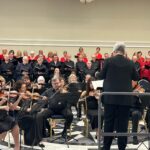
Collegium Musicum enchanting concerts. Credit: CM

Those who love classical music on the Costa del Sol can look forward to a breathtaking series of performances this May. Collegium Musicum has announced two exclusive dates for their “Timeless Masterworks” programme, featuring a sophisticated selection of choral and orchestral pieces. These events will no doubt deliver emotional depth through a curated mix of lyrical vocal works and rich symphonic textures.

International soloists lead diverse programme

Tilman Mahrenholz, the famous cellist, joins harpist Juan Remón Hernández to provide intricate instrumental layers to the evening. Audiences can also experience the powerful vocals of Pablo Jiménez Álvarez. This talented tenor from Malaga is scheduled to perform iconic arias, including Puccini’s “Nessun Dorma” and “E Lucevan le Stelle,” together with Donizetti’s “Una Furtiva Lacrima”. A special guest appearance by his father, Carlos Jiménez Enrique, adds a unique family connection to the vocal lineup.

Young talent will take centre stage during a collaborative performance of Andrew Lloyd Webber’s “Close Every Door to Me” from Joseph and the Amazing Technicolor Dreamcoat. Members of the Marbella Classical Children’s Choir, aged between 10 and 17, will perform beside the adult ensemble to demonstrate the region’s musical future.

Two exclusive dates in Marbella and Fuengirola

Marbella’s historic Old Town is set to host the first performance on Friday, May 17. Starting at 9pm in the Iglesia de la Encarnación, this evening functions as a benefit for church charities, with donations requested at the conclusion of the music.

Fuengirola will welcome the second spectacular concert on Sunday, May 19, to be held at the Hotel IPV Palace & Spa. Doors open at 7pm for an 8pm start. Entry costs €15, though guests under the age of 16 can attend for free. Tickets are still available via email at ticket@colmus.org, at Lepanto Café in Fuengirola, or directly at the door on the night of the event.

%

Ryanair Warns Over France Passport Delays

Published

on

ryanair-warns-over-france-passport-delays

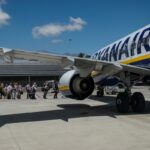
Ryanair raises concerns over summer airport delays linked to new EU passport system Credit : Nicolas Economou, Shutterstock

If you are flying through France this summer, there is a real chance your journey could slow down at passport control. Ryanair has asked the French government to pause the new Entry Exit System until September, warning that the current setup is already causing long queues and could lead to missed flights during the busiest travel period of the year.

The airline says passengers are already waiting up to two hours at some airports. For anyone travelling from Spain via France, or flying into the country from outside the EU, that could quickly become a problem as holiday traffic builds.

At the centre of the issue is a system designed to modernise borders but not yet fully ready to cope with summer demand.

What is the Entry Exit System and who it affects

The Entry Exit System, often shortened to EES, is a new EU border control process for travellers from outside the European Union.

Instead of a simple passport stamp, passengers now need to provide biometric data when entering the Schengen area. That includes a facial photo and fingerprints, which are stored to track entries and exits.

In the long term, the system is meant to replace manual checks and improve border security. But right now, the rollout is still incomplete.

Airports have installed self service kiosks, but many are not fully in use. As a result, most travellers are still being processed at border desks, one by one, which takes longer.

The people most affected are non EU travellers, including those coming from the UK. Even residents with valid permits or long stay visas can get caught in the same queues, because they are not always able to use automated gates.

For families or large groups, the delay can add up quickly.

Why airlines are raising concerns now

Ryanair is not questioning the system itself. The concern is timing.

Summer is the peak travel season in Europe. Airports are at their busiest, flights are full and any slowdown at border control can create a knock on effect across the whole journey.

The airline says the current situation is not ready for that level of pressure.

According to Ryanair, airports do not yet have enough staff or working equipment to handle the extra steps required by the system. The result is long queues, confusion and growing frustration among passengers.

France’s main airport operator has also warned about the rollout, adding that concerns are not limited to airlines.

One of the biggest issues is that the tools designed to speed things up are not fully operational yet. Without them, border checks rely heavily on manual processing.

That is where delays begin.

Passengers already feeling the impact

Reports from travellers suggest the problem is already visible. At airports such as Beauvais, Marseille and Nantes, passengers have experienced waits of one to two hours at passport control. For those with tight connections, that can mean missed flights or stressful last minute runs through the terminal.

There is also confusion around which queue to join. One traveller described being directed to the wrong line despite holding a residency document. She ended up waiting for hours alongside other passengers while biometric checks were carried out.

Situations like this are not unusual when a new system is introduced, but they highlight how small issues can quickly become bigger ones during busy periods.

Why September is being suggested

Ryanair is asking for a delay until after the summer peak for a simple reason.

By September, travel volumes drop and airports have more time to adapt. Staff can be trained properly, systems can be tested under less pressure and any technical issues can be resolved before the next busy period.

The airline has pointed to Greece, where authorities have reportedly chosen to delay the system until after summer, as an example of a more cautious approach.

EU rules allow countries to postpone the rollout temporarily if it risks disrupting border operations. That option is now being pushed as the most practical solution.

For now, France has not confirmed any change in plans.

What travellers should do before flying

With no official pause announced, travellers should prepare for delays.

Arriving at the airport earlier than usual is a sensible step, especially for flights leaving France or entering the Schengen area from outside the EU.

It is also worth checking documents in advance and being ready for biometric checks at the border. Passengers with connecting flights should allow extra time between arrivals and departures where possible.

While not every journey will be affected, the risk of delays is higher than usual.

A system that may improve but needs time

The Entry Exit System is not going away. Once fully operational, it is expected to make border control more efficient and reduce the need for manual checks. But getting there takes time.

Right now, the system is in a transition phase. Some parts are in place, others are not, and airports are still adapting. That is where the tension lies. Introduce it too early, and passengers face delays. Wait too long, and progress slows.

For travellers this summer, the reality sits somewhere in the middle. The system is coming. It just may not be fully ready yet.

Continue Reading

%

Malaga To Madrid High-Speed Rail Returns

Published

on

malaga-to-madrid-high-speed-rail-returns

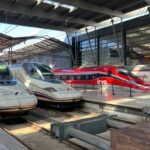
All high-speed trains from Malaga to Madrid suspended. Credit: Colin M Thompson – Shutterstock

Direct high-speed rail links between Malaga and the Spanish capital finally resumed on Thursday, April 30, ending a frustrating 102-day hiatus for commuters and tourists. Rail travellers gathered at Maria Zambrano station to board the first direct AVE services since a tragic accident in Adamuz and subsequent infrastructure damage halted the line earlier this year. And rather than an atmosphere of excitement, there was a solemnness among those passengers from Malaga Province as they remembered what happened on those tracks just 3 months before.

Restoring a vital economic lifeline

Rail services suffered a total collapse on January 18 following the Adamuz incident. Further complications arose in early February when torrential rain provoked a landslide in Alora, covering tracks and forcing Renfe to implement a cumbersome bus-and-train shuttle via Antequera.

Frequent travellers found the temporary arrangements exhausting, as journey times increased and ticket prices for alternative flights soared. Recovery of the direct route arrives just in time for the busy May Bank Holiday, providing a little boost for the tourism sector on the Costa del Sol. For thousands of Malaga residents who work in Madrid, the train serves as a mobile office, making its return a matter of professional necessity.

Mixed emotions among first passengers

Anxiety is still present among those returning to the tracks despite the general sense of relief. Passengers admitted to feeling a sense of respect and slight trepidation when boarding, with the memories of the January accident still fresh.

Safety remains the main concern for most. While some travellers expressed frustration at the three-month delay, others argued that a slow, thorough repair was preferable to a rushed botch job. With the Andalucia elections round the corner, some wondered whether the completion of the work now had anything to do with teh government’s image. Many have commented that the absence of the direct link has made their routine too expensive, forcing them to limit visits to her family in Madrid due to the high cost of last-minute flights and car rentals.

Initial technical hurdles and speed limits

Normality did not return without teething problems. The first service that departed Madrid’s Atocha station arrived in Malaga ten minutes behind schedule. Renfe officials attributed this to temporary speed restrictions currently in place along specific sections of the refurbished infrastructure.

Commuters reported feeling vibrations and noticing stops near Antequera, suggesting that the line is not yet operating at its maximum 300 km/h capacity. Nevertheless, the consensus at Maria Zambrano station was one of cautious optimism. Restoring this connection allows students, workers, and families to reclaim their schedules and move freely between Andalucia and the capital once more.

Continue Reading

%

Trainee Bus Driver Plunges Into River Seine

Published

on

trainee-bus-driver-plunges-into-river-seine

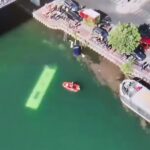
Sunken bus in the River Seine. Credit: François Durovray X

Commuters in Juvisy-sur-Orge witnessed a terrifying scene on Thursday morning, April 30, when a public bus veered off the road and crashed through a fence and into the River Seine. Local police confirmed the vehicle was being operated by a trainee driver completing her practical learning at the time of the incident.

Dramatic rescue operation south of Paris

Emergency responders rushed to the riverbank approximately 20 km south of Paris centre after the vehicle struck a parked car and swerved into the water at 9.30 am local time. Over 90 firefighters, divers, and police officers participated in a complex recovery mission involving helicopters and drones. Four individuals, including the student driver, her instructor, and two passengers, were pulled from the sinking vehicle. Miraculously, everyone on board survived the soggy ordeal and was reported safe and sound by local officials.

Suite à l’accident survenu ce matin à Juvisy-sur-Orge, la situation est désormais revenue à la normale.

Les opérations de vérification menées par les plongeurs ont permis de s’assurer qu’aucune personne ne se trouvait dans l’eau. Aucune victime n’est heureusement à déplorer.… pic.twitter.com/tIXGsVxR2r

— François Durovray (@durovray) April 30, 2026

Investigations launched into training gaff

Lamia Bensara Reda, the Mayor of Juvisy-sur-Orge, described the event as a nightmare, saying that the bus dragged a dark blue car into the water with it as it lost control near a busy station. Witnesses claimed the driver failed to negotiate a right-hand turn, heading straight into the Seine instead. Images from the scene showed the bus partially submerged for several hours before towing teams successfully extracted it during the afternoon with cranes.

Testing for alcohol and narcotics returned negative results for the driver, leaving the exact cause of the crash a mystery for now. The bus company, Île-de-France Mobilités, has ordered an immediate internal inquiry to determine why the vehicle left the road. Local politician Claire Lejeune praised the bravery of bystanders who threw life rings into the water before professional rescue teams arrived. There have been no reports of anyone diving in after the bus to rescue survivors, but the river does have a reputation. Traffic remained heavily congested throughout the day as local police managed the crowds gathered along the riverbanks to watch the recovery.

Continue Reading
Advertisement
Advertisement

Spanish Real Estate Agents

Tags

Trending

Copyright © 2017 Spanish Property & News