
Abelardo de la Espriella
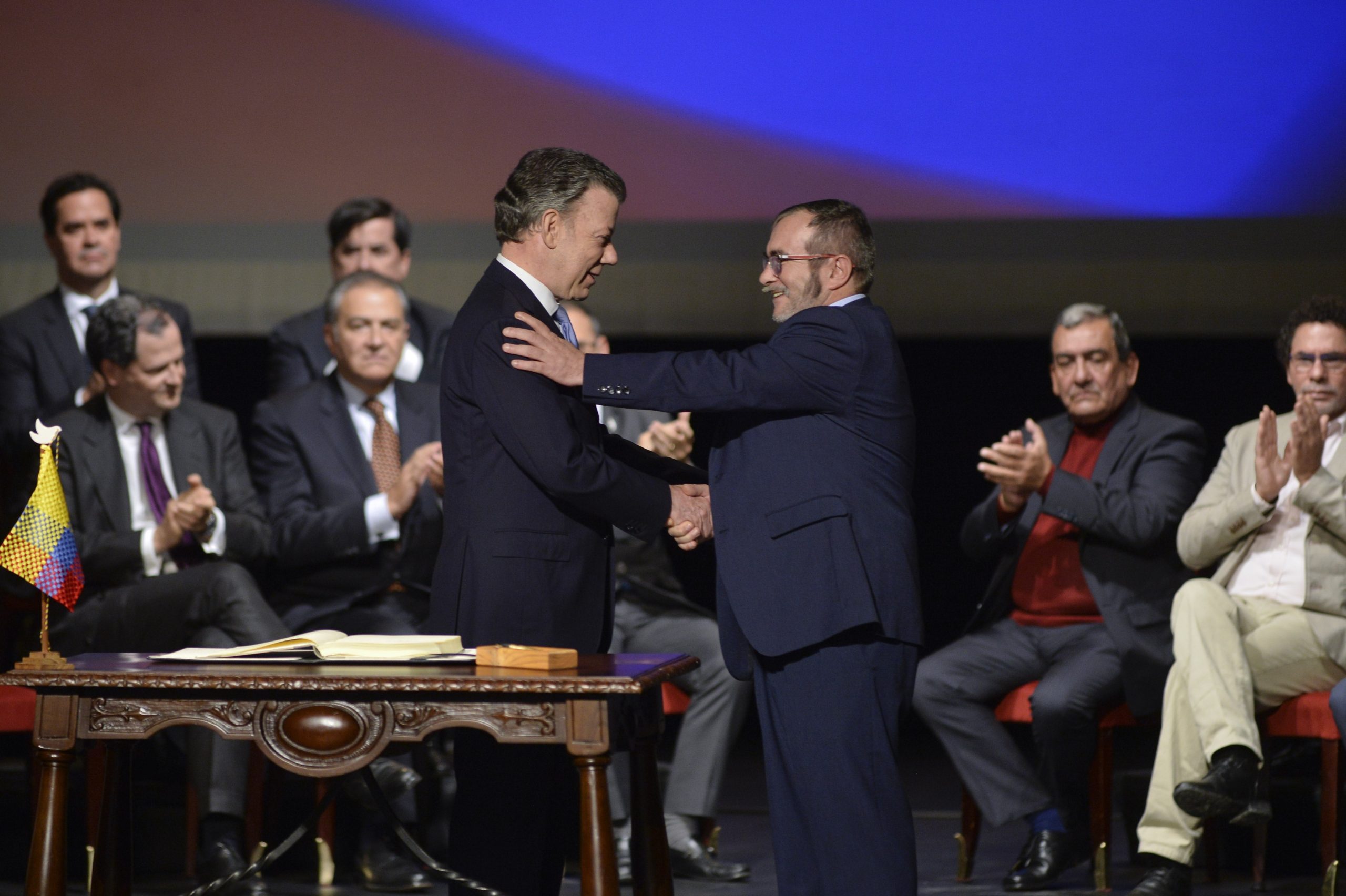
Colombia Marks 10 Years Since FARC Peace Deal As De La Espriella Threatens Its Future








The boy didn’t speak. He hit himself and couldn’t sit still. In January of this year, doctors diagnosed him with autism. He started Applied Behavior Analysis (ABA) therapy… but his parents still went to the church every week, asking God for what the doctors considered to be impossible: a revised diagnosis.
The day after one of these vigils — as his mother recounted on a stage, standing before thousands of worshippers — the boy who had never spoken suddenly began to sing the church songs.
“Ohhhhhhh!”
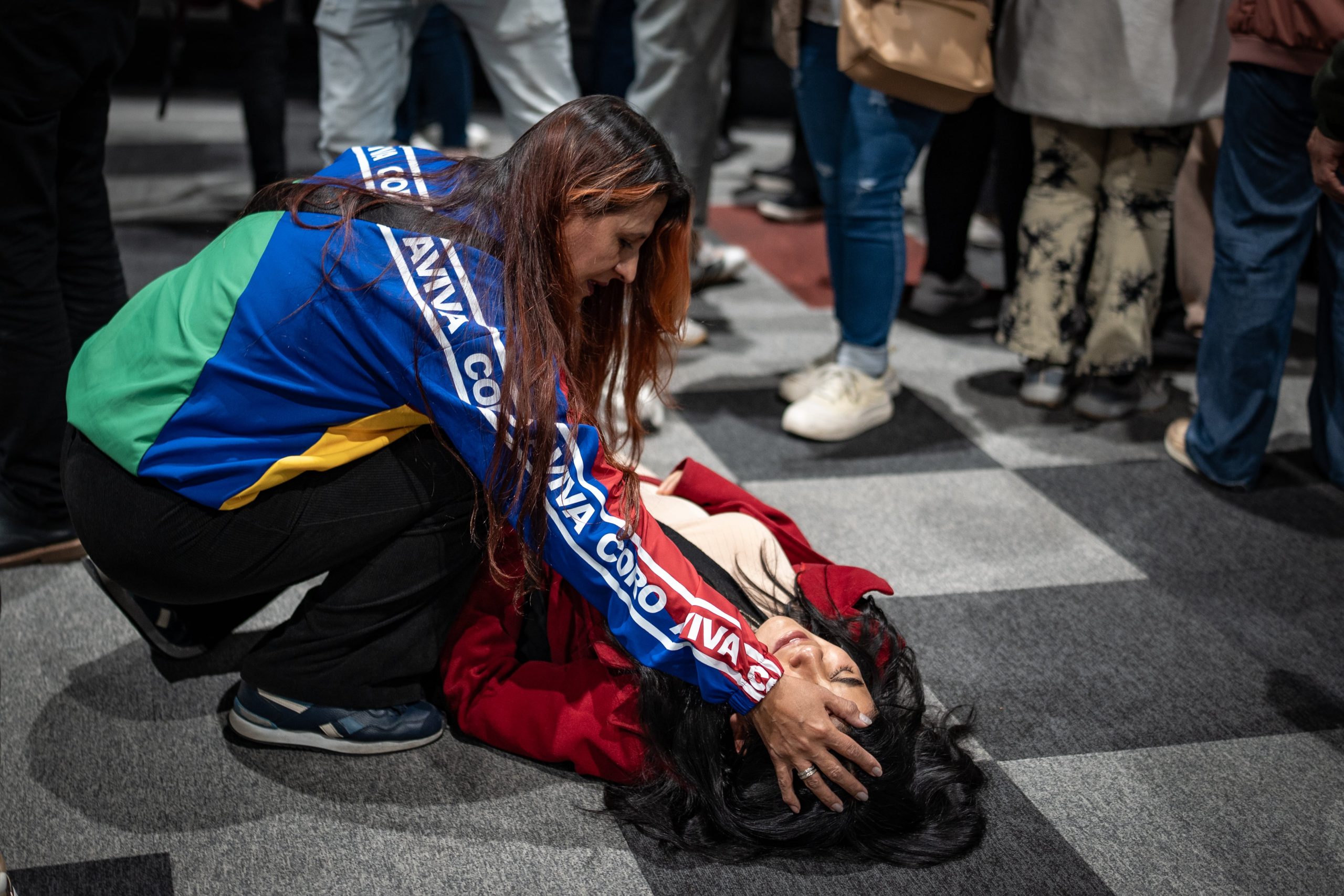
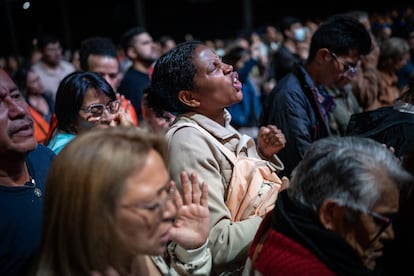
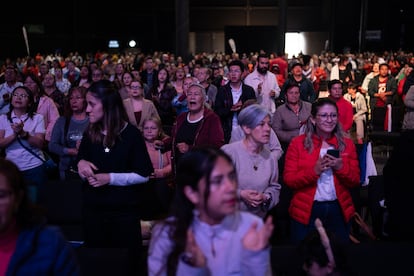
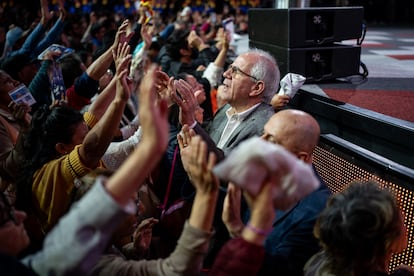
A collective gasp of astonishment swept through the church like a wave, as hundreds of people raised their hands to the sky. Neither science nor treatment could explain it; this was a miracle.
That Sunday in mid-October, in Bogotá, Colombia, testimonies piled up during the service. God had healed cancer, a herniated disc, fibroids and a terrifying case of dermatitis. He even paid back a loyal worshipper double what the car they had lost was worth.
In Colombia, nearly eight out of 10 people believe that miracles happen. And, among evangelical Christians, that figure rises to over nine out of 10, according to a survey conducted by the National University. “The Homeland of Miracles” — the slogan that propelled Abelardo de la Espriella to the presidency of Colombia in August — has been brewing for years now, in thousands of evangelical churches across the country.
Ricardo and María Patricia Rodríguez fell in love playing Parcheesi. They founded their church in October of 1990, in the living room of their apartment. At the time, their children were their only parishioners. But 36 years later, the World Revival Center is one of the largest and most influential evangelical movements in Colombia. Its main church occupies nine former warehouses in an industrial area of Bogotá, dominated by an 1,800-square-foot screen (almost the size of a volleyball court). The church services, which have become a kind of television show, are broadcast throughout the continent. Each year, the World Revival Congress fills the area’s hotels with hundreds of pastors from dozens of countries. Ricardo also presides over the March for Jesus, which — in its last edition — took place in 692 Colombian municipalities.
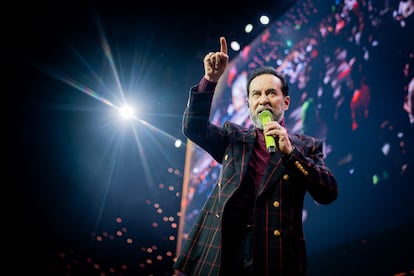
Their success is a win for the entire evangelical movement… although it’s not necessarily reflected in the numbers. A 2019 poll noted that around 20% of Colombian adults identify as evangelicals, but the most recent survey, conducted by the Pew Research Center, maintains that evangelicals and other Protestants make up only 15% of adults. This is less than in Brazil (29%) or Chile (19%), but it’s still a minority with a political heft that far exceeds its size.
“Evangelicals are becoming the determining factor in the political changes taking place in the Americas,” says the influential pastor Eduardo Gómez, who cites the cases of Javier Milei in Argentina, José Antonio Kast in Chile, and De la Espriella in Colombia. The evangelicals had also been counting on Flávio Bolsonaro’s victory in Brazil, which would have been the clearest reflection of this power play. However, President Lula da Silva’s comeback thwarted their expectations.
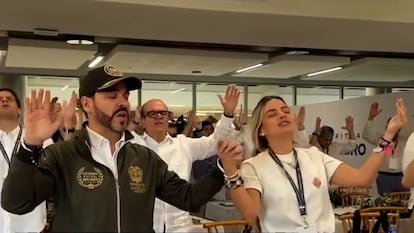
In Colombia, under De la Espriella, evangelical Christians have gained more influence than ever: there are now several evangelical ambassadors, ministers, mid-level officials, city councilors, and members of Congress. The minister of housing is a pastor. The first government spokesperson (who never actually carried out her role) is the daughter of Pastor Gómez himself. And Vice President José Manuel Restrepo, during a trip to Madrid for the Ibero-American Summit, convened a gathering of Colombians living in Spain at an evangelical church. Restrepo writes to Ricardo Rodríguez almost every week to ask for his prayers, according to the pastor himself.
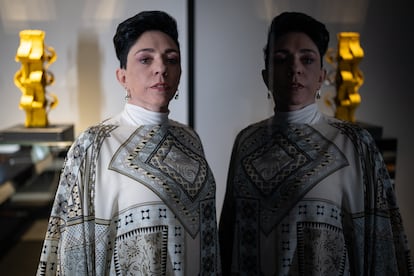
De la Espriella ran a campaign based on spectacle and faith, as if he were a spiritual leader. And, now in government, he has waged a culture war that promotes the same ideas that are expressed in evangelical churches. During his campaign, the president promised — among other things — to “end gender ideology, so that God can enter the classroom.” An atheist until just a few years ago, he now closes all his speeches with “Long live Christ the King!”
No to peace
Colombian evangelicals first found a political ally in Álvaro Uribe, who served as president of Colombia from 2002 until 2010. The Argentine political scientist Ariel Goldstein, author of Poder Evangélico (2020), translated as Evangelical Power, described him as “the leader who has aroused the most enthusiasm among Pentecostals.”
Pastors like César and Claudia Castellanos, from the International Charismatic Mission Church, cemented their ties with Uribe back in 2003. The major show of force, however, occurred during the 2016 referendum on the proposed peace agreement between the government and the FARC guerrillas, which the population voted against. Two months earlier, churches had taken to the streets to protest a booklet — published by the Ministry of Education — on sexual diversity and so-called “gender ideology.” This allowed evangelicals and Catholics to unite in opposition to the peace accords. According to Goldstein, the former president transformed the moral agenda into a platform that allowed his chosen candidate, Iván Duque, to win the presidency in 2018.
Almost a decade later, “gender ideology” is, once again, the government’s punching bag. “Colombia has joined that right-wing international movement — [using the slogan] ‘God, Fatherland and Family’ — which includes churches as part of its political structure,” Goldstein adds.
The evangelicals’ split from Uribe’s party came a few months before the presidential elections this past July. Paloma Valencia, the former president’s preferred candidate, won the right-wing primary. But just four days later, she chose economist Juan Daniel Oviedo — who is openly gay — as her vice-presidential running mate. “It was instant: she lost all the evangelical church votes,” Daniel Briceño notes. A member of the Democratic Center, Uribe’s party, Briceño is the most voted-for congressman in the country. “It was a domino effect. It wasn’t just the evangelicals, but also the most conservative Catholics [who stopped supporting Valencia],” he recalls.
The congressman — the grandson of a pastor — campaigned for Valencia. He says that the support she lost wasn’t “only” because of Oviedo’s sexual orientation, but also because of legislation he had promoted while serving on the Bogotá City Council, which the churches saw as a gateway to “gender ideology” being introduced in schools.
De la Espriella, in any case, understood this from the beginning. As a candidate, he courted Protestant preacher and former senator John Milton Rodríguez; César and Claudia Castellanos, from the International Charismatic Mission Church; and, above all, Pastor Marco Fidel Acosta, then a Bogotá city councilman, who, according to Briceño, gave the then-candidate “a very solid foundation.” Today, Acosta heads the National Savings Fund (FNA), while Rodríguez has been tasked with dismantling the Ministry of Equality. Meanwhile, Pastor Miguel Arrázola, who also helped De la Espriella in his campaign, has been appointed as Colombia’s ambassador to El Salvador.
The Bible as compass
Today, Sara Castellanos, the daughter of the pastor couple, who were so influential during Uribe’s presidency, is one of the four senators elected from De la Espriella’s party. Her latest legislative proposal is to declare that October 31 be known as “Bible Day.”
Of the six major Latin American countries studied by the Pew Research Center back in 2024, Colombia is the one whose population most wants the Bible to influence its laws: 69% of adults support this, compared to 66% in Brazil and Peru.
Briceño — who rejects the idea of pastors engaging in politics from their churches — will likely vote in favor of Castellanos’ bill. “Colombia is a secular state, but it’s not an atheist state,” he points out.
At the Revival Church, the sermon is interrupted by a call for donations (sometimes several times, depending on the day). While ushers walk the aisles with colorful cloth bags — like butterfly nets, collecting the tithe envelopes — a voice from the stage reads out bank account numbers: one is to make instant transfers to the Revival Church through the Bank of Bogotá, while another account, at Bank of America, is intended for the faithful living abroad.
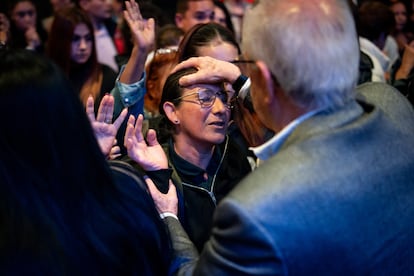
Then, Pastor Ricardo Rodríguez — who preaches while wearing brown suede Prada loafers (worth nearly $1,300) — makes a specific request: the church still owes money for the 28 men’s restrooms that have been built and he needs 200 people to “sow” $1,000 each. To encourage them, he tells the story of a bankrupt businessman who spent his last 15,000 pesos; equivalent to $5, only enough to buy a lunch of empanadas. Then, he received a call from a friend, who was just a few blocks away: he was bringing him a commission that he’d been owed for years.
Dozens of parishioners respond to the pastor’s call: they swipe or tap the card reader.
Catholics are still the majority in Colombia, representing 60% of adults. But this branch of Christianity is losing members. Out of every 100 Colombians, 22 were raised Catholic and have since left the faith: 13 now say they have no religion… and eight have moved to a Protestant church.
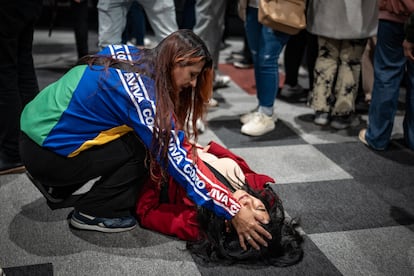
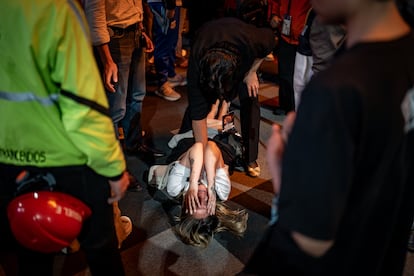
A decade ago, when the Pew Research Center asked these converts in Latin America about why they had moved away from Catholicism, the most common answer was that they wanted a more personal experience with God. “People are tired of religion,” Rodríguez affirms. “The gospel isn’t about switching religions; it’s about having a personal relationship with the Lord.” Every Friday, the members of his congregation tremble, weep and collapse. God has moved them.
Another part of the explanation has to do with what a church promises the poor people who fill it. Catholicism comforted and helped them for centuries; liberation theology sought to transform priests into political actors. But an evangelical pastor speaks to the downtrodden like a coach: “You can do it. God has your back.”
This is prosperity theology, which Goldstein identifies as one of the keys to the evangelical boom. Those who tithe and “sow” get their money back multiplied, while poverty ceases to be an injustice. Instead, it becomes a spiritual affliction, which you can free yourself from.
“Be fruitful — that word means prosper [and] move forward, not remain stagnant or [be] beggars,” Rodríguez preaches. The left offers subsidies and a social welfare state, but the right-wing pastor promises his followers upward mobility.
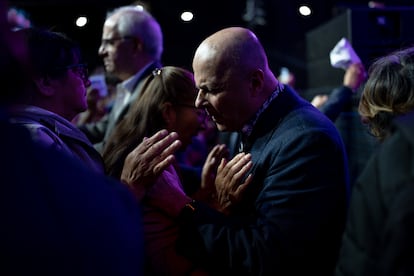
Above all, the church brings a moral agenda to a country that had one of the most liberal legal frameworks in Latin America. The Constitutional Court decriminalized euthanasia in 1997. Same-sex marriage has been legal since 2016. And abortion up to the 24th week of pregnancy has been permitted since 2022. But the churches are fighting against these rights.
Ricardo Rodríguez speaks about a “moral decline” that began in the 1990s, when money started to take precedence “over all values” as the family structure disintegrated. “In the construction business, one-bedroom apartments are the best-sellers,” he laments. Among the threats to the family structure, he lists “homosexuality” and technology.
“If there are people who represent us, they won’t let laws against the church [keep being passed],” says 46-year-old Diana Arias. A candy vendor, she’s been an usher at the Revival Church for two decades. For her, the left represents the opposite of what she believes the Bible teaches. “Pro-life” and “pro-family,” she declares that she would never vote for a progressive candidate: “The root of socialism is atheism.”
Ricardo Rodríguez claims that he doesn’t get as involved in politics as other pastors, but he does guide his congregation. And he supports candidates for public office. On many occasions, like during the last election, he doesn’t even need to be very explicit. On one side was a candidate who gave him “peace of mind.” And, on the other, there was the heir to a government that was “full of witches and sorcerers,” alluding to former senator Iván Cepeda — who was defeated in a runoff by De la Espriella by less than one percent — and former president Gustavo Petro.
After the miracle-working, he tells EL PAÍS: “[The left] almost won the elections; we’ve got to step up our game.”
Sign up for our weekly newsletter to get more English-language news coverage from EL PAÍS USA Edition
Abelardo de la Espriella
The Ette Ennaka, The Indigenous People Fighting To Reclaim Their Place In Colombia’s Sierra Nevada

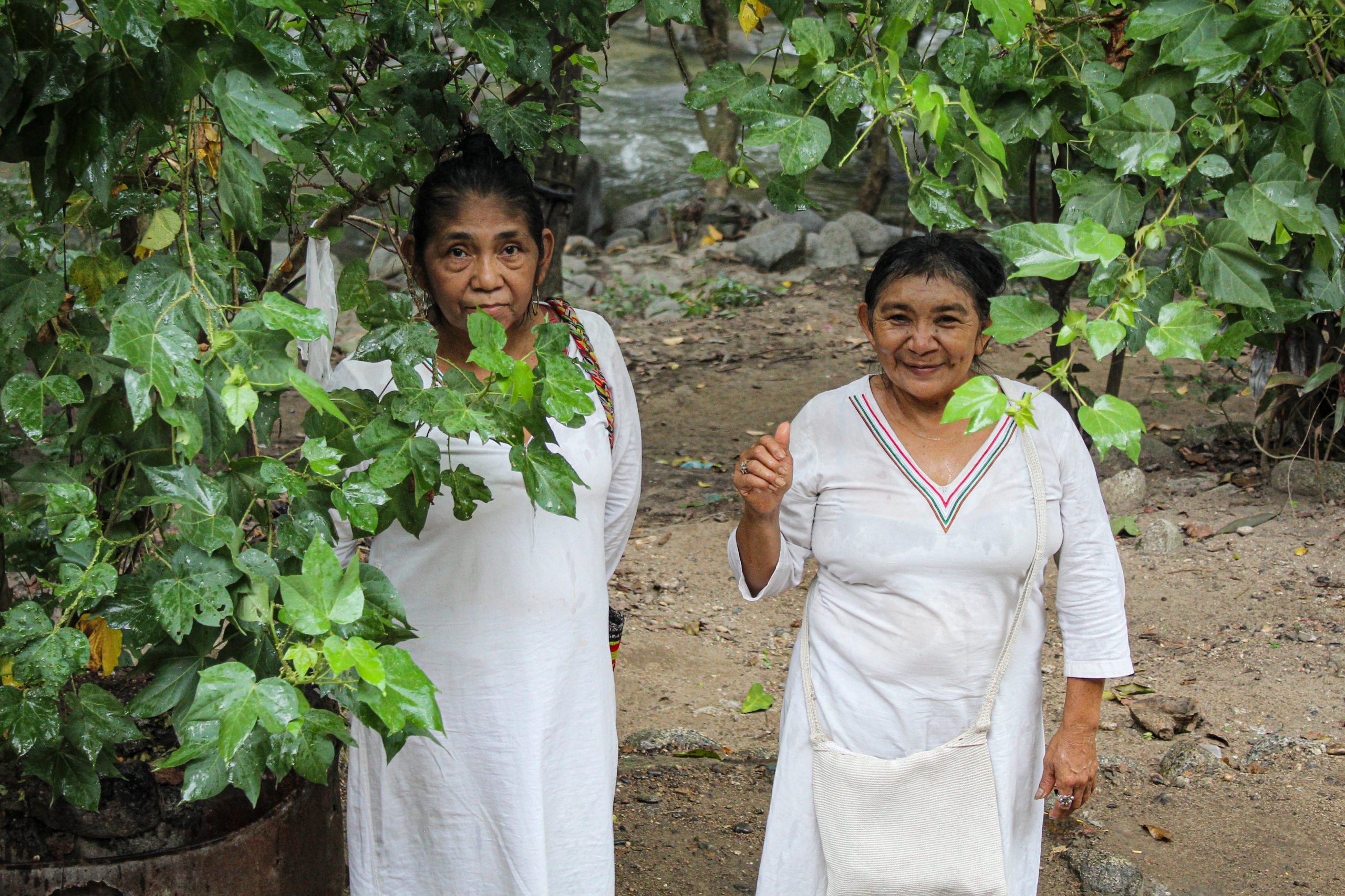
It is nighttime, and Luis, a kraanti (traditional leader), lights a cigarette while sitting in a chair outside his concrete house in the Nara Kajmanta Indigenous reserve, in the department of Magdalena in northern Colombia. In the dim light, he prays for his people, the Ette Ennaka, formerly known as the Chimila, an Indigenous group that was nearly wiped out by violence and is now struggling to reclaim its ancestral territory. He strokes his beard as the Gaira River roars outside and rain lashes the slopes of the Sierra Nevada.
On October 1, 2026, he attended, together with reserve governor Luis Sánchez, the presentation of a bill by the left-wing Historic Pact movement that would turn into law a presidential decree protecting the Línea Negra (Black Line), the spiritual territory of the peoples who inhabit this mountain range spanning some 573,000 hectares. They regard it as “the heart of the world.”
The two men greeted fellow Indigenous leaders and exchanged coca leaves at the event, held in the city of Santa Marta. But the smiles faded when the bill introduced by Senator Patricia Caicedo referred only to four Indigenous peoples of the Sierra Nevada: the Kogui, Wiwa, Kankuamo, and Arhuaco, though she did mention the Chimila in remarks.
“They do not take into account that we are part of the Sierra Nevada de Santa Marta,” lamented Sánchez. Echoing that sentiment, Luis said his people should not be “used for the benefit of others” and warned that he would not allow that to happen.
Asked about the criticism, Senator Caicedo said that “the specific reference to the four peoples is not intended to exclude other existing communities, or those seeking greater recognition of their rights,” but rather to “strengthen the path already laid out through the legal and documentary foundations that exist today.”
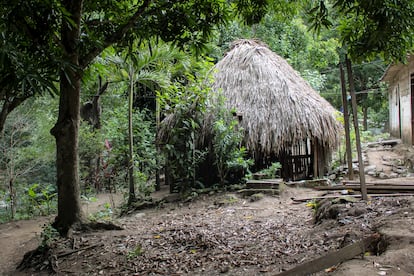
The Ette Ennaka live with a peculiar paradox. After spending decades hiding in order to survive, they have gradually regrouped in recent years and, without actively seeking it, have found themselves in a prominent position in the dispute over the future of the Línea Negra.
Conceived in the 1970s, the Línea Negra is a territory defined by sacred sites that, among other things, requires consultation with the Indigenous peoples of the Sierra Nevada before projects that could affect them are undertaken. The measure was formalized in 2018, during the government of Juan Manuel Santos, in the context of the peace agreement signed with the FARC guerrillas. But a legal challenge backed by mining and oil industry associations led the Council of State, one of Colombia’s highest courts, to strike down the decree in February 2026.
The lawsuit argued, among other things, that not all of the Indigenous peoples concerned had been consulted. The court agreed, ruling that the Wayuu, Chimila and Taganga communities should also have been included. When then-president Gustavo Petro signed a new decree in May, the Ette Ennaka saw an opportunity to reclaim rights that had been taken from them.
During the era of the Spanish conquest, explains sociologist César Rozo, director of the Teje Teje association, the Ette Ennaka were a collection of semi-nomadic groups that formed a nation spread across four departments on Colombia’s Caribbean coast: Magdalena, Cesar, Atlántico and La Guajira. They inhabited the plains and foothills of the Sierra Nevada, home to their principal deity, Yaao.
According to their elders, they fought the invaders to the death while other peoples retreated into the higher reaches of the mountains, forcing them to migrate to remote and inhospitable areas. Colonial records eventually declared them extinct. “But one thing is to cease being visible to those who wrote that history from the outside and quite another for the people to have ceased to exist,” explains anthropologist Caterina Villa De Liguori.
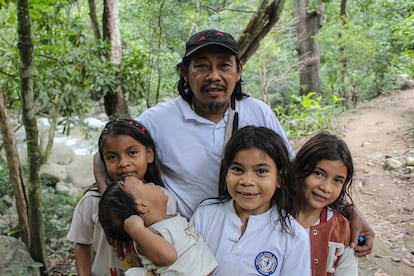
In the 1950s, violence by settler loggers scattered the survivors. Yet they managed to preserve their language, ette taara, as well as their origin stories, spiritual knowledge and ancestral practices, including the use of medicinal plants and the weaving of cotton bags. In 1990, a year before Colombia’s Constitution expanded protections for minority groups, they were granted land in the municipality of San Ángel, in the department of Magdalena. But the armed conflict eventually reached them too, bringing killings, displacement, forced recruitment and even bans on speaking their language.
Even so, “our grandparents did say these words: ‘We are not going to return to the Sierra Nevada again, but you, the new generations, will return to walk it’,” Sánchez recounts. Today, the Ette Ennaka — meaning “new people” — whose official population stood at 1,346 in 2017, estimate that they number around 4,000. They are spread across four reserves, including two in the Sierra Nevada, as well as a dozen settlements. “We changed the arrow for the word, because today we are no longer here to speak of war, but to unite, unify and speak of harmony and peace,” says the kraanti.
Reaching Nara Kajmanta requires travelling along an unpaved road that winds through small farms and roadside resting spots. The handful of houses in the reserve are no longer enough for a rapidly growing population living on mountainous land with limited farmland and patches of forest. One area is set aside as a burial ground.
On October 17, a dozen local authorities met in the maloka — the traditional communal house — to discuss their next steps and define the demands they would present in upcoming talks with other Indigenous authorities about the Línea Negra. Inside the cabin, with its earthen floor, they smoked cigars, their spirals of smoke filling the room.
“The Indigenous house does not belong to only four peoples. We want unity, but one that respects the teachings and traditions of each people,” the kraanti said before listing the community’s demands: the expansion of territory that had been ordered by a land judge but has yet to be guaranteed by the authorities; stronger food security; improvements in health care and education to reinforce their ethno-education project, through which they teach their language; and official recognition that there are seven Indigenous peoples in the Sierra Nevada, not just four.
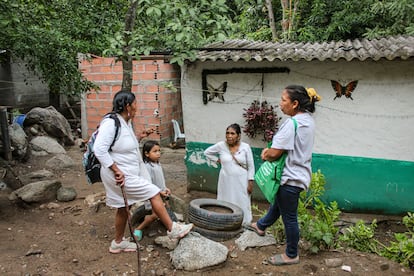
Above all, they want to be consulted on projects that affect their reserves and to secure the backing of other Indigenous peoples for recognition of the “Línea Blanca” (White Line), a proposal they have mapped out with the support of Teje Teje. Following the model of the Línea Negra, the map identifies their sacred sites, but the initiative has yet to receive official recognition. In some areas, the two territories overlap.
What is at stake is the recovery of at least part of what was lost. Before the Spanish conquest, the greater Chimila nation occupied more than 10,810 square miles. Today, according to Rozo, the Ette Ennaka have just 9,840 acres, or about 15 square miles, for some 500 families. Nearly half of that land is preserved in its natural state for environmental protection, leaving far less territory than Colombian guidelines recommend for sustaining family agriculture in the region.
The struggle, however, is far from straightforward. The four Indigenous peoples traditionally associated with the Sierra Nevada argue that the Línea Negra is rooted in their own worldview and spiritual mandates, which do not necessarily coincide with those of other Indigenous groups, although that does not negate the latter’s rights in the region. Speaking by phone, Kogui representative Juangil Garavito said he would not personally oppose the creation of a Línea Blanca, provided it is used “to defend the territory” and not for mining or hydrocarbon activities.
Meanwhile, the arrival of right-wing President Abelardo de la Espriella in August 2026 does not bode well for Indigenous communities. In his first months in office, he has pledged to turn mining and energy into engines of economic growth. During the transition from the previous administration, members of his team also indicated that he would seek to repeal the Indigenous Territorial Entities, a constitutional framework that allows Indigenous governments to administer their territories with a degree of autonomy. Although the mechanism was established in the Colombian Constitution decades ago, the first eight such entities were formally created only under the administration of Gustavo Petro. The presidency was contacted for comment but did not respond.
“How do we protect the Sierra Nevada with mining? That is, how do I keep you alive if I give you cyanide?” asked Arhuaco leader and adviser to Senator Caicedo, Saúl Mendiola.
For the kraanti, however, the current moment may also represent an opportunity. It could, he says, be “the moment of the Ette Ennaka.”
Sign up for our weekly newsletter to get more English-language news coverage from EL PAÍS USA Edition
Abelardo de la Espriella
Colombia’s Peace Tribunal Chief Warns Government Cuts Could Trigger International Criminal Court Scrutiny
In Aeschylus’ Oresteia, Orestes kills his mother to avenge his father, whom his mother had murdered after he sacrificed their daughter. The Furies, goddesses of vengeance, pursue Orestes until Athena establishes a court to put him on trial, breaking the cycle of retribution.
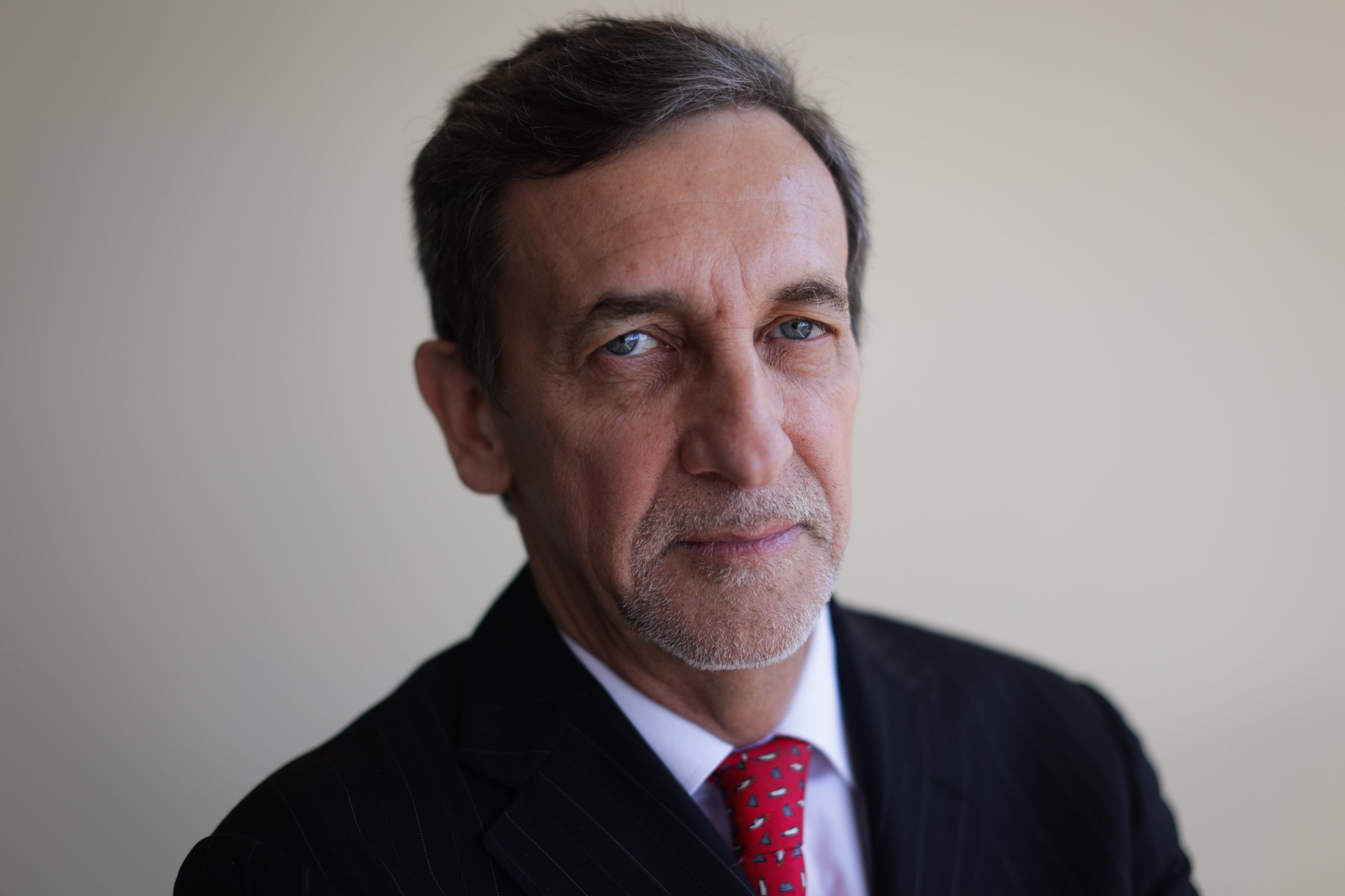
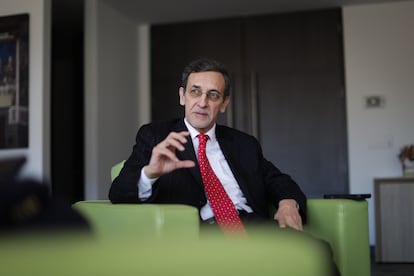
Last week, Danilo Rojas Betancourth, 65, chose this myth for his inaugural speech as president of Colombia’s Special Jurisdiction for Peace (JEP), the tribunal established under the 2016 peace agreement between the Colombian government and the Revolutionary Armed Forces of Colombia (FARC), the now-defunct guerrilla group. For him, this is the ultimate purpose of justice: to put an end to vengeance.
But he takes office at the worst possible moment for the institution. The government of Colombian President Abelardo de la Espriella has cut its budget by 170 billion pesos (around $52 million), forcing the JEP to leave its headquarters, move to remote working and scale back protection for victims, witnesses and judges. Meanwhile, a constitutional reform bill is making its way through Congress that would shut the tribunal down in 2028.
Who are the Furies today? The judge, a former president of Colombia’s Council of State, prefers not to name them. “I wish I knew who was behind it.”
Question. You have been chosen to lead a jurisdiction that the government has effectively marked for closure. Are you here to run the JEP or to manage its winding down?
Answer. Both. The JEP is already beginning to plan for its closure. It has resolved nearly 1,000 amnesty cases involving former guerrilla fighters and granted 1,070 decisions not to prosecute members of the military. By December 15, it will have issued its final indictments in the 11 major cases it is investigating. Next year, those indicted will decide whether or not to acknowledge responsibility. Those who do will face trials resulting in restorative sanctions. Those who do not will go to trial and could face prison sentences of up to 20 years.
Q. Can the JEP function with a budget cut of 170 billion pesos and 85% fewer contracts?
A. It is the most devastating blow the JEP has received in all these years. It forces us to undertake a complete restructuring. We will vacate these premises in March, with remote working becoming the norm and staff working on a rotating basis. We will have to scale back activities that were very important for victims. We have to change strategy.
Q. Did you expect such an aggressive assault?
A. No, of course not. But the JEP has a longstanding legitimacy problem, because the peace agreement lost the referendum. It was much like Brexit: it was close, but it lost. Since then, anything that happens at the JEP is accepted by half the country and resented by the other half.
Q. Is there an element of revenge in this offensive — in the budget cuts and the attempts to undermine the JEP’s legitimacy?
A. I don’t know whether revenge is the right word, but there has been a merciless ad hominem attack: the focus has been more on the person than on the arguments. My colleagues have been subjected to attacks that are false and malicious. The dignity of many people here has been undermined.
Q. Who is behind it?
A. I wish I knew. Some politicians have spoken out about it, but it’s very hard to know who might be behind it.
Q. The budget cuts affect security arrangements for the judges themselves, who are also targets of these attacks, as well as for victims, witnesses and those appearing before the JEP. How many people will lose their protection?
A. We are talking about almost 250 people whose security arrangements will have to be scaled back and reassessed. I don’t think they will be left without protection altogether; that would be very risky. I have repeatedly told the government that it must take responsibility for this.
Q. Almost 10 years on, there have been just two rulings. Was the JEP too ambitious?
A. I acknowledge that it was. In its effort to ensure that no one escaped justice, the JEP took on a broader remit. In my view, it could have been somewhat narrower. But when you reduce the number of people under investigation, you increase the scope for impunity. Our two rulings — on kidnapping and false positives [civilians killed by Colombian military personnel and falsely reported as guerrillas killed in combat] — cover an enormous number of incidents: the kidnapping ruling alone covers 21,000. It is not a ruling on a single case, but on thousands. There have also been decisions that are equivalent in substance to rulings, even if they are not formally called that: the 1,000 amnesties and the 1,070 decisions not to prosecute.
Q. With today’s perspective, what would you have done differently?
A. I would have opened only four cases: the FARC case, the security forces case, the case of civilians involved in the war and the case of state agents such as congresspeople, governors and mayors. Those appearing before the JEP and the victims would not have had to attend different cases, but just one. But the qualitative aspects are harder to measure. This process produces genuine reconciliation. Admitting responsibility is not easy. Doing so in front of a victim, in relation to serious harm inflicted on them, is immensely valuable.
Q. What do you say to those who believe that planting trees or painting a mural is not a punishment enough for crimes such as kidnapping and false positives?
A. The JEP did not invent these sanctions; they were established in the peace agreement. No state can bring every perpetrator of mass harm to justice, so a transitional arrangement has to be agreed: a small number are tried, and they answer for all the crimes. That is what could happen in Ukraine or Gaza when the time comes to establish accountability. Here, the decision was: no prison, but a sanction that restricts freedom and restores lives. What is sometimes so readily dismissed — a mural, a tree-planting project, a mine-clearance operation — is very transformative for the victim, because that is the kind of sanction they asked for.
Q. Do all victims see it that way?
A. No, and that is entirely understandable. There are victims who have every right to say: “What I want is for this person to rot in prison.”
Q. Some of your colleagues argue that the real aim of shortening the JEP’s mandate is to prevent the trials of the 29 military officers who refused to acknowledge their crimes, almost all of them generals. Do you share that view?
A. There is a group of generals who did not admit responsibility, and our small prosecution office has until March 14, 2028, to charge them. I would seriously doubt that this project seeks to obstruct that, because doing so would mean empowering the ordinary justice system and changing everything the peace agreement set out to achieve. And if charges could not be brought because the timeframe had been cut short, the International Criminal Court’s preliminary examination could be reopened. That is a risk.
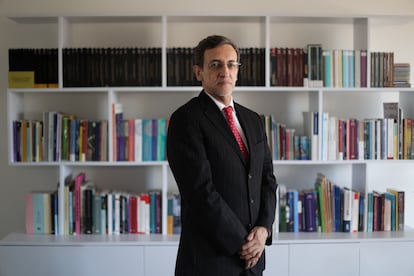
Q. The JEP is constitutionally guaranteed to remain in place until 2033. If Congress passes the bill, will you take the matter to the Constitutional Court?
A. I would hope it would not have to reach the Constitutional Court, that Congress would stop the process. A law that shortens the timeframe and changes the court with jurisdiction over the cases is not consistent with the peace agreement. But if it passes, I am in favor of going to the Constitutional Court.
Q. And would you appeal to international bodies, even if that put a strain on relations with the government?
A. Scrutiny by the Office of the Prosecutor of the International Criminal Court will be unavoidable. The government of Iván Duque signed a cooperation agreement with the ICC prosecutor that expressly states that the JEP’s budget must not be affected and that its legal framework must not be changed. That is precisely what has been done in budgetary terms and what they are now seeking to do in legal terms.
Q. Anyone looking at Colombia today would see anything but the end of a war. Where are we now?
A. The FARC disappeared. There has not been a single attack by that guerrilla movement in 10 years. Dissident groups, deserters and criminal groups such as the Clan del Golfo remain, which have gained ground because the state failed to take control of those areas. It is a new war, but completely different from the one waged by the FARC, which did aspire to seize power.
Q. Will the government’s hard-line approach to bringing armed groups under its authority work?
A. I hope it works. But the bill on the submission of armed groups to justice draws heavily on the restorative justice system, which is our area of expertise. It does not provide for prison sentences behind bars, but rather detention in agricultural colonies, and it sets conditions requiring perpetrators to tell the truth and help locate the disappeared.
Q. Colombia’s ambassador to the United Nations, Mauricio Gaona, said the peace agreement is not a model for the world. Was it necessary to go that far?
A. Gaona was simply doing what his role requires, in line with the government. All the countries that intervened before were generous, including the United States. The discrepancy is glaring.
Q. Are you concerned that, when the JEP closes, its legacy may not be what you hoped for?
A. Over time, it will become clearer. It seems we may need to go through another experience for people to see how well we did things here. The victims were treated very well: not only did they take part in the process, but the psychosocial support provided to people who had suffered so much was also very important. And I am convinced that this model can be useful beyond Colombia. There are heads of state responsible for mass atrocities who will never go to prison. When they operate at that level, a way forward has to be found. And that way forward is: no prison, but they must accept responsibility. Accepting responsibility is not easy.
Sign up for our weekly newsletter to get more English-language news coverage from EL PAÍS USA Edition

How To Get A Tourist Rental Licence In Andalusia (Spain) – Step-By-Step Guide 2025
Spain spends less on healthcare than Europe but patients are paying the price
Woman left with both legs fractured after driver is blinded by sun in Granada


-

 New Developments3 weeks ago
Luxury Villas For Sale, Estepona – ProjectL1
-

 New Developments3 weeks ago
The San Roque Club – Townhouses For Sale
-
costa blanca live music3 weeks ago
Beatles tribute: The Liverpool Band returns to Orihuela Costa
-
countryside4 weeks ago
Rural revival: Five Almeria villages make moving inland easier and more enticing
-

 New Developments3 weeks ago
Stylish 3-Bedroom Apartment With Panoramic Sea Views – Benalmádena
-

 America3 weeks ago
Así Ha Sido La Primera Jornada Del World In Progress 2026: Del Anuncio De Sánchez De Ayudas Para Las Víctimas De Urda A La Reivindicación De Rebeca Grynspan Del Papel De La ONU
-
Eating out in Gibraltar3 weeks ago
Young woman left horrified after Gibraltar restaurant receipt carries shocking racist slur
-
All Saints4 weeks ago
Driving to Andalucía this weekend? DGT warns of extra traffic after train crash