
Argentina
A World Cup In The Middle Of A Climate Crisis: How Will The Heat Affect Your Team?











Argentina
Painting Stolen By The Nazis Surfaces In The Netherlands Thanks To A Man Who Was Unaware He Was A Descendant Of An SS General

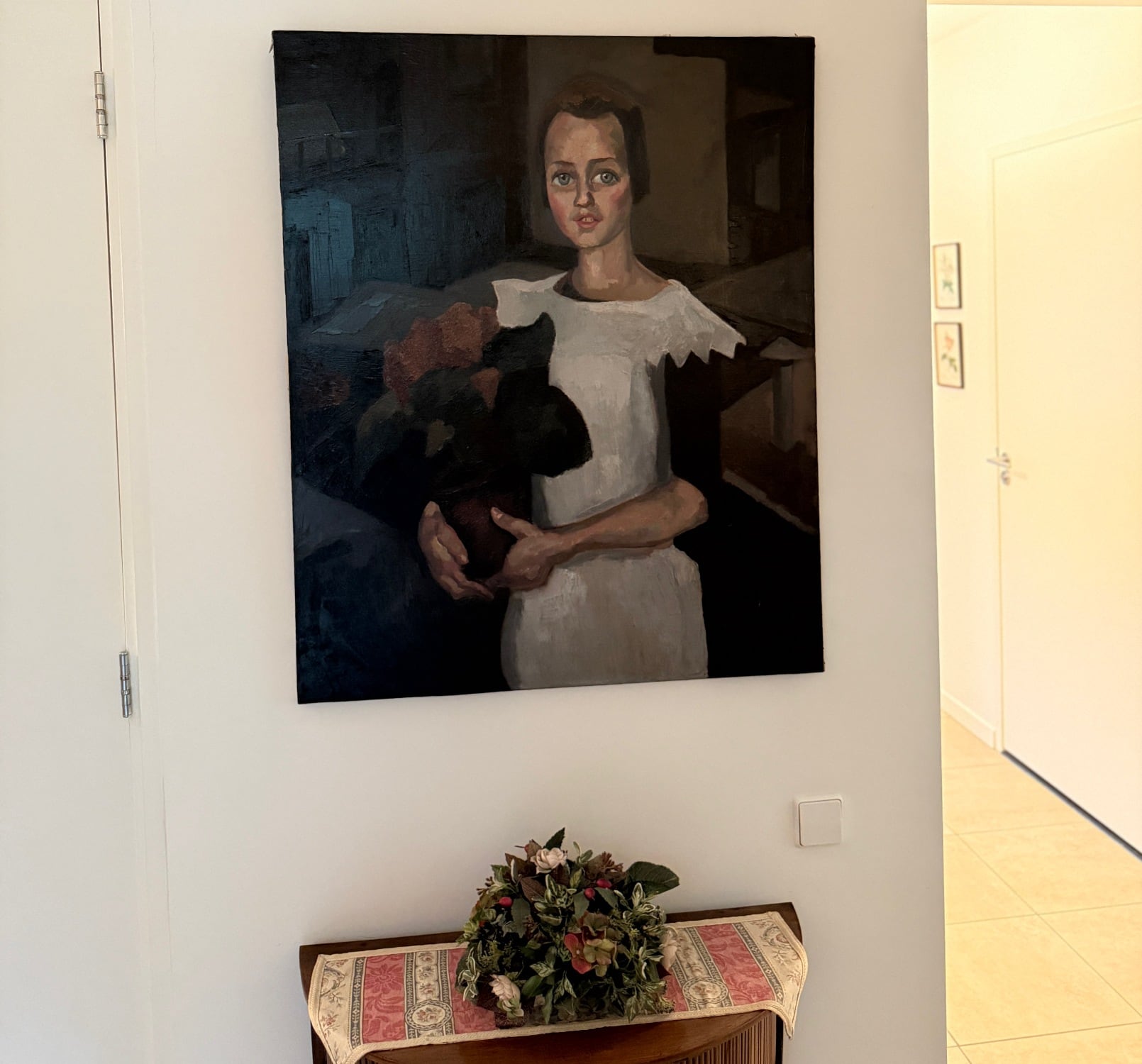
A painting by the artist Toon Kelder (Rotterdam, 1894-1973), titled Portrait of a Young Woman, stolen by the Nazis from the renowned art dealer Jacques Goudstikker, has surfaced at the home of the granddaughter of Hendrik Alexander Seyffardt, a Dutch general who commanded the Netherlands Volunteer Legion during World War II, a Waffen-SS unit that fought on the Eastern Front. A descendant of Seyffardt, unaware of the relationship, made the painting’s existence public through Arthur Brand, nicknamed the “art detective.”
The story of the painting is doubly painful for the relative in question, “whose identity we are keeping anonymous,” says Brand, speaking by phone. On the one hand, there is the profound emotional shock suffered, since “the informant was unaware that his relative had been one of the most prominent Dutch collaborators with the Nazi regime.” In 1943, Hendrik Alexander Seyffardt was shot in his home in Scheveningen — the coastal district of The Hague — by two well-known resistance fighters, Gerrit Kastein and Jan Verleun. The general died the following day, and his two assailants were arrested and later killed by the Nazis. Seyffardt had a son, Hendrik, who also collaborated with the occupiers. Married and divorced in 1944, his wife — the general’s daughter-in-law — with whom he had children, changed her surname, and the family’s past was never discussed again. “That new surname, which we are not revealing, is the one borne by the descendant who contacted me, and the painting has remained with the family since the war,” Brand explains.
The second blow to his informant was the discovery that the painting by Kelder belonged to the collection of Goudstikker, an expert in Old Masters and one of the most renowned art dealers of his time in Amsterdam. His collection was looted and remains one of the most significant claims of art stolen by the Nazis. Hermann Göring, commander-in-chief of the German air force, acquired the entire collection in a forced purchase. “That painting must never be sold because it is looted Jewish art, stolen from Goudstikker. It is unsellable. Don’t tell anyone,” the granddaughter warned the relative who had revealed its existence. Together, they took it down, and on the back, on the frame, was a label with Goudstikker’s name.
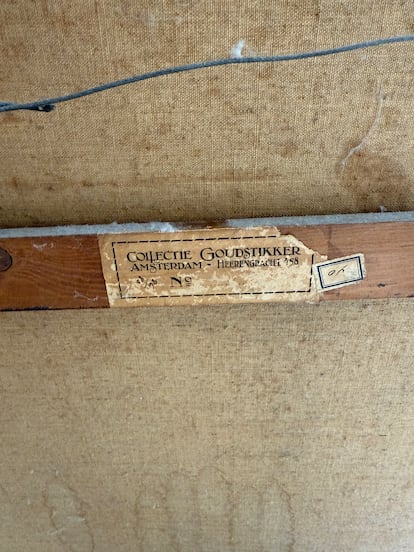
After receiving the call from the intermediary, Brand confirmed that Portrait of a Young Woman was part of the lot looted by the Nazis. It hadn’t been sold independently by Goudstikker. On October 9, 1940, the Frederik Muller auction house in Amsterdam presented a portion of the art dealer’s collection. “A few months earlier, it had passed into Göring’s hands, so that auction is considered looted art,” says Brand. He searched for the signature of the painter Toon Kelder and found three works. “One of them was number 92, the same one that appears on the back of this canvas.” He then contacted the lawyers representing Goudstikker’s heirs. In their response, they indicated that they could “determine that these three works were included in the Frederik Muller auction.” They added that “the number 92, written in chalk on the back of the work, is further proof that it was in the auction.” “We have seen that type of inscription on other pieces included in that sale and which have since been returned,” they replied.
The “art detective” was then certain that the painting had been looted and the dealer’s descendants wanted it back. “I relayed my discovery to the intermediary, who spoke with the family member,” Brand continues. “This person wanted to do everything possible to return the painting and gave permission to make the story public.” He asserts that he “feels a deep shame about the family’s past and is furious about the years of silence.”
From a legal standpoint, the Dutch police cannot confiscate the painting because the statute of limitations has expired. Furthermore, the Restitution Committee, which advises the government on art stolen by the Nazis, lacks the authority to order searches or seizures. It only deals with claims made against the Dutch state and has no jurisdiction over private individuals.

“It’s possible that Seyffardt bought the painting at the Muller auction in 1940. And it’s also possible that it passed into the hands of his son, Hendrik, after his father’s assassination,” Brand reflects. He also considers it likely that Hendrik’s ex-wife “took it after their divorce in 1944, because it now hangs in the home of a daughter: the granddaughter of the general who collaborated with the Nazis.” The expert acknowledges that this has been “the strangest case” of his entire career. He recalls that “thousands of young men lost their lives under Seyffardt’s command, and after his assassination, dozens of innocent civilians perished in retaliation.” At the end of the conversation, he emphasizes that while the family “bears no personal guilt for these crimes, they had the opportunity to return the painting.” “They chose not to,” he concludes.
Another piece from the Goudstikker collection, Portrait of a Lady, from around 1710 and attributed to the Italian artist Giuseppe Vittore Ghislandi, surfaced in 2025 in a house in Mar del Plata, Argentina. It was spotted in a real estate advertisement. Argentine authorities acted swiftly, and the family handed over the painting in September 2025. It had arrived there in the possession of Friedrich Kagdien, a financial advisor to Göring, who fled to Argentina after the war and lived there until his death.
Sign up for our weekly newsletter to get more English-language news coverage from EL PAÍS USA Edition
America
Massive Protest Against Cuts To Public Universities In Argentina: ‘It Is Our Future As A Society, As A People’

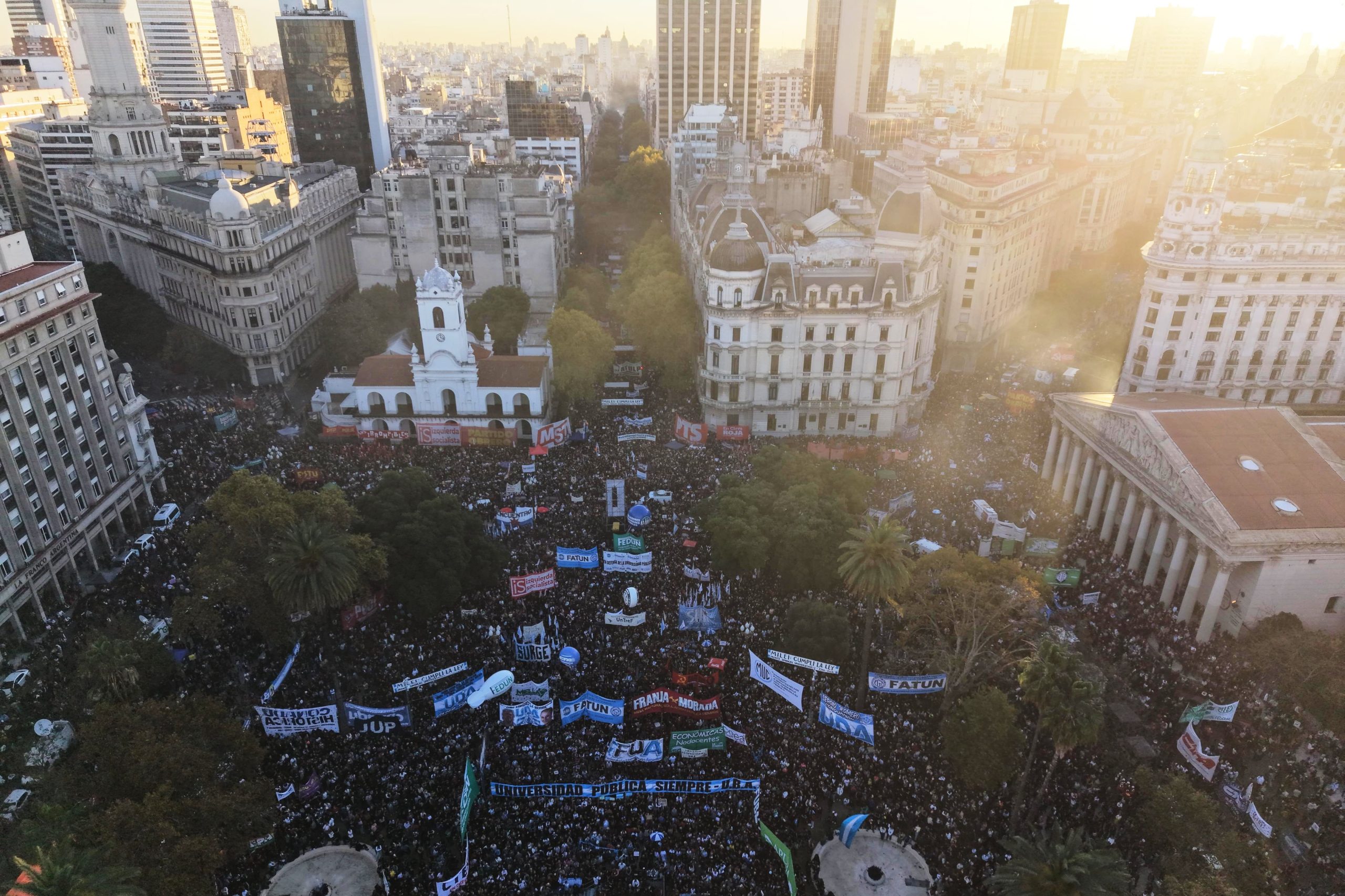
Enormous banners erected across Plaza de Mayo and the surrounding avenues in downtown Buenos Aires repeated the same slogan: “Milei, comply with the law.” Hundreds of thousands of people chanted it this Tuesday as they marched to demand that Argentina’s hardline government halt its cuts to public universities and release the funds approved by Congress. “The funding of the national university system is in a critical state, and the main cause is that the national government is failing to comply with the basic democratic and constitutional rule: to uphold the university funding law, which establishes a minimum level of resources that ensures the normal functioning of the system,” denounced academic authorities, faculty members and students in a joint statement read at the main protest event. The administration of Javier Milei labeled the federal university march an “opposition act” and reiterated that it will not release the requested funds.
Organized by the universities themselves, teachers’ unions, and student federations, the mobilization drew a massive crowd in the Argentine capital and was replicated in numerous cities across the country. According to the organizers, more than 1.5 million people demonstrated nationwide.

From midday onwards, columns of educators, students, and university employees filled the main streets of downtown Buenos Aires. The rhythm of drums could be heard from various points as they marched towards the historic Plaza de Mayo. Teenagers and adults carried flags identifying their universities, unions, or political groups from across a spectrum ranging from the center to the left.
“Without public universities, there is no future,” warned one of the many signs displayed by the protesters. “I defend public universities,” declared another. “The worst enemy of a corrupt government is an educated population.” And also: “Freedom without education is a lie.” Many posters targeted Milei’s Chief of Staff, Manuel Adorni, who is under investigation for alleged illicit enrichment: “How many teachers’ salaries were used to pay for this idiot’s vacation?” asked another sign illustrated with the high-ranking official’s face.
Since Milei took office in 2023, budget allocations to universities have suffered a cumulative drop of 45.6%, according to the National Interuniversity Council (CIN). During the same period, the salaries of professors and other employees at state universities have lost more than a third of their purchasing power—receiving increases of 147% compared to an inflation rate of 293%. The budget prepared by the executive branch for this year allocates 4.8 trillion pesos (approximately US$3.4 billion) to universities, compared to the 7.2 trillion pesos required by these institutions as “the bare minimum to maintain current operations.” This stark contrast in figures is at the heart of the conflict between the academic community and the far-right government.
“All we want is for the law to be upheld,” says Marisa Corral, a retired teacher and now, at 68, a literature student at the University of Buenos Aires, as she walks toward the plaza. “The president is too focused on the economy; he should read other things,” she suggests. “I’m here to defend our public university, which isn’t a privilege but a right of all Argentinians. And this government wants to destroy it,” affirms Marcelo, 24, a student at the University of Quilmes. Sitting on a set of steps, a few meters from the Casa Rosada (the seat of government), Agustina explains that she’s neither a student nor a teacher, but felt compelled to participate in the march. “The university is our future as a society, as a people,” she says. Next to her, Sabrina, a 29-year-old teacher, laments that governments “always cut funding for public education.”

The main demand of the academic community is that the executive comply with the university funding law. The law, passed last year by Congress with broad support from the opposition, simply updates the sector’s budgets to reflect the situation in effect at the end of 2023. Milei vetoed it, but the legislators overruled the veto. The president again attempted to repeal the law in the 2026 budget, but Parliament once more voted against it. Nevertheless, Milei failed to comply with the law, arguing that it would jeopardize the fiscal surplus generated by his political maneuvering. The universities have taken legal action. In two instances, the courts have issued injunctions ordering the government to begin releasing the funds, but the executive is resisting and has appealed to the Supreme Court.
Before Tuesday’s massive protest, the government had announced its refusal to accept the demands and focused on accusing the universities of “politicizing the protest” and resisting audits of their use of funds. “The only law we will comply with is the budget law,” emphasized the Undersecretary of University Policies, Alejandro Alvarez, who described the march as “an opposition act.” The Milei administration official criticized the universities because, he asserted, they have “one of the lowest graduation rates in the region” and because they do not charge tuition to international students.
Sign up for our weekly newsletter to get more English-language news coverage from EL PAÍS USA Edition


Lightning Bolt Forces EasyJet Flight Emergency Landing

PinkPantheress, Gen Z’s Most Unmistakably British Star: Between Classic Tartan And A Chess Player’s Mind

The Seven Trackers Who Traveled To Mexico To Search For Dozens Of Missing Migrants


-

 New Developments4 weeks ago
How To Get A Tourist Rental Licence In Andalusia (Spain) – Step-By-Step Guide 2025
-

 Uncategorized4 weeks ago
Max Verstappen Nurburgring LIVE: NLS5 Schedule, start times and free live streams
-

 Competiciones2 weeks ago
E
-
Costa Blanca South4 weeks ago
Fire forces evacuation of six-storey building in Torrevieja
-
Costa del Sol3 weeks ago
Why home care is the new gold standard for living well in Spain
-

 Uncategorized4 weeks ago
Lando Norris unleashes F1 2026 criticism after Nurburgring test
-
Bullfighter injured3 weeks ago
Second serious injury in Spain’s La Maestranza bullring reignites controversy
-
Illegal building4 weeks ago
Mallorca’s building amnesty: A route out of legal limbo for rustic homes