Connect with us

%

Couple Fined €1,200 In Barcelona Despite Never Having Driven There

Published

on

couple-fined-e1,200-in-barcelona-despite-never-having-driven-there

The first three penalties were successfully challenged and withdrawn. Photo credit: Alen Martisol/Shutterstock

A trip to the postbox has become a source of anxiety for a retired couple in Galicia after Barcelona City Council repeatedly accused them of driving illegally in the Catalan capital, despite their car never having left their home province. Carmen and José, both 78, have received six traffic fines totalling €1,200 for alleged journeys they insist they never made. The first penalty arrived in September 2024. Since then, five more have followed, each demanding €200 for entering Barcelona’s Low Emission Zone (ZBE) without the necessary environmental authorisation.

Although all six fines have now been cancelled, the couple are still worried that another could arrive at any time. “We are desperate,” José explained, describing how the situation has left them bewildered. The couple live in Bueu, in Pontevedra, and say their Audi A4, which is more than 20 years old, is only used for getting around their local area.

Six fines for journeys they never made

The penalties relate to three different locations in Barcelona: three alleged journeys along Travessera de les Corts, two on Avenida de Madrid and another on Avenida Paral·lel. José says the car does not leave Pontevedra province, making the accusations particularly difficult for the couple to understand. They initially had no idea how to challenge the fines and turned to a local gestoría in Bueu for help.

Francisco José Domínguez, who took on their case, began examining the evidence supplied with the penalty notices. One photograph appeared to offer a possible explanation for the repeated mistakes. According to Domínguez, the image shows what appears to be a tractor or trailer, rather than the couple’s Audi. Part of the registration plate is difficult to make out, and he suspects this may have led to the wrong vehicle being identified.

A registration plate may hold the answer

There is a small but important difference between Spanish registration plates for ordinary cars and those used on agricultural tractors. Both follow a similar combination of letters and numbers, but standard cars have the distinctive blue strip bearing the European Union flag and the letter E. Domínguez believes that a partially obscured letter could have caused the automatic recognition system to mistake another vehicle’s registration for the one belonging to Carmen and José. The gestoría does not believe the couple have been victims of identity theft. Instead, it suspects an error in the identification process, although the exact cause has not been established.

The first three penalties were successfully challenged and withdrawn by Barcelona City Council after the gestoría submitted appeals, including a specific request for the registration numbers to be checked. However, the matter did not end there. This year, the couple received another three fines for the same alleged offences, bringing the total to six and leaving them facing the prospect of having to challenge the same mistake all over again.

Barcelona admits a possible camera error

Barcelona City Council has attributed the problem to what it describes as a possible ‘one-off error’ in the reading of the registration plate. The city’s Low Emission Zone enforcement system uses cameras to photograph vehicles entering restricted areas. The images are then sent to the Barcelona Metropolitan Area (AMB), which checks whether the vehicle has permission to circulate or qualifies for an exemption. If the system identifies a vehicle without the required authorisation, the case is passed to the Institut Municipal d’Hisenda, which processes the penalty and sends the notification to the registered owner.

In this case, the council’s explanation points to an error during the initial identification process. However, the fact that three further fines were issued after the first batch had already been cancelled has raised questions about why the problem was not identified and corrected earlier. The council also maintains that the vehicle shown in the photograph cannot be a tractor, as tractors are not permitted to use the roads where the alleged offences took place.

€150 out of pocket despite winning their appeals

Although Carmen and José have escaped the €1,200 in penalties, fighting the accusations has not been entirely free. Their gestoría requested €150 in compensation from Barcelona City Council to cover the costs of preparing and submitting the paperwork needed to challenge the fines. That request was rejected.

The couple have therefore been left with the expense and frustration of defending themselves against six alleged traffic offences, none of which they say they committed. Domínguez has also questioned how the council could continue issuing penalties after cancelling the original three without identifying what had gone wrong.

The real driver may still be getting away with it

He described the situation as almost unbelievable, particularly given that the same registration-plate problem appeared to have continued unnoticed. The six fines have now been withdrawn, but there is still one question hanging over the case: who is actually driving the vehicle whose registration appears to have been confused with the couple’s Audi?

While Carmen and José have spent months dealing with fines for journeys they say they never made, the driver responsible for the Barcelona offences may still be going about their business without knowing anything about the confusion. As Domínguez pointed out, the real offender is potentially still driving around without a clue that someone else has been receiving their fines.

%

San Miguel De Salinas Charity Curry Lunch

Published

on

san-miguel-de-salinas-charity-curry-lunch

A tasty lunch supports abandoned animals. Credit: Lakshitha5991 / Shutterstock.com.

Curry lovers can enjoy a Friday lunch while helping hundreds of abandoned animals at a charity fundraiser in San Miguel de Salinas on December 4. Golden Curry Indian Restaurant is hosting a special meal in aid of Finca La Castellana Animal Welfare Centre, with part of every lunch payment going directly towards feeding rescued animals.

December 4: Golden Curry hosts charity lunch for Finca La Castellana

Golden Curry Indian Restaurant will welcome diners at 1:30 PM on Friday, December 4, for a fundraising lunch supporting Finca La Castellana Animal Welfare Centre.

The rescue centre cares for around 300 abandoned animals, providing food, shelter and ongoing care.

With so many animals depending on the centre, feeding them represents a substantial monthly expense, making community fundraising events an important source of support.

The charity lunch costs €14.95 per person, with €5 from every meal going directly towards feeding the rescued animals.

Friends and groups are welcome to attend, offering an opportunity to enjoy a meal together while supporting a local animal welfare cause.

Indian curry lunch includes food and a drink for €14.95

Diners will receive a poppadom and pickle tray, followed by a choice of chicken curry served with rice or naan bread.

The price also includes a small beer, glass of wine or soft drink.

Of the €14.95 paid by each diner, €5 will be donated to Finca La Castellana, helping the centre meet its ongoing food costs.

There will also be a raffle during the lunch to raise additional funds for the rescue centre.

The event combines a Friday afternoon meal with practical support for animals that have been abandoned and are now receiving care at the centre.

For Finca La Castellana, contributions from events such as this help provide food for the many dogs and other rescued animals relying on its services.

How to book the San Miguel de Salinas charity lunch

The fundraiser takes place at Golden Curry Indian Restaurant, Calle Antonio Machado, San Miguel de Salinas, on Friday, December 4, at 1:30 PM.

Tables should be reserved in advance, particularly for friends or groups planning to attend together.

To book, contact Jen by WhatsApp on (+34) 744 640 011.

Continue Reading

%

EasyJet Flight Emergency Return To Edinburgh

Published

on

easyjet-flight-emergency-return-to-edinburgh

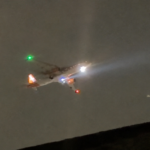
Overflying EasyJet flight appears to have blackened right engine. Credit: @jenzzo X

An easyJet flight bound for London Gatwick was forced to return to Edinburgh Airport after a loud bang was heard shortly after take-off on Thursday, November 26.

Flight U2816, operated by an Airbus A321neo, declared an emergency after reportedly experiencing an engine problem, with emergency crews waiting on the ground for its return.

The aircraft had departed Edinburgh at around 8.46pm, according to flight-tracking data. Reports say the bang was heard shortly after take-off, with residents in the Scottish capital describing a loud explosion-like noise overhead. Passengers and people living beneath the flight path were left concerned as the aircraft turned back towards the airport.https://x.com/flightdrama/status/2126065820446916726?a=J53eRHoMVIlJqnlTkak&s=20

What happened to the EasyJet flight?

The aircraft, registered as G-UZMC, was travelling from Edinburgh to London Gatwick when the incident occurred. According to aviation reports, the pilots declared a general emergency, transmitting the international emergency code 7700 to air traffic control.

The aircraft was reportedly flying at around 5,000 feet while the crew dealt with the problem. Reports also suggest the left engine was shut down after an engine warning. An engine stall or compressor surge has been suggested as a possible explanation for the bang, although the exact cause has not been confirmed.

Footage shows the easyJet Airbus A321neo on its final approach to Edinburgh Airport this evening following a suspected engine failure shortly after takeoff.

The aircraft successfully landed 53 minutes after departure.

🎥 Credit: @jenzzo on X https://t.co/KiDh9EWSiH

— Flightdrama (@flightdrama) November 26, 2026

A compressor surge can occur when airflow through a jet engine becomes disrupted, sometimes producing a loud bang. However, there has been no official confirmation that this was the cause of Thursday’s incident.

Emergency crews wait at Edinburgh Airport

Emergency services were placed on standby as the aircraft made its way back to Edinburgh. Police and firefighters attended the airport, with several roads reportedly closed as a precaution while the aircraft prepared to land. According to The Scottish Sun’s report, the aircraft landed safely back at Edinburgh Airport after circling the area.

There have been no confirmed reports of injuries among passengers or crew, but plenty of shocked travellers.

🚨Ahora un Airbus A321 de EasyJet declarado en emergencia apenas despegar

El vuelo operaba la ruta Edimburgo a Londres y se encuentra realizando maniobras para volver a aterrizar https://t.co/M3kkEyE5DM

— SOLO DE IDA✈️ (@solodeida) November 26, 2026

What happens after an aircraft engine failure?

Commercial passenger aircraft are designed to continue flying and land safely following the loss of one engine. Pilots receive extensive training for engine-related emergencies, including shutting down a faulty engine and returning to an airport when required.

The aircraft is expected to undergo technical inspections before returning to service. The cause of the incident and the full details of the emergency response have not yet been confirmed.

Passengers travelling from Edinburgh Airport are advised to check directly with their airline for any disruption to their onward travel. The incident comes as another reminder of the importance of aircraft safety procedures, with the crew bringing the plane back to the airport without any confirmed injuries.

Continue Reading

%

Expensive Pet Travel Certificates Could Be Scrapped As New UK-EU Rules Take Shape

Published

on

expensive-pet-travel-certificates-could-be-scrapped-as-new-uk-eu-rules-take-shape

Eligible owners will be able to obtain a multi-use pet passport instead. Photo credit: yar-andy/Shutterstock

Anyone planning to move to Spain with a dog or cat, or regularly travelling between Britain and the continent with a pet, could soon face a smaller bill at the vet. From 1 March 2028, British residents will be able to use a multi-use pet passport for trips to Spain and other EU countries, ending the need to buy a new Animal Health Certificate for every journey.

The change is part of a new UK-EU agreement on animal and plant health rules. It will help people who split their time between Britain and Spain, or regularly holiday in other European countries. 

What will change for pet owners?

Since Brexit, people living in Great Britain have generally needed an Animal Health Certificate (AHC) each time they take a dog, cat or ferret into the EU. The document must be issued by an official vet within 10 days of the animal entering the EU.

The current certificate has a short window for entering the EU: it must be issued no more than 10 days before arrival. Once the pet has entered, it can be used for further travel within the EU and for returning to Great Britain for up to six months, provided the rabies vaccination remains valid. But it is still a single-use document for a new trip from Britain.  Depending on the veterinary practice and location, an AHC currently costs between £90 and £250. Several trips a year can therefore mean hundreds of pounds in certificate fees alone.

Under the new arrangements, eligible owners will be able to obtain a multi-use pet passport instead. It will cover repeated travel to EU countries, removing the need to arrange and pay for a fresh AHC before every separate trip. It will cover dogs, cats, ferrets and assistance dogs, reducing repeated veterinary appointments as well as paperwork. 

Spain, France and Portugal trips

For people considering a move to Spain, it could simplify trips back to visit family. It may also help those who keep homes in both countries and travel between them regularly. The passport will cover travel across the EU, including France, Portugal, Germany and the Netherlands.

There is an important distinction for people relocating permanently. The new scheme is designed for pet owners resident in Great Britain travelling to the EU. People who move their main home to Spain may fall under the EU pet passport rules as residents there, rather than relying on the new British scheme. The Government has yet to publish the detailed application process. 

Horse owners will also benefit from separate changes

The agreement also includes new arrangements for horses and other equines, which could make a considerable difference to people who compete, breed or keep horses in Britain and Spain. At present, taking a horse from Great Britain to an EU country involves veterinary certification and health checks, with Export Health Certificates potentially costing up to £200 per journey.

The new arrangements are intended to replace these with Intra-Trade Animal Health Certificates (ITAHCs) for eligible movements, reducing duplicated paperwork and the costs associated with repeated journeys.  This could benefit British riders competing in Spain, Spanish-based competitors travelling to Britain, breeders and equestrian businesses transporting horses between countries.

It may also make it easier for owners who move horses between the UK and countries such as France, Portugal, Germany and the Netherlands. The changes will also bring new requirements for equine premises, including registration, identification, movement records and biosecurity. This means yards, riding schools, studs and other establishments may need to prepare for updated responsibilities. 

What happens before 2028?

Nothing changes immediately. The new passports cannot be issued yet, and the Government says further information about how to apply will be published in 2027. Until the scheme starts on 1 March 2028, people travelling from Great Britain to an EU country must continue to obtain an Animal Health Certificate. Owners will still need to meet health requirements, including microchipping and a valid rabies vaccination. A pet that needs its first rabies vaccination may also have to wait before it can travel. 

The rules follow changes introduced in April 2026, when British residents lost the right to use EU pet passports to enter the EU, even if they had a holiday home there.  For anyone weighing up a move to Spain with a four-legged family member, or already making regular journeys across the Channel, the return of multi-use passports is a welcome change. It will not remove every travel requirement, but it should mean one less expensive veterinary bill every time they set off.

Continue Reading

Trending

Copyright © 2017 Spanish Property & News