Connect with us

%

Spain Faces Fresh Doctor Strikes As Patients Warned Of More Appointment Delays

Published

on

spain-faces-fresh-doctor-strikes-as-patients-warned-of-more-appointment-delays

For residents in Spain, the main effect is the continued disruption of planned healthcare. Photo credit: OSCAR GONZALEZ FUENTES/Shutterstock

Patients across Spain could face further disruption to consultations, tests and non urgent procedures later this month.

What a fifth strike means for the healthcare system

A fifth strike in the same dispute reflects the continuation of a labour conflict that has already been repeated for months. In practice, it involves a new partial or total interruption of healthcare activity in affected centres during strike days, with a particular impact on outpatient consultations, scheduled procedures and non-urgent diagnostic tests. In previous calls, this type of strike has led to the suspension of thousands of appointments across the country and has forced health services to reorganise schedules in order to prioritise emergencies and critical patients.

Although minimum service levels are maintained, routine activity is reduced, which leads to a build-up of delayed work afterwards. For residents in Spain, the main effect is the continued disruption of planned healthcare. Each new call adds additional delays to existing waiting lists, especially in high-demand specialities or hospitals with lower capacity to reschedule.

Impact on patients with appointments cancelled in previous strikes

People who have already experienced cancellations in previous strikes are among those most exposed to the cumulative effects of the conflict. In many cases, cancelled appointments are not recovered in the same week or even the same month, but are rescheduled depending on the availability of each service. When strikes are repeated, a cumulative effect occurs: rescheduled appointments may be affected again, leading to new cancellations or additional delays.

This is particularly relevant for follow-up consultations, diagnostic tests and non-urgent surgery, where rescheduling depends on hospital capacity. Regional health systems usually prioritise urgent care during strike days, which shifts routine activity to later dates. This can extend waiting times even for patients who were already awaiting a rescheduled appointment.

Effects on those waiting for a first appointment or diagnosis

For patients who have not yet been seen, the repetition of strikes can increase waiting times. Waiting lists are affected by the temporary reduction in activity, delaying both first specialist consultations and diagnostic tests required to begin treatment. In some cases, delays may affect clinical follow-up, particularly in conditions requiring regular monitoring.

However, health services maintain urgent and priority care, meaning serious or potentially unstable cases continue to be treated during strike periods. The repetition of labour disputes also forces healthcare centres to reorganise resources constantly, which may lead to changes in medical schedules and appointment availability in the weeks following each strike.

Dispute over the Statute Framework reform

Medical unions have accused the Ministry of Health of not having presented sufficient proposals to advance negotiations in the dispute opened by the reform of the Statute Framework, which has led them to maintain the call for a new strike throughout Spain scheduled for 15 to 19 June, the fifth so far this year.

The strike committee, made up of the main organisations in the sector, including CESM, SMA, Metges de Catalunya, AMYTS, SME and O’MEGA, states that the meeting held with the ministry did not produce any progress and has criticised the “lack of capacity and willingness” of the department to unblock the situation, according to the statement reported by trade unions.

The dispute is part of negotiations on the reform of the Statute Framework, the set of rules governing working conditions for healthcare staff in the National Health System. The unions are calling for a specific statute for doctors and consultants, their own negotiating framework, and a review of working hours, especially in relation to on-call duties.

The Ministry of Health, according to reports, argues that it has put forward improvements within the draft text and maintains that part of the demands depend on the autonomous communities or go beyond its direct powers.

The dispute remains unresolved

The unions maintain that the negotiation process has not advanced sufficiently to call off the planned strike, while the Ministry of Health insists that dialogue remains open within the institutional framework.

With the call for a fifth strike, the dispute enters a phase of continuity that maintains uncertainty over the development of healthcare activity in the coming months and over the cumulative impact on routine healthcare provision.

%

Beachgoers Face Painful Sting Risk As Venomous Fish Spreads Across Spain

Published

on

beachgoers-face-painful-sting-risk-as-venomous-fish-spreads-across-spain

The sting of a weever fish can be extremely painful. Photo credit: Jesus Cobaleda/Shutterstock

Spanish coastal authorities are warning beachgoers about the seasonal presence of the weever fish (pez araña), a small but venomous species that can cause intense pain if stepped on in shallow water. The alert has recently been highlighted in Huelva, in western Andalucía, but experts say the fish can be found along much of Spain’s coastline, both in the Atlantic and the Mediterranean.

The warning has renewed attention on a risk that often increases during the warmer months, when more people enter shallow waters and the fish move closer to shore to bury themselves in sand.

Huelva alert highlights seasonal beach risk

In Huelva, local beach users were recently advised to be cautious after sightings of weever fish near the shoreline. The species is known to hide just beneath the sand in very shallow water, making it difficult to see and easy to step on accidentally.

Authorities in the area have reminded swimmers and walkers to avoid dragging their feet through the seabed and to be particularly careful in calm, sandy stretches close to the shore, where the fish are more likely to be present.

Although the alert has been reported locally in Huelva, marine specialists stress that this is not an isolated issue. The species is widely distributed along Spanish coasts, and similar warnings are issued periodically in other regions depending on conditions at sea.

Where the fish is found in spain

The weever fish is common in both Atlantic and Mediterranean waters surrounding Spain. On the Atlantic side, it can be found along Galicia, Asturias, Cantabria, the Basque Country and parts of Andalucía. On the Mediterranean coast, sightings are reported in Catalonia, the Valencian Community, Murcia and the Balearic Islands.

It tends to favour shallow sandy seabeds, often in water shallow enough for people to stand or wade in. This habitat preference is what brings it into contact with swimmers, especially during summer when beaches are busiest.

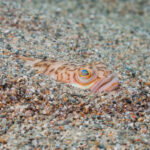
Marine biologists note that the fish buries itself almost completely under the sand, leaving only its eyes and the tips of its dorsal spines exposed. These spines contain venom used for defence, which is released when pressure is applied, such as when someone steps on it.

What makes the sting dangerous

The sting of a weever fish is not usually life-threatening, but it can be extremely painful. The venom causes immediate sharp pain at the site of the injury, which can spread quickly through the affected limb.

Common symptoms include:

  • severe and sudden pain 
  • swelling and redness 
  • dizziness or nausea in some cases 
  • occasional vomiting or fainting due to pain response 

While serious complications are rare, medical attention may be required if the reaction is severe or if the person is vulnerable due to allergies or other health conditions.

The main concern for authorities is not mortality risk but the intensity of the pain and the speed at which symptoms develop, which can cause distress in shallow water environments.

What residents and tourists should do

Beach users are being advised to take simple precautions to reduce the risk of injury. These include avoiding walking barefoot in shallow sandy areas where the fish may be buried and instead wearing protective footwear such as water shoes.

Swimmers are also encouraged to shuffle their feet rather than step normally when entering the sea, as this can disturb fish in the sand and encourage them to move away.

If someone is stung, the recommended first response is to:

  • leave the water safely and avoid further pressure on the affected area 
  • rinse the wound with seawater (not freshwater initially, as this can worsen pain) 
  • apply heat to the affected area, typically by immersing it in hot water as tolerated 
  • seek medical assistance if pain is severe or does not improve 

Heat is commonly advised because the venom is heat-sensitive, and warm water can help reduce its effects.

Wider seasonal pattern across spain

Experts say incidents involving weever fish tend to rise during late spring and summer. Warmer sea temperatures, calmer waters and increased beach activity all contribute to a higher likelihood of encounters.

Local authorities across Spain do not treat the fish as a rare or emerging threat, but rather as a known seasonal hazard. As a result, warnings are often issued when cases are reported in specific areas or when conditions suggest a higher risk.

In tourist-heavy regions, these reminders are considered particularly important, as many visitors may be unaware of the fish or unfamiliar with how to respond to a sting.

Awareness as the key prevention measure

Officials emphasise that the risk can be significantly reduced through awareness and simple behaviour changes. Most injuries occur when people unknowingly step on the fish in shallow, sandy water.

For this reason, coastal safety campaigns often focus on education rather than restriction, encouraging beachgoers to understand where the fish live and how to avoid accidental contact.

While the weever fish remains a small and largely hidden presence beneath Spain’s coastal waters, its sting is a reminder that even familiar beaches can carry seasonal risks that are not immediately visible from the surface.

Continue Reading

%

Puerto De Mazarron Turns Into A Paradise For Dog Lovers During The National Dog Show

Published

on

puerto-de-mazarron-turns-into-a-paradise-for-dog-lovers-during-the-national-dog-show

Mazarron dog show draws top trainers and rare breeds. Photo Credit: Sociedad Canina de Murcia

Once more, Puerto de Mazarron has become the centre of attention for dog lovers and dog breeding enthusiasts as it hosted the 14th edition of the National Dog Show, an event that becomes more popular with each passing year and attracted participants, breeders, and of course, pups with prowess to the charming coastal municipality.

More than 100 professional pups take the stage in Mazarron

The event attracted trainers of more than 100 dogs of various breeds, including extremely rare ones. Visitors who attended the event were treated to a unique opportunity to see the wide range of appearances and skills of the talented dogs, and both experts and amateurs alike enjoyed the show.

The dogs were judged by experts on various categories and evaluations, and trainers also got an opportunity to register their animals’ pedigree and confirm their breed. The event was a mix of both dog show professionalism and public spectacle, so seasoned experts and newcomers could enjoy the show in equal measure.

A prestigious competition to showcase world-class canines

The competition also boasts significant prestige; it was an official qualifying event for the Championship of the Region of Murcia, drawing high-level trainers and world-class canines to the idyllic shores of Puerto de Mazarron. Many of the dogs seen in the competition are set to compete on an international level.

A dog-lover atmosphere during a beautiful afternoon in Puerto de Mazarron

But what truly defined the day was the lively and family-friendly atmosphere among the dog lovers at the show. Spectators of all ages gathered to admire the adorable, striking, and professional pups in an event that combined leisure and community spirit, all in a seaside atmosphere that made for a wonderful afternoon.

With the event, Puerto de Mazarron has once more established itself as a hub for major, world-class competitions on the Costa Calida, and the XIV National Dog Show stands out as a celebration of both canine beauty and the enduring bond between trainers and their incredible animals.

Continue Reading

%

Benalmadena Marina €3.5 Million Transformation

Published

on

benalmadena-marina-e3.5-million-transformation

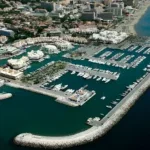
Benalmadena Marina as it is now. Credit: Junta

Benalmadena Marina has opened bidding for the full redevelopment of its nautical centre. Council leaders want to improve links between the port and the town while turning the site into a better place for strolling and sea views. The port first opened in 1987 and has been due an upgrade for many years.

Investment details and timeline

Project costs will reach almost €3.5 million, and works should take around 13 months once a contractor is chosen. Offers stay open until June 25 through the standard public contracting process. Earlier board decisions backed even bigger infrastructure upgrades worth more than €3.6 million but were toned down a little.

New viewing plaza and mobility improvements

Designers plan to turn the roof of the main nautical centre building into an elevated public viewing gallery. This space will connect directly to the seafront promenade so people can walk across the structure and enjoy clear views over the docks and water. Surface parking near the centre will disappear to give over more space to pedestrian areas and extend the promenade route without interruption.

Building renovations and access improvements

A new, much more accessible ramp will link street level to the viewing gallery through landscaped ground with a lift providing step-free entry to all levels. Main tasks cover renewal of the building envelope, replacement of external windows and doors, roof waterproofing and updates to electrical, air conditioning and drainage systems. Interior spaces will be reorganised for better use. The auditorium will receive a major upgrade with a new entrance, flexible systems and improved facilities for cultural and social events. Old changing rooms will be removed while fresh service modules are built in several dock areas. Light pergolas and sail-style covers will create shade and visual links across the buildings.

Wider upgrades and next steps

Board members also approved earlier projects to move electrical transformers in the Malapesquera area for €650,000, install new access control barriers for €75,000 and carry out containment works near the harbour entrance for €95,000 euros. These steps hope to improve electrical reliability, security and protection against storms. Planners want every resident and visitor to reach the new plaza and full port area without barriers. The changes should make the nautical centre a more open destination centred on strolling and sea views.

Continue Reading

Trending

Copyright © 2017 Spanish Property & News