Connect with us

%

Dog Owners Risk €50,000 Fines In Spain For Exposing Pets To Scorching Summer Temperatures

Published

on

dog-owners-risk-e50,000-fines-in-spain-for-exposing-pets-to-scorching-summer-temperatures

If a dog begins showing signs of heatstroke it should be moved immediately to a shaded or cool location. Photo credit: Ezzolo/Shutterstock

As temperatures begin to soar across Spain, pet owners are being urged to take extra precautions when exercising their dogs. Under Spain’s Animal Welfare Law, owners have a legal responsibility to protect animals from conditions that could cause suffering or injury, with serious breaches carrying fines of up to €50,000.

The warning comes as veterinarians continue to highlight the dangers of heatstroke, dehydration and burns caused by hot pavements during the summer months. While many residents adjust their routines during periods of extreme heat, experts warn that dogs remain particularly vulnerable because they are less able to regulate their body temperature than humans.

Legal responsibility and potential penalties

Authorities may consider it a breach of an owner’s duty of care if a dog suffers harm as a result of being exposed to dangerous conditions, particularly if the animal develops heatstroke, dehydration or injuries caused by hot surfaces.

Under Spain’s animal welfare framework, serious infringements can carry fines ranging from €10,001 to €50,000. The severity of any penalty depends on the circumstances and the impact on the animal’s wellbeing.

Why hot weather can be dangerous for dogs

Unlike humans, dogs do not cool themselves efficiently through sweating. Instead, they primarily rely on panting and limited sweating through their paw pads.

During periods of extreme heat, dogs can quickly become overheated, especially when exercising, walking on hot surfaces or spending prolonged periods in direct sunlight. Certain breeds, including Bulldogs, Pugs and French Bulldogs, are particularly vulnerable because their shortened airways make cooling themselves more difficult.

Owners should also ensure that any muzzle used does not prevent panting, as this can increase the risk of overheating, particularly during hot weather.

Older dogs, puppies and animals with underlying health conditions also face an increased risk of heat-related illness. Heatstroke can develop rapidly, particularly during Spain’s summer heatwaves, making prevention essential.

How to keep your dog cool during Spain’s summer

Veterinary experts recommend walking dogs during the coolest parts of the day, ideally early in the morning or later in the evening when temperatures are lower. Strenuous exercise should be avoided during the hottest hours, typically between midday and late afternoon.

Owners should always carry fresh drinking water and offer it regularly during walks. Access to shade is equally important, particularly in urban areas where concrete and asphalt can reach extremely high temperatures.

A simple way to test whether the ground is too hot is to place the back of your hand on the pavement for several seconds. If it feels uncomfortable, it may also be hot enough to burn a dog’s paw pads.

At home, pets should have constant access to fresh water, shaded areas and adequate ventilation. Cooling mats, fans and damp towels can help reduce heat stress, while dogs should never be left unattended inside parked vehicles, where temperatures can rise to dangerous levels within minutes.

Recognising the signs of heatstroke

Heatstroke is a veterinary emergency that requires immediate attention. Early warning signs often include excessive panting, heavy drooling, restlessness and difficulty settling.

As the condition worsens, dogs may become anxious, weak, lethargic or disoriented. Other symptoms can include bright red gums or tongue, rapid breathing, vomiting, diarrhoea, excessive salivation, loss of coordination, collapse or unconsciousness.

Without prompt treatment, heatstroke can lead to organ failure and may prove fatal. For this reason, pet owners should act quickly if they suspect their dog is overheating.

What to do if you suspect heatstroke

If a dog begins showing signs of heatstroke, it should be moved immediately to a shaded or cool location. Small amounts of cool drinking water can be offered, but the animal should not be forced to drink.

Owners should begin lowering the dog’s temperature gradually using cool, rather than ice-cold, water. Wet towels can be applied to the neck, chest and abdomen to help reduce body temperature safely.

Veterinary attention should be sought as soon as possible, even if the dog appears to recover. Internal complications can develop after the initial symptoms have subsided and may not be immediately visible.

Questions and answers

Is it illegal to walk a dog in hot weather in Spain?

No. Spanish animal welfare law does not set a specific temperature at which walking a dog becomes illegal, including 40°C or above.

However, the law does require owners to avoid exposing animals to conditions that could cause suffering or injury. In extreme heat, this can include risks such as heatstroke, burns from hot asphalt, dehydration or collapse from overheating.

Whether an offence has occurred depends on the circumstances, including the time of day, duration of the walk, condition of the dog and whether reasonable precautions were taken.

Can someone really be fined €50,000?

Potentially, yes. Serious infringements under Spain’s Animal Welfare Law can carry fines of between €10,001 and €50,000 where negligence results in significant harm to an animal.

What is the safest time to walk a dog during summer?

Early morning and late evening are generally the safest times, when temperatures are lower and pavements are less likely to cause burns.

How can owners tell if the pavement is too hot?

A common guideline is to place the back of your hand on the surface for several seconds. If it feels uncomfortably hot, it may also be too hot for a dog’s paws.

What is the biggest danger during extreme heat?

Heatstroke is one of the most serious risks. It can develop rapidly and requires immediate action and veterinary treatment.

A reminder for pet owners

As Spain enters another summer of high temperatures, veterinarians and animal welfare organisations continue to stress the importance of prevention. While the law does not specifically ban dog walks during hot weather, owners are expected to act responsibly and avoid exposing animals to conditions that could jeopardise their health.

By adjusting walking times, providing plenty of water and recognising the signs of heatstroke, residents can help ensure their pets remain safe throughout the hottest months of the year while complying with their responsibilities under Spanish law.

%

Scottish Tourist Had Message For Rescuers

Published

on

scottish-tourist-had-message-for-rescuers

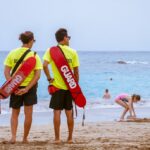
Scottish holidaymaker Aileen wrote an emotional letter to Benalmadena lifeguards after they came to her aid when she lost consciousness on the beach.

The handwritten note was sent by 62-year-old Aileen days after lifeguards responded when she became unwell on the beach on May 29. Addressed to lifeguard Melanie Waller and the SOS team, the message thanked them for their “care and assistance” during the incident.

“Thank you very much to everyone for your help and attention. Knowing they were there, I was able to enjoy the rest of my vacation. Thank you from the bottom of my heart,” Aileen wrote.

Lifeguards responded after woman became dizzy and lost consciousness

According to reports, the incident occurred at around 5.30pm on May 29 when staff working from a hammock station in front of the Gloria Bendita beach bar alerted Benalmadena’s lifeguard service that a woman was suffering from dizziness and required urgent assistance.

First responders Melanie Waller and Rodrigo Escobar were dispatched to the scene, where they found Aileen sitting on the ground displaying symptoms of dizziness.

During their initial assessment, the woman was not responding normally and shortly afterwards lost consciousness again. Lifeguards reported that she appeared pale, had bluish lips and was experiencing breathing difficulties.

Given her condition, emergency protocols were activated and medical assistance was requested, with the situation initially assessed as a possible Priority 1 emergency.

Emergency response praised after tourist recovers

After several minutes receiving assistance, Aileen regained consciousness, allowing responders to reassess the incident as a Priority 2 case.

During the intervention, she complained of thirst and was given sugar water under the supervision of the lifeguard team. Once her condition stabilised, responders identified her as a Scottish tourist visiting Benalmadena on holiday.

Local reports praised the quick actions of both the hammock attendant who raised the alarm and the lifeguard team that responded immediately, enabling medical resources to be activated without delay.

The incident ended on a positive note when Aileen later contacted the service to express her gratitude. Her letter has since been highlighted as recognition of the work carried out daily by Benalmadena’s beach rescue teams in supporting residents and visitors along the increasingly busy coastline.

Strengthened beach safety operation across Benalmadena

Benalmadena has recently announced the increase in coastal safety in the area with the launch of its summer vigilance and rescue operation, running from 15 May to 15 October. The plan brings in 45 lifeguards, rescue watercraft, a staffed ambulance and rapid‑response equipment across nine points of the coastline, to assist beach services during the areas busiest months.

Continue Reading

%

Oasis Bonehead In Marbella And Malaga

Published

on

oasis-bonehead-in-marbella-and-malaga

The former Oasis guitarist has been sharing snapshots from Marbella, Malaga and Ronda while enjoying a sunny break on the Costa del Sol.

No, he’s not playing a surprise gig in Malaga. Paul Arthurs, better known to Oasis fans as Bonehead, is simply enjoying a holiday and lucky for fans he is sharing plenty of it on social media.

An original member of the band

Anyone familiar with Oasis knows that Noel and Liam Gallagher were not the only iconic figures in the band. Bonehead, the rhythm guitarist from the group’s original classic line-up, became one of the most famous characters of Britpop’s biggest success story.

More than 30 years ago, Noel Gallagher wrote a song about him, Bonehead’s Bank Holiday, a tongue-in-cheek ode to a trip to Spain in search of sun and fun, originally intended to be sung by Bonehead himself. Now, it seems the guitarist has taken that inspiration himself.

Over the past few weeks, Arthurs has been documenting his stay in Malaga and surrounding areas on Instagram. His posts include selfies in Malaga city centre, photos of street flamenco guitarists, beach scenes in Marbella, traditional almond stalls and the obligatory view of Ronda’s famous Puente Nuevo. There have even been snapshots from shopping trips to Aldi and MediaMarkt, prompting one caption that reads, “It’s not all rock and roll.”

At 60 years old, Bonehead appears happy to blend in with the thousands of British visitors enjoying the Costa del Sol sunshine. However, he is far from an ordinary tourist.

Why Bonehead is one of the most important figures in Oasis

The guitarist famously left Oasis in 1999 during the troubled recording of the band’s fourth album, following a row that saw him pack his bags and fly back to Manchester. At the time, the official statement claimed he had quit to spend more time with his family. Noel Gallagher’s public response was characteristically cutting, “It’s hardly McCartney leaving The Beatles.”

A close friend of Liam Gallagher, Arthurs later filled in for injured Beady Eye guitarist Gem Archer in 2013 and 2014, and went on to become a major part of Liam’s solo backing band throughout his post-Oasis career.

When Oasis announced their much-anticipated reunion after years of family and artistic tensions, Bonehead was once again brought back into the fold. Fans welcomed the news enthusiastically. He remains the only musician who played on the band’s first three albums, Definitely Maybe, (What’s the Story) Morning Glory? and Be Here Now, who is still actively involved with the group.

At a reunion show, Noel Gallagher has previously been quoted as saying “On guitar, if it wasn’t for him, none of this would have happened,” a comment fans have interpreted as recognition of Bonehead’s role in helping keep the famously volatile Gallagher brothers on speaking terms.

Bonehead’s cancer recovery and return to the sun

Sadly recent years have not been without challenges. In 2022, Arthurs revealed he had been diagnosed with tonsil cancer, which he thankfully successfully overcame. Then, in 2025, he stepped back from being part of Oasis’s hugely successful reunion tour to undergo treatment for prostate cancer.

Now happily recovered and enjoying life under the Andalucian sun, Bonehead appears to be making the most of an extended Spanish getaway.

So if you happen to spot a bald Brit in shorts wandering around Malaga or Marbella, take a second look. You may have just crossed paths with one of British rock’s most recognisable figures.

Continue Reading

%

Experts Warn Of Spain Drug Shortages As A Common Everyday Medicine Runs Out

Published

on

experts-warn-of-spain-drug-shortages-as-a-common-everyday-medicine-runs-out

Spain faces widespread drug shortages, with aspirin now affected nationwide. Photo Credit: Maksym Pozniak-Haraburda / Unsplash

Spain is currently in the midst of a serious drug supply problem; in recent weeks, nearly 12,000 supply shortages have been recorded, affecting more than 1,500 different medications…including a common, everyday-use painkiller.

Aspirin running out in Spain: More than 11,700 shortages across nearly 4,000 pharmacies

The shortage was alerted by LUDA Partners, a network that connects more than 3,700 pharmacies in Spain. According to the network, 1,538 different medications are being affected by 11,785 supply shortages, with the latest addition to the figures being acetylsalicylic acid, the active ingredient in aspirin. As a result, aspirin is one of the five medications with the most reported shortages in Spain and accounts for 4 per cent of reported shortages on a national scale, an unprecedented figure.

This shortage is reported to affect 75 milligram in 30 unit-packs and 100 milligrams in 500 unit-packs of the drug, as well as Aspirin Plus, a particular brand of the drug, in its 500 milligram and 50 milligram formats.

This shortage could spell trouble for patients who regularly use aspirin to treat chronic pain, or those who need a quick, safe, and over-the-counter painkiller for unexpected aches and ailments. Additionally, acetylsalicylic acid is also a main ingredient in Lenzetto, a hormonal therapy for women in menopause.

The Canary Islands facing supply strain, particularly for epilepsy medication

The LUDA Partners report also points specifically to the Canary Islands, listing some other medicines that are difficult to obtain in the autonomous community. Among the medicines mentioned were Gabapentin, used to treat epilepsy and neuropathic pain; Hibor, an anticoagulant used to prevent thrombosis; Amchafibrin, a medication indicated for the control and prevention of bleeding; Depakine, used to treat different types of epilepsy; and Furantoin, a common antibiotic in the treatment of urinary tract infections.

More than half of people over 15 in Spain suffer from a chronic condition

LUDA Partners has alerted to the severity of the problem, stating that 54.3 per cent of the population over the age of 15 suffers from at least one chronic disease (including any long-term conditions). This number gets even more stark in those over 65 years of age, as 40 per cent of men and 44 per cent of women have two or more chronic pathologies, 2025-2028 Development Document of the Strategy for Addressing Chronicity of the Ministry of Health.

Not just aspirin: Spain faces drug supply shortages across the board

More common drugs facing shortages in the country include Fixaprost, intended for patients with glaucoma; Amchafibrin, which prevents hemorrhages; and Kreon, which is prescribed in cases of pancreatic insufficiency. These medicines are all among those with the most reported shortages.

What is causing the supply shortage?

The shortage is being caused by multiple factors, including temporary and seasonal increases of demand, spiking production costs, and ongoing tensions that affect international supply chains.

Certain medications also present a low profitability, hindering the production and distribution of some treatments and causing wider structural issues.

Spain has been under “pressure” due to this pharmaceutical supply shortage for years, but, though very noticeable in Spain, this drug supply shortage is not exclusive to the country

Continue Reading

Trending

Copyright © 2017 Spanish Property & News