Connect with us

%

Drivers In Spain Could Be Turned Back On Three Motorways Even With Snow Chains

Published

on

drivers-in-spain-could-be-turned-back-on-three-motorways-even-with-snow-chains

Photo by ricardo lago, CC BY-SA 2.0, via Wikimedia Commons.

Drivers heading into the Pyrenees or across northern Spain this winter could find their snow chains are of no use on parts of three motorways. When a red snow restriction is in force, cars on those stretches must have winter tyres fitted. The restrictions can affect anyone driving a hire car or taking their own car on a winter road trip.

Where snow chains won’t be enough

Spain’s traffic authority, the DGT, announced the winter measures on 19 November. The restrictions cover stretches of the A23 in Huesca, the A67 in Cantabria and the A6 in Lugo. All three pass through a series of tunnels, which is why the DGT prohibits chains on those sections when the red snow restriction applies.

  • A23 in Huesca, between kilometres 374.5 and 395.1.
  • A67 in Cantabria, between kilometres 135.4 and 175.2.
  • A6 in Lugo, between kilometres 406.3 and 455.

On other roads under a red snow restriction, cars can generally continue with chains or winter tyres, at a maximum of 30 km/h. On these three stretches, a set of chains in the boot won’t get you through. DGT winter driving announcement

What the new road alerts mean for drivers

The DGT is using the same set of road condition colours for snow, dense fog and strong winds. Yellow means conditions are starting to affect traffic. Orange means restrictions apply, red means tighter restrictions and black means the road is closed. The exact restrictions depend on the weather and the road.

When snow makes driving difficult on motorways and dual carriageways, drivers must leave the left lanes clear for snowploughs and emergency vehicles. Overhead signs can tell drivers when to keep right and when overtaking is prohibited.

What to check before you set off

If you’re hiring a car and your route takes you through one of the affected stretches, ask the hire company whether winter tyres are fitted. Check the DGT live traffic map before leaving, especially if you’re crossing a mountain pass. For the rules on chains and winter tyres elsewhere, see EWN’s guide to driving in snow in Spain.

%

Could Homes In Spain Soon Regulate Their Own Temperatures Without Heating Or Air Conditioning?

Published

on

could-homes-in-spain-soon-regulate-their-own-temperatures-without-heating-or-air-conditioning?

The design also uses carefully positioned windows, insulation and automated ventilation panels. Photo credit: Volker Vornehm/Shutterstock

Keeping a home comfortable in Spain can be an expensive balancing act. Summer temperatures can turn bedrooms into ovens, while winter brings freezing nights that make poorly insulated houses difficult to heat. With energy bills adding to household costs, a building designed to maintain a comfortable temperature without relying on conventional heating or air conditioning raises an interesting question: could homes be built to stay comfortable naturally, whatever the season?

A new residential development in Lyon has put that idea into practice, using the building itself to regulate indoor temperatures rather than depending on radiators and air-conditioning units. Its design aims to keep homes between 20°C and 26°C throughout the year, with the structure doing much of the work.

How can a building regulate its own temperature?

The concept is based on thermal inertia, using substantial building materials to absorb heat and release it gradually. Thick walls help slow the movement of heat between indoors and outdoors. In summer, they can delay the arrival of outside heat; in winter, they help retain warmth rather than allowing it to escape quickly.

The design also uses carefully positioned windows, insulation and automated ventilation panels. Sensors monitor indoor conditions and the weather outside, adjusting ventilation when fresh air is needed. Sunlight can contribute warmth during colder months, while shading and controlled airflow help limit overheating in summer.

Could it work in Spain?

A building designed to cope with the weather in Lyon would not necessarily perform in the same way in Sevilla, Madrid or Málaga. Spain’s climate varies enormously, and a home needs to be designed around the conditions it actually faces. In coastal areas, keeping direct sunlight out and making use of cooler night air can be crucial during summer. Inland, the problem is more complicated. Madrid can experience temperatures above 40°C in summer, followed by freezing winter nights.

Walls that store heat can help during cold spells, but without adequate shading and ventilation they can also retain unwanted warmth when temperatures soar. That is why insulation alone is not enough. Window placement, external shutters, roof protection and the ability to ventilate a property safely at night all influence how comfortable it will be.

Would it mean lower energy bills?

The developer estimates that the building could reduce energy consumption for heating and cooling by 73 per cent compared with a conventional new development. That is a projected saving rather than a figure established through years of independent monitoring. Nor is the building entirely without conventional heating: auxiliary radiators are installed for exceptional circumstances, including extreme weather and periods when apartments have been left empty. 

The idea is not that Spanish households could immediately get rid of their air conditioning or radiators. It is that better-designed homes could need to use them far less. Better insulation, external shading, airtight construction and night-time ventilation can all help reduce the strain on cooling and heating systems, whether in a new build or an existing property.

The cost of making these improvements is another consideration. Thick walls, high-performance glazing and carefully designed ventilation are easier to incorporate during construction than to retrofit into an older home. But with summer heat becoming increasingly difficult to manage and winter heating still expensive, building homes that work with the local climate rather than constantly fighting it could make a real difference to household energy use.

Continue Reading

%

Cuban Family’s 7-Border Journey To Salobreña

Published

on

cuban-family’s-7-border-journey-to-salobrena

Antony and Odaimy’s place on Salobreña sea front. Credit: ETFB

A Cuban family’s journey to Spain has ended with a new life and a sandwich business in Salobreña, on Granada’s Costa Tropical.

Antony, his partner Odaimy and her son Víctor left Cuba in 2021, hoping to settle in Russia. Instead, they crossed seven borders during a three-month journey to Spain in southern Spain. Cuban independent outlet elTOQUE interviewed the family about their journey.

From Cuba to Russia – then onwards

They sold their home in Havana to fund their departure. Russia was their first destination, but language and cultural barriers made settling there difficult, so they decided to not stop moving until they found the fit for them.

They travelled onwards to Serbia, then tried to cross into Croatia. Their first attempt ended when armed soldiers intercepted them and sent them back. On their second try, they walked almost 20 kilometres through uninhabited fields carrying their luggage.

The route continued through Croatia, Slovenia, Italy and France. The family were detained in Croatia and Slovenia, and feared deportation back to Cuba. In Italy, a relative helped with money for food and bus tickets. Odaimy said the thought of her son kept her going. “I would look at my son and tell myself that, above all, I owed him that: freedom.”

A new beginning on the Costa Tropical

After entering Spain, the family passed through Barcelona, Valencia and Murcia before deciding on settling in Salobreña, as the coast reminded them so much of home.

They found work in the food industry and built relationships in town. At the start of 2026, Antony and Odaimy opened a business selling Cuban sandwiches. “We’ve met some wonderful people, and we owe them a great deal,” Antony said. “Among other things, we owe it to them that we now have our own business.”

Odaimy says she is happy with the life they have built. Her son, now 26, has started his own life in Spain, and she has become a grandmother. Antony still worries about his parents and relatives in Cuba. “I have to go back even if I don’t want to,” he said.

Read the original elTOQUE report for the family’s full account. Their sandwich bar can be found on the corner of Paseo Marítimo and Calle Oleaje, Salobreña.

Continue Reading

%

Which Firewood Should You Buy In Spain?

Published

on

which-firewood-should-you-buy-in-spain?

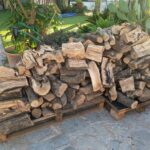
Encina, olive or almond? Falling night-time temperatures mean many expats are lighting their fireplaces again, but choosing the right firewood can make a real difference to heating costs.

As temperatures start dropping after sunset, households across Spain are preparing to light their fireplaces and wood-burning stoves again. For expats who are used to buying logs at home, however, choosing firewood in Spain can be a little confusing.

Spanish suppliers sell several different varieties, often using the local names rather than English descriptions. Prices and burning characteristics also vary, meaning that buying the cheapest wood does not necessarily mean getting the best value.

Knowing the difference between encina, olivo, almendro and other commonly available woods can help homeowners get more heat from their money this winter.

Which Spanish firewood gives the best heat?

Some varieties burn considerably longer than others. Hardwoods are generally the better choice for maintaining a fire, while lighter woods are useful for getting it started.

Here are some of the main varieties available from Spanish firewood suppliers:

Spanish name English name Burning characteristics
Encina Holm oak Dense, burns slowly and produces lasting embers
Olivo Olive High heat output and long-lasting embers
Almendro Almond Good heat and relatively long burning time
Roble Oak Good for maintaining a steady fire
Fresno Ash Good flames and useful general-purpose firewood
Pino Pine Lights easily but burns quickly
Eucalipto Eucalyptus Produces plenty of heat when properly dried

Encina is often considered one of the best all-round choices for domestic fireplaces. Olive and almond are particularly popular in southern Spain, where they are readily available in many areas.

According to the Spanish Association of Manufacturers of Stoves, Fireplaces and Solid Fuel Cookers (AEFECC), hardwoods such as encina, olive and almond generally offer better heat output and longer burning times than softer varieties.

Your fireplace type matters when choosing logs

Not every fireplace works in the same way, so the type of appliance in your home should influence your purchase.

  • Open fireplaces (chimeneas abiertas): Encina and olive are good choices because they produce lasting embers. Use smaller, easily ignited pieces to start the fire.

  • Glass-fronted fireplaces (chimeneas insertables or cassettes): Encina, oak and olive are suitable choices for steady heating.

  • Freestanding wood-burning stoves (estufas de leña): Dense hardwoods such as encina, almond and oak are excellent for maintaining warmth.

  • Wood-burning cookers (cocinas de leña): Choose logs cut to the size specified by the manufacturer, with almond and encina among the options worth considering.

Always check the appliance manufacturer’s instructions before buying, particularly if you have a specialist stove or a water-heating fireplace.

Dry firewood is more important than expensive firewood

Regardless of the variety, moisture content is one of the biggest factors affecting how well logs burn. Spanish government guidance recommends a moisture content of between 10 and 20 per cent for traditional firewood. Wet logs are harder to light, produce less useful heat and create more smoke and deposits inside chimneys and flues. A cheap moisture meter can help buyers check their purchase. Split a log and test the newly exposed inner surface rather than the outside.

Other signs of properly dried wood include:

  • Cracks appearing at the ends of the logs.

  • A lighter weight than recently cut timber.

  • A hollow sound when two logs are knocked together.

  • No obvious dampness or musty smell.

Homeowners can read the Spanish government’s guide to good firewood-burning practices for further advice.

Should you buy firewood by weight or volume?

Another question worth asking before ordering is how the supplier measures the wood. AEFECC generally recommends buying by volume rather than weight because moisture can make logs considerably heavier without providing any extra heating value. However, buyers should clarify whether the quoted cubic metre is stacked or loose, as the amount of actual wood can differ.

Its guide to choosing and buying firewood in Spain explains the differences between varieties, prices and purchasing methods.

One final reminder: Have chimneys and flues checked and cleaned as recommended, never burn painted or chemically treated timber, and always follow the manufacturer’s instructions for your particular fireplace.

With the right logs and properly dried firewood, homeowners can enjoy a warmer winter without wasting money on fuel that produces more smoke than heat.

For readers looking at other ways to heat their properties, Euro Weekly News has also published guides to keeping a Spanish house warm during winter and why Spanish homes can feel colder indoors than outside.

Continue Reading

Trending

Copyright © 2017 Spanish Property & News