
Costa del Sol
Where are they? Expat questions local police presence

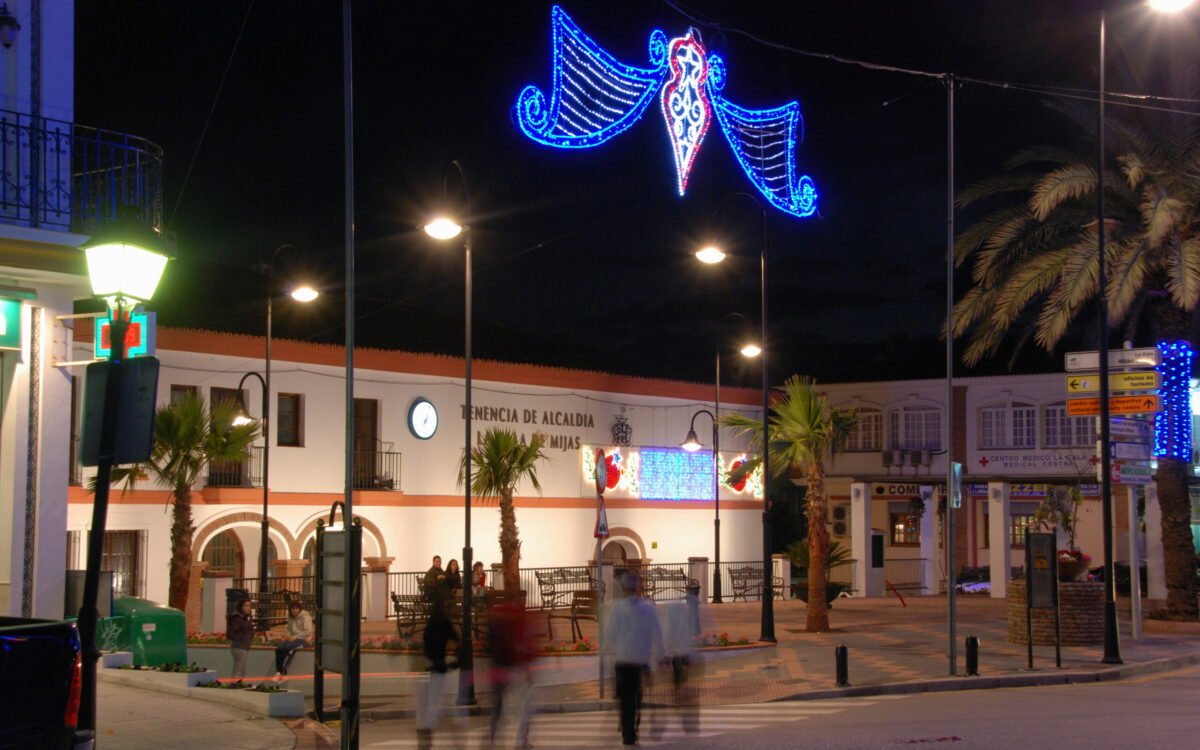
Steve Marshall says he has been hearing “disquieting stories” from La Cala, Mijas, including a reported attack on a man returning home at night.
According to the account he received, three youths wielding what were described as “bats” attacked and robbed the man close to Butibamba. Even after he handed over his money, the attackers allegedly stood on his arms and beat him black and blue, leaving him with a bloody gash to his head.
Marshall also refers to a robbery at the Galp garage, where Amazon collection boxes were reportedly vandalised. He says he was told that security cameras were operating, but questions their deterrent value.
“Why does this seem to be happening now?” he asks. “Were the same culprits who attacked the man walking home involved? Is it down to the pressures of the cost of living? I don’t know.”
Mijas Council has also announced plans for more than 150 surveillance cameras across the municipality as part of its efforts to improve public safety and crime prevention.
Where are the night patrols?
“What I do know is that there is little to no police presence at night,” Marshall says, adding that his own experience has been of seeing officers patrolling in the mornings.
“It is well documented that a physical police deterrent, patrolling our streets, not only reassures residents, it discourages crime,” he argues.
His concerns extend to a recent visit to the local police station in Las Lagunas. Arriving in the early afternoon, he says the station appeared closed, with its doors locked. An officer eventually allowed him and his wife inside after his wife explained that, because Marshall is disabled, waiting outside was not an option. He says they were initially told to return later.
As they left, the couple counted as many as 13 police cars parked nearby.
“Surely not all the police were having lunch at the same time?” he asks.
Marshall welcomes reports of increased funding for local police but believes residents deserve to see a visible presence on their streets. “We read a lot about the local police being given priority in funding and that is welcome news,” he says. “But my simple question is ‘where are they?’”
Mijas Council previously announced an increase in local police spending, taking its 2025 budget to almost €1.5 million.
Local elections are closing in fast on the Costa del Sol, and registry ends in December. Perhaps this is the time to make one’s voices heard.







Mijas distributes 33,000 super-seeds across its Sierra to regenerate plant life scorched by wildfires and combat creeping desertification.
In a hands-on bid to reverse decades of environmental damage, the Spanish town of Mijas has distributed more than 33,000 “supersemillas” across its Sierra, aiming to regenerate plant life scorched by wildfires and threatened by creeping desertification.
The plan, led by the Ayuntamiento de Mijas in partnership with the local firm Exploramás, relies on a centuries-old Japanese technique known as nendo dango. Volunteers crafted small balls of clay, natural fertilizer, substrate and meadow seeds. Once scattered on the ground, the clay casing shields the seeds from birds, wind and sun until rainfall gradually dissolves it, allowing germination without any need for planting or irrigation. A similar nendo dango approach has already been used on the Costa del Sol dunes.
Deployment of seeds follows successful experiments
The second phase of the project saw the seed balls dispersed around the former Los Arenales quarry near Mijas Pueblo and in the Hipódromo area, zones still recovering from recent fires. The effort builds on an earlier workshop held between 20 and 21 October at Cortijo Don Elías, where roughly 700 residents, students and association members rolled the balls by hand. Participants included pupils from the Las Lagunas, Sierra de Mijas, Torre Almenara and Villa de Mijas institutes, students from Kampus Formación, and members of the Fuenmijas Parkinson’s association and Afesol.
Organisers had originally planned for 27,000 seed balls; the final tally exceeded 33,000, a figure chosen in part to symbolically represent the workforce of General Electric, which supported the social action through Exploramás.
Mayor Ana Mata takes part
Mayor Ana Mata joined Environment Councillor Marco Cortés and Education Councillor Juan José Torres for the distribution. She described the Sierra’s recovery as a collective responsibility and stressed that involving schools, associations and businesses turns a practical restoration project into broader environmental education. This latest action continues broader volunteer-led efforts to revive the fire-damaged forests of the Sierra de Mijas.
“When administrations, companies, young people and social groups work together, we achieve results that go far beyond a single environmental action,” Mata said. “We are also teaching values and respect for nature.”
By combining traditional low-tech methods with broad community participation, Mijas is betting that a few tens of thousands of carefully made seed balls can help tip the balance toward greener slopes and greater resilience against the Mediterranean’s intensifying dry spells.

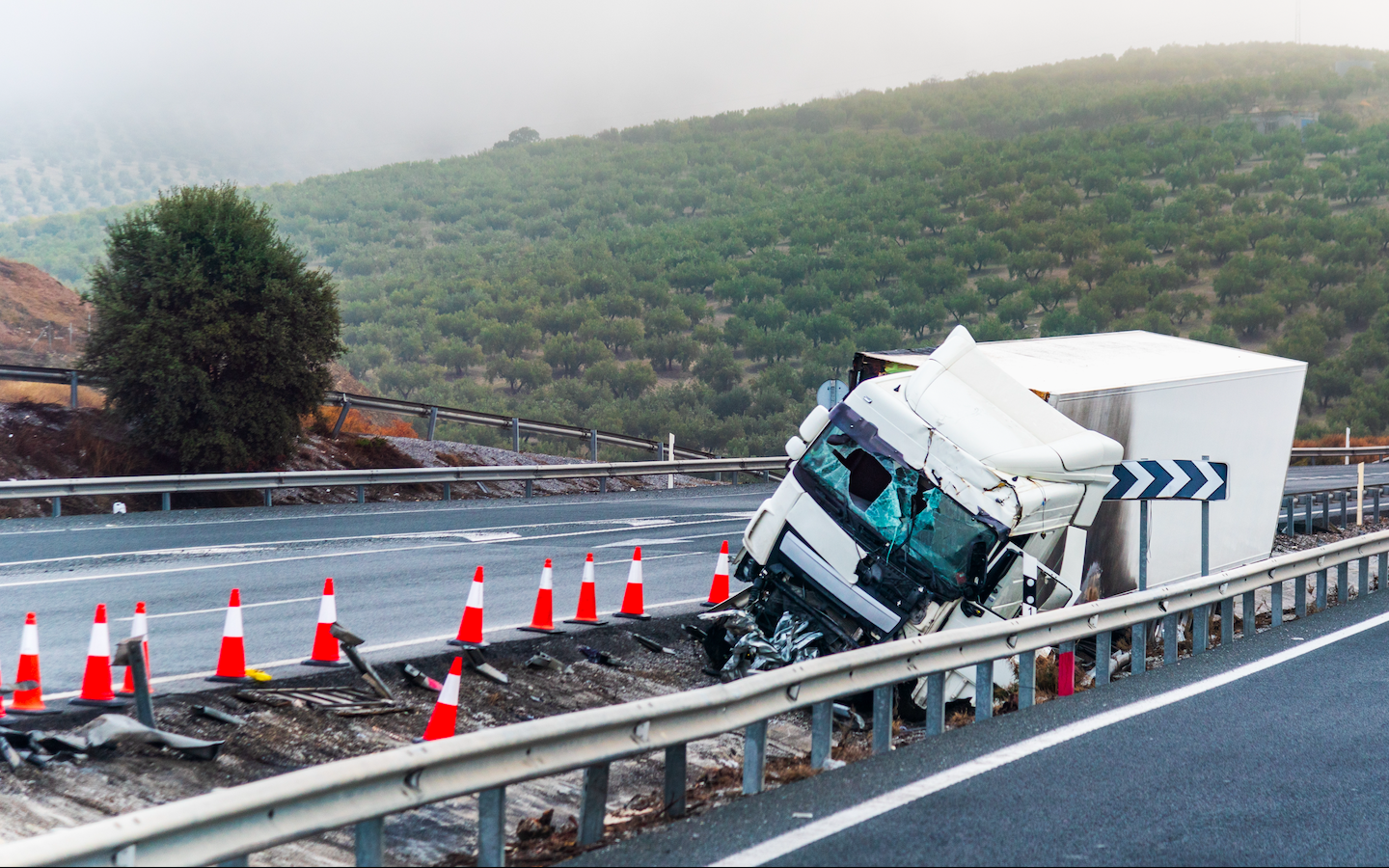
Recovery can cost thousands of euros. Photo credit: Miguel Perfectti/Shutterstock
A broken-down lorry can bring parts of Málaga to a standstill, leaving commuters trapped in traffic, workers late and families struggling to get where they need to be. Yet when a heavy goods vehicle is involved in an accident on the province’s main roads, there is no dedicated Government recovery service ready to remove it.
The problem is not simply a shortage of recovery vehicles, the Government has actually acknowledged that there is no specific protocol for removing heavy goods vehicles from roads such as the A-7, leaving the operation dependent on insurance cover, private companies and the availability of specialist equipment.
Why can removal take so long?
Unlike a regular car, a loaded lorry cannot necessarily be moved with a standard breakdown truck. Depending on its weight, position, cargo and damage, operators may need heavy-duty vehicles, cranes or machinery and a specialist team. The Guardia Civil can secure the scene, manage traffic and contact recovery companies, but it has no fleet of heavy recovery vehicles.
The DGT also has no public roadside assistance service for removing broken-down or accident-damaged lorries. The process can slow down when the haulage company has no recovery cover. The insurer may need to authorise the work, a company must be found and a price agreed. Some operators are reluctant to take jobs involving foreign-registered lorries if payment is uncertain.
The cost of leaving a lorry stranded
Recovery can cost thousands of euros. In complicated cases, the bill can reach €20,000, according to industry sources cited in reporting on Málaga’s roads. The Government says removal is arranged through compulsory insurance, with response times depending on availability, vehicle type and condition. The consequences reach beyond the driver and haulage company.
A lorry blocking a motorway can close lanes or force a diversion, pushing traffic onto surrounding roads. Commuters lose hours, deliveries are delayed and businesses wait for staff or supplies. A recent incident in the Carlos Haya tunnel, where an overturned lorry landed on a taxi, showed how difficult recovery can be in confined conditions. Two specialist companies were needed, and the cargo had to be removed before the vehicles could be cleared. The crash and its impact on the taxi driver can be read here.
Calls for a different system
The issue was raised after lorry breakdowns caused long queues on Málaga’s roads in 2025. The PP asked the Government why there was no dedicated service for removing heavy vehicles. The Executive replied that there had never been a specific protocol. The DGT has said it was studying alternatives, including agreements with private recovery firms.
However, motorists have no clear timetable for when any arrangement might be introduced. Málaga’s traffic volumes make the question pressing. When a heavy vehicle cannot be shifted quickly, disruption spreads beyond the stretch of road where the incident happened. Until a reliable system is in place, drivers may continue to face lengthy delays whenever a lorry becomes stranded on a key route during the morning rush hour.

Campaña Elecciones 29N Y Actualidad Política, En Directo | Sánchez Pide “el Voto De Todos Los Que Quieren Más Europa” Para Frenar A Abascal

Toto Wolff Mercedes exit plan revealed as F1 commentator tips successor

La Cancelación De Vuelos En Estados Unidos, En Vivo | Estados Unidos Levanta La Suspensión De Vuelos Tras Más De Cuatro Horas De Paro Total


-
DGT4 weeks ago
Viral video in Spain sparks fury over drivers who ‘have no idea how to drive’
-

 New Developments3 weeks ago
How To Get A Tourist Rental Licence In Andalusia (Spain) – Step-By-Step Guide 2025
-

 New Developments2 weeks ago
Luxury Villas For Sale, Estepona – ProjectL1
-
Age Concern Marbella - San Pedro3 weeks ago
Halloween lunch sells out as 51 join Marbella get-together
-
Consumer Rights Spain4 weeks ago
EU offers extra year of warranty on phones, but Spain faces delays
-

 %4 weeks ago
Santa Pola Museo Del Mar
-
Barcelona riots3 weeks ago
Looting and street violence hit Barcelona as El Corte Inglés customers are trapped
-

 %3 weeks ago
Spain Orders Replacement Of Eight Million Gas Meters: New Rules, Costs And Deadlines