Connect with us

%

Spain Steps Up Drink Driving Checks

Published

on

spain-steps-up-drink-driving-checks

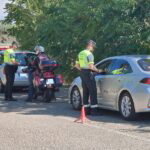
Police are increasing roadside alcohol and drug checks across Spain as part of a nationwide road safety campaign. Credit : DGT.ES

If you’re planning a road trip, heading to the beach or simply driving to work this week, there’s a much greater chance you’ll be stopped by police. Spain’s Directorate General of Traffic (DGT) has launched a nationwide campaign targeting drink and drug driving, with extra roadside checks taking place until 19 July.

The campaign comes after worrying new figures showed that alcohol was involved in 28 per cent of all fatal traffic accidents recorded by the DGT in 2024. Even more striking, the number of people killed in crashes where at least one driver tested positive for alcohol rose by 9 per cent compared with 2023 and by 24 per cent compared with 2019.

For drivers, whether you’re travelling across Spain for the summer holidays or making a short journey close to home, expect to see more police controls on both major roads and in towns and cities over the coming days.

Why Spain is increasing roadside alcohol and drug checks

The DGT says the campaign is designed to tackle one of the country’s biggest road safety problems.

Although awareness of the dangers of drink driving has improved over the years, alcohol continues to play a major role in fatal collisions.

According to official figures, 273 people died in fatal crashes linked to alcohol in 2024 within the areas covered by the DGT.

The statistics suggest the problem is not getting smaller. Not only has the number of alcohol related deaths increased, but alcohol is also appearing in a higher proportion of serious accidents than in previous years.

The DGT believes preventive roadside checks remain one of the most effective ways to reduce that risk.

In fact, almost 89 per cent of positive alcohol tests are detected during routine roadside controls rather than after accidents. From the authorities’ perspective, that means thousands of potentially dangerous drivers are being removed from the roads before a collision happens.

The campaign is being carried out by the Guardia Civil Traffic Group, with regional and local police forces joining the operation in many parts of Spain to increase checks in urban areas as well.

Drivers may therefore encounter alcohol and drug controls almost anywhere, from motorways to local roads.

The figures behind the campaign

The DGT’s concerns are supported by data from the National Institute of Toxicology and Forensic Sciences.

Its latest report found that 34 per cent of drivers who died in road accidents and underwent toxicology testing had alcohol in their system, while 16.4 per cent tested positive for drugs.

In nearly one in four cases, the alcohol level exceeded 1.20 mg/l, well above the threshold that can lead to criminal prosecution in Spain.

According to Álvaro Gómez, director of the DGT’s National Road Safety Observatory, scientific evidence continues to point in the same direction.

He said that the only truly safe alcohol level when driving is zero, adding that many international road safety organisations recommend lowering legal alcohol limits because of their proven impact on reducing serious crashes.

Research shows that the risks begin increasing long before a driver reaches the criminal limit.

At 0.5 g/l of alcohol in the blood, the risk of being involved in a collision roughly doubles.

At 0.8 g/l, the risk becomes around five times higher.

At 1.5 g/l, it can increase by as much as twenty times.

Alcohol also affects reaction times, coordination, judgement and vision, making it harder for drivers to respond quickly even when they believe they remain in control.

What penalties could drivers face?

For anyone tempted to take the risk, Spain’s penalties remain among the toughest in Europe.

Drivers who record more than 0.25 mg/l but up to 0.50 mg/l in breath alcohol face a €500 fine and the loss of four licence points.

Anyone above 0.50 mg/l faces a €1,000 fine and six points.

Repeat offenders can also receive a €1,000 fine, together with the loss of four or six points depending on the alcohol level recorded.

Testing positive for drugs carries a €1,000 fine and the loss of six points.

The consequences become much more serious when criminal thresholds are reached.

Drivers who record more than 0.60 mg/l of alcohol in breath or 1.2 g/l in blood may face between three and six months in prison, a substantial fine or community service, together with a driving ban lasting between one and four years.

Refusing to take an alcohol or drug test is itself a criminal offence and can result in six months to one year in prison, along with the same driving disqualification.

According to Spain’s Road Safety Prosecutor’s Office, 47,103 drivers were convicted in 2025 for driving under the influence of alcohol or drugs.

A campaign built around real life stories

As in previous years, the DGT is working alongside ASPAYM, Spain’s National Federation of People with Spinal Cord Injuries and Other Physical Disabilities.

Volunteers who were themselves seriously injured in road accidents will accompany traffic officers at selected roadside checks across Spain.

Their role is not to enforce the law but to speak directly with motorists about the lifelong consequences a single decision can have.

The campaign’s message, ‘Don’t speed, don’t drink… don’t change the wheels,’ is intended to remind drivers that road safety is not only about avoiding fines.

For many families, one poor decision lasts far longer than any penalty issued at the roadside.

As millions of people continue travelling across Spain during the busy summer period, the DGT says its advice remains unchanged. If you’re driving, the safest amount of alcohol is none at all.

%

Cataluña Waste Scandal: 46,000 Tonnes Of French Waste Buried In Spain

Published

on

cataluna-waste-scandal:-46,000-tonnes-of-french-waste-buried-in-spain

The investigation remains ongoing as authorities work to establish the full scale of the operation. Photo credit: Guardia Civil/Ministerio de Interior

What if the ground beneath farmland was hiding thousands of tonnes of waste that should never have been there? That is the question facing authorities in Cataluña after four people were arrested over an alleged illegal waste operation involving up to 46,000 tonnes of rubbish brought from France and buried in Spain.

The investigation has uncovered what police describe as a major environmental crime operation, with concerns that some of the buried material included potentially dangerous substances such as hydrocarbons and heavy metals. For residents, farmers and environmental groups, the case raises a worrying question: how much damage can happen when waste disappears underground and out of sight?

Thousands of tonnes allegedly brought across the border

The investigation, known as Operation Franger, was carried out by the Guardia Civil with support from Europol and the French Gendarmerie. According to investigators, the group allegedly introduced at least 46,000 tonnes of urban and industrial waste from France into Cataluña, using false documentation to disguise the material as other types of products or soil.

Authorities say the waste was then allegedly deposited illegally, without the necessary environmental safety measures, in agricultural land and unsuitable landfill sites. The investigation began in 2022, when officers inspected a waste management facility after detecting suspicious activity linked to the handling of materials from contaminated areas.

A hidden environmental threat

Unlike rubbish piled up in the open, illegally buried waste can remain invisible for years. Experts warn that waste hidden underground can create long-term problems, potentially affecting soil quality, groundwater and surrounding ecosystems, particularly when hazardous substances are involved.

Authorities will now assess the full environmental impact and determine whether any contamination risks remain. Some of the waste allegedly contained substances including hydrocarbons and heavy metals, raising concerns about possible consequences for the environment and nearby communities. While the extent of any damage has not yet been confirmed, the investigation highlights the difficulty of tackling illegal waste trafficking, where materials can cross borders and disappear before authorities are alerted.

Why would waste be moved between countries?

Illegal waste trafficking is often driven by one simple motive: money. Proper treatment and disposal of industrial waste can be extremely expensive, creating opportunities for criminals to cut costs by avoiding regulations and environmental controls. Investigators believe false documentation was used to make the waste appear legitimate, allowing it to enter Spain and be disposed of incorrectly. The case also highlights how environmental crime has become an international issue, requiring cooperation between countries to track waste movements and identify those responsible.

Four arrested as investigation continues

The four detainees, two men and two women, are accused of a series of alleged offences including crimes against natural resources and the environment, document falsification, fraud, money laundering, tax offences and belonging to a criminal organisation. Authorities carried out searches at homes and businesses, collecting documents, accounting records and electronic devices as part of the investigation.

A large part of the alleged dumping took place around Sant Esteve Sesrovires in Barcelona province, with reports indicating that some of the waste was buried in agricultural areas. The investigation remains ongoing as authorities work to establish the full scale of the alleged operation.

A warning for Spain’s environmental future

Environmental crimes do not always leave obvious signs, there may be no visible rubbish piles, no immediate warning and no obvious indication that anything is wrong, but what is buried underground can have consequences that last for decades. The case has raised concerns about Spain becoming a destination for illegal waste disposal and the need for stronger controls to protect the country’s countryside and natural resources.

For Cataluña, the issue is not simply about 46,000 tonnes of waste. It is about who pays the price when environmental rules are allegedly ignored. As investigators continue examining the case, one question remains at the centre of the scandal: What exactly has been left beneath the land, and what impact could it have in the years to come?

Continue Reading

%

Alec Baldwin’s Mallorca Family Summer

Published

on

alec-baldwin’s-mallorca-family-summer

For many celebrities, a summer holiday is all about luxury yachts and exclusive beach clubs. But for Alec Baldwin’s wife Hilaria Baldwin, this year’s trip to Mallorca has been something far more personal: introducing her seven children to the island that has become the heart of her family’s life.

A family reunion in Mallorca

Hilaria has spent the past few days exploring Mallorca with the couple’s seven children while reuniting with her parents and brother, who have lived on the island for more than a decade. Alec Baldwin has not been pictured on the trip, with Hilaria revealing beforehand that she was travelling to Spain alone with the children for the first time.

Sharing regular updates on social media, the 42-year-old yoga instructor and entrepreneur described the visit as the “best time” with family, posting photos and videos of beach outings, strolls through Palma, ice cream stops and relaxed moments together.

Discovering the island together

Rather than staying in one resort, the family appears to have explored several corners of Mallorca.

Images shared online show the children walking along Palma’s fashionable Jaime III shopping avenue, spending time on the coast, enjoying traditional paella by the sea and visiting the inland town of Inca. The holiday has mixed sightseeing with everyday island life, including supermarket trips and family meals, giving the children a taste of the place where their maternal grandparents now call home.

One photograph featuring Hilaria and her brother also caught the attention of followers, many commenting on their striking resemblance.

A new summer tradition?

Before leaving for Spain, Hilaria had spoken openly about wanting to spend much of July in Mallorca with her extended family, describing the trip as a trial run for future summers.

After successfully making the journey with all seven children, she later admitted she felt “empowered” by how smoothly the experience had gone, saying it had shown her the family could spend more time in Spain now the children are getting older.

For the Baldwins, Mallorca is more than another celebrity holiday destination. It is a place of family history, where grandparents, cousins and lifelong memories come together, and one that could become the backdrop for many more summers to come.

Continue Reading

%

Tin Foil Clue Exposes A Car Theft Gang

Published

on

tin-foil-clue-exposes-a-car-theft-gang

Guardia Civil haul in Mijas. Credit: GC

Guardia Civil officers in the Costa del Sol have dismantled an active, highly mobile criminal gang specialising in stealing valuable belongings from parked cars. Investigators arrested three gang members who allegedly targeted busy supermarket and shopping centre car parks across Malaga, Mijas, Marbella and Manilva. The police operation successfully put an end to a crime spree that had caused frustration and upset among local residents and tourists.

Victims regularly reported their vehicles had been raided without any physical signs of forced entry, despite being certain they had locked their doors correctly when they left them to go shopping. Officers from the Mijas Guardia Civil headquarters launched a detailed inquiry after noticing a sudden increase in theft reports in these specific shopping centre car parks.

Coordination and clever wrapping techniques

Gang members worked in a highly coordinated manner to access these unsuspecting targets. One individual would watch out for potential victims returning to their cars while a second accomplice used sophisticated electronic frequency jammers to block remote key signals, leaving the vehicles completely unlocked. This method allowed them to slip inside the cars without attracting attention.

Suspects then entered the unlocked cars, quickly stealing valuable items like laptops, tablets, mobile phones, sunglasses, luxury watches, and designer handbags. They tried to avoid detection by wrapping these stolen electronic items in kitchen aluminium foil before sending them away using standard postal courier services. This foil wrapping was intended to block GPS tracking signals.

Recovered items returned to rightful owners

Police tracking efforts eventually led to the successful identification and arrest of all three suspects. Investigators have now charged the trio with seven counts of theft, membership of an organised criminal group, and forging official documents.

Officers recovered numerous stolen electronics, luxury watches, and designer handbags during the raid, which have now been returned to their original owners. This successful police action has put an end to an incredibly elusive and technologically advanced theft ring.

Continue Reading

Trending

Copyright © 2017 Spanish Property & News