Connect with us

%

Elche Improves Visitor Experience

Published

on

elche-improves-visitor-experience

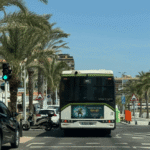
Elche’s beach buses are back for summer. Credit: Ayuntamiento de Elche.

Elche is making it easier than ever for residents and visitors to explore the city this summer, with new technology helping tourists discover its rich heritage while enhanced public transport provides convenient access to the coast. The latest initiatives form part of the city’s ongoing investment in sustainable tourism, accessibility and environmentally friendly travel.

Smart signs help visitors explore historic Elche

Visitors to Elche can now discover more about the city’s history and attractions thanks to a new smart tourist information system installed across the historic centre.

For the first time, the city has introduced 21 information panels at key locations including Glorieta, the Altamira Palace, the Calahorra Tower, Clarisas, the Hermitage of San Sebastian and the MAHE Archaeological and History Museum.

The new signs are designed to help visitors find their way around while providing information about Elche’s main cultural and historic landmarks.

Each panel includes QR codes that visitors can scan with their mobile phone to access additional information in Spanish, Valencian, English and French. The system also includes videos, audio guides and links to cultural walking routes through platforms such as Wikiloc. More languages, including German and Polish, could be added in the future.

The signs also feature Navilens technology, making them easier to use for people with visual impairments and improving accessibility for all visitors.

City officials say the project is aimed at improving the visitor experience while helping people learn more about Elche’s rich cultural heritage. The information has been prepared with input from the city’s archaeology, archives and heritage departments to ensure it is accurate and informative.

The project represents an investment of €180,000 and has been funded through the European Union’s Next Generation programme as part of Elche’s Sustainable Tourism Plan. It follows other recent improvements, including upgrades to the Misteri Museum and Hort del Gat, new shade structures, solar panels and electric vehicle charging points.

Summer beach buses return to Elche

Getting to Elche’s beaches is a little easier this summer thanks to the return of the town’s seasonal beach bus services.

Elche Town Hall has once again introduced its three special summer routes, P1, P2 and P3, to help residents and visitors travel to the coast during July and August.

The P1 service runs a circular route around Arenales del Sol from 8:20 AM to 9:30 PM, with buses every 22 minutes.

The P2 route provides a direct link between El Altet and Arenales del Sol, operating from 10:00 AM to 7:30 PM, while the P3 service connects La Marina and El Pinet with the beaches, with departures every 45 minutes. New minibuses have been introduced this year on both the P2 and P3 routes.

The announcement comes as Elche’s bus network continues to attract more passengers. During June, services to the town’s surrounding districts carried 172,495 passengers, the highest monthly figure ever recorded.

That represents an increase of almost 40 per cent compared with June last year, with nearly 50,000 additional journeys made.

Town Hall officials say the growing number of passengers shows that more people are choosing public transport as an easier way to travel around the municipality, particularly during the summer months.

%

Marbella Heading For Image Change

Published

on

marbella-heading-for-image-change

Event at Marbella’s The Pool. Credit TP FB

Marbella is looking for new appeal further than its long-established draw for global millionaires. Decades of success in the Costa del Sol city rest on year-round fine weather, strong privacy measures and upscale living options. City leaders now want to push further with ambitions to make the area Europe’s own Silicon Valley equivalent.

It seems that startups favour the Costa del Sol location over most others. Luxury property developments sit near growing coworking facilities and office spaces. Property agents report a clear move away from mainly retired wealthy arrivals. Talent from many countries and age groups is now investing more in the destination.

Business centre head reflects on talent attraction

“In place of drawing those nearing retirement, young talent is arriving instead,” says Christian Rasmussen, chief executive of the business centre The Pool. Few places worldwide have such high talent levels. This represents a goldmine opportunity.” He remarked in a recent interview for Bloomberg. “Marbella’s future will differ greatly from its present form,” he explained. “Efforts now focus on altering views of Marbella, moving it from a leisure destination to a key base for contemporary professionals,” he told Bloomberg.

Property developers are currently aiming to create a lasting European base for international founders and investors. The location combines all the sunshine you could want with accessible luxury features similar to those in the United Arab Emirates.

International property investors getting younger

Pandemic years brought noticeable buyer changes. Pure Living Properties’ The Marbella 2025 market report identifies younger purchasers are now keen on full-year living and working arrangements. British, Scandinavian, German and Dutch buyers remain prominent, yet demand is growing from the United States, Canada, Poland and Gulf nations.

Artur Loginov, chief executive at estate agency Drumelia, observed clear progress. “New residents, investors and hotels reached Marbella after the pandemic and raised area standards. Once simply an attractive town, the place now operates as a full city,” he said. “Recent years delivered new gyms, restaurants, hotels and global brand outlets matching New York or Monaco levels.”

Marbella council on board

Local government initiatives are supporting this new direction. Cooperation between Marbella Council and centres such as The Pool is going out of their way to promote foreign business investment. Visits to China and the US with the mayor are being used to promote Marbella as an entry point to Europe. Infrastructure gains include expanded international schools and modern amenities that suit professional families.

Continue Reading

%

Rare Six Planet Alignment Over Spain

Published

on

rare-six-planet-alignment-over-spain

A rare six planet alignment will be visible from Spain on 12 August, alongside the peak of the Perseid meteor shower. Credit : Kim Steinberg, Shutterstock

Most people already know that 12 August is the night to watch the Perseid meteor shower, but that’s only half the story. If the skies stay clear, anyone looking up from Spain could also catch a rare six planet alignment, with Jupiter, Mercury, Mars, Saturn, Uranus and Neptune appearing across the same stretch of sky. Astronomers say alignments involving this many planets don’t happen very often, making it one of the standout nights for skywatchers this summer.

You don’t need to be an expert to enjoy it. In fact, for most people the appeal is simply being outside on a warm August evening and seeing more planets than you would normally expect in a single night. If you’re lucky enough to be away from city lights, you could have a front row seat to one of the year’s most striking celestial displays.

Why this planetary alignment is attracting so much attention

The phrase ‘planetary alignment‘ often sounds more dramatic than the reality, and it’s easy to see why there’s confusion.

The planets are not actually lining up in space one behind another. What happens is that, from our point of view on Earth, several planets appear to gather along the same path across the sky. Astronomers call this path the ecliptic, which is also the route followed by the Sun and the Moon throughout the year.

Small alignments happen fairly regularly. Spotting two or three planets close together is nothing unusual. Seeing six planets appearing in the same part of the sky, however, is much less common.

That’s why 12 August has already been highlighted by astronomy platform Star Walk as one of the key dates of the year for anyone who enjoys watching the night sky.

Adding to the excitement, the alignment arrives on exactly the same night that the Perseid meteor shower is expected to reach its peak. It’s unusual to have two headline astronomical events sharing the same evening, which is why many amateur astronomers have already circled the date on their calendars.

Which planets will you actually be able to see?

This is where expectations need a little reality check.

Although six planets are taking part in the alignment, not all of them will be equally easy to spot.

If you’ve never looked for planets before, Jupiter will probably catch your eye first. It is one of the brightest objects in the night sky and is difficult to miss when conditions are good.

Saturn should also stand out, while Mars will be recognisable thanks to its familiar orange red colour.

The remaining planets are more challenging.

Mercury spends most of its time close to the Sun from our perspective, so it only appears for short periods around sunrise or sunset. Finding it usually requires good timing and an unobstructed horizon.

Then there are Uranus and Neptune. They are simply too faint for most people to see with the naked eye, so binoculars or a telescope will be needed if you want to add them to your list.

Even if you only manage to spot three planets, it’s still an impressive evening. Most of us go through daily life without noticing what’s happening above our heads, and events like this offer a reminder that the night sky is constantly changing.

Where should you go to get the best view in Spain?

The best viewing tip has nothing to do with buying expensive equipment. Your location matters much more than your telescope.

If you’re surrounded by street lights, apartment blocks and illuminated roads, you’ll lose much of the detail. A short drive into the countryside can make a remarkable difference.

Spain has no shortage of places with excellent dark skies. Rural inland areas, mountain viewpoints, national parks and quiet stretches of coastline often provide ideal conditions for stargazing.

Weather is just as important. A perfectly timed astronomical event can disappear behind cloud in seconds, so it’s worth checking the forecast before heading out.

If you’re planning to use binoculars or a telescope, try to arrive before it gets fully dark. Give your eyes around 20 to 30 minutes to adjust naturally, and avoid looking at your phone too often, as bright screens quickly reduce your night vision.

Many local astronomy groups across Spain also organise public observing sessions whenever major celestial events take place. They’re a great option if you’re unsure where to look or simply want someone to point out the planets for you.

A reminder that some of the best summer experiences are completely free

There is something refreshing about an event like this. No tickets, no queues and no booking required.

All you really need is a clear sky and a little patience.

Planetary alignments have fascinated people for thousands of years. Ancient civilisations carefully followed the movements of the planets to create calendars and better understand the changing seasons. Today we know these alignments are simply the result of the planets following their own orbits around the Sun, but that doesn’t make them any less captivating.

For many families, 12 August could become one of those evenings that is remembered long after summer ends. Children might see Saturn for the first time. Someone else may finally understand why Jupiter shines so brightly compared with the surrounding stars. Others may simply enjoy sitting outside while the Perseids streak overhead.

Whether you’re a keen astronomer or someone who rarely looks up after dark, this is one of those occasions that rewards curiosity. Six planets, one of the year’s biggest meteor showers and, hopefully, clear summer skies make for a combination that doesn’t come along very often.

So if the forecast looks promising, it might be worth swapping an evening in front of the television for one under the stars. On 12 August, Spain’s night sky could put on one of its finest displays of the year.

Continue Reading

%

Spain’s Road Rules Are Changing

Published

on

spain’s-road-rules-are-changing

Spain’s updated traffic rules will introduce new measures to improve safety for pedestrians and cyclists from 1 October 2026. Credit : daily_creativity, Euro Weekly News

If you drive in Spain, there are new road rules coming into force on 1 October 2026 that could affect your daily journeys. The changes are designed to make urban streets safer, particularly for pedestrians and cyclists, but they also introduce new responsibilities for motorists and professional drivers.

From traffic lights to overtaking cyclists and seat belt requirements, several long standing rules are being updated. While many of the changes are aimed at improving safety rather than introducing tougher penalties, failing to follow the new regulations could still lead to fines.

Here’s what will change and why it matters.

Spain updates traffic rules to make city streets safer

The Spanish government has approved a reform of the General Traffic Regulations (Reglamento General de Circulación), introducing a new section dedicated entirely to driving in urban areas.

Cities have changed dramatically over the past decade, with more bicycles, electric scooters and pedestrians sharing the same streets. The updated rules are intended to reduce conflicts between different road users and create clearer priorities at junctions and crossings.

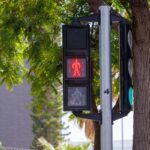
One of the biggest changes concerns traffic lights at pedestrian crossings.

From 1 October, flashing amber lights for vehicles will no longer be allowed to operate at the same time as a green signal for pedestrians at the same crossing.

Although the previous arrangement was legal in certain situations, it often caused uncertainty. Drivers could interpret the flashing amber light as permission to continue with caution, while pedestrians assumed they had clear priority because their signal was green.

The new rule removes that overlap entirely, making crossings easier to understand for everyone.

For pedestrians, the change should make crossing the road more predictable. For drivers, it means paying closer attention to updated traffic light sequences in towns and cities across Spain.

Drivers will have new responsibilities around cyclists

Cyclists are also given greater protection under the revised regulations.

The new rules state that cyclists should ride in the centre of their lane whenever appropriate, rather than staying close to the kerb as many currently do.

For motorists, that position must now be respected.

Drivers will also be required to maintain at least five metres of separation from a cyclist travelling ahead in the same lane. The measure is intended to discourage drivers from following bicycles too closely, particularly on busy urban streets where cyclists may need extra room to avoid parked cars, potholes or opening vehicle doors.

Another change could surprise some motorists.

On single lane urban roads with speed limits of 30km/h or less, local councils will be able to authorise cyclists to travel in both directions, even on streets that normally operate as one way systems.

This will only apply where the appropriate road signs are installed, so drivers should pay close attention to new signage introduced by their local authority.

The reform reflects a broader effort to encourage cycling while making interactions between cyclists and motorists more predictable.

Seat belt rules change for professional drivers

Another important change affects professional drivers who work in towns and cities.

Until now, certain professional drivers were exempt from wearing a seat belt while driving in urban areas under specific circumstances.

From 1 October 2026, that exemption will largely disappear.

Professional drivers will be expected to wear their seat belt in the same way as other motorists. Only a small number of exceptions will remain, including cases supported by certified medical reasons and certain reversing or parking manoeuvres.

The government believes the change reflects modern vehicle safety standards and removes an exception that no longer aligns with current road safety policy.

Some new requirements will not apply until 2027

Although the main reforms take effect on 1 October 2026, not every measure will begin immediately.

The government has allowed extra time for manufacturers, retailers and public authorities to prepare for two additional changes.

From 1 October 2027, personal mobility vehicles, including electric scooters covered by the regulation, will be required to have built in lighting.

The same date will also mark the introduction of a stricter rule for moped helmets. Riders will need to wear approved helmets, replacing the current requirement for helmets that are simply certified.

The staggered timetable is intended to give manufacturers and users enough time to adapt before the new technical requirements become mandatory.

For anyone living or driving in Spain, these changes are worth knowing before they take effect. Whether you drive every day, cycle to work or simply cross busy streets on foot, the updated regulations are designed to make urban roads clearer and safer for everyone. Spending a few minutes familiarising yourself with the new rules now could help you avoid confusion and unnecessary fines once they come into force in October.

Continue Reading
Advertisement
Advertisement

Spanish Real Estate Agents

Tags

Trending

Copyright © 2017 Spanish Property & News