Connect with us

%

Electric Cars Can Drive 30km/h Faster Than Petrol Cars In This European Country

Published

on

electric-cars-can-drive-30km/h-faster-than-petrol-cars-in-this-european-country

Will we have to get out of the way of electric cars? Credit: Grisha Bruev – Shutterstock

A strange motorway rule in Austria means electric car drivers can legally travel 30km/h faster than petrol and diesel cars on certain stretches of road when pollution restrictions are activated.

For someone driving along a motorway at 100km/h, obeying the speed limit, seeing another car cruise past at 130km/h could be a bit of a shock. There is no separate lane, no obvious mistake and, under the right circumstances, the faster driver is not breaking the law. Their secret? They may be driving a fully electric car.

Austria has a special environmental rule known as IG-L, short for its air pollution control legislation. Certain motorway sections normally allow speeds of up to 130km/h. When local air pollution triggers an IG-L restriction, electronic signs can reduce the limit to 100km/h to cut harmful emissions. Some electric cars, however, are exempt from that particular restriction.

Austria’s Federal Ministry for Innovation, Mobility and Infrastructure confirms that vehicles powered entirely by electricity or hydrogen fuel-cell technology can continue at the normal legal motorway maximum of 130km/h when an IG-L 100km/h restriction is in force.

That means a petrol or diesel car may legally have to stick to 100km/h while an eligible electric car can travel at 130km/h on exactly the same stretch of road. It is not actually a special 130km/h limit created for electric vehicles. Instead, the environmental restriction does not apply to qualifying zero-emission vehicles, allowing them to still go at the ordinary motorway maximum.

Green number plates are important

Qualifying vehicles need Austria’s distinctive E licence plate with green lettering to benefit from the exemption. Austria’s government says the special plate is available for purely electric and hydrogen-powered vehicles. Although having one is generally optional, it is required if motorists want to take advantage of certain local benefits, including exemptions connected with IG-L restrictions.

That makes the rule particularly interesting for anyone driving an electric vehicle through Austria from another country, as the paperwork and vehicle identification requirements matter.

Could Spain introduce the same rule?

Spanish motorists should not expect to see electric cars legally overtaking everyone at 150km/h any time soon. Spain’s general maximum speed for cars and motorcycles on motorways and dual carriageways remains 120km/h, regardless of whether the vehicle is electric, petrol or diesel. The DGT confirms the 120km/h limit for these roads.

Spain already uses environmental classifications to give certain vehicles different treatment in areas such as low-emission zones. Malaga, for example, has introduced its own low-emission zone rules, with vehicles classified according to their environmental status.

Any future Spanish system would also need to be carefully worded. Rather than allowing electric vehicles to exceed the normal motorway maximum, a system modelled on Austria could theoretically allow them to retain the ordinary 120km/h limit while petrol and diesel vehicles were temporarily reduced to a lower speed for pollution reasons.

Very different approach to electric car incentives

Austria’s rule offers an unusual example of how environmental policy can affect what happens on the motorway.

Spain has already offered electric vehicles certain privileges, although those benefits are changing. Recent Spanish traffic rules, for example, removed a previous advantage for some zero-emission vehicles using BUS-VAO lanes without enough passengers.

For drivers in Spain, the important point is simple: owning an electric car does not currently give you permission to exceed the posted motorway speed limit.

Anyone heading across the border into Austria, however, could encounter the remarkable situation where the type of engine under the bonnet genuinely determines whether 100km/h or 130km/h is legal.

%

Why Your Spanish Country House Zaps You Every Summer

Published

on

why-your-spanish-country-house-zaps-you-every-summer

Hand gets electric shock from appliance. Credit: brizmaker – Shutterstock

Feel a sharp tingle or mild shock every time you empty the washing machine, fridge or oven in your rural Spanish home? You are not alone. Hundreds of expats living in country houses, fincas and cortijos report the same problem, and it gets worse after weeks without rain. Dry soil is the most common culprit behind these unwanted electric shocks, and ignoring it can turn a mild annoyance into a real safety risk.

Spain’s electrical system relies on a local earth electrode (often a copper rod) at each property. When the ground dries out, that electrode stops doing its job properly. Current that should disappear harmlessly into the soil instead sits on metal appliance cases, building up, waiting for your hand to complete the circuit.

Why long dry spells make the shocks worse

Rural properties usually sit on a TT earthing system. Your house has its own metal rod or rods driven into the ground for this purpose. Leakage current from an appliance travels down the protective earth wire, into the rod, and through the soil back to the transformer.

Soil needs moisture to conduct electricity well. After months of sunshine and little rain, water under your house disappears and resistivity goes through the roof. A rod that measured acceptably low resistance in spring can easily double or triple its value by August. Light voltage on the washing machine or fridge door rises as a result. You feel it as a persistent tingle, especially if you stand barefoot on a tiled or concrete floor.

Spanish rules recognise this seasonal change. Official guidance tells installers to design and test earth electrodes for the driest conditions of the year (but does this always happen?) Many older rural installations never received that treatment.

How Spanish earthing works in country homes

Most Spanish homes use the TT arrangement. The utility, be it the oven or coffee machine, earths the neutral at the transformer. Your property provides its own independent path to true earth. Residual current devices (diferenciales) protect you by cutting power when they detect a leak, but they only work properly if the earth path is low enough in resistance.

In towns and modern urbanisations a foundation electrode or ring often keeps resistance stable. Out in the countryside a single rod is far more common. Rocky, sandy or clay soils that shrink in drought make the problem worse. Once resistance climbs, even normal appliance leakage becomes noticeable, and often painful.

What you should do right away

Stop using any appliance that gives a clear shock until someone checks it. Unplug it if possible. Test the RCD buttons on your fuse box every month, as they should trip instantly.

Call a registered electrician (instalador autorizado) and ask for an earth resistance measurement with a proper tester. Request the test during or just after a dry spell so you see the worst-case figure. August is often the most practical me for this. Ask them to check continuity of the protective conductors and confirm the RCDs still work correctly. Mild tingles often mean the system is only just failing. A full fault could put mains voltage on the casing with no warning, and can be deadly.

Practical longer-term solutions that work

Extra earth rods spaced correctly and bonded together usually bring resistance down. Deeper rods reach more stable moisture layers. In difficult soils specialists sometimes use conductive compounds or a buried ring. Costs vary with site conditions, but many rural jobs fall into a few hundred euros rather than thousands.

Make sure every circuit that needs it has a working 30 mA RCD. Bonding of metal water pipes and other services should also be confirmed. Once the earth path is solid again, the tingles normally disappear.

Endesa and Iberdrola, the biggest power companies, both publish clear explanations of why a working ‘toma de tierra’ (earthing) matters for everyday safety. Their advice matches what rural electricians see every dry summer: test it, improve it if needed, and the shocks stop. Until you get it fixed, don’t walk on a damp floor, and wear rubber soled footwear.

Continue Reading

%

Two Women Dead And Two Children Injured After Deadly León Flash Flood

Published

on

two-women-dead-and-two-children-injured-after-deadly-leon-flash-flood

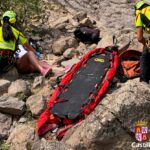
The scale of the incident triggered a major emergency response. Photo credit: Junta de Castilla y Leon

A quiet Saturday evening in the León countryside turned deadly when a sudden torrent of water and mud swept through Manzanedo de Valdueza, killing two women and injuring two children. The women were inside a bodega with four other people when the torrent hit. The two children were among those caught up in the flooding and suffered minor injuries. 

Authorities have since confirmed that there are no further missing people.  The disaster struck shortly after 7:30pm on Saturday, August 15, after a powerful storm caused a surge of water and a landslide in the mountainous area around the village. The resulting torrent of water, earth and mud was channelled down Calle de la Iglesia, reaching the bodega where the six people were sheltering. 

Water and mud swept into the bodega

The force of the flooding left little time for those inside to react. A torrent caused by the storm triggered a landslide on the mountainside before water and mud were funnelled into the village. Two women, reported by Europa Press to have been around 60 and 80 years old, died in the bodega. 

Two children were rescued with minor injuries and received medical attention. Earlier reports had raised concerns that other people could have been missing, but the emergency operation later established that there were no further missing people.  The first emergency calls were received at 19:38, reporting a flash flood and movement of earth in Manzanedo de Valdueza, part of the municipality of Ponferrada. 

Emergency crews rushed to the scene

The scale of the incident triggered a major emergency response. Firefighters from Ponferrada, Policía Nacional and Policía Local were deployed alongside medical teams and the Castilla y León emergency coordination centre. The Grupo de Intervención Psicológica en Desastres y Emergencias (GRIPDE) was also mobilised to provide psychological assistance following the deaths. 

A rescue helicopter was also activated as emergency teams worked in an area affected by mud, debris and unstable ground.  The operation initially focused on establishing how many people had been caught by the flood and whether anyone else remained trapped or unaccounted for. That uncertainty was eventually resolved, with authorities confirming that there were no further missing people. 

Bouzas also hit by violent flooding

Manzanedo de Valdueza was not the only village affected by the storm. The nearby locality of Bouzas, also within the Ponferrada municipality, was hit by another torrent. Several vehicles were swept away as the water moved through the area.  The storm also caused damage to roads in the surrounding area. The route connecting Peñalba de Santiago was affected by landslides and flooding, adding to the difficulties faced by emergency crews attempting to reach the affected communities. 

The episode struck as León was already under weather warnings for storms. The mountain areas and León plateau had been under an orange warning for torrential rain, while El Bierzo, where Manzanedo de Valdueza is located, was under a yellow warning. 

A sudden disaster after intense storms

The tragedy illustrates how quickly conditions can change during intense summer storms in mountainous terrain. According to the Subdelegación del Gobierno in León, the rainfall triggered a landslide on the mountainside, sending water and earth towards Manzanedo de Valdueza. Rather than remaining within the natural drainage channels, the torrent was funnelled along Calle de la Iglesia before reaching the bodega. 

The combination of fast-moving water and earth made the incident particularly dangerous. By the time emergency services began receiving calls, people inside the building were already caught in the flooding. The two deaths have turned what had been a severe weather episode into a fatal disaster for the small León community.

No further victims reported

The latest information from authorities indicates that the death toll stands at two women, while two minors suffered minor injuries. No further people are currently reported missing.  Emergency teams have remained focused on the affected areas, assessing damage and dealing with the consequences of the flooding and landslides.

For the residents of Manzanedo de Valdueza, however, the most devastating consequences are already clear. Two women lost their lives after a torrent of water and mud swept into the bodega where they had been during the storm, while two children were left injured. What began as an intense summer storm became a deadly flash flood in a matter of minutes.

Continue Reading

%

Leonardo DiCaprio And Jeff Bezos Put $200m Behind Desperate Bid To Save 100 Species

Published

on

leonardo-dicaprio-and-jeff-bezos-put-$200m-behind-desperate-bid-to-save-100-species

The project is concentrating on species where conservation action could still change their future. Photo credit: Erin Jones/Shutterstock

Some of the world’s rarest animals and plants are now being given a chance they may not have had for much longer. A new $200 million conservation project backed by Leonardo DiCaprio’s Re:wild and Jeff Bezos’ Bezos Earth Fund is targeting 100 of the planet’s most threatened species across 30 countries. 

The Phoenix Species Project aims to do more than slow population declines. Its stated goal is to recover species that are already on the brink of extinction, using long-term funding for conservation programmes that have often had to operate with limited resources.  The initiative was announced recently and is described by its organisers as the largest philanthropic fund dedicated exclusively to recovering critically endangered species. 

100 species facing a fight for survival

The species selected for the project are spread across very different habitats, from tropical forests and volcanic islands to freshwater ecosystems and oceans. They include the golden-crowned sifaka, a lemur found in Madagascar; the Malayan pangolin; the Visayan warty pig of the Philippines; the pink land iguana of the Galápagos; and Attenborough’s long-beaked echidna from New Guinea. Other targets include threatened amphibians, birds, reptiles, fish, invertebrates and plants. 

The project is being led by Re:wild, the conservation organisation co-founded by DiCaprio, and the Bezos Earth Fund, established by Bezos. The initial $200 million commitment is divided equally, with $100 million coming from each organisation. Re:wild says the funding also has support from Age of Union and the Todd Graves Family Foundation.  That distinction matters because the $200 million is not simply a personal donation from DiCaprio and Bezos. It is being provided through the organisations behind the initiative.

Why these species were chosen

The project is concentrating on species where conservation action could still change their future. According to the organisers, the money will support work including conservation breeding, habitat restoration, disease management and controlling invasive species. Projects will be carried out with local conservation groups, Indigenous peoples, communities, scientists and governments. 

The intention is also to provide funding over a longer period rather than forcing conservation organisations to repeatedly seek short-term grants. That can make a major difference for species whose recovery may take years or even decades. Conservation programmes can require sustained monitoring, breeding, habitat protection and work with communities before animals can safely return to the wild.

The numbers behind the extinction crisis

The scale of the project comes as conservationists face an enormous global challenge. The International Union for Conservation of Nature’s Red List contains more than 49,000 species classified as threatened with extinction, representing about 28 per cent of the species assessed. 

The Phoenix project is therefore targeting only a tiny fraction of the species at risk. Its organisers argue that focusing substantial resources on 100 particularly vulnerable species can demonstrate what is possible when conservation programmes have the funding and technical support needed to continue their work. One of the conservation groups involved has described the additional funding as a chance to move beyond simply trying to prevent a species from disappearing and towards actually rebuilding its population. 

From pangolins to an extraordinary echidna

Among the animals receiving support are species many people may never have encountered. The Attenborough’s long-beaked echidna is an egg-laying mammal from New Guinea, while the Malayan pangolin is one of the world’s most heavily trafficked mammals. The pink land iguana is found only on Wolf Volcano in the Galápagos.

The project also includes the Hickory Nut Gorge green salamander, which lives in a small area of North Carolina, and Tanzania’s pancake tortoise, named for its unusually flat and flexible shell.  Each faces different pressures, meaning there is no single conservation solution. Habitat loss, disease, invasive species and human activity can all contribute to population declines, depending on the species.

A chance to bring species back

DiCaprio has spent years campaigning on environmental issues, while Bezos has channelled substantial funding through the Bezos Earth Fund. The Phoenix project brings those efforts together around a specific objective: recovering species rather than simply documenting their decline. The organisers say the programme grew from discussions beginning in 2021 between DiCaprio, Re:wild and Bezos, followed by consultations with scientists, Indigenous communities, conservation organisations and governments. 

For the 100 species selected, the difference could ultimately be measured in something much more basic than dollars. It could mean whether future generations are still able to see these animals and plants in the wild, or whether they become names remembered only because they once existed.

Continue Reading

Trending

Copyright © 2017 Spanish Property & News