
Donald Trump
Enriched Uranium, The Latent Threat At The Center Of The Dispute Between The US And Iran

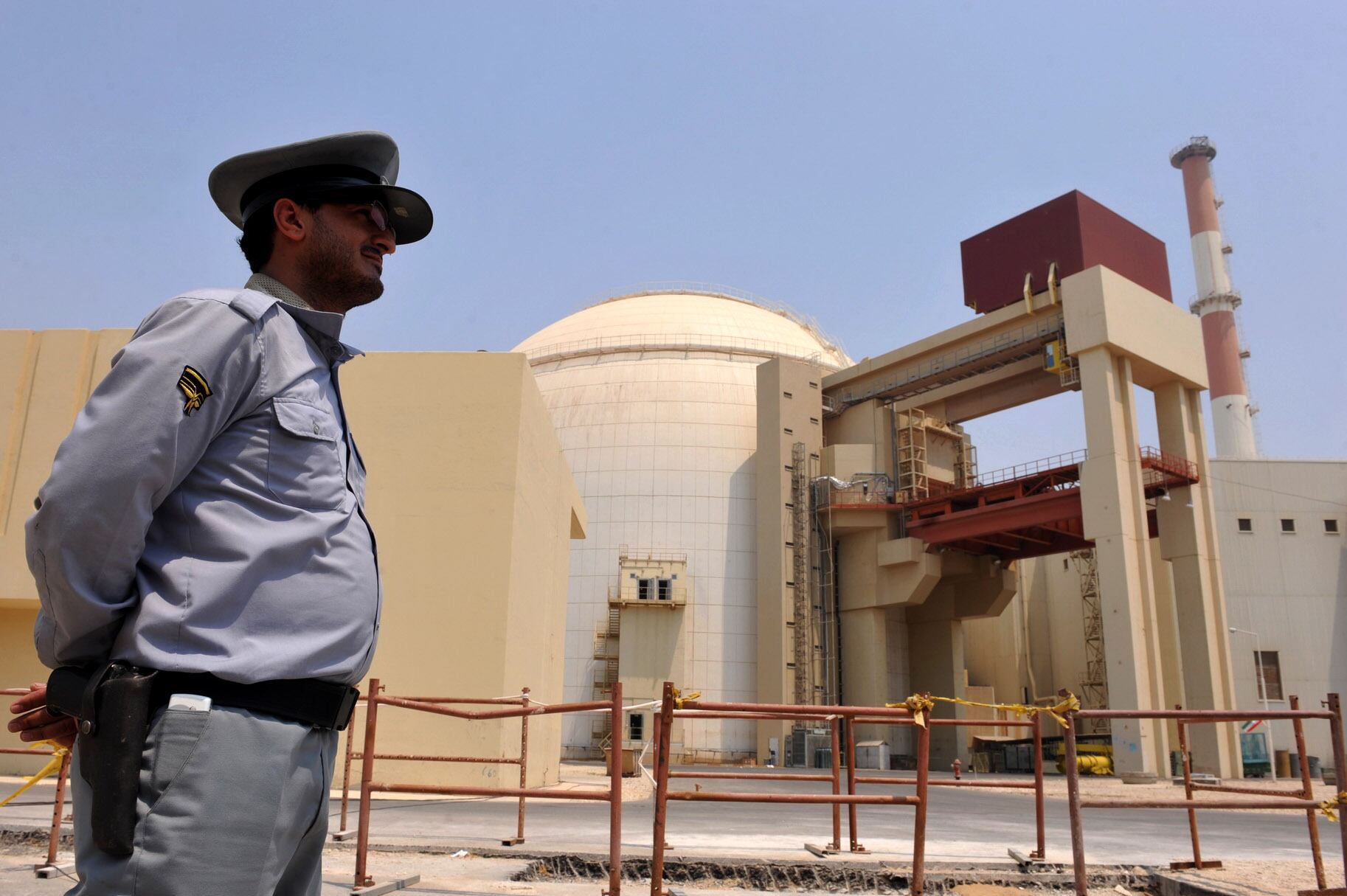
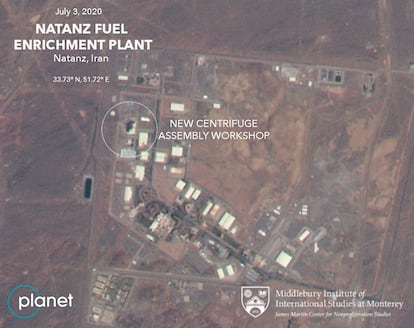
Satellite images released in March show a flatbed truck carrying several suspicious blue barrels in a desert area. It is escorted by three security vehicles to the entrance of the underground tunnel complex in Isfahan, the bunkers that are part of Iran’s nuclear facilities. “Not time to get excited? Transfer of large load precious high enriched uranium in daylight?” Olli Heinonen, the former head of the Safeguards Department at the International Atomic Energy Agency (IAEA), quipped on social media after the French newspaper Le Monde published the photographs.
Since the U.S. and Israeli strikes against Iran’s nuclear and military facilities in June 2025, inspectors from the UN nuclear agency have only set foot in Iran to monitor sites that were not targeted. And since February of this year, after the start of the full-scale war, not even that. The IAEA has lost the physical access that for decades underpinned verification of Iran’s nuclear program. “Although analysis of satellite imagery of the nuclear sites around Natanz, Fordow and Isfahan is important,” Heinonen explains from New York, “supply chains for equipment and materials are geographically dispersed. Much of the actual research and experimental work is being carried out elsewhere, including at unknown locations.”
Heinonen is known in U.S. Department of Energy laboratories as the “Sherlock Holmes of nuclear detection.” He worked for 27 years at the IAEA in Vienna and personally inspected nuclear facilities in Iran. Although he led the agency’s efforts to implement analytical models to complement traditional verification activities, he speaks with the caution expected of someone trained as a safeguards inspector. “Satellite imagery has its limitations. It is not a continuous monitoring system that can determine, for example, a vehicle’s origin or the contents of packages. When we look at the Isfahan nuclear center, we see it houses many other activities, such as production of zirconium tubes, hafnium, etc. Additional information is needed to reach a credible, professional conclusion about the possible material those containers hold.”
U.S. President Donald Trump claimed the June 2025 bombings had caused “the total destruction” of Iran’s nuclear program. Contradicting his own boast, eight months later, on February 28, 2026, he launched Operation Epic Fury, telling the world that “Iran will never have a nuclear weapon.” The White House embarked on a large-scale war that was supposed to last a few weeks but stretched into months — with the current uncertainty over a ceasefire agreement hanging in the balance; it began with the bombing of a school in Minab that killed nearly 200 people, mostly girls, and has caused more than 7,000 deaths and 37,000 injuries in Iran and Lebanon; it has brought the Middle East to a boil, and has given Iranian leaders a new superweapon they did not know they possessed: control of the Strait of Hormuz, a key route for oil transport.
The UN agency responsible for safety and nonproliferation sees more nuclear risk in Iran today than before the war. Three days after the start of the bombings, Rafael Grossi, director general of the IAEA, said: “While there has been no evidence of Iran building a nuclear bomb, its large stockpile of near-weapons grade enriched uranium and refusal to grant my inspectors full access are cause for serious concern.” “For these reasons,” he added, “the Agency will not be in a position to provide assurance that Iran’s nuclear program is exclusively peaceful.”
Grossi is in the midst of a campaign to be appointed the new UN secretary-general. He balances leadership of the IAEA with publishing articles in U.S. international affairs journals that set out his proposal to save the organization from “irrelevance,” as he stated in a column for Foreign Affairs. The veto power of one of the five permanent members of the UN Security Council could block his candidacy. Among them is the country that attacked Iran, the United States.
Robert Kelley, former chief inspector for the IAEA in Iraq, South Africa, Libya and Syria, with extensive experience in technical analysis of Iran’s nuclear program, distinguishes between the Agency’s ability to measure nuclear material — which he says remains excellent — and its capacity to judge whether that material points to a weapons program, something he considers politicized.
“Its inspectors verify declared nuclear material,” Kelley tells this newspaper from Klosterneuburg, near Vienna. “They are the only ones, outside Iran, who can do that, and they have done an excellent job. We would be blind without the IAEA’s routine inspections.” However, the expert cautions, “making superficial judgments about ‘peaceful’ intent is a slippery slope that [Grossi] may regret taking. He himself is technically rather weak, as are his advisers, when it comes to a [nuclear] program and its content.”
The fate of Iran’s uranium
The 440 kilograms of uranium, enriched to 60%, whose exact whereabouts no one can confirm today, would fit “in 50 barrels the size of scuba tanks. That’s it,” says the U.S. nuclear engineer who, before becoming IAEA director, worked on defense nuclear programs at the Los Alamos National Laboratory — the origin of the Manhattan Project that built the first atomic bomb during World War II — and the Lawrence Livermore National Laboratory.
Hence Heinonen’s disdain for speculation about the blue drums in the satellite images, and the warning about the risks of physical inspection being replaced by remote monitoring. “The enriched uranium has not disappeared,” Kelley reminds us. “Iranian leaders know exactly where it is, and the ambiguity keeps them laughing all night.” That is, the Revolutionary Guard retains its value as a bargaining chip and latent threat. Meanwhile, Iran’s ambassador to the IAEA, Reza Najafi, denies that his country resumed enriching uranium after the Israeli and U.S. bombings of its nuclear facilities in 2025.
Kelley proposes an unconventional negotiated solution, not just a diagnosis of the crisis: that Iran give up all its 60% uranium in exchange for being allowed to continue enriching to 20%, a level for civilian use that is currently scarce on the international market, and export it as fuel. In this way, it would preserve its centrifuge program and gain a real industrial niche, while the IAEA maintains verification. A swap inspired by the “Megatons to Megawatts” precedent, which under U.S. supervision turned Soviet weapons-grade uranium into civilian fuel for two decades. “Why bomb Iran?” Kelley asks. “Just buy the material and remove it, like in Operation Sapphire in Kazakhstan.”
Days after the Memorandum of Understanding signed by the presidents of Iran and the United States on June 17, 2026, Grossi spoke at the Fukushima Daiichi nuclear plant in Japan. “The agreement explicitly states nuclear activities that are going to be carried out with regards to nuclear material facilities will be supervised by the IAEA.” He added: “Obviously, to do that, we will have to inspect. Whether this happens today, after tomorrow, or in one week, or in 10 days, it’s important but not essential. This is going to happen.” As yet, no date has been set.
Sign up for our weekly newsletter to get more English-language news coverage from EL PAÍS USA Edition





America
Marco Rubio Convoca A 66 Países A Un Encuentro Para Combatir A “los Extremistas De Izquierda” En Todo El Mundo

Benjamin Netanyahu
Basel Adra, Palestinian Filmmaker And Oscar Winner: ‘Israelis Don’t See Us As Human Beings’

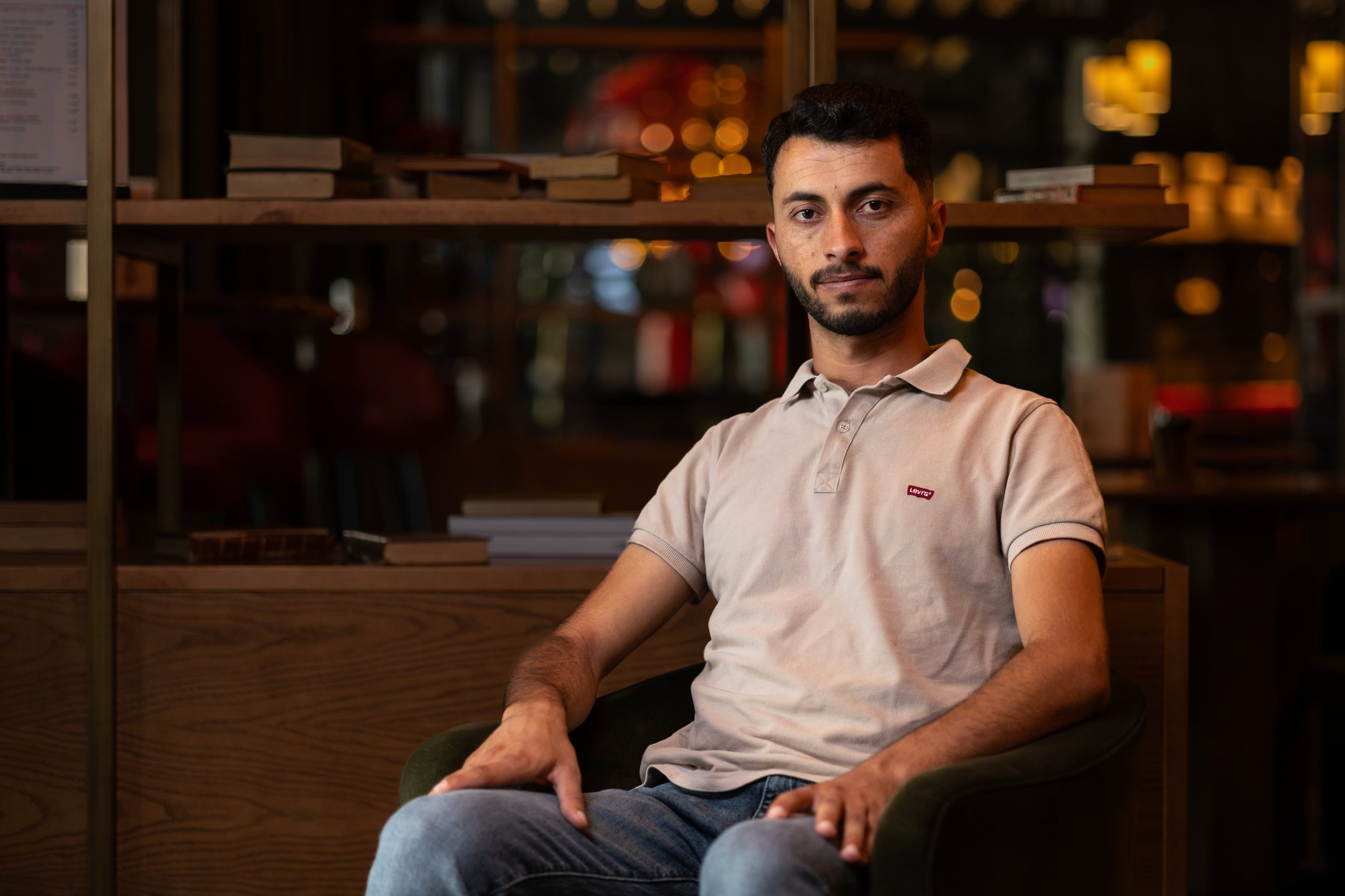
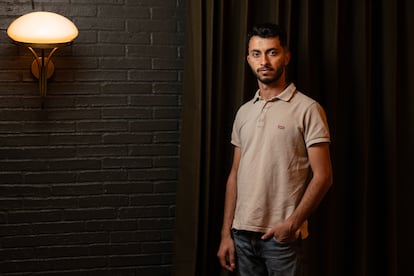
Wednesday morning at a Madrid hotel. Palestinian filmmaker Basel Adra, an Oscar winner for the documentary No Other Land, turned 30 on Monday after waiting hours in queues at border crossings and passing through checkpoints (“It’s inhuman, it’s another tool against Palestinians,” he says) in order to take part in the Ministerial Conference, co-organized by the ministries of culture of Spain and Palestine, which opened at the Museo del Prado on the afternoon of July 15 and where more than 30 international delegations will sign a declaration for the reconstruction of Palestinian culture. Thanks to his statuette and the trajectory of his film, Adra is one of the most visible faces among artists inside and outside his country, and he still lives in the village where he was born, Al Tuwani, a hamlet in Masafer Yatta, a harsh area of the southern West Bank depicted in his film. “They recognize me at every Israeli checkpoint, that scares me,” he explains. Serious — although he will smile when soccer or his 18-month-old daughter is mentioned — and accompanied by his wife, Adra sits down to talk. He makes only one request: that the chosen table be in the quietest area because he speaks softly and in a low voice.
Question. How is your family?
Answer. Physically fine. I have a one-and-a-half-year-old daughter, and she’s fine.
Q. What is your day-to-day life like?
A. It’s not easy to live in our communities. You can plan something for the next day, and suddenly Israeli forces arrive with bulldozers or settlers, and then your day changes. For example, I might plan to go to the city with my family, but we get up in the morning, something happens and the whole day is lost. So our daily life really depends on what is happening each day, on what they do to us.
Q. What do you expect from the Ministerial Conference?
A. I hope more attention is paid to Palestinian culture. That Palestinian artists and culture receive genuine support and backing from the international community; not just pity, but real assistance. That could help more filmmakers and artists show their work to the world. So we hope Palestinian artists find solid backing at that meeting.
Q. Do you feel Spain supports the Palestinian cause?
A. Absolutely. Both the government and ordinary people. For example, I remember a footballer did something small with a flag and caused a huge stir [he is referring to Lamine Yamal, who waved a Palestinian flag in May during FC Barcelona’s victory parade after winning La Liga]. Israeli ministers and officials had to comment on it, which drew even more attention.
Q. Europe is more hesitant…
A. We hope Spain doesn’t change because, you know, in Europe and other countries it’s easy to get support at first, but after a while the government changes or people within the government itself — as has happened in Sweden — change their minds and stop supporting the cause or even turn against it. The Israeli lobby always finds a way to influence official policies.
Q. Your father already had a camera with which he filmed both your childhood and attacks by settlers and Israeli forces. Is the documentary No Other Land — which portrays the daily struggle of Masafer Yatta families facing demolitions and forced displacement — the result of a legacy?
A. Not exactly. In my community, the camera arrived at the start of this century. It wasn’t common, it was unique, unlike today.
Q. Did you use it as a defensive tool?
A. Yes. My father and other people recorded those images. It wasn’t just him. There were others in the community who were learning and filming, as well as international activists. So we have a very large archive because many people have been filming in the West Bank for two decades.
02:00
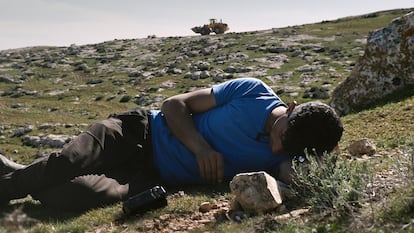
Trailer for ‘No Other Land’
Q. Do you feel a responsibility?
A. I feel a constant responsibility. Not only to bring my community’s story to film, but also to speak about it and try to help, you know? Filming and publishing is no longer enough; I have an even greater responsibility than before No Other Land.
Q. Are you shooting another documentary?
A. No, it’s a short animated film about movement restrictions in the West Bank. I’m making it with an Argentine animation production company. I found the company through friends in the U.S. I do it from my village and they do it from there. And the topic is a bit too complicated and dangerous for a documentary: if I wanted to shoot that film passing through checkpoints and filming with cameras, I would be in great danger… because of the Israeli soldiers and all that.
Q. What do you think of calls from filmmakers around the world to boycott Israeli artists and companies linked to their government?
A. That’s not an easy question because I work with filmmakers. For me it’s quite simple: those who publicly support, endorse and back the regime, the apartheid and all the atrocities committed by Israel, should be boycotted. You can’t accept people who support what their regime did in Gaza, the West Bank, Lebanon, or Syria. It’s not normal, you know? But I think those who raise their voices and defend humanity and international law should not be boycotted.
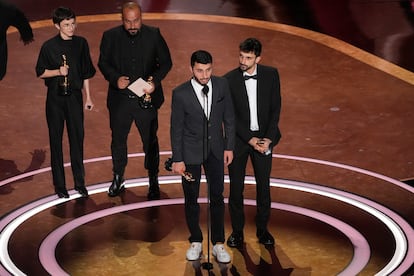
Q. Very few Hollywood stars, such as Javier Bardem or Mark Ruffalo, have dared to support Palestine. Do you understand that fear?
A. I don’t think this happens only in Hollywood. It happens in many other places around the world. People fear for their jobs, for their income, for their positions. They’re afraid of losing their work and, in other places, of course they fear for their safety. The Israeli regime has the backing of powerful regimes around the world; governments with great wealth and power that, in my view, lack moral standing. That’s why it’s understandable that people fear for their safety and salaries. We greatly value those who speak out against what is happening, and we always encourage others to overcome that fear and join the cause. However, it’s striking how fear takes hold of people who work in the film industry. They control your voice; they condition what you’re allowed to say and which topics you can make films about. Or even which films you can watch. For example, our film still hasn’t secured distribution in the United States.
Q. What do you remember about holding the Oscar in your hands?
A. I knew that even if I won the statuette, I would return to my reality, because since we won the award for best documentary at the Berlinale in 2024 there had been a lot of uproar around the world. And things did not change; on the contrary, they got worse. On the other hand, there was what was happening in Gaza: people saw on their phones what was happening, but the genocide did not stop. I was firmly convinced while working on the film that when it premiered people would do something. I believed people simply did not know what we were going through. And I had a very unpleasant feeling when I discovered that this is not true, that people do know and see what we are suffering, and simply let it happen.
Q. Do you think a documentary can change the world?
A. No, I think it changes people. I’ve been to movie theaters and screening rooms many times, and I see how No Other Land affects the audience sitting there. I inform people about what’s happening. That’s why I also know it’s an educational film for people who don’t have a firm stance or who are unaware of what’s happening to the Palestinians: they’ll learn from it.
Q. With Donald Trump and Benjamin Netanyahu in charge, can one still be optimistic about the future of Palestinians?
A. No, and regarding Israelis, it’s not only Netanyahu, the national security minister, Itamar Ben-Gvir, the finance minister, Bezalel Smotrich, or the settlers. Netanyahu, Smotrich and Ben-Gvir were elected by the people, and I believe they represent the majority of Israelis. For me, the problem is Israeli society. Even before [the Hamas-led attacks on] October 7 we lived under occupation, but Israelis in Tel Aviv lived their normal lives; the money from their taxes went to the settlers, to the settlements, and to the army, which killed Palestinians, although in smaller numbers than after October 7. But they do not see us as human beings. That’s why they accept the occupation and cannot claim ignorance; we live in the same territory and they cannot say they didn’t know what was happening. And now I think they have reached their worst moment in terms of racism and tolerance of the crimes committed against us Palestinians. So I don’t think change will come through elections in Israel or the United States. Europe must assume its responsibilities; to this day Europe, including Spain, allows products from the settlements to enter. Stopping that would be a small step toward change, although they aren’t even willing to do it. So what’s the point of speaking publicly about morality, international law, democracy, etc., if your actions say otherwise?
Q. As you said earlier, after the Oscar, Israeli attacks on your village increased. When was the last one?
A. This very morning they attacked the village of Susia in Masafer Yatta. I saw many people wounded, with bleeding injuries to the head and chest. Members of that family had already suffered attacks last March. Settlers came to their fields with their livestock; they called the police and the army to evict them, but no one came. The family decided to drive the animals away from near their homes; then two settlers, one of them in uniform, got out of their SUV, began shooting at the family and killed a man and wounded his brother, who has been left partially paralyzed. It was a nightmare and it still is. The killed man was 28 and had a wife and two daughters. And demolitions have increased with total impunity.
Q. You yourself suffered a raid at your home a month ago, didn’t you?
A. Yes, they entered at night and searched it. They even looked through my wife’s phone. And two months ago, settlers came to the house at four in the morning and smashed the cars of some activists parked in front of my building. I feel fear. But, to be honest, it’s a feeling all Palestinians share today.
Sign up for our weekly newsletter to get more English-language news coverage from EL PAÍS USA Edition
arrest
Spain’s Left Accuses Trump Of Targeting Pro-Palestine Activism Over Ibiza Arrest Of US Millionaire

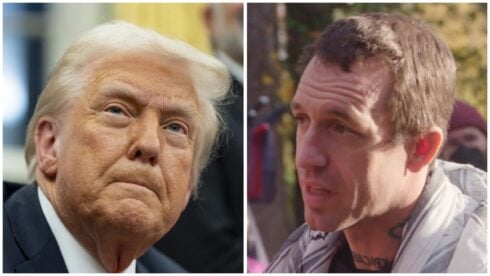
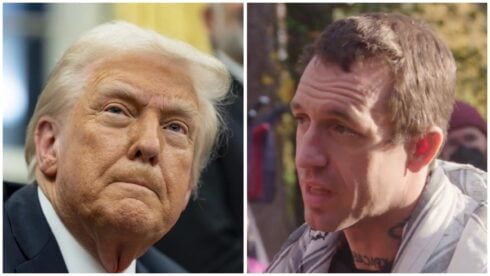 SPAIN’s left has accused Donald Trump of treating support for Palestine as terrorism after the arrest in Ibiza of a US millionaire who donated $1 million in aid to Gaza.

Lotería Nacional: Comprobar Sorteo Del Jueves 16 De Julio

The San Roque Club – Townhouses For Sale

Marco Rubio Convoca A 66 Países A Un Encuentro Para Combatir A “los Extremistas De Izquierda” En Todo El Mundo

Spain Is Set To Be Swarming With Rock Legends This Weekend – Here’s What You Need To Know
Alhaurin el Grande and Coin launch historic 1.5 million kilo season for premium tomato

Cheap Flights And Mass Tourism Are Adding €3,800 To The Cost Of The Average Spanish Home, New Report Warns


-
 Barcelona2 weeks ago
Spain Is Set To Be Swarming With Rock Legends This Weekend – Here’s What You Need To Know
-
Alhaurin El Grande2 weeks ago
Alhaurin el Grande and Coin launch historic 1.5 million kilo season for premium tomato
-
 Business & Finance2 weeks ago
Cheap Flights And Mass Tourism Are Adding €3,800 To The Cost Of The Average Spanish Home, New Report Warns
-
Barcelona2 weeks ago
Gang Horror In Barcelona As Gunmen Shoot Dead 15-Year-Old Boy Hanging Out In A Park
-

 New Developments2 weeks ago
🌅 Stunning Penthouse With Panoramic Sea & Mountain Views Benalmádena
-
 Dutch demand2 weeks ago
Dutch Demand For Spanish Property Keeps Rising As Others Cool
-
Cataluña wildfire1 week ago
Spain travel chaos as Cataluña wildfires close major roads and suspend trains
-
 Andalucia2 weeks ago
La Fiscalía Abre Una Investigación Para Determinar Si Un Hospital Público De Málaga Utilizó Reactivos Caducados En Sus Análisis