Connect with us

%

EU Changes Course On EES As Nine Countries Further Delay Biometric Checks

Published

on

eu-changes-course-on-ees-as-nine-countries-further-delay-biometric-checks

The latest development puts the EU in an uncomfortable position. Photo credit: Colinmthompson/Shutterstock

If you are travelling into the Schengen area from outside the EU, you may have been expecting the new biometric border checks to become unavoidable this month. Instead, the rules have taken another turn. Nine Schengen countries have told Brussels they are not ready to fully enforce the EU’s Entry/Exit System (EES), and the European Commission has reportedly agreed to let them delay the checks while technical problems are sorted out.  

France and Portugal are among the nine countries, alongside Belgium, Germany, Greece, Italy, Malta, the Netherlands and Switzerland. The development comes just days after the temporary flexibility built into the system expired on September 6. That arrangement had allowed countries to temporarily suspend biometric registration when queues became too long, helping airports deal with the summer rush. Now, the countries concerned are effectively being allowed more time.

Nine countries hold back on full EES rollout

The nine countries have reportedly told the Commission that they will not fully enforce the new controls until the necessary technology and systems are working properly. According to the latest reports, Brussels has informally agreed to the delay in order to maintain what officials describe as “border fluidity” and avoid a repeat of severe queues at busy crossings.

The European Commission has not publicly confirmed the arrangement in detail. The decision affects some of Europe’s busiest tourist destinations, with several major airports still struggling with queues and technical problems.

Why is Spain not one of them?

Spain is notably absent from the list, despite also experiencing problems with EES during its rollout. Spanish airports previously had the ability to temporarily pause biometric registration when queues became excessive during the transition period. However, Spain has continued with full implementation after the September 6 deadline rather than asking Brussels for the additional flexibility now being used by the nine countries. That does not mean Spain avoided the technical problems affecting other European countries.

The difference is that Spain is currently considered capable of operating the system in full, while the nine countries seeking further flexibility still have problems at some of their border crossing points. For travellers, that means the experience can vary considerably depending on where they enter the Schengen area. Someone arriving in Spain should not assume that the flexibility available in France, Portugal, Germany or the other affected countries will apply at a Spanish border crossing.

Queues and technical problems behind the decision

The rollout has brought problems at several major European travel hubs. Airports in countries including Greece, Italy and Portugal have experienced long queues, while technical difficulties have affected the ability of border officials to register biometric data and retrieve information from the central system.

Reports of passengers facing lengthy waits and missing flights have added pressure on governments and the travel industry to slow down the full rollout.  France had already been using the flexibility during the summer to keep queues moving. Portuguese authorities have also used temporary suspensions when congestion became too severe. The difference now is that the September 6 deadline has passed.

What this means for travellers

For British travellers, the change could mean that arriving in France, Portugal, Belgium, Germany, Greece, Italy, Malta, the Netherlands or Switzerland does not always result in the full EES biometric registration process being carried out immediately. However, it does not mean EES has been cancelled in any of the nine countries.

Travellers should still expect the system to be used and should have their passport ready for the new registration process where it is operating. The arrangements can also differ between individual border crossing points, meaning that a traveller cannot assume that EES will be suspended simply because they are entering one of the nine countries.

Brussels faces an awkward border problem

The latest development puts the EU in an uncomfortable position. The bloc has spent years developing EES as a major overhaul of Europe’s external borders, with the aim of making crossings more secure while replacing manual passport stamps with a central digital system. Yet nine countries have now effectively asked for more time to make it work without creating major disruption for travellers.

The Commission had already acknowledged before the September deadline that some member states still needed adjustments at particular border crossing points. At a September 1 briefing, a Commission spokesperson said officials were in contact with the countries concerned and were looking at transitional arrangements for places where further adjustments were needed.  For anyone travelling to the nine countries in the coming weeks, that means one thing: the EES rules are still changing, even though the system is officially up and running. The biometric border system has not disappeared. But neither has the ability of some of Europe’s busiest destinations to put the brakes on it when the technology or queues become a problem.

%

Benahavis Wildfire Stabilised: 300 Hectares Burnt

Published

on

benahavis-wildfire-stabilised:-300-hectares-burnt

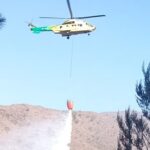
Heavy helicopters drop water in one of biggest operations of year. Credit: Infoca X

Residents forced from their homes by the Benahavis wildfire can now return after firefighters brought the major blaze under control following a difficult 24 hours.

More than 300 hectares of woodland and scrub have been affected by the fire, which started near the Ermita del Rosario on Sunday afternoon and spread rapidly through steep terrain and strong easterly winds.

Around 50 people from Montemayor Alto were evacuated as the flames threatened areas where homes and forest meet. Residents of Montemayor and Benahavis Hills, together with the occupants of a property known as La Coja, were among those later given permission to return.

Andalucian emergency authorities said the fire was declared stabilised at around 7.30pm on Monday, allowing the operation to be scaled back to pre-emergency level.

More than 300 hectares affected by fire

Antonio Sanz, the Junta de Andalucia’s vice-president and regional minister for emergencies, said the progress represented an important stage in dealing with the blaze. Firefighters had spent the night working to stop the head of the fire from advancing, with heavy machinery used to protect Benahavis and nearby residential areas.

Monday’s operation involved around 200 personnel and a large fleet of aircraft and ground vehicles. The aerial response grew considerably during the day, with up to 16 aircraft involved at one stage.

Despite the improved situation, firefighters have not simply left the area. INFOCA crews are staying behind to check the perimeter, tackle hot spots and prevent the flames from starting again.

Three people injured in Benahavis fire

Three people were injured during the emergency. A 78-year-old man suffered burns to between 30 and 35 per cent of his body after trying to tackle the flames. He was taken to hospital in Malaga before being transferred to the burns unit at Hospital Universitario Virgen del Rocio in Seville.

A forest firefighter suffered a broken wrist in a fall, while another person received medical attention after inhaling smoke.

No homes were reported to have been destroyed, although emergency authorities reported some damage to outdoor features, including fences, terraces and access points.

A-7175 road reopened

The A-7175 road was also affected by the wildfire after being closed during the emergency. It was reopened overnight, helping residents who had been outside the municipality to get back home.

Fire behaviour was made more difficult by the combination of wind, steep slopes and the area’s numerous ravines and valleys. According to the technical analysis carried out by INFOCA, the flames spread quickly along ridges and slopes exposed to the wind.

Although the immediate danger to Benahavis residents has eased, INFOCA personnel will continue working at the scene until the fire is fully extinguished.

Police investigations now point to an initial blaze which broke out on the main road to Benahavis Village from what appears to be a stopped car moments before the alarm was officially raised.

#benahavis así ha empezado el incendio en Benahavís. Hemos avisado al 112 en ese momento pic.twitter.com/eBknt6AWRK

— mariareke 🐾✨ (@mariareke) September 13, 2026

Continue Reading

%

Algarrobo’s La Quema Reenactment This Weekend

Published

on

algarrobo’s-la-quema-reenactment-this-weekend

Players in the reenactment fiestas. Credit: Ayto

Algarrobo is about to step back to 1811. From Friday 18 to Sunday, September 20, the Axarquia village stages the 12th La Quema de Algarrobo, a provincial tourist-interest fiesta that recalls how Napoleonic troops failed to torch the place during the Peninsular War.

Town hall and the Asociacion Historico Cultural Quema de Algarrobo run the weekend, with backing from Malaga’s Diputacion. Neighbours, or locals that call themselves themselves “tiznaos”, fill the streets as guerrillas and French soldiers. Craft stalls, workshops, a tapas trail heavy on mangoes and village tortas, and live music sit around the battles.

Friday night: capture, speech and a staged burial

Action starts at 9pm on Friday with the capture of Marcos Loco. A theatrical burial of Marcos Loco and mayor Francisco Ramos follows along with many more battle reenactments, and partying to the small hours.

Saturday: street fights, a river ambush and a rock gig

Saturday carries are the biggest events. Sonnet recitals, skirmishes in the old streets and the opening of a French headquarters run through the day. Late afternoon brings an ambush by the river, with more than 60 riders. That set-piece leads into the central play, La Quema de Algarrobo — el jinete heroico — at 10pm.

Hugely famous Spanish rock band Seguridad Social closes Saturday from 11.30pm in the municipal marquee, and bound to bring a night full of dancing and revelry.

Sunday: 300 reenactors and a last play

Sunday’s Encuentros Historicos parade draws more than 300 people from about a dozen Andalucian reenactment groups. Theatre wraps at 5pm with La noche de El Melgares.

Anyone heading in should expect packed streets, horses, gunfire effects and evening crowds. Parking in the village centre will be tight; arriving early or using Algarrobo Costa and walking up is the usual workaround.

Official programme details can be found at Axarquia tourism via axarquiacostadelsol.es.

Continue Reading

%

Suffering Noisy Neighbours In Spain? Don’t Wait Until 11pm

Published

on

suffering-noisy-neighbours-in-spain?-don’t-wait-until-11pm

You may not need to wait until 11pm to make a noise complaint. Credit: Africa Studio / Shutterstock

Many residents in Spain assume they have to grit their teeth until 10pm, or even 11pm, before an inconsiderate neighbour’s racket becomes anything more than their own problem. Now, a Madrid property lawyer says that the clock-watching habit rests on a rule that simply does not exist. 

There is no single hour that makes noise illegal

Roberto Mangas, a lawyer and legal adviser to the Madrid College of Building Administrators (CAFMadrid), has moved to correct a persistent piece of folk wisdom about Spanish noise rules. There is no fixed national hour, he said, after which all neighbour noise automatically becomes something a resident can report.

The confusion often centres on a specific hour. Spain’s noise regulations set a reference night-time period running from 11pm to 7am for measuring acoustic quality and planning purposes. But that reference period is a technical tool for zoning and noise limits, not a blanket licence for neighbours to make as much noise as they like before or after those hours.

Being annoying is not the same as being illegal

Mangas draws a clear line between a nuisance and a breach of the rules. Irritating noise can disturb rest or daily life, he said, but not every annoyance on its own amounts to an infringement. Noise only becomes reportable when it exceeds acoustic limits or breaches the schedules and prohibitions that apply locally, not simply because a neighbour finds it irritating.

That also goes both ways. A baby crying occasionally, footsteps overhead or one noisy evening are unlikely to meet the ‘infringement’ bar on their own. However, persistent drilling, amplified music, repeated late-night parties or any unusually loud activity that keeps happening are a different matter, whatever time of day they occur. 

Why your town hall’s ordinance decides the real limits

Because the state only sets a general framework, Spain’s autonomous communities and individual town halls are free to set their own schedules, decibel limits and lists of banned activities through local ordinances, and these can vary considerably between neighbouring municipalities. Some coastal towns already enforce their own strict summer quiet hours that go beyond the national reference period. 

Anyone unsure which rules actually apply to their address is better off searching their town hall’s website for its ordenanza de ruido (noise ordinance), ordenanza de contaminación acústica (acoustic pollution ordinance) or ordenanza de convivencia ciudadana (civic co-existence ordinance), rather than relying on the common misconception of “I’m pretty sure they can do whatever they like until 11pm”.

What to do while the noise is happening

For a disturbance happening in the moment, Mangas recommends calling the Local Police rather than waiting it out. Officers who attend while the noise is still going on can witness it directly, identify its source and, where relevant, take a measurement or draw up an official record, which carries far more weight later than a resident’s own memory of events.

For anything more persistent, he suggests keeping a log of dates, times and duration, retaining recordings where they are lawfully made, noting any witnesses and holding on to police incident numbers or written reports. That evidence becomes essential if a dispute escalates towards mediation or the courts, and Euro Weekly News’ full guide to escalating a noisy-neighbour dispute sets out those next steps in more detail.

When the community itself can step in

Beyond the police, Spain’s Horizontal Property Law (Ley de Propiedad Horizontal) gives a community of owners its own route. Article 7.2 lets a building’s president demand the immediate end of any activity that is banned by the community’s own rules, damages the building or breaches general provisions on nuisance, unhealthy, harmful or dangerous conduct, acting either on their own initiative or at a resident’s request.

If the resident responsible ignores that demand, the president can seek authorisation from a duly convened owners’ meeting to bring a formal acción de cesación, a court action that can force the activity to stop, award damages and, in serious and repeated cases, bar the resident from using their home for up to three years. Spanish courts have already used this same law to order the owner of a persistently barking dog out of a property, so the power is not theoretical.

That three-year ban, rather than the clock on the wall, is the real threat a persistent noise problem in Spain can escalate to. So next time a neighbour’s excessive noise is recurring and breaches local rules, the ideal first step is to approach them with good intentions and speak to them in person to resolve the issue. However, if this proves unsuccessful, official advice is to keep a log of the disturbances and report them to the Local Police when possible.

Continue Reading
Advertisement
Advertisement

Spanish Real Estate Agents

Tags

Trending

Copyright © 2017 Spanish Property & News