
Bolivia
Evo Morales: ‘Our Demands Will Only Be Met When We Are In Power’

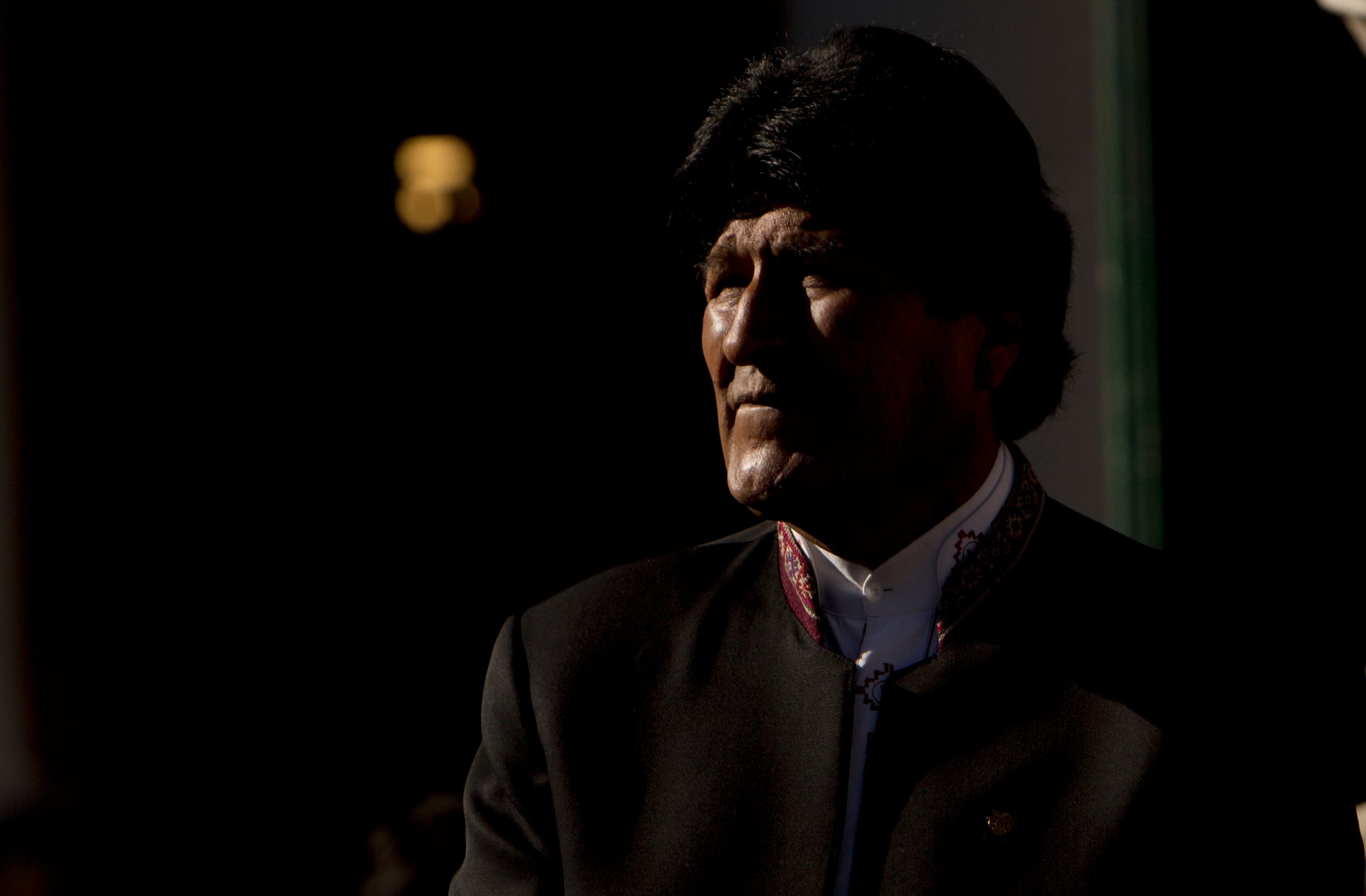
Evo Morales, 66, is entrenched in the place where he built his political power: the Chapare province, Bolivia’s coca-growing region. There he cultivates avocados, farms fish, plays chess, runs and does sit-ups to stay in shape, all while closely monitoring the Indigenous uprising that has put Bolivian President Rodrigo Paz on the ropes just six months after taking office.
The prominence of the former president – who governed the country between 2006 and 2019 – had waned. But Paz has revived it by asserting that Morales is the main instigator of the ongoing protests and road blockades that have no visible leaders and are spreading throughout the country. “I didn’t call for this mobilization,” Morales defends himself, during an interview via video call with EL PAÍS.
Seven years after being forced to resign as head of state, Morales is a fugitive from justice. However, he refuses to voluntarily appear before the court that is set to try him for alleged child trafficking and sexual abuse. He argues that there has been no due process.
When Paz promised to capture Morales, he challenged him: “Let them come get me, but those who [arrest] me should ask themselves whom they are [arresting]: the first Indigenous president.”
Question. What were the causes that led to the social conflicts that Bolivia is currently experiencing?
Answer. What’s brewing now is an uprising – a rebellion of the Indigenous movement – against the neoliberal model and against the neocolonial state. In 2005, for the first time, an Indigenous president won, breaking all the established capitalist formulas. [From the capitalist perspective], the Indigenous movement has no political rights… we’ve had almost no rights since colonial times. But I finally said: “We do have political rights.” In 14 years, we demonstrated that Bolivia had great hope. Economically, we nationalized [certain assets]; socially, we redistributed wealth.
The 2019 coup pitted the empire against the people; the gringo against the Indigenous people. The coup was about lithium… and now the issue of lithium has resurfaced. When I say it’s an uprising against the neoliberal economic model, it’s because the people don’t want basic services to be privatized. Rodrigo Paz has already introduced 10 laws – in mining, gas, energy, lithium – to privatize [resources]; that’s where the uprising comes from. In the midst of the conflict, he continues to sign memorandums with the United States regarding rare earth elements.
Q. President Paz considers you to be the instigator of the protests. What’s your opinion on this?
A. I didn’t call for this mobilization. There’s a fundamental issue here: you can’t govern based on lies. Rodrigo Paz lied, he deceived [Bolivians]. Why are they mobilizing? Well, he said: “The day after I take office, there will be no fuel shortage.” And now, there’s junk gasoline (degraded gasoline). The gasoline is coming out like Coca-Cola – black – and it’s ruined almost all the cars. He issued a decree so that the wealthy people don’t pay taxes; he passed a law to reclassify small properties as medium-sized properties, which is being defended by agribusinesses… to sum up, I understand why people are angry. They say, “He hasn’t kept this or that promise.” Now they’re saying, “Out, out!”
I already said: “If you want to avoid a bloodbath, this pacification process involves [the president stepping down] and an election being held within 30 days. That’s constitutional.”
Q. Do you believe that Paz’s resignation is the only possible solution to the crisis?
A. I expressed that opinion a week ago, [but] I don’t make the final decision. There’s total persecution… and [the administration is] preparing a state of emergency, which is very serious. Article 28 of the state of emergency law speaks of “presumption of operational legality” – the granting of impunity to [the security forces]. This is extremely serious. Article 30 addresses the “use of lethal force,” [meaning that] whoever kills won’t be investigated.
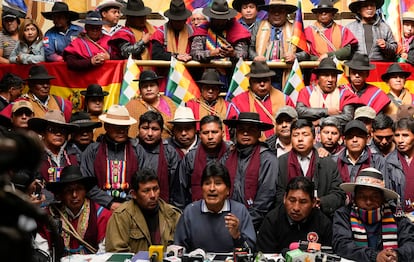
Q. What will happen if Paz declares a state of emergency?
A. Knowing my brothers and sisters in the Bolivian highlands, if they rise up, it’s impossible for them to lose. If someone is killed, there’ll be an even stronger reaction. They aren’t afraid; [this is] an act of rebellion.
Q. Paz was democratically elected for a five-year term. Why shouldn’t he complete his term? If people are dissatisfied with his policies, shouldn’t they wait for the next elections to vote for another candidate?
A. [Finishing his term] is his duty. But he promised everything and didn’t deliver. A comrade said that, during the campaign, Paz called her “sister, comrade.” [But] today, according to him, we’re vandals paid by drug traffickers; he repeats what the empire says.
Q. Would you run in the next elections?
A. I’m not desperate [to launch a] candidacy. Two days ago, the foreign minister said that everything is ready for Operation Delta Ñ (supposedly a reference to Lauca Eñe, the town where the former president has sought refuge). They want to seize Evo, arrest him and immediately declare a state of emergency. They’ll take Evo from Viru Viru (the international airport in Santa Cruz) to Buenos Aires or Lima. And, from there, to the United States.
Q. The president also announced that they’re going to capture you at any moment.
A. Let them come get me, but those who arrest me should ask themselves whom they’re arresting: the first Indigenous president. [A couple of weeks ago], Marco Rubio said that the United States wouldn’t allow drug-trafficking criminals to overthrow democratically-elected leaders. Paz is just repeating what he said.
Q. If you’re not seeking to mount a presidential bid, do you want to leave politics?
A. I’m a small farmer now; I planted avocado trees yesterday. I even thought about getting married. But my comrades tell me, “Without you, the political movement will go to hell; you have to stay.” Our revolution must continue, but people say, “Evo or nothing.” I have an obligation to support them; it’s our work. Our demands will only be met when we’re in power.
Q. Who will be the candidate representing the Indigenous peasant movement?
A. Candidates will emerge from grassroots meetings; it’s [an] open [process]. Today, I was at an event with the only governor [from my party] – Leonardo Loza – in Cochabamba. In Bolivia, we have many leaders and comrades.
Q. But you still don’t consider any of them to be your potential successor?
A. That may be true. We need to build a [new] political instrument, together with middle-class intellectuals who once saw us as a source of hope.
Q. Your former vice president, Álvaro García Linera. said that one of the mistakes made during your administration was not taking into account the growing discontent of the middle class. Do you agree with him?
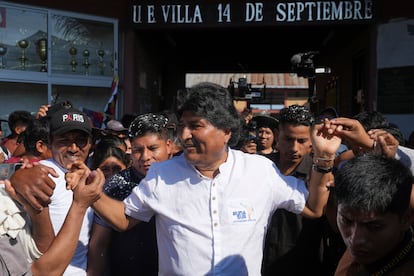
A. I wouldn’t say so. [I acknowledge] that we haven’t implemented programs to rethink history [or remember] the struggles of our ancestors. In short, we haven’t been able to ideologize. We’ve [dialogued] with this new middle class because our democratic revolution was important… but based on my experience, I’d say that you have to shield yourself with your own people, with people from humble backgrounds.
Q. Your government had the support of various sectors, such as the urban middle classes. But today, has the Indigenous movement become radicalized? Have the bridges been burned?
A. That’s what has happened since the 2019 coup. I deeply regret that some of the middle-class leaders with privileges are now in prison. In 2021, I contacted Luis Arce (who governed Bolivia from 2020 until 2025) and told him, “Lucho, there are rumors that your son is involved in shady dealings. Stop it; it’s going to affect us.” Now, look: he’s in jail. Later, I told Lucho that we needed to move forward in the fight against drug trafficking… but he neglected that, too.
You have to make yourself loved and feared. Unfortunately, that’s the nature of political life, of union life. I distanced myself from Lucho in December of 2022. I saved the political movement by distancing myself. Otherwise, I’d be in jail.
Q. You have an open case against you. If you’re innocent, why don’t you turn yourself in?
A. For 30 years, they’ve been accusing me of being a drug trafficker, a terrorist. If I were a drug trafficker, I’d already be in jail. They wanted to disqualify me in the 2005 [elections], but I beat them and became president. [Jeanine] Áñez (who governed Bolivia from 2019 until 2020) filed 29 lawsuits against me for terrorism, civil disobedience, incitement to commit crimes… they found nothing. Now they’re fabricating human trafficking charges and issuing an arrest warrant, but there was no due process.
The press itself says that 200 police officers and 800 soldiers are waiting for me at the hearing. As if I’m stupid enough to go. They’re trying to arrest me, to kill me. They can’t prove the crime. On May 5, the alleged victim submitted a memorandum stating that she wasn’t anyone’s victim. So, that [case] should be closed.
Q. What guarantees should be made for you to appear before the courts?
A. The prosecutor’s office should drop the case.
Q. But the case is for human trafficking: a complaint from the victim isn’t necessary. The prosecutor’s office can investigate ex officio, by virtue of office.
A. But what if there’s no evidence? There was no due process. And there’s no victim. It’s a purely political action. Before, Evo was a drug trafficker, a terrorist; now, he’s a pedophile.
Q. Do you feel strong enough to continue in politics?
A. I still lead the Seis Federaciones del Trópico de Cochabamba (translated as the Six Federations of the Tropics of Cochabamba, a collective representing coca leaf growers in the Chapare region). I have a youthful spirit. In January, I got sick like never before; I had chikungunya, but I’ve recovered and I’m back to normal. I go to the soccer pitch to run 60 laps; I do 1,000 sit-ups five times a week, in two sessions. My schoolmates move around with walking sticks and they ask: “What does Evo eat?”
Sign up for our weekly newsletter to get more English-language news coverage from EL PAÍS USA Edition



America
Bolivia’s Failed Economic Model: From The ‘energy Heart Of South America’ To The Risk Of Blackouts



Última Hora De La Guerra De Estados Unidos E Israel Contra Irán, En Directo | Irán Confirma El Acuerdo De Paz Con Estados Unidos, Que Se Firmará El Viernes En Suiza
Torremolinos installs smart traffic lights on its beaches to warn about UV radiation levels
Alicante’s La Mar Solidaria opens water sports to people of all abilities


-

 Africa2 weeks ago
Europe Enters The ‘era Of Deportations’
-
 Alberto Fujimori7 days ago
Peru’s Roberto Sánchez And Keiko Fujimori Urge Caution As Vote Count Continues In Very Tight Presidential Election
-

 %2 weeks ago
Major Strike In Portugal To Cause Widespread Disruption To Air And Rail Travel
-

 Uncategorized1 week ago
Max Verstappen F1 future hangs in the balance as three teams block 2027 rule changes
-
 Barcelona1 week ago
Spain, A Country Of 50 Million People With Infrastructure For 40 Million: ‘The Cracks Are Starting To Show’
-
David Beckham1 week ago
A Journey Through The Ages Of Soccer In The United States
-
 Brasil2 weeks ago
Caetano Veloso: ‘Right Now Concern Predominates Within Me; Brazil Seems Unable To Save Itself’
-
Latest1 week ago
Today In Spain: A Roundup Of The Latest News On Friday