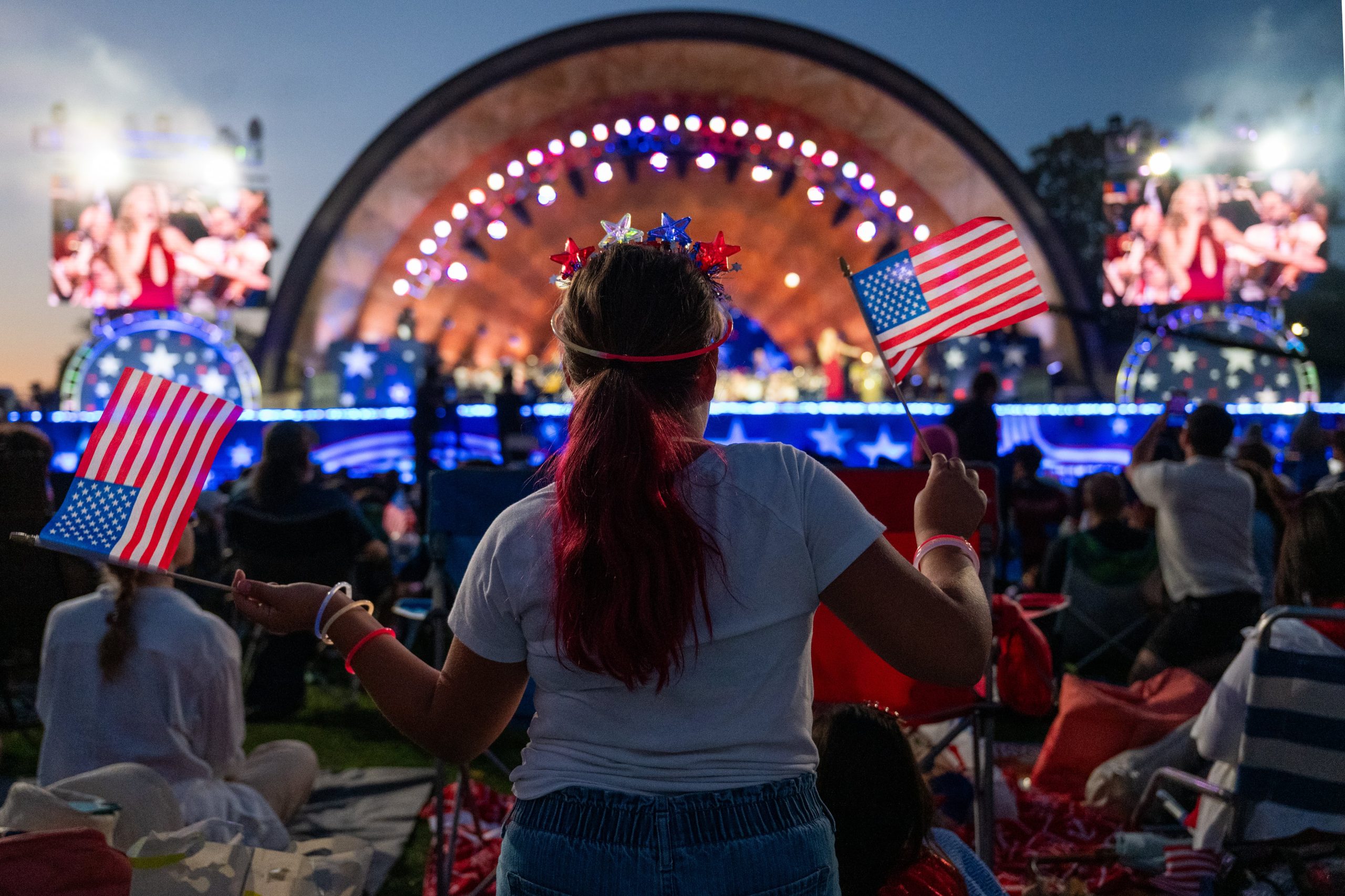
In just two days, several artists who had been announced for the Great American State Fair—a festival organized by Freedom 250, an initiative backed by the Trump administration—have withdrawn from the lineup after claiming they were unaware of the event’s political ties. The fair, scheduled for June 25 through July 10 on the National Mall in the nation’s capital, was billed as a massive celebration of American identity, featuring concerts, rodeos, amusement rides, livestock competitions, military exhibitions, and fireworks displays. It was also part of the extensive calendar of celebrations promoted by President Donald Trump leading up to the 250th anniversary of American independence in 2026.
The problem began when artists on the lineup claimed that the event had been sold to them as a “nonpartisan” celebration—a claim they later questioned upon discovering its direct connection to Freedom 250, an organization created by Trump allies to lead the patriotic celebrations for his second term.
Country singer Martina McBride was one of the first to pull out. In a statement posted on Instagram, she explained that she agreed to participate because she understood it was an event open to all states and free of political affiliations. “I was presented with the opportunity to perform at a nonpartisan event but that turned out to be misleading,” McBride wrote. “Yesterday things started changing and what we were told is, in fact, not what is happening.”
The singer added that she was concerned her fans might interpret her participation as contradicting the social messages in her music. “I’ve spent my entire career singing about real people with real issues,” she wrote. “It greatly upsets me that any fan who has been moved by my music may now feel like I’m abandoning the meaning behind those songs.”
Shortly after, Bret Michaels joined in. The Poison frontman announced his departure via an Instagram post, stating: “Unfortunately, what was presented to us as a celebration of our country has evolved into something much more divisive than what I agreed to be a part of.” The musician also noted that there were concerns about threats directed at him, his family, and his team. “This isn’t about politics,” he added. “But as a father, friend and bandmate, I have to take threats and safety concerns seriously.”
Rapper Young MC also declined to participate. On Facebook, he stated that the artists “were never informed of any political involvement with the event.” “I hope to perform in D.C. in the near future at an event that is not so politically charged,” he added.
Other names began to quickly disappear from the lineup. Morris Day & The Time posted a brief message on social media, simply stating, “It’s a no for me.” The Commodores announced that they did not want to “publicly affiliate with any single political party,” while Milli Vanilli stated that they had not even formally agreed to participate.
The controversy was particularly striking because the event had been promoted just one day earlier with a nostalgic theme featuring 1990s artists such as Vanilla Ice, Flo Rida, C+C Music Factory, and Bret Michaels.
Keith Krach, CEO of Freedom 250, stated that the festival sought to “bring together people from all 56 states and territories to celebrate the traditions, innovation, music, military heritage, freedom and entrepreneurial spirit that define our nation.”
But the controversy surrounding the festival reflects much broader tensions over how Trump is attempting to turn the 250th anniversary of the United States into a celebration aligned with the aesthetic and cultural priorities of the MAGA movement.
The agenda pushed by the White House ranges from a UFC fight on the White House lawn to NASCAR races, conservative religious ceremonies, and symbolic proposals such as printing a $250 bill featuring Trump’s face.
While several artists pulled out of the festival, others decided to stand their ground. Vanilla Ice publicly defended his participation in an Instagram video. “I’m tired of all the news channels dividing this country,” the rapper wrote. “This is not a political platform. This is celebrating America’s birthday.”
Freedom 250 insists that the event will go ahead despite the cancellations. Spokesperson Rachel Reisner told USA Today that the organization remains focused on “uplift and unite America.”
Sign up for our weekly newsletter to get more English-language news coverage from EL PAÍS USA Edition















 Foreign demand3 weeks ago
 New Developments4 weeks ago
 New Developments3 weeks ago
 New Developments3 weeks ago