Connect with us

ElPais

Floppy Disks, Faxes, Envelopes And Other Analog Fossils That Survive In Windows Imagery

Published

on

floppy-disks,-faxes,-envelopes-and-other-analog-fossils-that-survive-in-windows-imagery

You’ve just finished writing an article and, almost mechanically, you click the small square in the top-left corner of the screen. Millions of people do this every day. But how many know what that icon actually means?

Older users will recognize it as the stylized silhouette of a 3.5-inch floppy disk, but many of those who now use it daily as the Save symbol have never held one in their hands.

Sony introduced that floppy-disk format in 1987 after experimenting with less capable systems, so the icon we click in Windows represents a device that is nearly 40 years old.

This small disk, which held 1.44 megabytes, quickly became hugely popular after it was adopted as a standard by IBM PS/2 computers and then by virtually all other manufacturers, including Apple. It was easy to carry and fast to load. Its hard plastic shell and a sliding metal shutter protected it from shocks, scratches and bending.

Yes, bending — because its predecessors, nicknamed floppys, were a thin mylar sheet inside a flexible cardboard sleeve. There were 5.25-inch disks, preceded by 8-inch ones used early on in large professional machines. The 5.25-inch format became widespread with the boom of the personal computer. When IBM launched its first PC in 1981, it offered a dual floppy drive, each capable of 160 kilobytes (later up to 640K). Today it’s hard to imagine how an operating system or a spreadsheet could fit in so little space.

Not even a moderately sized photo taken on today’s mobile phones would fit on one of those disks. Yet, in the late 1990s Sony introduced digital cameras that recorded directly onto 5.25-inch disks as if they were film.

IBM decided to name its floppy drives “A:” and “B:”, reserving “C:” for a future hard disk, which at the time was almost a rarity. The “C:” remains on our computers today; the other two drives fell into oblivion many years ago. In fact, if you still have floppies of those older formats, you most likely don’t have the proper drives. If you urgently need to read one, try secondhand shops or eBay. Connecting them to your machine is another matter. Some later models use USB, but direct connection to the motherboard can be more complicated.

That is the problem of technological obsolescence — archivists’ nightmare. A 11th-century parchment can still be read; an inscription on the walls of Luxor can still be read; a file recorded on a floppy in the 1980s, using a long-forgotten processor and operating system, probably cannot.

Floppies were slow to die. In an attempt to delay the inevitable, IBM released a double-capacity version that met with little success. In the mid-1990s a company called Iomega, specialized in mass-storage media, introduced the Zip, a disk the same size as the classic 5.25 but with the astonishing capacity of 100 megabytes.

The Zip was a phenomenal hit, but it didn’t last long, partly because of a nasty tendency for its heads to go off-track and destroy data, and mainly because of the arrival of a new optical medium: CDs and, later, DVDs. Although burning data to them made them somewhat cumbersome for everyday use.

The article is finished and saved. To retrieve it I’ll click the corresponding icon: a half-open cardboard folder. When was the last time I held a physical cardboard folder? Yet another icon that evokes an almost vanished object.

And how do I send my article to the paper? By email, of course. I just click another icon, the one that shows an envelope (or sometimes a paper airplane like the ones we folded in school). An envelope? Do I have a single unused envelope at home? When did I last write a handwritten letter myself? The few times I need one, I have to overcome the laziness of going to the stationery shop — and then to the tobacconist for a stamp. Except for some utility bills, it’s rare that I receive a letter in an envelope anymore. Yet that symbol persists on my computer screen.

New phones, old symbols

Next: to make a phone call or a WhatsApp call the icon shows a handset like those on old desk phones — the kind with a rotary dial or a numbered keypad that have disappeared from many homes. Ironically, it’s the same symbol that appears on mobile phones.

In some audio apps you can still see cassette-tape icons. In some video apps the record command is shown as a camera with two film reels, like those used in Hollywood’s silent era.

Windows’ icon collections still include images of CRT monitors, film cameras, CDs, DVDs, analog videotapes and even a fax terminal.

For younger generations, these symbols have lost much of their original meaning. Much like Egyptian hieroglyphs, where each sign could have several interpretations depending on context, but rarely referred to the actual object. A loaf of bread followed by a wavy snake simply meant “father”; a cartouche around a group of signs identified a proper name, such as a pharaoh.

With the spread of the cloud, new symbolic needs have emerged. And, surely, other icons we take for granted today will disappear. The USB flash drive, for example? Or the image of a desktop computer, replaced by one of the new fist-sized PCs or a tablet?

But the modest floppy icon as a synonym for “save” remains. All the designers’ attempts to create alternatives have met with little success or have simply been unintelligible to the average user. The small square drawing remains on our computers, even if for many it is now just an archaeological artifact.

Sign up for our weekly newsletter to get more English-language news coverage from EL PAÍS USA Edition

Continue Reading
Click to comment

Leave a Reply

Your email address will not be published.

Anne Hathaway

Anne Hathaway Is Back On Top In Hollywood: How Five Films, A Pregnancy And Her Best Laugh Put Her Back On The Throne

Published

on

anne-hathaway-is-back-on-top-in-hollywood:-how-five-films,-a-pregnancy-and-her-best-laugh-put-her-back-on-the-throne

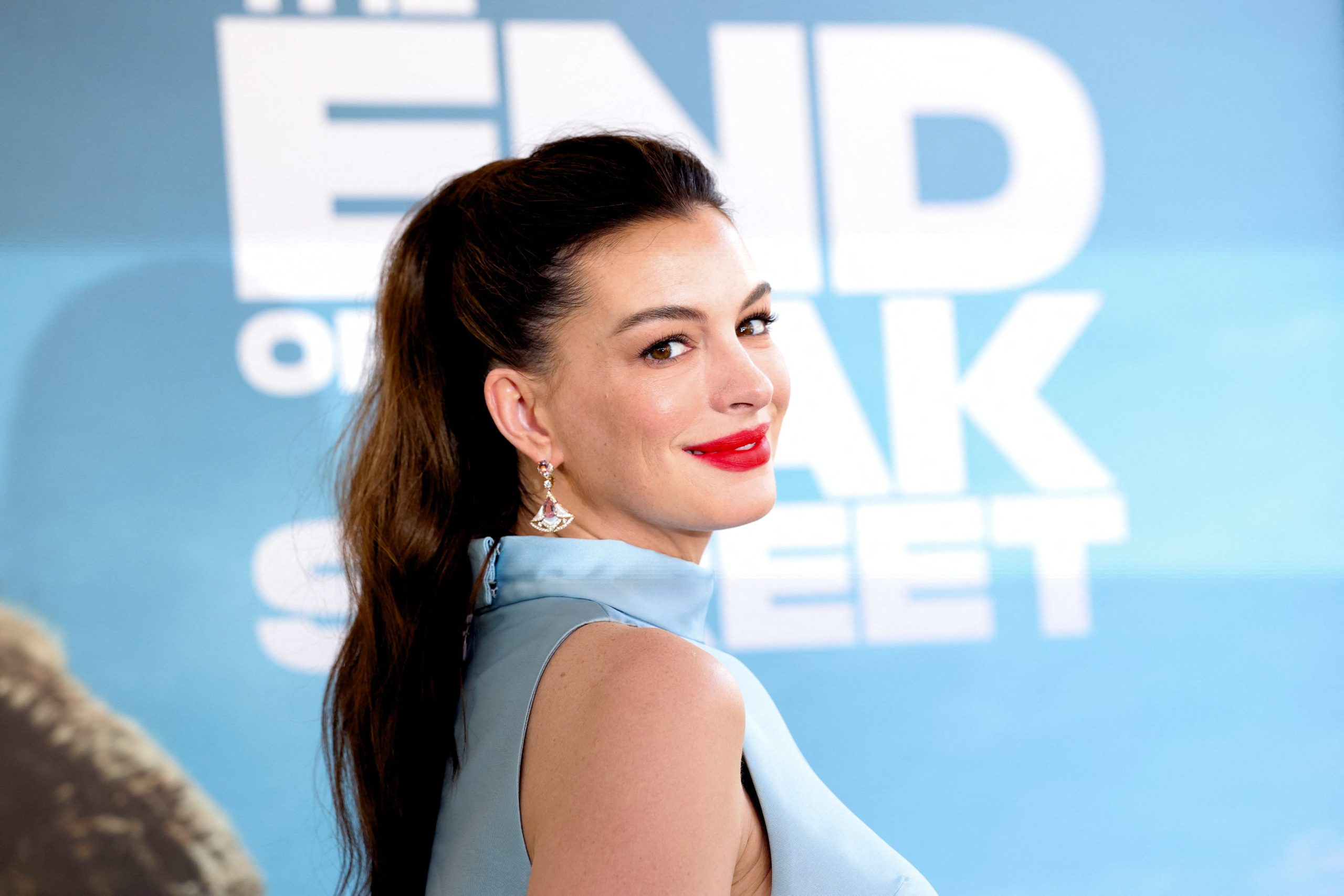
Anne Hathaway is doing everything right. Magazines, TikTok videos and the most erudite critics show it daily. Audiences love her. Social media loves her. But the point is she hadn’t been doing anything wrong before, not exactly. Yet back then the public hated her. The internet hated her. The world turned against her. Still, this year the American actress is releasing five films; among them are two of the year’s biggest box-office hits, The Devil Wears Prada 2 and The Odyssey. This Friday her fourth project, The End of Oak Street, a dinosaur movie set in the American suburbs, opens in Spanish cinemas. Ten years ago, that Hathaway would have been eaten alive by social media, the screen snobs would have ridiculed her, and the box office probably would have crushed her. But a decade has passed and everything has changed—for audiences, for ticket sales and, above all, for her.

This 2026, Hathaway, 43, faces the most demanding year of her career. The actress herself has said it is something that will probably never happen again and that she had to be very prepared for it. She planned it carefully, from the moment scripts began to rain in and turned into shoots, now rounded off with immaculate promotional campaigns that will run through awards season in the first quarter of 2027. This year has also brought an extra flourish to show the world more than her impeccable work: the happy progress of her personal life in the form of a pregnancy she announced in June. That news rounded out her carefully calculated comeback. She made that clear in an interview with The New York Times at the start of her unstoppable season, laughing—her best promotional tool—saying: “Before then, I was like, I’m not ready as a person. I’m not ready as an artist. I need to develop more, otherwise I’m just going to get eaten alive.” She knew what she was talking about, having been subject to that cannibalism a decade earlier.

A small film was followed within a week by a giant: the long-awaited sequel to The Devil Wears Prada, in which she returned to what she has said is one of the roles people most identify her with on the street, Andy Sachs—the awkward, deeply human subordinate to the icy Miranda Priestly (Meryl Streep). The flawless chemistry worked again, backed by a brilliant global, big-budget promotion, and the box office rewarded the film with $700 million (about €606 million).
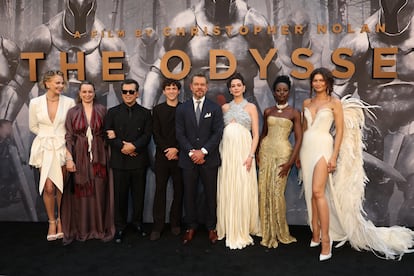
El reparto de 'La odisea', de izquierda a derecha, Charlize Theron, Samantha Morton, John Leguizamo, Tom Holland, Matt Damon, Anne Hathaway, Lupita Nyong'o y Zendaya en la premiere de Nueva York, el 14 de julio de 2026.

That is a lot of millions, but not as much as Christopher Nolan’s The Odyssey, which has grossed $1.2 billion in less than a month (€1.04 billion). After years of wanting to, Hathaway finally worked with Nolan again, more than a decade after Interstellar (2014), which marked a shift toward a more powerful image for her after her more vulnerable role in the film adaptation of the musical Les Misérables, for which she won the Oscar for best supporting actress in 2013.

Now comes The End of Oak Street, an adventure film co-starring Ewan McGregor, which she primarily shot because she wanted to work with director David Robert Mitchell, she told Europa Press at the premiere. Her pregnancy has progressed, but she shows no sign of stepping back: she has kept joking on social media and visiting sets with McGregor in recent weeks. And she still has Verity, due in October, a thriller about a successful writer who, after an accident, is replaced by Dakota Johnson.

The actress has mixed projects shrewdly: indie, crowd-pleasing pop, the big auteur picture, family fare, and horror. In The Devil Wears Prada 2 she shares the screen with Streep and Emily Blunt. In The Odyssey she shines within a more global cast. In Oak Street she traded scenes with McGregor. And in Mother Mary, the quieter promotion has been squarely about her. So much variety and volume don’t seem to tire an actress whom, just a decade ago, Hollywood chose to hate without a clear reason—and who now laughs for photographers every day.

Perhaps there is the key, as corny as it sounds: Hathaway has moved from smile to laugh. Before, she smiled discreetly. Now she freely laughs in interviews, at photocalls, even at herself. It all began when she won the Oscar for Les Misérables, a grueling role. She told The Guardian she did not feel the expected “uncomplicated happiness” when she went up to collect the statuette after a part that required fasting, losing 11 kilos and shaving her head; at the time she seemed to apologize at every turn. Her remarks always came off as politically correct. She said, for example, about the Oscar: “I felt wrong that I was standing there in a gown that cost more than some people are going to see in their lifetime.” She was wearing a custom Prada valued at €70,000 and a necklace worth €8.6 million—expensive like any star’s, borrowed like any star’s.

That somewhat naïve Hathaway irritated an industry that was changing. When traditional outlets lost clout and fans’ comments, social media and blogs gained influence, she didn’t fit the good-girl profile her publicists were trying to sell. Her chemistry with the public broke. The so-called ‘Hathahaters’—as her critics labeled themselves—arrived.
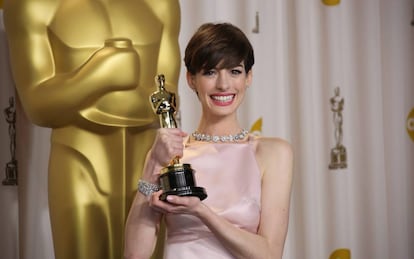
Anne Hathaway con el Oscar que ganó a mejor actriz de reparto por 'Los Miserables' en 2013.

Facebook pages criticized her, and for every remark she made there was a mocking tweet. That strange and ungrateful hatred fueled analyses and TV shows. She admitted, perhaps naively, perhaps seeking peace, that it affected her. As Carolina Bermudez—then the host of CBS entertainment program The Couch—said around 2013: “Right now, there isn’t anything that Anne can do that won’t be scrutinized. Her best option is to just go away for a bit, perhaps take a long needed vacation and let the critics find another person to vilify. It doesn’t take long in Hollywood!”

And that’s what she did. She didn’t go on holiday, but she shifted the focus. She got through the 2010s with many projects, not all of them acclaimed. The plan wasn’t to disappear but to be more calculated about her presence. She told The New York Times she thought she was “in the small, weird indie section of my career”and that the big roles wouldn’t return—until a couple of years ago when two films changed the script for her career.
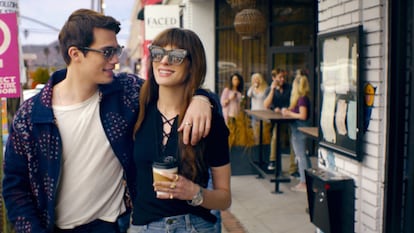
Nicholas Galitzine y Anne Hathaway

On one hand, the romantic The Idea of You, a streaming hit in which she plays a 40-year-old who falls for a twenty-something musician, which raised her profile with younger generations. On the other, what she described as one of the most complex roles of her career, Céline in Scenes from a Marriage with Jessica Chastain, which put her in a complicated place regarding motherhood. By then she was speaking openly about the ‘Hathahaters’: “A lot of people weren’t offering me roles because they were very worried about how toxic my internet identity had become,” she told Vanity Fair.

Now Hathaway is back. After this busy 2026, next year she will release Princess Diaries 3, in which she will reprise her popular character Mia Thermopolis. This Sunday she will be named a “Disney Legend,” a title held by stars such as Julie Andrews, Miley Cyrus, Elton John and George Lucas, among others.

Everything has added up: her political engagement with the Democrats, where she calls for votes with humor and pop-culture references; her increasingly refined personal image—elegant but resolute (she didn’t hesitate to show her pregnant belly at the Oak Street premiere, grabbing headlines); and a youthful face have put her among the most admired. She no longer measures her words so carefully and her candor is upfront, as candid as a star can be within Hollywood’s orchestrated machinery. This week, asked about her baby’s sex on Jimmy Kimmel’s show, she said she knew but wouldn’t reveal it. “Thanks for the support, I always feel so rude saying this,” she said with a big smile. The crowd, far from taking offense, cheered. Not a single ‘Hathahater’ remains in her path.

Sign up for our weekly newsletter to get more English-language news coverage from EL PAÍS USA Edition

Continue Reading

Canada

Mexico Steps Up Pressure For US To Lower Its Auto Tariffs In USMCA Talks

Published

on

mexico-steps-up-pressure-for-us-to-lower-its-auto-tariffs-in-usmca-talks

The government of Mexico has stepped up negotiations with the United States to contain the U.S. tightening of trade, especially in key sectors such as automotive and steel. Economy Secretary Marcelo Ebrard said on Thursday that the negotiating team reviewing the United States–Mexico–Canada Agreement (USMCA) has asked for a discount on the 25% tariff imposed by the Trump Administration on cars manufactured in Mexico and exported outside the alliance, and for greater flexibility in the duties applied to its steel sales.

Negotiations over the USMCA have entered a new phase of greater scrutiny in which every industrial sector on the table will be crucial to the economic performance of its members: Mexico, Canada and the United States. In July, Washington ruled out the possibility of swiftly renewing the agreement — which supports about $1.5 trillion in annual trade — for a further 16 years. Instead, the world’s largest economy has pushed its partners into a process of detailed, periodic bilateral meetings in which every trade issue is examined not only as a business matter but also through the Republicans’ political lens. In that context, Ebrard also disclosed that Mexico has requested a halt to the imposition of new tariffs while the treaty review is under way.

“I brought a study that says: you are charging 15% on a vehicle made in Japan, South Korea, Germany or Morocco, and you want to charge us 25% on the ones we make in Mexico. So give me a discount, because we buy more U.S. parts than the other countries I just mentioned,” the official told reporters.

The report on the negotiations was first published by The Wall Street Journal, which said that Claudia Sheinbaum’s government presented this counterproposal to the Trump Administration, which in turn is pushing to raise even further the rules vehicles must meet to qualify for the agreement’s preferential treatment for vehicles made in North America. According to the WSJ, the U.S. Trade Representative’s office has proposed amending the rules of origin to specify that only cars with 50% U.S. components would be covered by the USMCA.

The change would be significant both operationally and to the spirit of the agreement, shifting the advantage more strongly toward the United States, at least in the automotive sector, one of the pillars of trade among the three countries. Under the current USMCA rules, 75% of a vehicle’s content must originate in North America for it to qualify for preferential tariff rates. Outside that threshold, and under Section 232 provisions, the United States applies an additional 25% tariff on autos.

Ebrard confirmed that his delegation has been persistent in its demands, though he avoided revealing details about Washington’s requests or the progress of talks. The two sides will meet again in September. The executive branch had previously said its review strategy would focus on improving its stance in the automotive and steel sectors, without outlining a specific plan.

Currently, much of Mexico’s steel exports are also subject to U.S. Section 232 tariffs, a measure Washington justifies on national security grounds. Those tariffs were 25% and were later raised to 50% as of June 2025 for most products made from that raw material. “We have also raised the steel issue. Mexico runs a steel deficit with the United States. So: why do you put a 50% tariff on me?” Ebrard asked. Mexico argues that the steel tariffs lack commercial justification because the United States runs a surplus in bilateral trade. According to figures from the Mexican steel industry, that surplus exceeds $4 billion in finished products.

Trump has made the USMCA a recurring target of his attacks. He often threatens to tear up the free-trade framework he promoted during his first term in favor of a protectionist scheme to revive U.S. manufacturing. That strategy has fueled uncertainty in Mexico, whose value proposition as a manufacturing hub rests on preferential access to the world’s largest consumer market. In that context, the Mexican government is seeking to prevent the treaty review from becoming a pretext for new retaliatory measures against its factories. “We have proposed that, while talks on the free-trade agreement review continue, no further tariffs be imposed,” the secretary added. “We are the most persistent, persevering, patient and insistent delegation,” he stressed.

Despite the ups and downs, the Latin American country continues to benefit from a relatively stronger position than other exporters. Eighty percent of Mexico’s exports go to its northern neighbor and, of those, eight in 10 enter under USMCA preferential treatment. The agreement will remain in force at least until 2036, although it is subject to annual reviews. However, termination remains possible if any of the three partners notifies its withdrawal.

Canada and Mexico are confident that the economic benefits of integration will outweigh Trump’s pressures, who is approaching the halfway mark of his term. In that context, companies are watching the outcome of the negotiations closely because much of the conditions for producing and exporting from the Latin American country will depend on them.

“Prospects for foreign direct investment (FDI) in coming years will depend largely on the outcome of the USMCA review, tariffs and the international economic environment,” wrote wealth manager Skandia. “If the country maintains macroeconomic stability, strengthens the rule of law, improves energy and logistics infrastructure and keeps clear rules for investment, FDI will continue to grow,” the firm predicted.

Sign up for our weekly newsletter to get more English-language news coverage from EL PAÍS USA Edition

Continue Reading

Donald Trump

Florida Primaries Test Republican Dominance In The State

Published

on

florida-primaries-test-republican-dominance-in-the-state

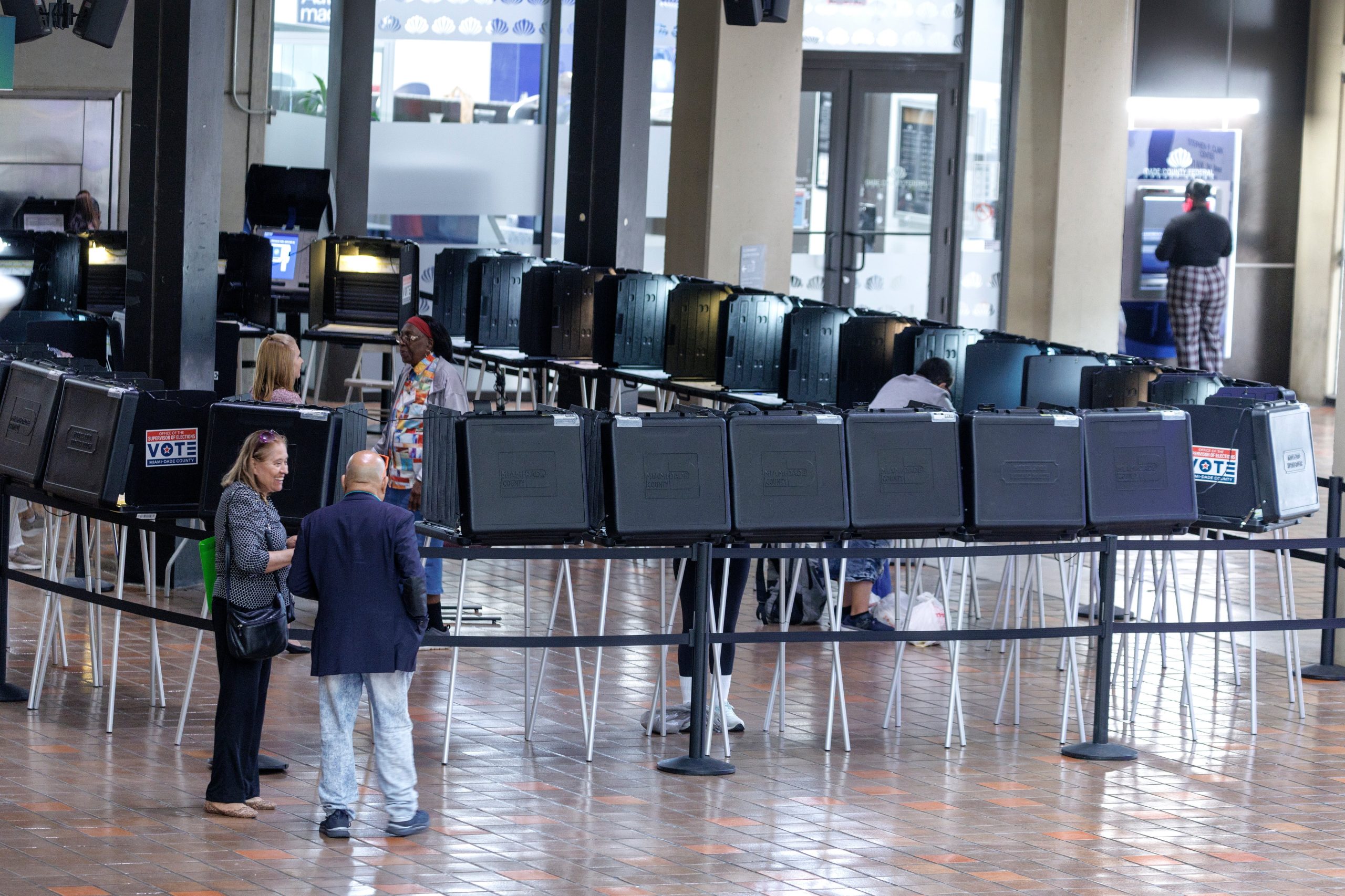
Florida has arrived at the primary elections as a Republican stronghold after decades as one of the nation’s key swing states. The vote is scheduled for Tuesday, August 18, but early in-person and mail voting has already begun to choose the candidates for governor, the Senate and the House of Representatives who will compete in November, along with other local contests.

The state’s political shift is partly due to a rightward move among a large segment of the Hispanic electorate, especially in South Florida, whose behavior this year remains to be seen, according to experts who say the primaries will act as a thermometer ahead of the November midterms to measure the influence President Donald Trump still holds within his party.

“Although Florida has become a Republican state, Democrats may remain competitive in some of these primaries,” says Aubrey Jewett, a political science professor at the University of Central Florida (UCF) and an elections expert.

“One of the main reasons Florida has become more clearly Republican is that the Hispanic vote shifted substantially toward the party in recent years,” Jewett says. “The primaries could provide clues about whether Hispanic voters are shifting again toward the Democratic Party, whether some Florida Hispanics who supported Trump are beginning to have doubts and change their minds.”

The immigration policies the president promised during his campaign resonated with many Hispanic voters, Jewett notes, but in practice they have encountered an anti-immigrant offensive that has wreaked havoc among the large Latin American diaspora communities in the state. The Trump administration has pushed mass arrests in immigration courts, workplaces and traffic stops, and has left hundreds of thousands in limbo by eliminating humanitarian and temporary protection programs. “It appears that many Hispanic voters in Florida may be reconsidering their choice,” the expert adds.

Florida’s Republican primary for governor is seen by analysts as an opportunity to measure the influence Trump still holds in his party. Republican Ron DeSantis, a key ally of Trump’s immigration push, is finishing his second term and cannot seek a third. The leading Republican to succeed him is Congressman Byron Donalds, who has received Trump’s endorsement. On the Democratic side, former Republican congressman David Jolly has emerged as the frontrunner to win the nomination after Orange County Mayor Jerry Demings withdrew from the race following a cancer diagnosis.

Although Trump’s backing helped make Donalds the favorite, the president enters these elections with low approval ratings. “In American politics, the president’s party almost always loses seats in Congress during midterm elections. We also know that an unpopular president loses more seats,” Jewett explains. “Trump is unpopular right now across the country. Several polls have found his disapproval ratings are higher than his approval ratings. Even in Florida.”

An AP-NORC survey from late July found Trump had just 32% approval for his handling of the economy and 39% approval on immigration policy.

As for Congress, the Democratic primary to choose who will run for the Senate seat vacated by Secretary of State Marco Rubio could serve as a barometer of whether the party is moving toward the more progressive wing or closer to the establishment, an uncertainty that has marked contests nationwide. The seat is currently held by the Republican Ashley Moody, appointed by DeSantis after Rubio’s departure, and she will seek to keep it in November. Democrats are deciding between state Rep. Angie Nixon of Jacksonville and Alexander Vindman, a retired lieutenant colonel who was a key witness in Trump’s first impeachment trial.

Nixon has campaigned on positions associated with the party’s left wing, such as taxes on the wealthy and universal childcare, while Vindman has rejected labels; his background as a former official is more institutional, with emphasis on accountability and the cost of living, and he aims to capture independent voters and moderate Republicans. Of the two, he is the best-funded candidate.

“The outcome of that primary can help us understand how that battle within the Democratic Party is unfolding nationally,” Jewett says.

Unlike general elections, where different parties face off, primaries decide the candidates who will represent each party in the November midterm elections. Florida’s primaries are closed, meaning voters must be registered with a party to vote, although there are some nonpartisan contests, such as judicial elections, where voters may participate without party affiliation.

The Florida primaries are also the first test of DeSantis’ new electoral map, which redrew the boundaries of several districts to dilute Democratic voters and favor Republicans in a bid to gain more seats in Washington. Republicans hold 20 of Florida’s 28 seats in the House of Representatives, and with the new map they aim to win four more.

“What happens in some of these Florida primaries could affect control of the U.S. Congress,” Jewett says. “Republicans have a very slim majority in the House. If Democrats can pick up three or four more seats, it would be enough to retake control,” he explains.

In South Florida, some Democratic primaries show the impact of the new map. In District 24, for example, seven candidates are competing in a close race to succeed Frederica Wilson, led by state Senator Shevrin Jones and Miami-Dade Commissioner Oliver Gilbert III.

The redistricting left veteran Democratic congresswoman Debbie Wasserman Schultz without a seat in District 25 and pushed her to run in District 20, a historically Black district, which has sparked internal disputes.

From purple to red state

The current political landscape would have been hard to imagine a few years ago, when Florida was considered a purple state. The Republican George W. Bush won the state in 2000 by a razor-thin margin of just 537 votes. The Democrat Barack Obama won the next two elections, and Trump won the last three. DeSantis won the governorship by a narrow margin in 2018 but was reelected by a crushing margin of nearly 20 points in 2022.

“For more than 20 years, Florida was considered the country’s most competitive swing state, but in the last five years it has gone from a purple state to a red state. It is definitely a Republican state now, but it’s not as Republican as some others. We are not Wyoming,” Jewett says.

The voter rolls show the change. Four years ago there were 5.1 million registered Republicans and 4.9 million registered Democrats. Now there are 5.6 million Republicans and 4 million Democrats. The gap, which widened from 229,000 to 1.5 million, is due more to the loss of about 900,000 Democratic registrants than to roughly 409,000 new Republican registrants. More than 28% of voters on the rolls have no party affiliation or belong to one of the other 15 registered parties.

As of Thursday afternoon, more than 1.3 million people had already voted early or by mail. Republicans have cast 38,744 more ballots, while Democrats continue to show a higher turnout rate.

Sign up for our weekly newsletter to get more English-language news coverage from EL PAÍS USA Edition
Continue Reading

Trending

Copyright © 2017 Spanish Property & News