
Argentina
From Aristocratic Vault To Café: Buenos Aires Tenders Old Tombs At La Recoleta Cemetery

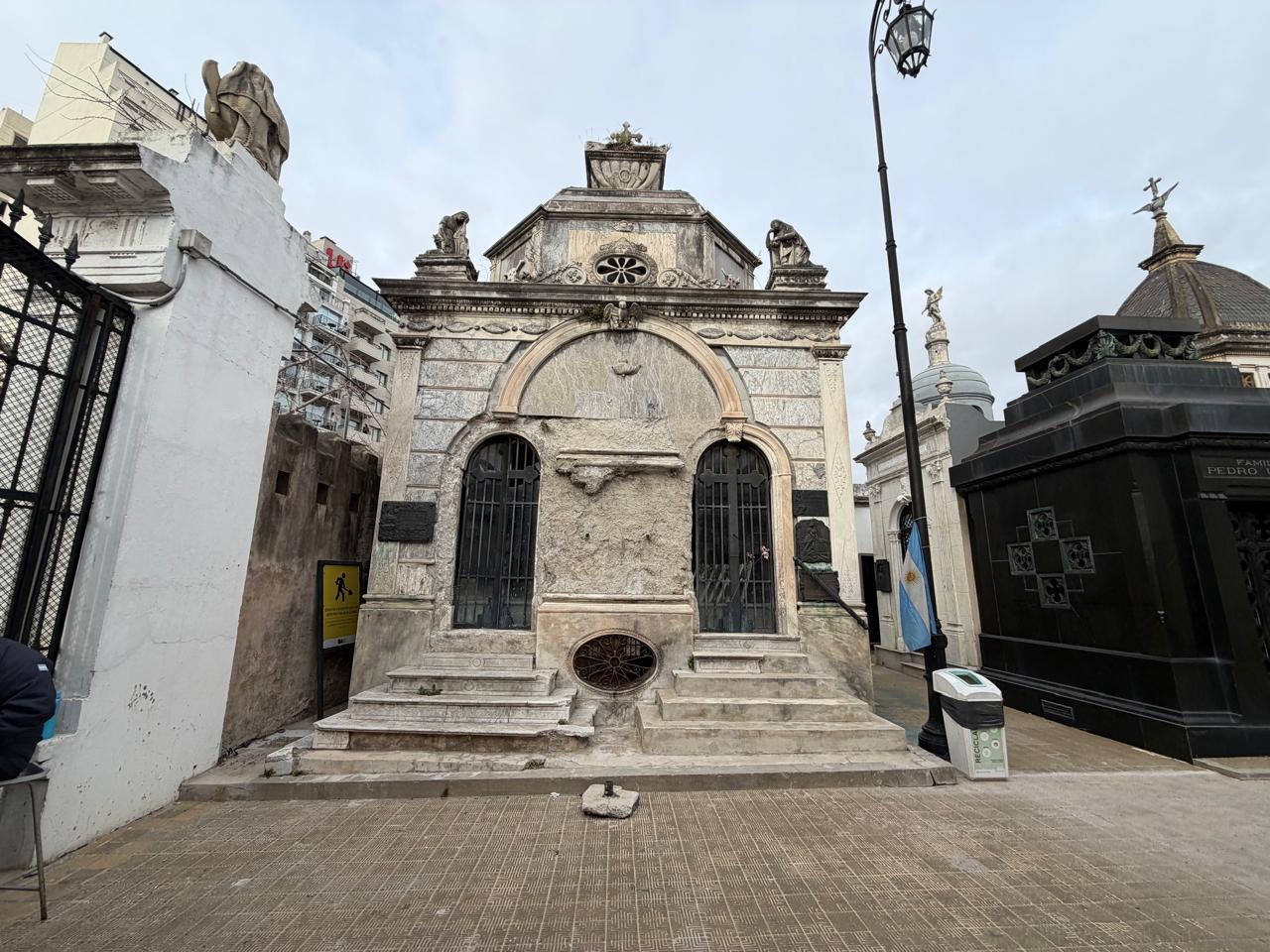
—It’s behind that pine, a little further on. Past Evita’s grave.
The man giving directions is sweeping the white marble floor on a cloudy Wednesday morning at La Recoleta Cemetery, the most aristocratic neighborhood in Buenos Aires. The directions take one to the vault that once belonged to the Girado family, a surname on the very small list of Argentina’s landed bourgeoisie in the 19th and 20th centuries, and which will soon be repurposed as a grab-and-go gift shop and café. The Government of the City of Buenos Aires has published a tender for the concession of use and “commercial operation” of that space, originally designed to house 12 tombs.
Built in 1822 as Buenos Aires’ first public cemetery, La Recoleta Cemetery is a reminder of an era when the country was an emerging economic power and the city’s leading families competed with each other to build lavish mausoleums. Many of these are now in ruins, with broken glass, mold and exposed coffins. That is the case with the Girado vault, which borders the wall facing Junín Street and is neighbors with the Álzaga family pantheon —another patrician surname— where the remains of the famed Felicitas Guerrero de Alzaga rest: she the country’s youngest, richest and most beautiful widow, murdered in 1872 by a suitor.
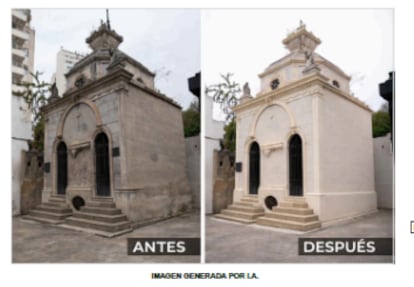
A little further on is the tomb where Eva Perón’s body was finally laid to rest after a long journey, and also —with its obelisk and the bronze condor that crowns it— that of former president Domingo Faustino Sarmiento, author of one of the foundational works of Argentine literature, Facundo. Nearby are the remains of writer Adolfo Bioy Casares, but not those of his friend and colleague Jorge Luis Borges, who died in Switzerland, even though he had expressed a wish to be buried in his family pantheon in La Recoleta, in the same grounds as the “fathers of the nation.”
According to the public tender, the concession for the vault —which covers roughly 25 square meters— will be granted for a five-year term and may host a gift shop, a food and beverage outlet and a “rest and support area” for visitors who book the new nighttime tour service. In exchange, a monthly fee of 1.6 million pesos (just over $1,070) will be charged, plus 20% of gross revenues from operating the nighttime tours.
The café will operate only as takeout, with no tables or chairs allowed and no on-site food preparation. Although the tender explicitly allows that possibility, city government sources say “there is no chance that the space will be considered a café.” “As in other cities around the world, the City tendered a space to establish a gift shop in La Recoleta Cemetery, and it will join the trend of expanding cultural and service offerings as seen in the cemeteries of Vienna, Dublin, Berlin and London,” they said. The site currently receives an average of 1,816 visits per day.
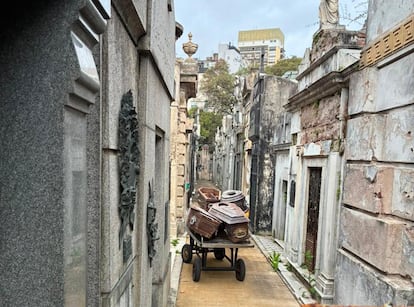
More than 90 vaults have been declared National Historic Monuments and the cemetery’s architecture is legally protected, so only restoration work is permitted. An annex to the tender includes two images: one of the vault’s current condition, labeled the “before,” and another generated with artificial intelligence showing a possible “after.” There are no structural changes, but a fresh coat of paint and the removal of commemorative plaques that still survive on the pantheon’s eroded walls are shown: the plaque reading “To engineer Francisco J. Girado from his colleagues and friends of the Pelota Club of Chascomús,” dated 1934, and the one remembering Federico M. Girado, signed “from his classmates at the National College” in 1913.
The vault was recently returned to the city government after an administrative procedure. City government sources said it had been available for 10 years and that all steps required by burial laws were followed (the same legislation that prohibits “any commercial activity, in its different forms” within cemeteries), a procedure that provides for notifying rights holders and giving them the opportunity to file legal challenges in advance. Although they did not specify the fate of the human remains, the law states that if relatives do not remove them, they should be sent to the common ossuary or communal crematorium.
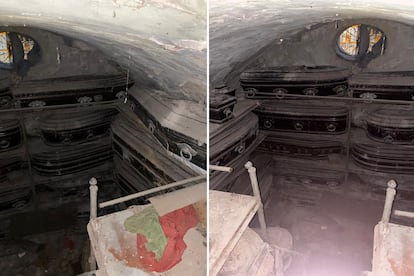
This past Wednesday the vault was cordoned off with yellow fences put up by the City Government and guarded by four security guards who not only refused to confirm the identity of the vault behind them, but who also tried to mislead approaching journalists. “You can’t take photos and you must leave, we are in the middle of a conflict right now,” one of them said. On Tuesday, when local media published news of the tender, a journalist named Gabriel Levinas went inside the vault and recorded at least a dozen coffins still inside. He later wrote that a cemetery employee told him some had been moved and showed a photo of a wheelbarrow loaded with coffins.
The man sweeping the white marble floor of one of the vaults that still receives care from its lineage says the uproar started because “the owners are against” the tender. They are upset by the idea of people wandering around during a funeral with a coffee in their hand. “They are going to file a complaint. And these are important people,” he warns. Asked by EL PAÍS, the city government did not specify whether it had received any formal complaints so far.
Sign up for our weekly newsletter to get more English-language news coverage from EL PAÍS USA Edition






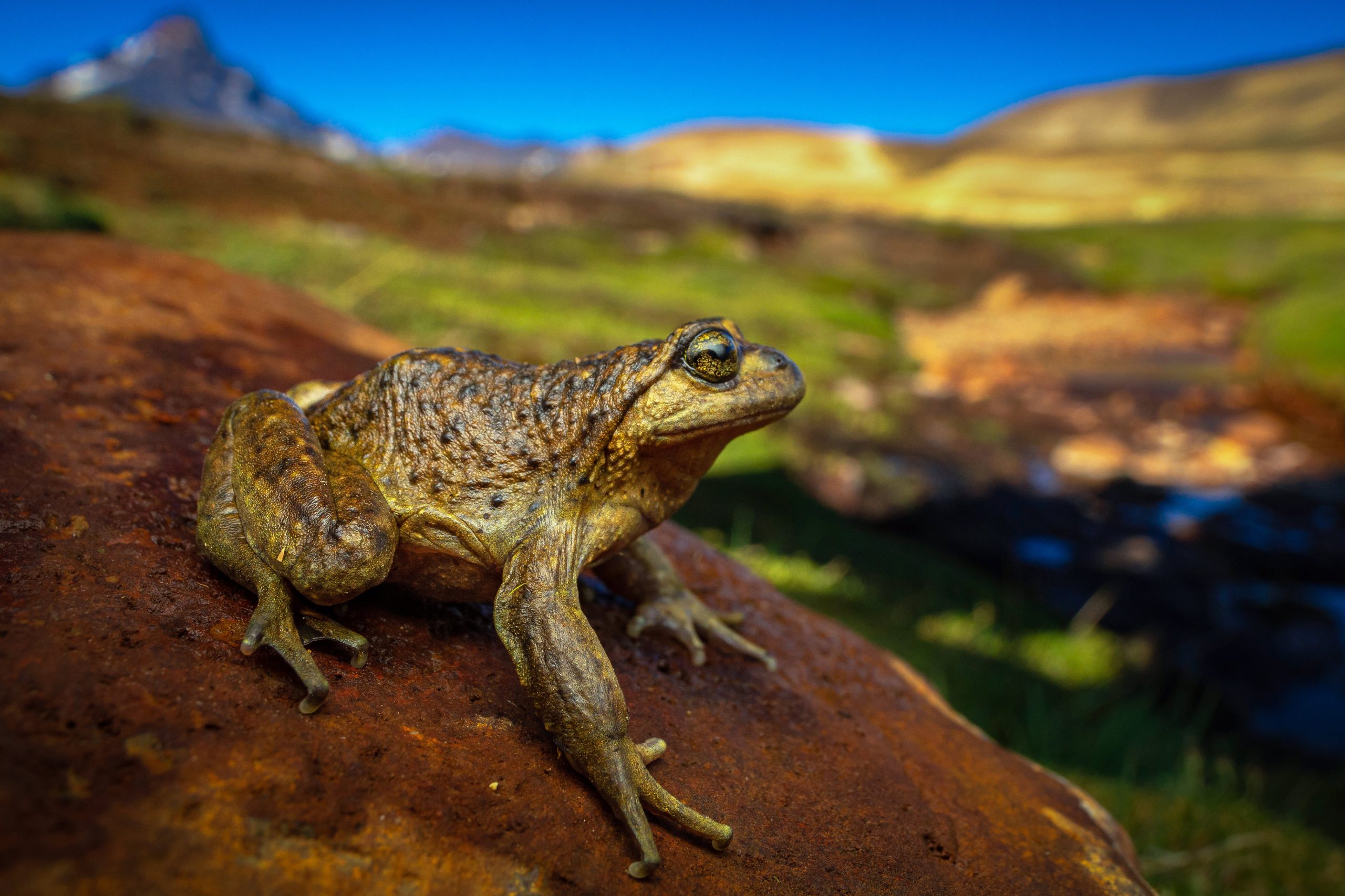
Actor and environmental activist Leonardo DiCaprio has come out in defense of the Pehuenche frog (Alsodes pehuenche), an amphibian listed as critically endangered, amid concerns that the Los Cóndores-Río Diamante power transmission project in Chile’s Maule region could threaten the species’ survival.
In an Instagram post on Sunday, in which he tagged the Chilean Herpetological Network and shared photographs of the frog and its habitat, the Titanic star warned that fewer than 1,000 individuals remain. He said Chile could approve “ a catastrophic plan to destroy the heart of their only known habitat.”
DiCaprio stressed, however, that his appeal is not aimed at halting the project altogether. “Conservationists are not asking for the transmission project to be stopped,” he wrote, but rather for it to be built in a location that would not expose the species to greater risk.
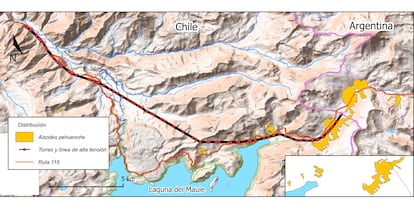
The project referenced by DiCaprio, developed by Enel Generación Chile, involves the construction of a 500-kilovolt power transmission line designed to interconnect the energy grids of Chile and Argentina. On the Chilean side alone, the plan calls for a 26.6-kilometer overhead transmission line and 72 high-voltage towers, infrastructure that would cut directly through the habitat of the Pehuenche frog.
A key milestone for the project had been scheduled for Monday, when the Environmental Assessment Commission (COEVA) was due to rule on a report by the Environmental Assessment Service (SEA) recommending its approval. However, following DiCaprio’s message, the session was suspended. No public explanation has been given for the postponement, nor has a new date been announced, Claudio Azat, director of the One Health Institute and co-chair of the International Union for Conservation of Nature’s (IUCN) amphibian specialist group, told EL PAÍS.
The Chilean government of José Antonio Kast responded to the actor’s comments. Environment Minister Francisca Toledo told Radio ADN that DiCaprio’s message referred to a project that remains under environmental review and therefore declined to comment on its merits while the process is ongoing. Instead, she defended Chile’s environmental institutions, saying: “Chile has a robust environmental framework in which all the evidence is examined and weighed as part of environmental assessments.”
The Pehuenche frog exists nowhere else in the world except the high Andes of Chile and Argentina. The person who helped bring the species’ plight to the attention of Re:wild, the conservation organization co-founded by DiCaprio, was Chilean biologist Claudio Azat.
“It is a little-known species. It was described by science about three or four decades ago,” Azat explained. “We know it has a very restricted distribution and that its main threat is the international highway that connects the Chilean city of Talca with Malargüe in Argentina.”
This amphibian is distinguished by the fact that, during the breeding season, males develop patches of gelatinous spines on their chests and fingers. They are also known as “Popeye frogs” after the famous cartoon character because their forearms become enlarged, allowing them to hold onto females during mating.
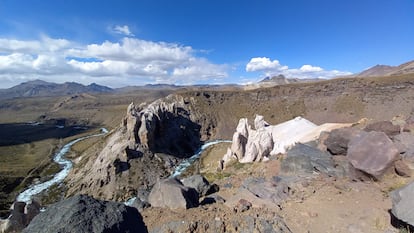
The species was classified as critically endangered in 2018 and has yet to recover from that status. “It is a species found only in the Alto Maule region, in the Pehuenche Valley, inhabiting small streams and wetlands fed by snowmelt and glaciers high in the central Andes, at elevations above 2,000 meters [6,500 feet],” Azat explained. “Its population numbers around 1,000 individuals.”
The conservationist acknowledges that, although campaigners had been raising concerns about the frog’s plight for years, the visibility generated by DiCaprio’s message has provided a decisive boost. “This is the second time he has supported a species in Chile. In 2019, he posted about the campaign to save the Loa frog, which was very positive because it changed the situation for that species,” Azat concluded.
Sign up for our weekly newsletter to get more English-language news coverage from EL PAÍS USA Edition
America
Brasil Confirma Que Su Embajador No Regresará A Argentina Hasta Que Cesen “los Reiterados Insultos Y Agresiones” De Milei




Los Demócratas Denuncian Las Malas Condiciones Que Sufren Los Marineros Del Portaaviones ‘Abraham Lincoln’ Desplegado En El Golfo

🌅 Stunning Penthouse With Panoramic Sea & Mountain Views Benalmádena

Manchester City’s Rodri Takes Ryanair Flight To Liverpool Ahead Of Transfer Speculation


-
easyJet2 weeks ago
First EasyJet passenger from UK refused entry to Gibraltar after new treaty
-

 New Developments2 weeks ago
Inside The Most LUXURIOUS Apartment Building In Spain!
-

 Uncategorized1 week ago
Lewis Hamilton hits gold with $10bn jackpot but British star snubs Monaco move: F1 News Recap
-

 Latest2 weeks ago
Suspect In Murder Of Hungarian Woman In Benahavis Attempts To Slit His Own Throat As Guardia Civil Make Arrest
-
2 wheel case2 weeks ago
To push, pull or carry? Which luggage option is best for your posture and journey.
-
Charity padel tournement2 weeks ago
Nueva Alcantara Club and children’s charity come together for a padel weekend with a purpose
-

 Uncategorized1 week ago
Racing star was destined for F1, now he
-
 Estepona2 weeks ago
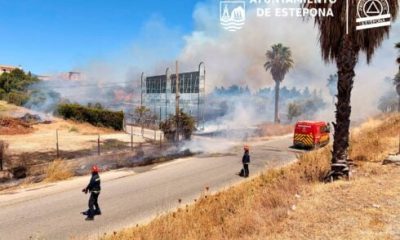
WATCH: Fire Breaks Out At Entrance To Estepona Near A7 As Drivers Film The Flames And Two Helicopters Battle The Blaze