
Costa del Sol
Fuengirola shoppers offered chance to win €500 Christmas hamper

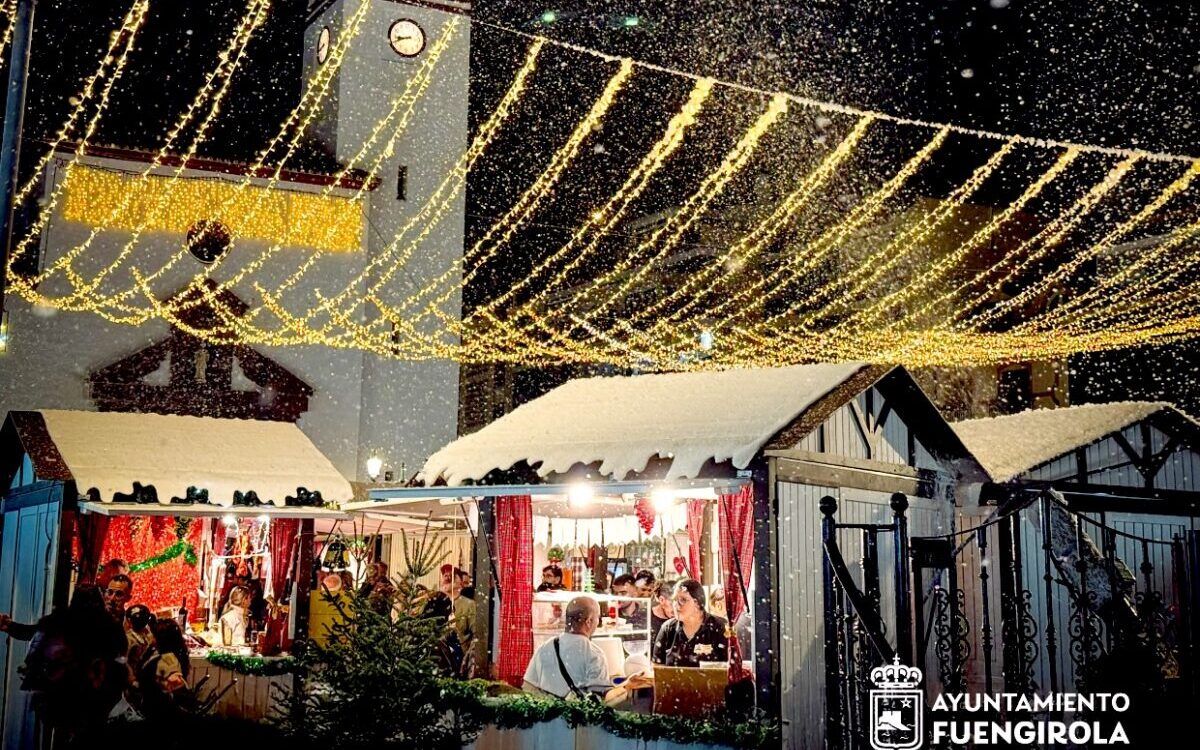
Shoppers in Fuengirola will have the chance to win a €500 Christmas hamper when a town hall campaign starts on Thursday, November 26.
A new measure also allows retailers to apply to use extra pavement space outside their premises to display products and pitch stalls and draw in customers on the run up to Christmas.
How to enter the Fuengirola Christmas draw
Called Esta Navidad tus compras en Fuengirola tienen premio, the campaign runs until December 21 and is open to everyone, including residents and visitors.
For every €20 spent at a shop or hospitality business in Fuengirola, customers receive one entry. Receipts must be uploaded to the Fuengirola Más Viva app, with entries accumulating as spending increases.
A €60 purchase, for example, would earn three entries. Spending at restaurants, bars and cafes counts, as well as purchases in shops.
What’s in the €500 Christmas hamper?
The prize includes an Iberian cured ham, red and white wines, cava, Manchego cheese and organic goat’s cheese. It will also contain gourmet products such as cured meats, pâtés, preserves and traditional Christmas sweets. Organisers will announce the winner on December 22, with the hamper handed over the following day.
Shops can apply for extra pavement space
Retailers can request temporary permission to use public pavement space during the campaign, from November 26 to December 21.
Approved businesses could put out display stands, arrange products outside or add festive decorations, such as a red carpet. The council has decided it will assess applications and decide how much space can be authorised.
Businesses interested in applying should email comercio@fuengirola.org or viapublica@fuengirola.org before using the additional space.
Fuengirola Town Hall says the campaign is intended to encourage local spending at Christmas and support businesses and jobs in the town. Visitors can browse Christmas markets across the Costa del Sol. Further details are available on the council’s official website.










Thousands expected as 45,000-capacity celebration welcomes festive season as Malaga switches on its Christmas lights.
Malaga is once again preparing for the moment when its Christmas lights are switched on this Friday, November 27.
Many Malagueños see this as the moment Christmas begins: families meet in the historic centre, friends make an evening of it and generations share a tradition that has become part of the city’s identity. The occasion also gives local shops, cafes, bars and restaurants a welcome lift as festive trading gets under way.
Malaga will switch on 2.8 million LED light points this Friday, November 27, 2026. According to the official Malaga Council announcement, these will be distributed across the historic centre and other emblematic areas of the city.
There are also some impressive details:
-
Around 500 streets across Malaga will have Christmas lighting and decorations.
-
19 locations will have new illuminated designs.
-
Calle Larios will feature 16 large illuminated medallions.
-
Its 32 columns will carry 384 red bows and 512 decorative balls.
Up to 45,000 people expected
Organisers expect the viewing area around Calle Larios and Plaza de la Constitución to accommodate up to 45,000 people. That is the estimated capacity, not a guaranteed attendance figure, but it shows the scale of the occasion.
Proceedings begin at 6.30pm, when television news reader Matías Prats will press the button. The ceremony will be followed by the first performance of ‘Natividad de luz’, the sound-and-light show above Calle Larios, and a free concert by Malaga singer El Kanka near the statue of the Marquis of Larios.
This year’s decorations form part of a display featuring 2.8 million LED lights. The Calle Larios show is scheduled three times each evening, at 6.30pm, 8.30pm and 10pm, until January 4, except on December 24 and 31.
Arrive early and plan your journey
Anyone travelling from the Costa del Sol or elsewhere in the province should expect heavy traffic and difficult parking around the centre. Spaces are likely to fill quickly, so arriving well before the 6.30pm start is advised. Consider public transport, allow extra time and check your route before setting off.
No special low-emission-zone restrictions have been announced specifically for the switch-on. However, Malaga’s existing ZBE rules still apply. On November 27, vehicles without an environmental label and not registered in Malaga are already restricted; new restrictions for non-local vehicles with a B label begin on November 30. Check the council’s guidance before driving into the zone.
For residents, this is a night to share the excitement and welcome Christmas together. For visitors, it is a chance to experience a Malaga tradition. Make an early start.

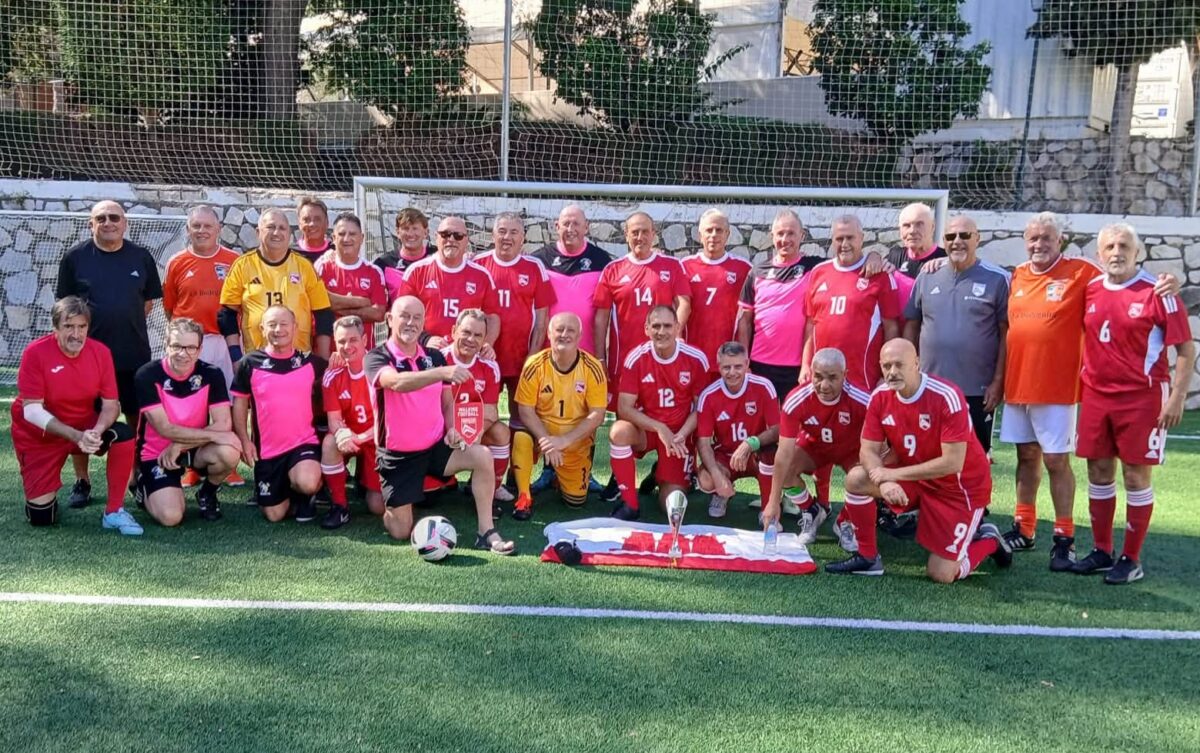
From six-a-side beginnings to international tournaments, Walking Football is attracting players across the coast.
Walking football in Costa del Sol is growing from Nerja to Estepona, with more Spanish-born players joining expatriates, according to Mark Coleman, founder of Spain Walking Football.
The game was created in Chesterfield, England, in 2009 by John Croot, chairman of Chesterfield FC. He wanted older players to keep enjoying football and support active ageing. “John invented Walking Football, a slower paced small sided hybrid of the chaotic 11 a side version that we all know,” Coleman told Euro Weekly News.
Usually aimed at men over 50 and women over 40, the game keeps football’s passing and teamwork but removes running. Smaller teams and modified rules make it accessible to people who want to stay active or return after years away.
Walking football is widely acknowledged by cardiologists and chief medical officers as an ideal activity after heart surgery. In the UK more than 100,000 people play every week, and the sport is now played in over 60 countries. Its rapid growth has also earned recognition from both UEFA and FIFA.
From expat beginnings to Spanish participation
Walking football arrived in Spain through expatriate players around 2015, Coleman said. Growth has accelerated over the past five years, with clubs now playing across mainland Spain. “More and more Spanish born players and clubs made up of entirely Spanish players are participating in the game,” he said.
Coleman said local interest is helping the sport develop beyond its original expatriate base. Players can take part socially at a nearby club or work towards selection for teams.
“Despite the project making huge progress and the opportunities for players to represent Spain multiplying fivefold in a relatively short space of time it is still the subject of criticism from those that see the project as a ‘Guiri group’ . ”
Team Spain expands fivefold
Team Spain Walking Football was formed in late 2022 after Coleman was approached to send a team to the World Nations Cup at St George’s Park, England’s national football centre. The men’s over-50s side reached the semi-finals at its first tournament, losing 1-0 to eventual winners England.
Since then, Team Spain has grown from one representative side to five: men’s over-50s and over-60s, plus women’s over-40s, over-50s and over-60s.
Coleman said the project developed through recruitment drives, trials and visits to groups around Spain. He said it gives players chances to represent Spain internationally while encouraging more people to try the sport.
Costa del Sol teams make their mark
Results show local progress. CD Marbella Walking Football won the fifth Esquina Park Rangers tournament in Torrevieja, finishing on 38 points — one ahead of hosts Esquina Park Rangers.
Sixteen clubs took part, representing England, Wales, Scotland, Argentina and regions of Spain. Marbella won all eight matches on the final day to claim the title.
The result adds to a competition calendar for Costa del Sol players. At the European Walking Football Championships in November, Spain’s women’s over-60s team won silver.
Why players keep coming back
Walking football offers more than a match. Coleman points to its physical and mental health benefits, social inclusion and community links as reasons for its growth.
The format is slower than traditional football, but still rewards passing, positioning and teamwork. Players can enjoy competition without the sprinting and physical contact of the full game. For many, the social side matters just as much: a session offers exercise, friendship and a reason to get together.
How to get involved
Players can find local clubs through the Spain Walking Football club directory, which lists teams and contact details. Costa del Sol clubs include Real Calahonda, Malaga WFC, Torrox Tornadoes, Nerja United and Benalmadena.
Those interested in Team Spain or trials can contact Coleman through the organisation’s contacts page. Newcomers should check with their chosen club about age groups, session times and whether they need to register before attending.
With participation spreading from Nerja to Estepona and more Spanish players joining, Coleman’s message is clear: walking football is becoming a game for the whole community.

How To Get A Tourist Rental Licence In Andalusia (Spain) – Step-By-Step Guide 2025
Spain spends less on healthcare than Europe but patients are paying the price
Woman left with both legs fractured after driver is blinded by sun in Granada


-

 New Developments4 weeks ago
Luxury Villas For Sale, Estepona – ProjectL1
-

 New Developments3 weeks ago
The San Roque Club – Townhouses For Sale
-
costa blanca live music3 weeks ago
Beatles tribute: The Liverpool Band returns to Orihuela Costa
-
countryside4 weeks ago
Rural revival: Five Almeria villages make moving inland easier and more enticing
-

 New Developments3 weeks ago
Stylish 3-Bedroom Apartment With Panoramic Sea Views – Benalmádena
-
Eating out in Gibraltar3 weeks ago
Young woman left horrified after Gibraltar restaurant receipt carries shocking racist slur
-

 America3 weeks ago
Así Ha Sido La Primera Jornada Del World In Progress 2026: Del Anuncio De Sánchez De Ayudas Para Las Víctimas De Urda A La Reivindicación De Rebeca Grynspan Del Papel De La ONU
-
All Saints4 weeks ago
Driving to Andalucía this weekend? DGT warns of extra traffic after train crash