
German armed forces
German conscription plans: Men between 17 & 45 must request permission from army to leave country

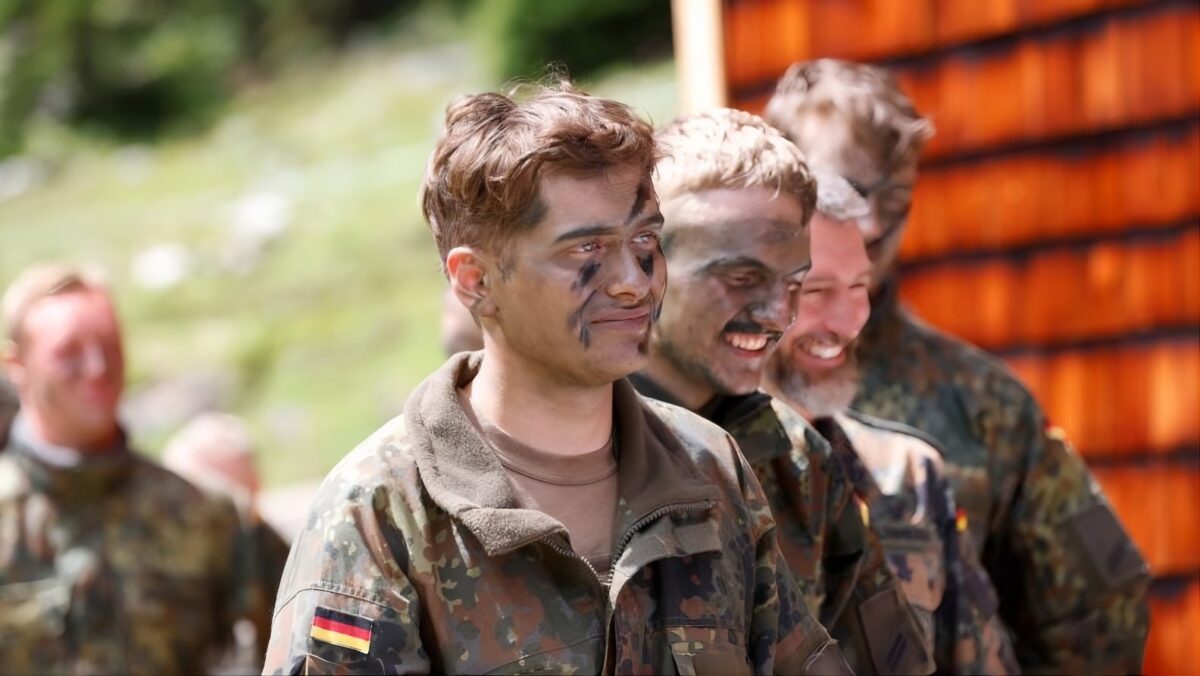
Military-age German men must ask permission to leave Germany.
Credit: deutschland.de
Fresh new regulations now compel men aged between 17 and 45 across Germany to get formal authorisation before departing for stays exceeding three months abroad. Applications target studies, employment or long-term travel and take effect immediately. Affected individuals must submit requests as part of the Military Service Modernisation Act.
Public attention stayed minimal throughout the legislative process. Earlier versions of the rules restricted permits solely to periods of acute external threat or declared defence emergencies. The latest reforms activate the requirement during ordinary peacetime conditions. Defence ministry spokespeople say it is for the purpose of reliable tracking of service-eligible citizens as the core objective.
Public protests expose deep societal rift over conscription fears
Hundreds of thousands of young demonstrators filled streets in 90 German cities last December to oppose any return of compulsory military service. Extreme views surfaced during rallies, with some participants voicing preference for life under Vladimir Putin rather than military army duty.
German society is beginning to reveal a widening gap between leadership sensing shifting strategic realities and citizens shaped by decades of assuming large-scale European wars belong to history.
German military expansion and Israeli arms deals suggest urgent preparedness plans
Ambitious conscription growth targets underpin the travel permit system as armed forces plan to expand from roughly 184,000 troops to between 255,000 and 270,000 soldiers by 2035. Young men born from 2008 onwards complete mandatory questionnaires on willingness to serve while women retain voluntary participation. Procurement budgets have recently ballooned with advanced systems purchases including initial deliveries arriving in December.
Broader European challenges contrast with reports of drug-test failures among British nuclear submarine crews and French military warnings about potential sacrifices in any conflict with Russia.
Estonian security expert Erkki Koort has identifed Germany as a prime NATO vulnerability due to its central logistical role and substantial Russian-speaking population. Successful disruption there would deliver major Kremlin propaganda gains and paralyse eastern flank operations.
Chancellor moves quickly to rearm Germany
Chancellor Friedrich Merz recently hosted Syria’s new president during talks on refugee returns, as part of Europe’s rapid backtrack from pacifism toward heightened security doctrines. NATO Secretary-General Mark Rutte earlier flagged possible Russian invasion risks by 2030 while tensions with US President Donald Trump raise questions over 45,000 American troops stationed in Germany.
Europe appears to be accelerating rearmament and manpower controls while most civilians have grown up in an era when a return to times of conflict seemed unthinkable.








El Getafe Apaga La Celebración De La Real En Anoeta Y Se Lleva Los Tres Puntos

El Elche Se Oxigena Y Derrota A Un Atlético De Bolo Veraniego

Bonoloto: Comprobar Sorteo Del Miércoles 22 De Abril

Luxury Villas For Sale, Estepona – ProjectL1

Stylish 3-Bedroom Apartment With Panoramic Sea Views – Benalmádena
Brussels warns Spain that migrants regularised under controversial scheme will be deported back to Spain if they try to move to other EU countries


-
 New Developments3 weeks ago
Luxury Villas For Sale, Estepona – ProjectL1
-
 New Developments3 weeks ago
Stylish 3-Bedroom Apartment With Panoramic Sea Views – Benalmádena
-
eu response to spain migration policy2 weeks ago
Brussels warns Spain that migrants regularised under controversial scheme will be deported back to Spain if they try to move to other EU countries
-

 %3 weeks ago
Poland Disconnects Utilities At Russian Consulate That Moscow Refuses To Hand Over
-

 Uncategorized4 weeks ago
Lewis Hamilton goes from Karate Kid to Samurai Warrior with Kill Bill guru
-
AER Lingus3 weeks ago
High-speed internet at 35,000 feet: Aer Lingus launches Starlink Wi‑Fi
-

 Uncategorized3 weeks ago
How Lewis Hamilton spent break with A-list star
-
Groundforce4 weeks ago
Spain’s Easter holiday airport strikes: Walkout suspended over weekend but disruption expected to kick in from first day of Semana Santa