ElPais
Heidi O’Neill, The Nike Veteran Who Knows How To Turn Around A Struggling Business
Published
2 hours agoon
By
Daniel Soufi
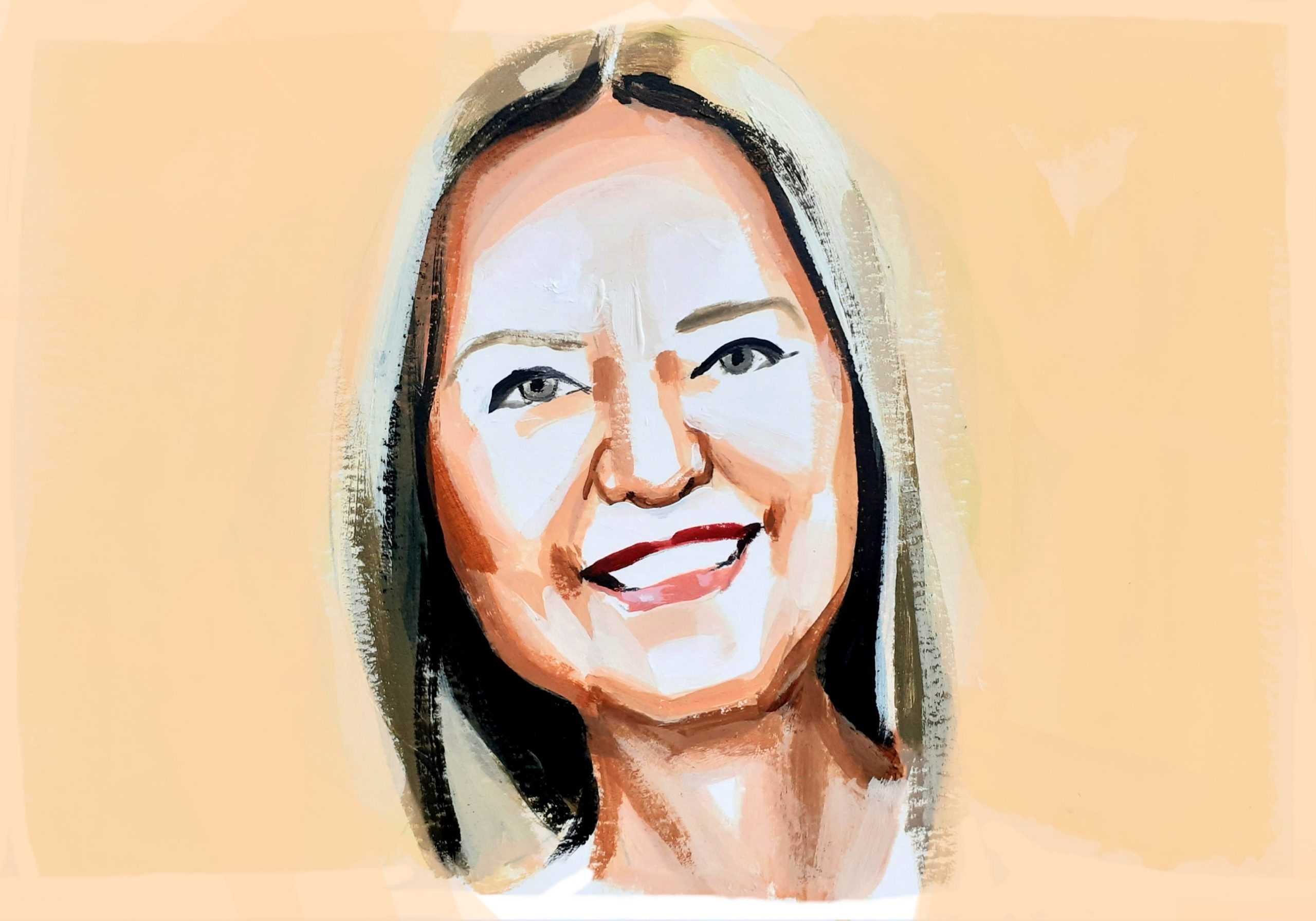
Heidi O’Neill, 61, learned before she turned 13 how a business can fall apart. Her parents ran a sporting goods store. When the oil crisis of the 1970s crushed consumer spending, the family went bankrupt and lost the shop. O’Neill attended eight schools in eight years. But they managed to move forward.
“What I love about my family is they dared for a comeback after a setback. A comeback requires heart and will and courage, and that’s what I take with me the most,” she told Women’s Wear Daily.
That belief in comebacks will come in handy. On September 8, the U.S. executive will take over as chief executive officer of Lululemon Athletica, the Canadian brand that practically invented athleisure — sportswear designed to be worn beyond the gym — and that today generates more than $10 billion in annual revenue with its premium yoga pants and more than 760 stores worldwide.
She is replacing Calvin McDonald and inheriting a business in crisis: sales are slumping in the United States, its largest market; it is losing share to younger rivals such as Alo Yoga and Vuori; the stock has fallen by nearly half over five years; and it is engaged in a public feud with its own founder, Chip Wilson, who accuses the board of having killed the brand’s creative soul.
Wilson has also questioned O’Neil’s appointment: “I genuinely hope that Heidi is the right person for Lululemon, but a near 30-year veteran of NIKE, Inc., is not the symbol of transformative, creative-first leadership that can instill shareholder confidence in today’s world.”
O’Neill has not waited to respond. Three weeks after the announcement, she addressed Lululemon employees for the first time in a video. “Since the announcement, some people have been underestimating me. Some have been underestimating Lululemon,” she said. “That’s fine. We’ll let the work answer.”
Within the company, the board has closed ranks. Its chair, Marti Morfitt, describes her as the “best, perfect, right next leader for this company,” highlighting her creativity, brand instinct and global experience.
O’Neil is married and has two children. She enjoys fashion and design, but also the outdoors and, above all, fly-fishing. She travels whenever she can. Until now, she has lived in Beaverton, Oregon, Nike’s global headquarters, and in September, she will move to Vancouver, where Lululemon is based. Beyond the office, she maintains a steady commitment to several nonprofit organizations.
The failed shop of her childhood was called Port Side Sports and was located in Charlevoix, a tourist town of fewer than 3,000 people on the shores of Lake Michigan. There, O’Neill grew up surrounded by skis and rain jackets. Her father, an entrepreneur obsessed with bringing sport to the community, introduced cross-country skiing to local residents and organized courses that Heidi herself would later teach as a teenager. After the bankruptcy and years of moves, she studied journalism at the University of Colorado Boulder, graduating in 1986.
Her first professional stop was at Foote, Cone & Belding, the storied San Francisco advertising agency, where she rose to vice president and account supervisor. From there, she moved to Levi Strauss & Co. as marketing director for Dockers. In 1998 — the same year Chip Wilson opened a design studio in Vancouver with yoga classes at night — O’Neill joined Nike. She would remain there for the next 26 years.
In Beaverton, she rose through the ranks to become one of Nike’s most powerful executives. For seven years, she led the women’s business and turned it into a multibillion-dollar division. She later oversaw the company’s vast global consumer engine: stores, digital commerce, product and brand strategy across its main international markets.
When she left the company in 2025, amid a restructuring following the departure of John Donahoe, Nike’s annual revenue had grown to more than $45 billion, up from $9 billion when she joined. At the same time, she built a parallel career as an outside director at companies such as Spotify, Hyatt Hotels Corporation and Lithia & Driveway.
Markets reacted coolly to the news of her appointment. Lululemon Athletica’s stock fell on the day of the announcement, April 23. Williams-Blair analysts called the choice “out-of-left-field”; BNP Paribas spoke of disappointment. The doubts have less to do with O’Neill’s résumé than with the context she comes from. Her name is tied to the Donahoe era at Nike, marked by the company’s aggressive shift toward direct-to-consumer sales. The idea was to cut out much of the middlemen — from department stores to sports chains — and sell through its own website and stores. The strategy weakened the wholesale network and left room for rivals such as Hoka and On to gain ground. It ultimately took a toll on sales. Since Elliott Hill’s arrival, the historic company has been trying to correct course.
There is a touch of irony in her career. When O’Neill joined Nike in 1998, the Oregon brand was beginning to lose share to the athleisure trend that Lululemon was creating at the same time in Vancouver. Twenty-eight years later, the roles have reversed: it is Lululemon that is losing ground to more agile competitors, and a Nike veteran who must reinvent it.
Both brands now share the same diagnosis: cultural disconnect, a worn-out digital strategy and a fading narrative. O’Neill now has to lead her own comeback. As journalist Manuel Jabois recently put it, what interests us in stories of rise and fall is not watching people fail, but watching them rise again.
An executive with rod and fly
Heidi O’Neill practices fly-fishing, a technique that does away with natural bait and uses artificial lures — flies — that imitate insects or small fish, hand-tied from feathers, hair and thread.
Sign up for our weekly newsletter to get more English-language news coverage from EL PAÍS USA Edition
You may like
Alphabet
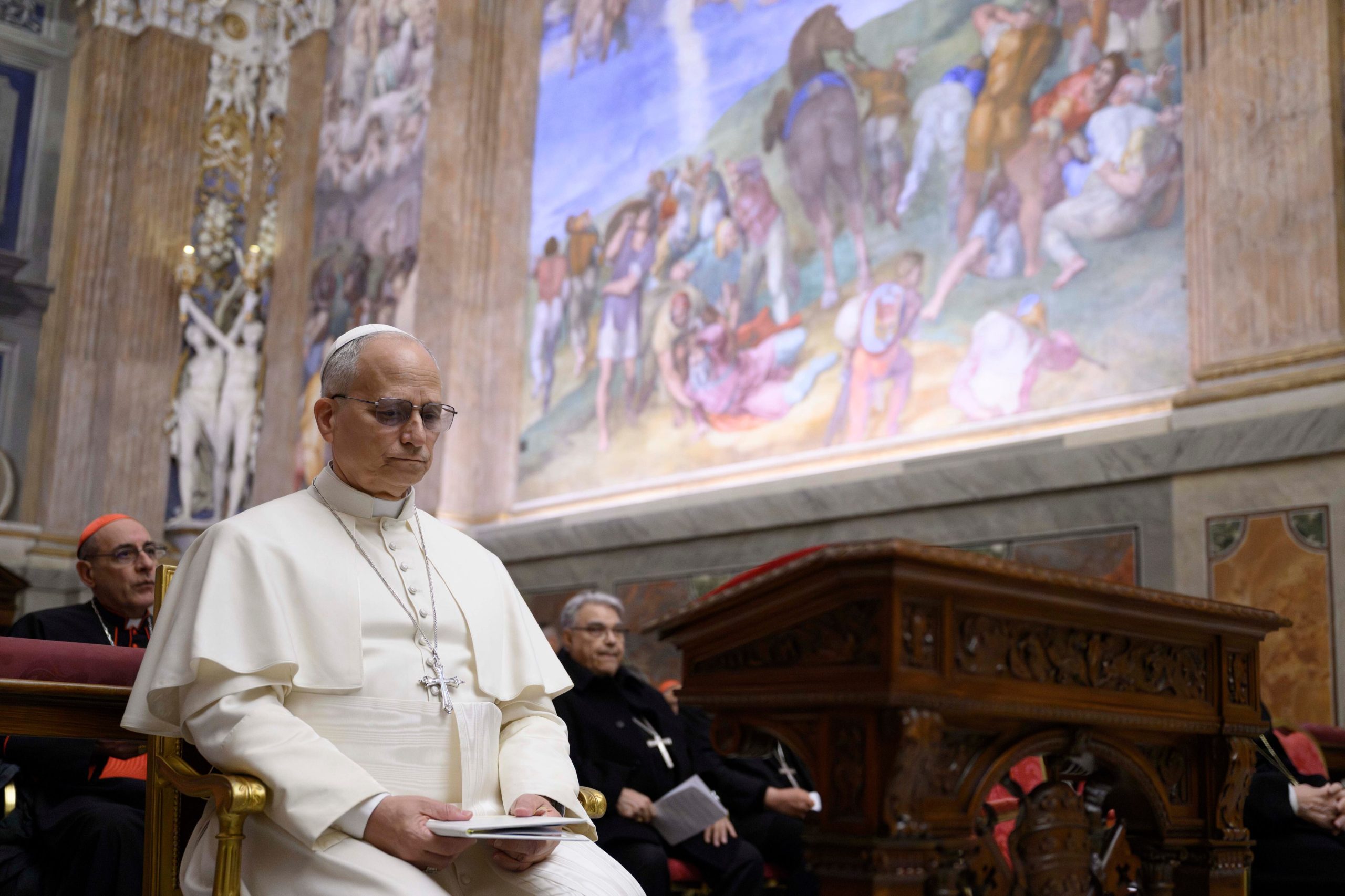
A Franciscan Monk, A Festival With Karol G, And The Vatican’s Investments: How The Pope Came To Say That ‘AI Needs To Be Be Disarmed’
Published
7 hours agoon
May 26, 2026
Last year Time magazine included Pope Leo XIV among the 100 most important figures in the world in artificial intelligence (AI). It is no coincidence. Only eight days passed from his papal appointment to his first public remarks on the technology: “Truth is never separated from charity… Thus, truth does not distance us, but rather allows us to face with greater vigor the challenges of our time, such as migration, the ethical use of artificial intelligence and the protection of our beloved Earth,” he said in his second official address. His first encyclical, Magnifica Humanitas (magnificent humanity), is devoted precisely to this technology.
AI is a concern at the Vatican. For the pontiff, the issue was so important that it even influenced his choice of name. “Pope Leo XIII […] addressed the social question in the context of the first great industrial revolution. In our own day, the Church offers to everyone the treasury of her social teaching in response to another industrial revolution and to developments in the field of artificial intelligence that pose new challenges for the defence of human dignity, justice and labor,” Leo XIV said in his first address to the College of Cardinals.
“Artificial intelligence needs to be disarmed,” the pope declared yesterday during the presentation of his encyclical. “The word is strong, I know, but deliberately chosen because this moment needs words capable of attracting attention […] The Church has long been working for nuclear disarmament […] In a similar sense, artificial intelligence now demands to be ‘disarmed,’ freed from logics that turn it into an instrument of domination, exclusion and death,” he added. Before him, Christopher Olah, co-founder of Anthropic, the developer of Claude and Mythos — a generative AI system so sophisticated it has triggered global alarm over its potential to undermine cybersecurity — took the floor. “We need moral voices that the incentives cannot bend. We need more of the world — religious communities, civil society, scholars, governments — to do what His Holiness has done here: to take this seriously.”
In the 1891 encyclical Rerum Novarum, Leo XIII adapted the Church to the social reality brought by the turn-of-the-century change, calling for labor rights for the precarious industrial proletariat of the time that included children and pregnant women who faced 20-hour workdays, and criticizing the excesses of monopoly capitalism (43 years after the publication of the Communist Manifesto). The first U.S. pope intends to do the same in the context of AI, even though he presented his encyclical alongside a prominent member of the AI industry — a fact that has been noted (“It’s as if Leo XIII had presented Rerum Novarum together with Henry Ford,” an analyst commented).
As evidenced by the unbridled promotion and implementation of technology at the expense of human dignity, we are truly experiencing an eclipse of the sense of what it means to be human. It is imperative to recover an understanding of the true meaning and grandeur of humanity as…
— Pope Leo XIV (@Pontifex) May 22, 2026
The encyclical, published this Monday, is not presented solely as a way to address the social consequences of AI. The Church is under increasing scrutiny, and it sees in this technology a potential source of problems for the institution. “It is no revelation that the Catholic Church is experiencing one of the deepest crises in its history, fundamentally due to the loss of credibility because of widespread sexual abuse within its structure,” says theologian Juan José Tamayo, honorary emeritus professor at Carlos III University in Madrid and author of Cristianismo Radical (Radical Christianity). “AI is a communication mechanism for spreading the Catholic message, the Pope’s message, and that of the hierarchy in general, to harmonize it with the idea of a universal Church. That is why they need AI to convey a message to the entire citizenry that in some way neutralizes that crisis.”
Investments in AI
Time presents Pope Leo XIV as a “spiritual counterweight” to Silicon Valley’s leadership. But the pontiff’s rhetoric, and that of his predecessor Pope Francis — who was highly critical both of AI and of the industry developing it — contrasts with the Church’s investment policy.
The Vatican bank, the Institute for the Works of Religion (IOR), manages assets worth $6.85 billion, according to its own reports. The amount has almost tripled since 2020, when it totaled $2.56 billion. The institution devotes 10% of its budget to charitable works that reinforce “humanitarian assistance that responds to the most urgent needs of the poor and the marginalized.”
The rest of that money is invested. Where? The IOR does not make its positions public. What is known are the values that, in the Church’s view, are suitable for investment — that is, those “aligned with Catholic values.” In February this year the IOR and U.S. financial services firm Morningstar launched two stock indices, one European and one U.S., each including 50 mid- and large-cap companies that “adhere to Catholic teachings regarding life, social responsibility, and environmental protection.”
Among the principal holdings of those indices are companies such as Meta, Microsoft, Amazon and Alphabet (Google’s parent), as well as ASML, Intel or Nvidia Corp, Apple and Tesla. In other words: AI developers, cloud infrastructure providers, manufacturers of the hardware necessary for this technology to operate, and companies whose flagship products incorporate AI.
Excluded from these indices are companies tied to sectors the Vatican has for years advised against investing in: gambling, abortion, and products related to terminating pregnancies (such as condom manufacturers), the fossil fuels and mining industries (because of pollution), or the arms industry. That last exclusion contrasts with the fact that many of the tech firms that do have the Church’s approval have contracts with the Pentagon or have provided direct support for the Palestinian genocide.
The Vatican-branded indices serve as a guide for asset managers and funds — such as iCapital, Altum Faithful or Portocolom — that specialize in attracting savings from religious congregations or organizations that observe Catholic principles. They manage billions of euros in assets, so their moves are influential. And those indices prominently include many of the main AI developers.
The friar who put the Church in the conversation
On Saturday, September 13, 2025, Karol G performed before a packed St. Peter’s Square on a night that also featured Andrea Bocelli, John Legend, and Pharrell Williams. The unusual festival, Grace for the World, capped a week of reflection sessions organized by the Fratelli Tutti Foundation, established by Pope Francis. During those days a dozen Nobel laureates visited the Vatican to debate various topics.
There was a panel dedicated specifically to AI. The question to be addressed was how human, animal, and machine intelligences can coexist. The caliber of participants was high: Geoffrey Hinton, Nobel Prize winner in Physics and creator of the Transformer algorithm that made generative AI possible; Yoshua Bengio, another godfather of AI; Stuart Russell, also well known in the field; cosmologist Max Tegmark, and historian Yuval Noah Harari.
The organizer of that panel — able to bring together such leading figures from academia — was a Franciscan monk, Paolo Benanti. This theologian served as an AI adviser to Pope Francis, a role he has also performed for Italian Prime Minister Giorgia Meloni. Benanti’s writings reflect a human-centered view of AI. He supports the development of a sapient AI only if it remains strictly a tool.
“The research question itself already implies a deterministic and doomster view of AI,” one participant in those meetings told EL PAÍS. The debates were heated. Of the dozen experts convened, only two sought to focus the discussion on the current problems caused by AI, such as its high energy consumption, environmental impact, the biases many models embed, or its effect on mental health.
After the working group concluded, Tegmark, Bengio, Hinton and Russell promoted a new letter opposing the development of AGI (artificial general intelligence, the kind that would theoretically match or surpass human capacities). Among the signatories were Benanti and Steve Bannon, former communications adviser to Donald Trump.
“Benanti’s rhetoric is essentially similar to that of [OpenAI CEO Sam] Altman: AI is so efficient, powerful and dangerous that AGI is imminent, so the crucial thing is that the right people develop it,” said a participant in the Vatican discussions.
There is no scientific evidence to suggest we are close to seeing AGI. Nevertheless, the Church is making a move with its encyclical on AI — both because of the social consequences of this technology, emphasized by Pope Francis and now by Leo XIV, and because of the elephant in the room at the Holy See: how the development of machines that can provide answers — whether correct or incorrect — to every question, even existential ones, could affect the institution’s very existence.
Sign up for our weekly newsletter to get more English-language news coverage from EL PAÍS USA Edition
ElPais
The Øresund Strait, The New Frontier In Russia’s Hybrid War Against NATO
Published
1 day agoon
May 25, 2026The port and ferry terminal in Helsingborg are bustling with activity. Everything operates with an almost choreographed efficiency. Ferries maneuver slowly; refrigerated trucks wait their turn to board alongside cars, cyclists, and workers who cross the Øresund Strait as if taking a commuter train. After all, only 2.5 miles separate Swedish Helsingborg (population 114,000) from Danish Helsingør. From the waterfront, under the oblique light of northern Europe that lengthens the evenings over the water, the strait is so narrow it is hard to see it as a strategic border. But that maritime line, which looks ordinary on maps, is today one of the flashpoints between Russia and NATO. It is the setting of a gray, hybrid war of maritime sabotage and ghost ships.
The Øresund Strait, also known as the Sound, is one of three gateways from the Baltic Sea to the Atlantic Ocean, along with Denmark’s Great Belt and Little Belt. That means every vessel entering or leaving the Baltic — cargo, energy, oil, data cables, or military — passes through this corridor.
For centuries, controlling Øresund meant controlling access to the Baltic, says Per Svensson, 62. Tanned from his morning walks, he downs a black coffee in a café near the Helsingborg ferry terminal as he recounts working for two decades on the port’s ships. Now he likes to sit and watch the ferries and freighters coming and going — and read about the region’s history. “These waters have always been ordinary to us, not a border. Now everything seems to have changed,” he says, pensive.

Historically, these straits were a source of power and wealth for Denmark, which for four centuries collected maritime tolls. In post–Cold War Europe, that geostrategic significance faded somewhat under decades of Nordic integration, short ferry crossings, and weekend tourism. There are no tolls today. But the strait’s old strategic importance has returned forcefully amid Russian efforts to move the hydrocarbons that fuel its war against Ukraine.
In 2025, Nordic authorities verified the passage of at least 292 vessels linked to Russia in the region. Ships that left Russian Baltic ports transited Øresund or the Great Belt to the North Sea and from there to the Atlantic. From the terrace of the luxury Clarion hotel in downtown Helsingborg, where NATO foreign ministers met last week, you can see those vessels almost every day, says Sweden’s Foreign Minister Maria Malmer Stenergard.
They look like ordinary ships, but beneath a dense layer of bureaucracy they are part of what is called the ghost fleet, or shadow fleet, Malmer Stenergard says. These are aging vessels with opaque ownership structures designed to make them hard to trace, flying flags of distant countries that change frequently — ships the Kremlin and its orbit use to move hydrocarbons. It is their way of evading Western sanctions over the war in Ukraine.
Intelligence reports have also recently documented that many of those ghost ships carry armed contractors on board whose job is to protect the cargo, and who give those vessels a military aura. “You cannot prove they are Russian military, but there is evidence they are linked to paramilitary companies with ties to the Kremlin,” a Swedish official says.
Russia’s war against Ukraine, which shook Europe more than four years ago and changed its landscape and mindset forever, produced a structural shift in the Nordic region that today, under the Kremlin threat, has been hardened. The invasion ordered by Vladimir Putin pushed Finland and Sweden into NATO. Both Nordic countries provide the Alliance with invaluable strategic and geographic capabilities. Their accession, together with the existing membership of Estonia and Denmark, changed the Baltic’s standing. With the exception of the Russian exclaves of Kaliningrad and St. Petersburg, it became an allied sea — almost a “NATO lake,” as experts put it. That raised the value of strategic points such as Helsingborg.
Conflict in the shadows
Far from being placid, the Baltic is now one of the primary laboratories of Russia’s hybrid warfare, says Elisabeth Braw, a researcher at the Atlantic Council’s Transatlantic Security Strategy Center.
There are no fleet battles or classic naval engagements. The Kremlin uses more ambiguous tactics, such as sabotage or damage to maritime infrastructure, interference with navigation systems, manipulation of AIS signals, covert operations that are hard to attribute, and espionage activities.
And at the heart of that hybrid war is the ghost fleet. “Russia has discovered these ships can be used for more than moving oil — to cause damage in the Baltic — so they are exploiting them,” warns Braw, who has extensively researched the Kremlin’s hybrid warfare.

Moscow has found it can inflict substantial damage without using military forces. There is also an environmental risk from those decrepit tankers carrying Russian hydrocarbons. Since October 2023, authorities in the region have recorded at least 11 significant incidents of damage to submarine cables — mainly telecommunications and power lines; some incidents involved gas pipelines and other critical infrastructure, according to an Estonian intelligence report. Although most investigations have not officially attributed the incidents to the Kremlin, several of the most serious cases have involved vessels linked to Russian ports or the ghost fleet.
Ships such as the Fitburg, detained by Finnish authorities in December 2025 after being implicated in damage to telecom cables between Finland and Estonia. The freighter was sailing under the flag of Saint Vincent and the Grenadines, had departed St. Petersburg, and was found with its anchor down in Finnish waters — a pattern that bears a strong resemblance to the Russian shadow fleet.
Thus, Helsingborg, a bottleneck of the Baltic, has shifted from a peripheral, quiet place to an area under watch. The small southern Swedish port city and the Øresund Strait are now part of the Atlantic defensive architecture.
Maritime law establishes that vessels that appear linked to the Russian ghost fleet have the right to sail. And unless there is evidence of environmental risk, illegal fishing, or another crime against maritime traffic, Swedish, Danish, Estonian, or Finnish authorities have limited room to act.
A few months ago, however, the Swedish government enacted a legal change that expands the Coast Guard’s powers to request insurance information and to monitor ships merely transiting Swedish territorial waters and even Sweden’s Baltic exclusive economic zone. “We are not at war, but we are not at peace either,” Prime Minister Ulf Kristersson has said.
Back at Helsingborg’s port, whose terminal almost fronts the terraces of waterfront restaurants and cafés crowded under the May sun, Karin Akerman says she is “a little worried.” The 55-year-old teacher has two teenage grandchildren and fears the war may one day reach her waters. “We always thought we would never experience a conflict, but nothing feels safe anymore,” she says. Nearby, in a small square, two teenagers record a TikTok video. For a couple of days the town’s attraction has been the tide of police and military personnel deployed during the NATO meeting. “Nothing ever happens here. And I don’t think anything will happen,” one of them says.
Not far away, at various points along the Skåne coast, concrete bunkers built during World War II and expanded during the Cold War still face the Sound. For years they were historical, anachronistic remnants of a Sweden on alert when the Baltic was seen as a potential line of confrontation with the Soviet Union. Now, in a country that is continuing to militarize and which talks about submarine cables, maritime surveillance, espionage, and hybrid warfare, they make sense again to many.
Sign up for our weekly newsletter to get more English-language news coverage from EL PAÍS USA Edition
Abelardo de la Espriella
In The Final Stretch Of Colombia’s Presidential Campaign, Undecided Voters Are In High Demand
Published
1 day agoon
May 25, 2026Just days remain until the first round of Colombia’s presidential election on May 31, and millions of citizens still haven’t decided which of the 12 candidates to vote for.
This heterogeneous group of undecided voters includes people with no clear political affiliation, those disillusioned with democracy, people who prefer to cast a blank ballot, young people with no interest in politics, as well as potential abstainers. Various campaigns estimate that, in this final stretch, these undecideds could represent a third of the total electorate. An analysis by independent digital news outlet La Silla Vacía (“The Empty Chair”) using microdata from polls suggests that the undecided account for around 28% of Colombian voters. Therefore, the five leading candidates in the polls have developed strategies to attract them… while being careful not to lose their base of loyal supporters.
Several political analysts consulted by EL PAÍS agree that undecided voters will play a decisive role in determining who will join leftist Senator Iván Cepeda in the second round. The battle for this spot is being waged by the right and the far-right, with Senator Paloma Valencia and criminal lawyer Abelardo de la Espriella in the mix.
Political strategist Diego Correales asserts that the latest polls, released Saturday and showing a surge in support for De la Espriella, “will be key in shaping the undecided voters, especially those torn between two similar options.” Correales explains how, four years ago, the results of those polls tipped the scales against the mayor of Medellín, Federico Gutiérrez, and in favor of the former mayor of Bucaramanga, Rodolfo Hernández, who ultimately lost to incumbent President Gustavo Petro in the second round. This time around, a key question in the electoral contest will be who is most likely to defeat Cepeda… a question that all the polling firms are asking when modeling runoff scenarios.
Augusto Reyes, director of the consulting firm Poder y Poder (“Power and Power”), maintains that the principal characteristic of undecided voters is that their vote is volatile; it can change at any moment, even in the hours leading up to the election. “They’re people without party affiliation, without ideological convictions, who are usually far from the extremes.” Reyes agrees that the main competition for their support is on the right, but insists that centrists like Claudia López and Sergio Fajardo — and even Cepeda — are seeking to secure that support with specific messages. “All the campaigns are targeting this large group [of undecideds],” he explains.
For Corrales, it’s no coincidence that, in the final days before the elections, President Petro — who has repeatedly expressed his desire to maintain the left-wing political project — has embarked on a series of interviews with major media outlets, delivering a moderate message and defending his administration’s record. “The president’s [TV appearances] and announcements are aimed at consolidating these undecided voters for Cepeda’s campaign. The goal is to gain two or three percentage points that could be decisive for the final result,” Corrales insists.
Nadia Pérez Guevara, who holds a doctorate in political science from the University of Salamanca, explains that the fact that there’s a two-round system in Colombia produces a greater number of undecided voters, because it gives citizens more time to make their final decision.
This expert mentions another factor: that a shift in political preferences has also increased the number of undecideds. “Electorally, Colombia is changing, as demonstrated by Petro’s election four years ago and the recent legislative elections (which were won by the leftist coalition). [Today], there’s a significant left-wing bloc and a very distinct right-wing bloc.”
In this realignment of forces, Pérez notes, many voters who previously voted for traditional parties or for the political center have been left adrift. “They don’t know what decision to make within the framework of the left-wing and right-wing alternatives, which — [despite being] the majority — don’t represent them.”
It’s within this context that Fajardo and López — trailing in the polls — are insisting on winning back these undecided voters. Fajardo, the former mayor of Medellín, is confident that, in the last 72 hours of the campaign, many doubtful citizens will agree that his proposals are the best option. In fact, he has publicly stated that there are recent precedents for this: “28% of voters are undecided! With just over two weeks to go, one in three Colombians is undecided. They’re unsure about what’s best for them, their families and their country. And that’s good. It’s healthy. Doubting, thinking, reflecting and getting informed, [these are] the best ways to decide how to vote. Everything is still up in the air. Anyone who tells you that the elections are [already] decided, in either the first or second round, is lying. There’s plenty of time and anything is possible!” he wrote a few days ago, on his X account.
However, Yann Basset, a political analyst and university professor, says that a significant percentage of these undecided voters are expected not to vote at all. He also explains that even many of those who already claim to have settled on a candidate won’t actually go to the polls. “Studies show that there’s a segment of the electorate that always decides at the last minute. And that’s why it makes sense for campaigns to target undecided voters… but the key lies with those who abstain.”
Basset insists that, in Colombia, where voting isn’t mandatory and almost half the population doesn’t exercise their right to vote, convincing abstainers can change the election result more than convincing undecided voters. And time is running out.
Sign up for our weekly newsletter to get more English-language news coverage from EL PAÍS USA Edition
Heidi O’Neill, The Nike Veteran Who Knows How To Turn Around A Struggling Business
E
New Law In Spain Targets AI Fake Sexual Images After Growing Fears Over Online Abuse
Tags
Trending
-
Competiciones4 weeks agoE
-
blackout April 20253 weeks ago
Insurance company Mapfre decides to pay out €14 million compensation for 2025 blackout
-
Foreign demand3 weeks agoWho Bought Where In The Second Half Of 2025?
-

New Developments3 weeks agoStylish 3-Bedroom Apartment With Panoramic Sea Views – Benalmádena
-

New Developments3 weeks agoInside The Most LUXURIOUS Apartment Building In Spain!
-

New Developments4 weeks agoLuxury Villas For Sale, Estepona – ProjectL1
-
America4 weeks agoE
-
Costa Blanca South3 weeks ago
Alicante police chief to retire after 17 years of service