Connect with us

Latest

How Companies In Europe Are Struggling To Recruit Workers From Outside The EU

Published

on

Almost half of European small and medium companies struggle to find workers with the skills they need but recruitment outside the EU remains “limited” and “too difficult”, a recent Eurobarometer survey published by the European Commission had shown.

The Commission said the EU faces “persistent labour and skills shortages across key economic sectors, with about 84 per cent of all occupations in shortage in at least one EU Member State in 2023”.

The EU executive adds that the potential to recruit foreign workers “remains largely untapped”, especially by small and medium-sized enterprises (SMEs), which represent 99 percent of all EU businesses.

Few SMEs tried to hire workers outside the EU in the past two years, with proportions ranging from 2 percent in Hungary, to 7 percent in Sweden, 9 percent in France, 11 percent in Austria, 15 percent in Denmark, Spain and Italy, 25 percent in Germany and 48 percent in Malta.

Among those that have recruited outside the EU, 54 per cent said the process was “difficult”.

Complex administration and immigration procedures were the most frequent barriers (31 percent), followed by difficulty finding suitable candidates (25 percent) and language issues (24 percent), according to the survey.

Positive views were also expressed, with almost a quarter of recruiters (24 percent) saying not to have had any problems. The highest share was reported in Greece (67 percent) and Portugal (46 percent), while few companies (less than 10 percent) said they had no issues in Germany, Denmark and the Netherlands.

Among companies that have recruited third-country nationals, more than 60 percent said their integration and retention was easy.

Among SMEs that have not tried to recruit outside the EU (86 percent), the most common perceived barriers were language requirements, administrative and regulatory procedures, and the recognition of qualifications.

The survey also showed that recruitment for both EU and non-EU citizens typically occurs via informal contacts and employee referrals, while private agencies were mentioned more frequently for international recruitment.

Companies said hiring outside the EU could become easier with financial support, information and guidance, assistance in finding candidates, help with workplace integration, and immigration and relocation support.

The Commission is launching the EU Talent Pool, a platform for international recruitment meant to help ease skill shortages. The Commission also recently proposed a new visa policy asking EU countries to make procedures “simpler and faster” for skilled workers.

READ ALSO: How the EU’s new Talent Pool for non-EU jobseekers will work

Magnus Brunner, Commissioner for Internal Affairs and Migration, said the results of the survey “clearly shows that we must help our businesses to attract talent”.

“With the visa strategy, we aim to facilitate international recruitment. We need to simplify and speed up procedures through digitalisation, less red tape and smoother transitions from study to work or entrepreneurship,” he said.

Continue Reading
Click to comment

Leave a Reply

Your email address will not be published.

Andalucia

E

Published

on

e

Please enable JS and disable any ad blocker

Continue Reading

Austria

The Microbes Of Ötzi The Iceman Awaken Thousands Of Years After His Death

Published

on

the-microbes-of-otzi-the-iceman-awaken-thousands-of-years-after-his-death

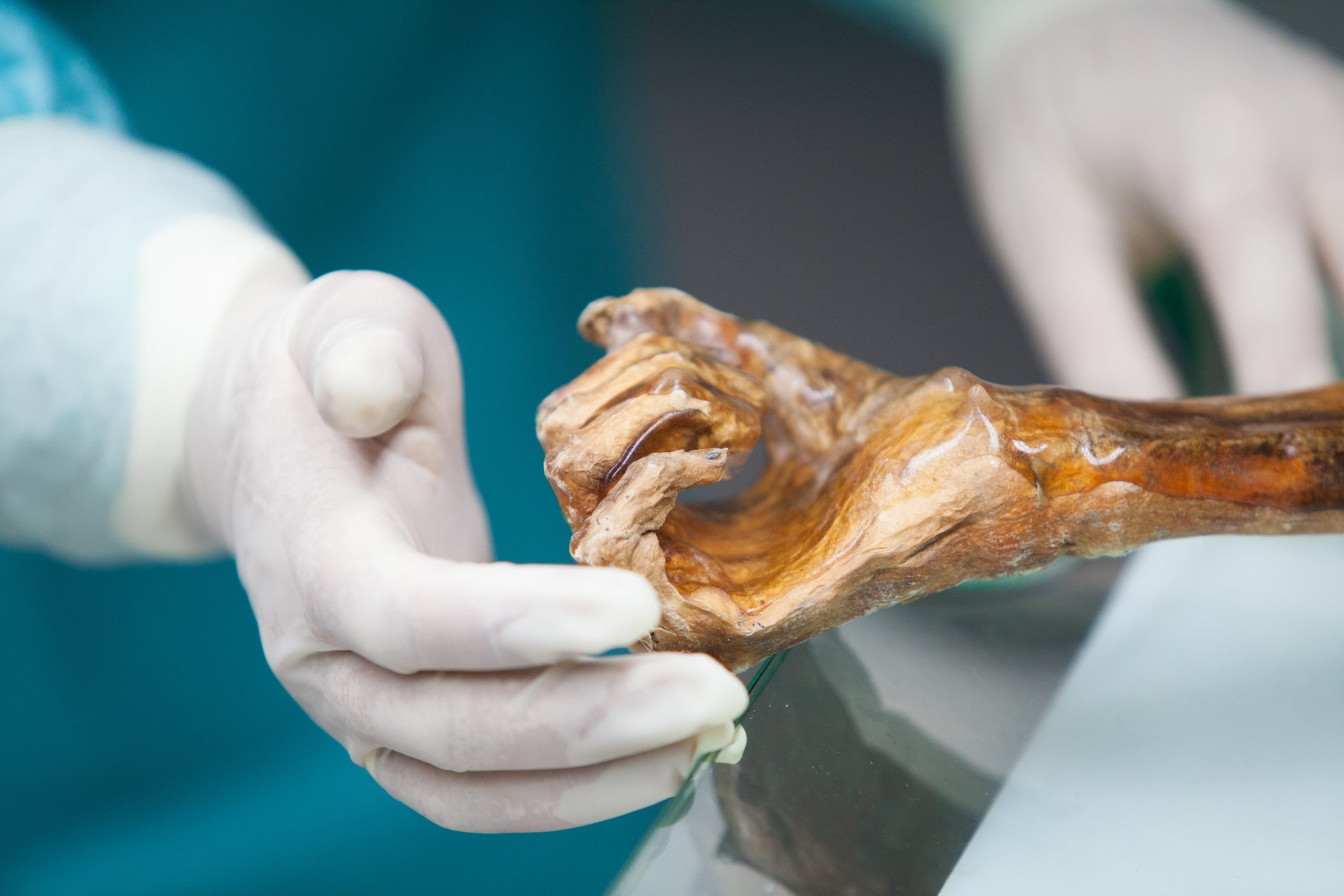
Recovered from the ice of an Alpine glacier at the end of the last century, almost everything about Ötzi was already known. That he was about 45 when he was killed from behind some 5,300 years ago. A detailed genetic study published three years ago revealed that, besides being bald, he had a dark complexion and likely came from distant Anatolia. We even know what he ate shortly before he was killed by an arrow. Now, a new study identifies the microscopic life he carried inside him. The paper, published in the journal Microbiome, shows that his bacteria were very different from those of people in modern societies. The researchers also found a number of cold-adapted fungi that have awakened thousands of years later and could threaten the mummy’s future.

“We have identified ancestral gut bacteria preserved in Ötzi that are extremely rare in people living modern, industrialized lifestyles, although they can still be found in people with traditional, non-industrialized lifestyles,” says Frank Maixner, director of the Institute for Mummy Studies at Eurac Research (Bolzano, Italy) and the study’s senior author. “These microbes give us a unique and valuable picture of what the human gut looked like in the Copper Age, before industrialization transformed our microbiota,” Maixner adds in an email.

The researchers took advantage of the rare opportunity in 2019 when Ötzi was thawed for five hours for a series of procedures on the mummy. During that time they sampled his skin and connective tissue, used about a dozen swabs on as many parts of his body, collected some of the water that melted from his interior, and reanalyzed the soil preserved since 1991 from where the mummy had been removed. They even studied the air inside the chamber where the Iceman is kept—always at the same temperature (−6º) and 99% humidity—which aims to replicate the conditions in which he was preserved for millennia.

Ötzi’s gut microbiome found now is the same one he had when he died, although postmortem species typical of decomposition have been added to it. The team found a large number and variety of the genus Clostridia, already detected in some Egyptian mummies. In both the soil and the melted water they found microorganisms well adapted to the cold. In particular, they identified four species of fungi, all yeasts, such as Glaciozyma watsonii and Phenoliferia glacialis, whose names are telling: these are psychrophilic microbes, accustomed to icy environments. Some of them had previously been found far from the Alps, in places like the Russian Arctic or Antarctica.

What is intriguing about these yeasts is that, despite accompanying Ötzi in his death, some samples showed only limited DNA damage. That would indicate that at least some of those found on the Iceman’s skin were active when they were studied. Moreover, by comparing them with samples taken in 2010, the researchers confirmed that they have not remained static—that the mummy’s microbial ecosystem did not stay frozen for 5,300 years. This leads the authors to write in their conclusions: “The crucial question now is whether these yeasts are descendants of ancient yeasts that continued to replicate over the years, or whether they were in a latent state that reactivated after the mummy was thawed.”

According to Maixner, “here we see continuity. These yeasts have accompanied Ötzi on his long journey through the millennia.” For him, this would demonstrate that the mummy “is not a static relic, but a dynamic biological system.” But it also means the mummy may be at risk. When they removed him from the ice, they used a chemical compound (phenol or carbolic acid) to decontaminate him. But, as with the arms race between antibiotics and bacteria, this may have suppressed some microorganisms while leaving the door open to others—such as these yeasts that thrive on the Iceman’s skin.

“The mummy’s conservation conditions are very stable nowadays,” says Elisabeth Vallazza, director of the South Tyrol Archaeological Museum, which oversees his preservation. “Extensive microbiological monitoring ensures the mummy does not suffer any damage. However, more research and comprehensive conservation efforts are unquestionably needed to preserve him for many more generations,” she adds in a statement.

But the study’s authors are clear that keeping Ötzi at −6º and 99% relative humidity is no longer sufficient to freeze his microbiome’s activity. “Our genomic analysis revealed that several of the microbes present—including some cold-adapted yeasts and certain bacteria—carry genes that encode enzymes capable of breaking down proteins, fats and even collagen, a key structural component of skin and connective tissue,” Maixner emphasizes, concluding: “this implies a latent biological risk to the mummy’s integrity in the long term.”

Sign up for our weekly newsletter to get more English-language news coverage from EL PAÍS USA Edition

Continue Reading

BBC

New Lady Di Auction: Unseen Photos And Letters From The Time Before She Was Princess Of Wales

Published

on

The fascination with Diana, Princess of Wales, and her legacy endures nearly 29 years after her death. From time to time her story is rewritten in the present tense. Not only because new information comes to light—or because past material is rediscovered—but also because tangible memories have become prized possessions for their owners and objects of desire for her fans. From her iconic dresses to personal letters, they are small fragments of a life that continues to attract interest.

On July 7, the British auction house Gorringe’s will sell a collection related to the Princess of Wales and her teenage years. The items in this new lot, which offer a unique view of Diana Spencer before she became Princess of Wales by marrying Prince Charles, were in the possession of Katherine Hanbury, a childhood friend of Lady Di who attended West Heath Girls’ School in London with her between 1973 and 1977. “It represents a genuine personal archive of a real friendship with someone who knew Diana before her public life. Through these objects you can see the princess in the years before she became one of the most famous people in the world: as an innocent, proud, thoughtful and deeply sincere young woman,” the auction house says.

The collection includes four previously unseen color photographs from Diana’s school years: two of her alone in her bedroom, one outside the school and the last with her group of friends, a scene showing them relaxing in the sun by the school. At that stage the future princess was not especially notable for her academic achievement. She left West Heath Girls’ School at 16 in 1977, the same year she met her future husband. They would not begin their relationship until 1980; a year later, on July 29, 1981, they were married.

One of the items up for sale dates from two months after that mass wedding at St. Paul’s Cathedral. Lady Di wrote a letter to Hanbury after returning from her honeymoon, which ended with a stay at Balmoral Castle following a two-week trip aboard the royal yacht Britannia. The missive is dated September 27, 1981: “Dear Katherine, I can’t tell you what a lovely surprise I got opening your card. Thank you so much for putting pen to paper and wishing me well.” It is three handwritten pages on Buckingham Palace stationery, bearing Queen Elizabeth II’s royal seal. The pages are inside an original envelope that is also part of the lot.

The owner of these mementos has also included in the sale a handwritten birthday card signed Diana (S). It appears this was how she and another Diana in her class were distinguished. “She remembers Diana volunteering to clean the house of the headmistress, and it is memories like this, and the collection that has come to light, that present the real young Diana in a way that is completely at odds with the public persona that was created by others,” explains Albert Radford, books and manuscripts specialist at Gorringe’s, in statements to People magazine.

The final item completing this collection is the program for an intimate Thanksgiving service held at St. Martin-in-the-Fields in London on November 19, 1997, in memory of the late Diana, Princess of Wales. The princess died in a tragic car crash in Paris at the age of 36 on August 31, 1997. This service was entirely separate from the state funeral held on September 6 at Westminster Abbey and broadcast worldwide. Only those closest to her attended this last farewell, making this program a unique keepsake that few possess.

The auction house estimates the sale price for the whole collection will range from $4,600 to $6,937. The aim was to time the auction to coincide with what would have been the 45th anniversary of the royal wedding of Charles III and Diana on July 29. In addition, on July 1 the Princess of Wales would have turned 65.

Sign up for our weekly newsletter to get more English-language news coverage from EL PAÍS USA Edition

Continue Reading

Trending

Copyright © 2017 Spanish Property & News