
Adolf Hitler
E




Adolf Hitler
In Spain, The US And Argentina, The Far Right Is Rewriting The Past: ‘Nationalism Needs Its History’

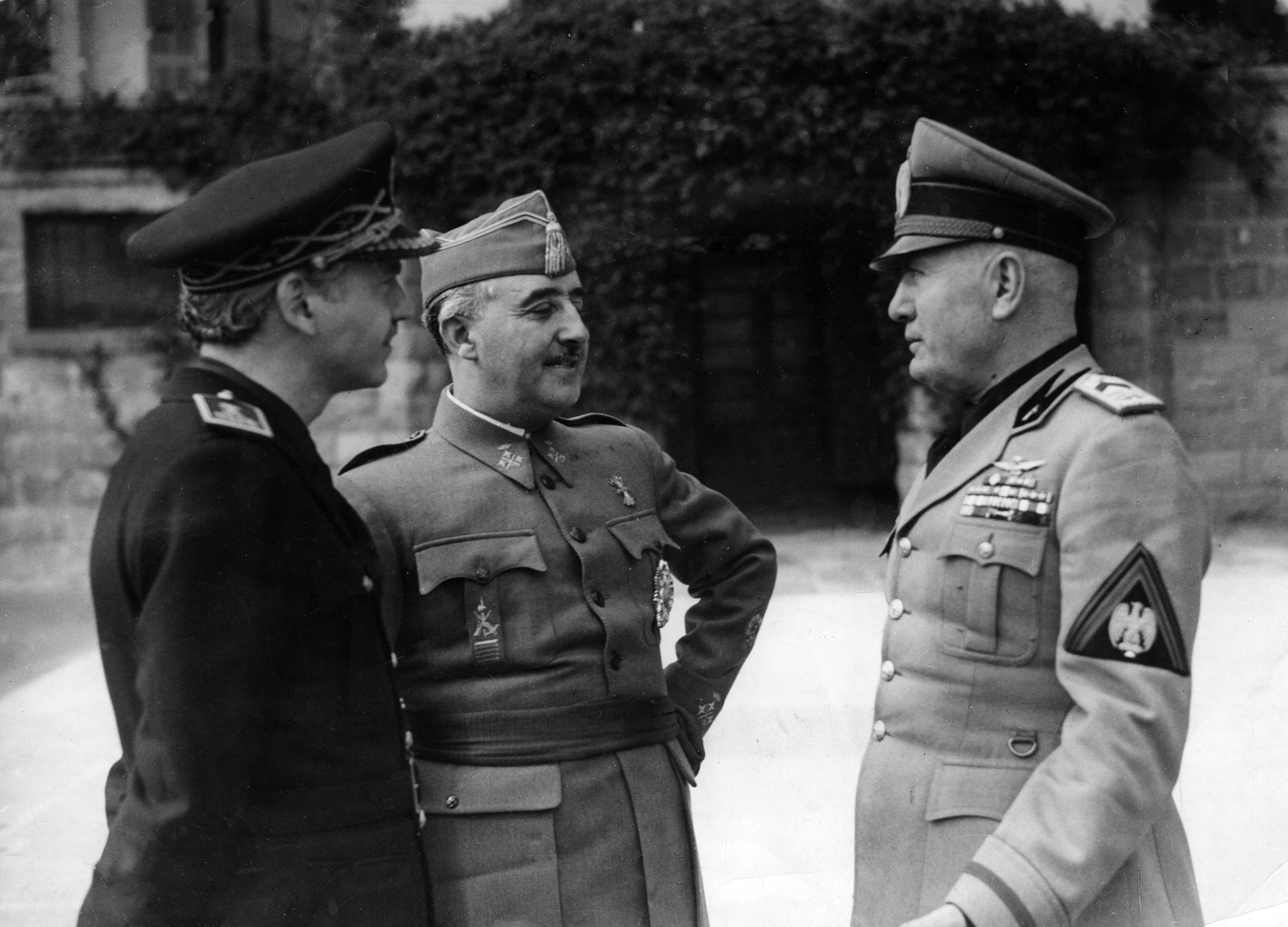
On Via Rasella, in the heart of Rome, stands a bullet-riddled building. The machine gun fire left so many holes that you can see them with a quick Google Maps search. It was there, on the afternoon of March 23, 1944, in the German-occupied city, that a company of the SS Bozen Regiment was marching when the GAP partisan group detonated two bombs. Thirty-three soldiers died, while their surviving comrades fired in all directions. The walls still bear witness. And so does all of Italy: the Nazi vengeance the following day in the Ardeatine Caves claimed the lives of 335 people — 10 for every German killed. Both episodes have since filled history books and collective memory. But three years ago, they were rewritten.
In 2023, Senate President Ignazio La Russa declared regarding Via Rasella: “They killed a band of semi-retired people.” And Prime Minister Giorgia Meloni, on the occasion of the annual commemoration of the victims of the Ardeatine Caves massacre, lamented the “335 innocent people massacred simply for being Italian.” Consequently, the National Association of Partisans and several historians felt compelled to clarify that the list of those executed included primarily members of the resistance, political opponents, and Jews.
Days later, La Russa apologized and acknowledged his mistake in “not saying that they had killed Nazi soldiers.” The controversy, however, continued. This was in no small part because, just weeks earlier, the politician had refused to remove a bust of Benito Mussolini displayed in his home, a gift from his father. And every so often, the controversy resurfaces, generated by another rejection: Meloni’s refusal to define herself as “anti-fascist.” After passing through so many trenches, history itself becomes a battleground. Argentina, the U.S., and Spain are also witnessing the questioning of the darkest past by the far right. Francoism, slavery, and the disappeared under the Argentine military dictatorship divide, instead of uniting people against them. In 2024, Maximilian Krah, the lead candidate for Alternative for Germany in the European elections, had to resign after the uproar caused by his argument about the SS: “Not [all its members] were criminals.”
“It’s a growing phenomenon, and not just in one country, but internationally. History has always been a companion to politics. Perhaps it doesn’t exist as a set of reactions in a laboratory, but the documents do, and we can’t do without them,” states Encarnación Lemus López, winner of the 2023 Spanish National History Prize for her work, Ellas. Las estudiantes de la Residencia de Señoritas (Them. The students at the Girls’ Dormitory). “There are several histories, not just one official one. Only dictatorships have tried to construct one. The idea that the past is something questioned and questionable dates back to antiquity; historical knowledge itself inherently involves revision. But in a rigorous way, based on the capacity for verification. Instrumental denialism and revisionism are something else entirely,” adds Umberto Gentiloni Silveri, author of Storia dell’Italia contemporánea 1943-2023 (History of Contemporary Italy 1943-2023). Scholars such as Julián Casanova, Paul Preston, Gutmaro Gómez Bravo, François Godicheau, Jorge Marco, and Ángel Viñas have raised similar alarms in recent times.
Those interviewed agree on the importance of experts leading the discourse on the past, and on the need for them to leave academia and participate in public debate. “I am convinced that the gaps in opinion we create by not being present are filled by communicators of a different ilk, with biased arguments and simplistic, essentially false, clichés,” Lemus López observes self-critically. This school of thought maintains that a great historiographical effort is of little use if no one reads it. This presents another challenge: updating their communication to the times and styles of the digital age without sacrificing accuracy. Casanova, for example, has just adapted the history of the Spanish Civil War into a graphic novel, Spain Divided in Two (Planeta).
In March 2023, Gentiloni published an article in La Repubblica detailing his reconstruction of the proven facts of Via Rasella and the Ardeatine Caves: among other things, that the Bozen company attacked by the partisans was a police battalion attached to the SS. “We are used to dissecting everything, choosing what we like on demand, like picking a fragment of history to support what I want to say at this moment. However, context is essential,” the specialist points out.

However, for others, these experts are already talking too much. In 2017, the late historian Guillermo Gortázar coordinated the collective work Under the God Augustus, denouncing that “the conservative liberal right has allowed a narrative of the past to be taken over by socialist, communist, and nationalist historians.” This movement is now being reinforced by authors such as Stanley Payne and Pío Moa, who has sold thousands of copies of more than 40 books on Spain in which he asserts: “There wasn’t a single democrat in Franco’s prisons.” He himself has recommended La represión de la posguerra (The Repression of the Post-War Period), by Miguel Platón, which claims to put an end to “the falsehoods” surrounding the number of executions under Franco. “This is the worst government in 80 years,” declared the leader of Spanish far-right party Vox, Santiago Abascal, about the Pedro Sánchez administration. An oversight like that of the streets recently dedicated in Italy to Giorgio Almirante: the right-wing politician collaborated with the Nazis and saw how a court endorsed the right of the newspaper L’Unità to call him “executioner of partisans.”
“The right wing also uses history through a certain victimhood narrative, based on a supposed cultural hegemony of the left,” argues Steven Forti, professor of contemporary history at the Autonomous University of Barcelona. He cites “reservoirs and wetlands,” perhaps the most frequently used example in both Italy and Spain to highlight the merits of their respective dictatorships. “The manipulation of the past is growing. This is because the far right has more power and a strategy to conquer cultural hegemony. And it’s also due to the impact of new technologies, with the viral spread of fake news and conspiracy theories,” the expert adds.
In response to this development, another recent collaborative book emerged, Vox frente a la historia (Vox vs. History), an attempt to dismantle myths and misinformation through rigorous research. “What historians do is continually revise their work. They are more like propagandists. They launch sensationalist claims for commercial and political purposes. There are people who still dislike it when Franco is spoken of negatively, and this is because the dictatorship was a 40-year brainwashing. But these books that whitewash Francoism deny an irrefutable truth. There is very serious research on the repression in every town, city, and province,” Preston told EL PAÍS in 2024.

Rewriting history
Upon his return to the White House, Donald Trump made clear his intention to rewrite U.S. history by silencing what he considers “woke” distortions that have emerged in recent years in the wake of movements like Black Lives Matter and MeToo, and which contradict the way the Republican believes the supposedly glorious past of the United States should be told. “Nationalism needs its history to define its own identity and make it stronger than others,” reflects Gentiloni.
This past weekend, Trump installed a statue of Christopher Columbus at the White House, as part of his campaign to redefine the continent’s history, distancing himself from those who advocate for acknowledging the abuses of colonization. In just over a year, the U.S. president has ordered the removal of names of key figures in the anti-racist and LGBTQ+ rights movements, eliminated inconvenient narratives from monuments and national parks, installed a presidential gallery in the White House filled with lies and exaggerations about his predecessors, and issued an executive order to “cleanse” Smithsonian museums of “inappropriate, divisive, or un-American ideology.” This last action has prompted the creation of a group called Citizens Historians, which tracks these changes to ensure that no whitewashing operation goes unnoticed. Citizens have just scored another victory: they succeeded in court in having the panels that the administration removed in January from the President’s House in Philadelphia — which focused on the history of several slaves owned by George Washington — reinstalled on February 19.

Everything indicates that Trump will now infuse the celebrations to mark the 250th anniversary of U.S. independence with the ideals of “America First.” This means a sanitized version of the history of a Christian and white country, where remembering the traumas of racism and inequality and celebrating the diverse spirit of a nation of immigrants is seen by its rulers as an act of supreme betrayal.
Argentina is also facing controversy surrounding a significant anniversary: Tuesday, March 24, marked half a century since the last military coup, just as the current far-right government has begun to attack the social consensus that prevailed for decades against the dictatorship. While there has always been a minority that attempted to justify the illegal repression carried out between 1976 and 1983 by attributing it to the armed struggle of some guerrilla organizations, this narrative gained traction under Javier Milei’s rise to power in late 2023.
Through institutional videos and social media posts, the Argentine government is trying to promote the idea that a war was actually fought between two sides: the military and guerrilla organizations. This avoids addressing the issue of state terrorism, despite the more than 1,200 people convicted in court for crimes such as kidnapping, torture, forced disappearances, and the theft of babies. The main proponent of this narrative is Vice President Victoria Villarruel, the daughter and granddaughter of military officers, who visited dictator Jorge Videla and others convicted of crimes against humanity in prison. Villarruel denies the figure of 30,000 disappeared persons claimed by human rights NGOs, and her inner circle accuses these organizations of profiting from the compensation granted to relatives of victims of the dictatorship.

In the Buenos Aires provincial legislative elections last year, the government even trivialized Nunca Más (Never Again), the title of the report by the National Commission on the Disappearance of Persons that was used as evidence in the 1975 trial of the military juntas and became a national symbol against the dictatorship. Milei copied the spelling to plaster the province with posters reading “Kirchnerism Never Again” as part of a campaign that drew widespread criticism.
In Germany, the message was also “never again”: any form of Nazi glorification or Holocaust relativization is prosecuted by law and socially condemned. But this does not mean that the far right, in its strongest position since 1945, does not promote its own particular vision, which distorts the meaning of Nazism, diminishes its place in history, and laments that Germans must continue to bear the burden of its crimes.
Alternative for Germany (AfD), the second-largest parliamentary group after the 2025 elections, criticizes the so-called culture of remembrance and complains of self-flagellation. “Hitler and the National Socialists are a bird dropping in the thousand years of glorious German history,” said leader Alexander Gauland in 2018. The current co-chair, Alice Weidel, maintains that Hitler was a “communist” or a “leftist.” And when, in 2024, Giorgia Meloni was asked at a press conference if she defined herself as “anti-fascist,” she replied: “I’ve said everything I had to say about fascism a hundred times over, and I don’t think I need to say it again — that way, you can keep calling me a dangerous fascist.”
“These aren’t outbursts, but rather well-thought-out provocations designed to break taboos and undermine consensus on values like democracy and antifascism. They are serious comments because they are unfounded, and also because of who is saying them,” laments Forti. A monologue by the writer Antonio Scurati was intended to denounce all of this on RAI, Italy’s public television, in 2024: its broadcast, however, was canceled amid accusations of censorship. The author has sold hundreds of thousands of copies of M, his account of Mussolini’s life in five novels based on documents. These novels, of course, also include the racial laws passed by Il Duce in 1938, a fascist measure from which Meloni has distanced herself. In 2022, she described them as “the lowest point in Italian history, a disgrace.”

“Over the last 20 or 30 years, a strong consensus on fascism has solidified among scholars. However, there is a difficulty in its more general evaluation by society, and these controversies demonstrate this: the antifascism of the Italian Constitution was not conceived ‘against’ fascism, but as a unifying force that includes everyone,” asserts Gentiloni. “If the discussion is conducted properly, and the analysis seeks truth and is guided by ethics, the discourse should be fairly homogeneous. I don’t believe there can be a left-wing or right-wing outcome,” adds Lemus López. But more than 21% of the Spanish population considers the years of the Franco dictatorship to have been “good” or “very good,” according to a CIS poll from last October. And 26% of men aged 18 to 26 stated in a survey conducted by the 40dB institute for EL PAÍS and Cadena SER that they preferred authoritarianism to democracy “in some circumstances.”
“It’s devastating that these disastrous clichés are gaining traction. That ‘Spain was a great country.’ But people were starving and Spain was capitulating to the U.S., ceding sovereignty,” counters Lemus López. Spanish conservative politician Esperanza Aguirre recently argued that Francoism was, for the most part, “an authoritarian regime very concerned with public order, which allowed for the emergence of a middle class with numerous opportunities for advancement.” The expert clarifies: “Growth in the 1960s is undeniable, but it had two key factors: it was 25 years behind the rest of the continent, and it started from a very low GDP, which made growth easier. Did the middle class emerge in Spain during the dictatorship? Yes, but in Europe it represents a larger percentage of the population and strengthened earlier with the advance of democracy.”
Both Lemus López and Gentiloni point to the same explanation: they associate the whitewashing of past regimes with the betrayal of the present. That is, young people who grow up with the promise that they will live better than their parents, only to discover that this isn’t going to happen. The Spanish historian adds: “This revision is related to the criticism that there was progress during that period and that democracy hasn’t brought it. There was progress, and currently, after neoliberalism, there is uncertainty, and the blame is placed on the boomers. This false myth is linked to the idea that the dictatorship built a welfare state.” In short, the old notion that the past was always better. To disprove this, one need only look at history.
Sign up for our weekly newsletter to get more English-language news coverage from EL PAÍS USA Edition

I’ve spent a few intense days hunting down an old Nazi. In a prime example of new-new journalism, I enlisted the help of AI, but I have to say things didn’t go as planned: AI can really mess things up. It all stemmed from reading Revenge of Odessa, the posthumous sequel to Frederick Forsyth’s celebrated novel, and also from stumbling upon an old 2001 film on Netflix in which a rather clumsy fellow reinvents himself as a journalist.
The film is The Shipping News, based on the beautiful 1993 novel of the same title by Annie Proulx, which has lines that keep you thinking for a long time, such as “one of the tragedies of real life is that there is no background music,” “the sky a net, its mesh clogged with glowing stars,” or, more relevant to our discussion: “Where are the reporters of yesteryear, the nail-biting, acerbic, alcoholic nighthawk bastards who truly knew how to write?”
In the film, the shy and downtrodden Quoyle (played by Kevin Spacey) ends up in Killick-Claw, a small fishing village in Newfoundland, his family’s ancestral home, and gets a job at a local newspaper, The Gammy Bird, where he’s hired as a writer despite his only experience being as an inker at a New York daily. A seasoned veteran journalist, Billy Pretty (Gordon Pinsent), gives him invaluable professional advice for getting ahead. “You have to find the center of your story, its beating heart,” he tells him. He advises him to start by making up some headlines, “short, impactful and dramatic.” And he invites him to look at the horizon and say what he sees. “Is the horizon filled with dark clouds?” Quoyle suggests. “An imminent storm threatens the town,” Pretty corrects. “But,” Quoyle questions, “what if no storm comes?” “Town safe from a deadly storm.”

Our man learns quickly and triumphs with a story about Hitler’s former yacht, which, acquired years after the war, supposedly ended up one day in the local port. The success of the story affords Quoyle the privilege of having his own column about ships, “The Shipping News,” a subject he actually knows nothing about, since he’s even afraid of the sea: a superb metaphor for how far you can go in a newspaper.
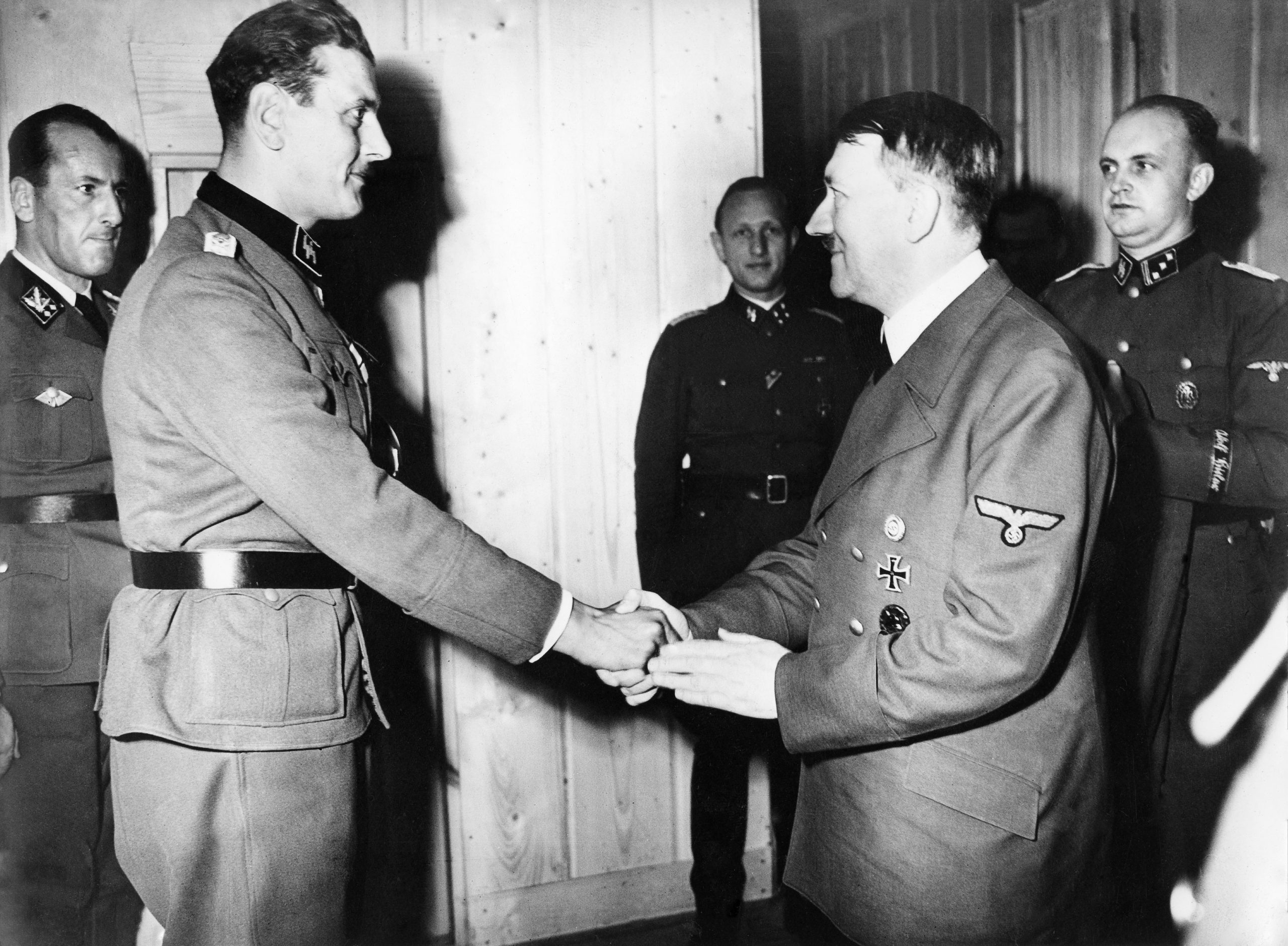
Reflecting on the film, I thought about how I could return to the essence of my profession while simultaneously taking a qualitative leap in my craft. And then came Odessa. Reading the sequel about the Nazi organization led me to reread the original novel, published in Spanish in 1973. And an absence caught my attention: was it possible that Otto Skorzeny, the former Waffen-SS colonel who took refuge in Spain and has always been considered one of the key figures in the Nazi escape network, didn’t appear in the plot? Skorzeny, Hitler’s former commando chief and famous for his role in freeing Mussolini from his confinement on Gran Sasso, was even placed at the center of the Odessa (Organisation Der Ehemaligen SS-Angehörigen, or Organization of Former SS Members) web by Almudena Grandes in her novel Los pacientes del doctor García (The Patients of Dr. García). How did Forsyth overlook mentioning him in his novel, for which he conducted in-depth research that revealed the escape routes of the treacherous Nazis and cited Eichmann, Mengele, SS General Bruno Streckenbach, Bishop Hudal, or the novel’s central brown-shirt protagonist himself, the Austrian captain Eduard Roschmann, commandant of the Riga ghetto — a real-life figure (though his many crimes did not include plotting to devastate Israel with deadly rockets, as in Odessa)?

It’s true that Forsyth made some inaccuracies in his novel, such as using SS General Richard Gluecks, who had actually died at the end of the war, as a key figure in the shadow Nazi organization. But Skorzeny’s absence, even though there’s a scene in the novel set in Madrid, aroused suspicion in my sharp journalistic instincts, usually quite excited when it comes to hunting Nazis. Then I had a sudden inspiration. What if Skorzeny did appear in Forsyth’s original novel and had been omitted from the Spanish edition, published during the final years of the Franco regime?
Thanks to a thoughtful and kind reader, Evelio Montes, I learned that the translation contained glaring errors and what appear to be acts of censorship. For example — I’ve checked — the Spanish version states that Peter Miller, the protagonist journalist, wakes up in bed next to his girlfriend, the beautiful stripper Sigi, positioned so that “the woman’s back was pressing against the base of his stomach,” while in the original, it’s her buttocks that are pressing against him, which, it must be said, is a different situation. And there’s no trace of Forsyth’s emphatic line that follows, “automatically he began to erect.”
I have found other similar omissions, such as Sigi liking Peter to caress her “crotch,” her inner thigh, or the scene in which he starts kissing her breasts, to which she responds with a series of “long mmmms” (we already knew from The Day of the Jackal that Forsyth knew how to heat up his thrillers).
Ok, if we’re talking about Nazis, we’re talking about Nazis, but those omissions in the translation made me think that perhaps Skorzeny’s absence was a similar, premeditated omission. And that’s where my recourse to AI comes in. I used Google’s, which comes up by default when I search for something. I decided to try and asked, just to cut to the chase, “Does Otto Skorzeny appear in Odessa?” The AI’s response, whoever it was, thrilled me. “Yes, Otto Skorzeny appears and is a key figure in the novel’s plot” […] “he is described as the organizer of the network that facilitated the escape of Nazi war criminals from Germany to Spain (ratlines), after the defeat of the Third Reich.” Since he doesn’t appear in the Spanish edition, I deduced that someone had omitted Otto. In 1973, the imposing colonel was still alive (he died in 1975) and in Madrid, on very good terms with the regime (and even with my father). Was someone pressuring to have him removed from the novel in Spain? Perhaps he himself? Odessa itself? Was the Spanish version of Forsyth’s book hiding Skorzeny the way the Odessa of the plot protected Roschmann? There’s a topic! Finally, some news!

I could already picture myself with a Pulitzer Prize — shared with the AI, my partner, less material than Sigi, mind you, and without a butt — for uncovering the literary cover-up of a Nazi. I visualized the headline: “The Spanish edition of Odessa omitted Otto Skorzeny,” by J. A. and his AI. Billy Pretty would be proud.
Enthusiasm is dangerous in investigative journalism, and my next step, to confirm my suspicions, was to get an English copy of Odessa and meticulously check my (our) exclusive. Imagine my surprise when I discovered that Skorzeny doesn’t appear in the original novel either. I went back to the AI to ask for an explanation, but when I repeated the question and asked it to specify which chapter and pages the Nazi appears in, it replied nonchalantly that “it can’t be specified due to the multiple editions,” and added: “He’s usually mentioned in the first chapters when the background of Odessa, the figure of Simon Wiesenthal, and the postwar context are explained.” “Liar! Psychopath!” I yelled at the screen, much to the surprise of my colleagues in the newsroom. The AI didn’t even flinch. I thought about deactivating it slowly, cruelly, like astronaut Dave Bowman does with HAL 9000, and I imagined that instead of singing Daisy Bell, it would be singing SS marschiert in Feindesland. Clearly it was all a Nazi cover-up operation in the cloud. But I couldn’t prove it.
Finally, as a last test, I typed in my name, and the AI’s response was to mention my bullfighting reports (!), “focused on the passion, romance, and drama of the spectacle.” Well, what a joke of an AI!
My next investigation will be about Mengele and The Boys from Brazil, but I’m going to do it alone.
Sign up for our weekly newsletter to get more English-language news coverage from EL PAÍS USA Edition

Claudia Sheinbaum Llega A Barcelona En Su Primera Visita A Europa Como Presidenta De México

El Palau Abraza A Pesic Y El Barça Se Gana El Derecho A Soñar

S


-

 New Developments2 weeks ago
Luxury Villas For Sale, Estepona – ProjectL1
-

 New Developments4 weeks ago
How To Get A Tourist Rental Licence In Andalusia (Spain) – Step-By-Step Guide 2025
-

 New Developments2 weeks ago
Stylish 3-Bedroom Apartment With Panoramic Sea Views – Benalmádena
-

 Uncategorized4 weeks ago
Max Verstappen left laughing after Nurburgring triumph
-

 %2 weeks ago
Poland Disconnects Utilities At Russian Consulate That Moscow Refuses To Hand Over
-

 Uncategorized4 weeks ago
Max Verstappen team-mate sheds light on Nurburgring mistake
-

 Uncategorized3 weeks ago
Lewis Hamilton goes from Karate Kid to Samurai Warrior with Kill Bill guru
-

 %4 weeks ago
Torrevieja Spring Concert Brings Classical Music And Community Spirit