
China
How Putin, Trump And Xi Are Aiming To Make The EU Fail

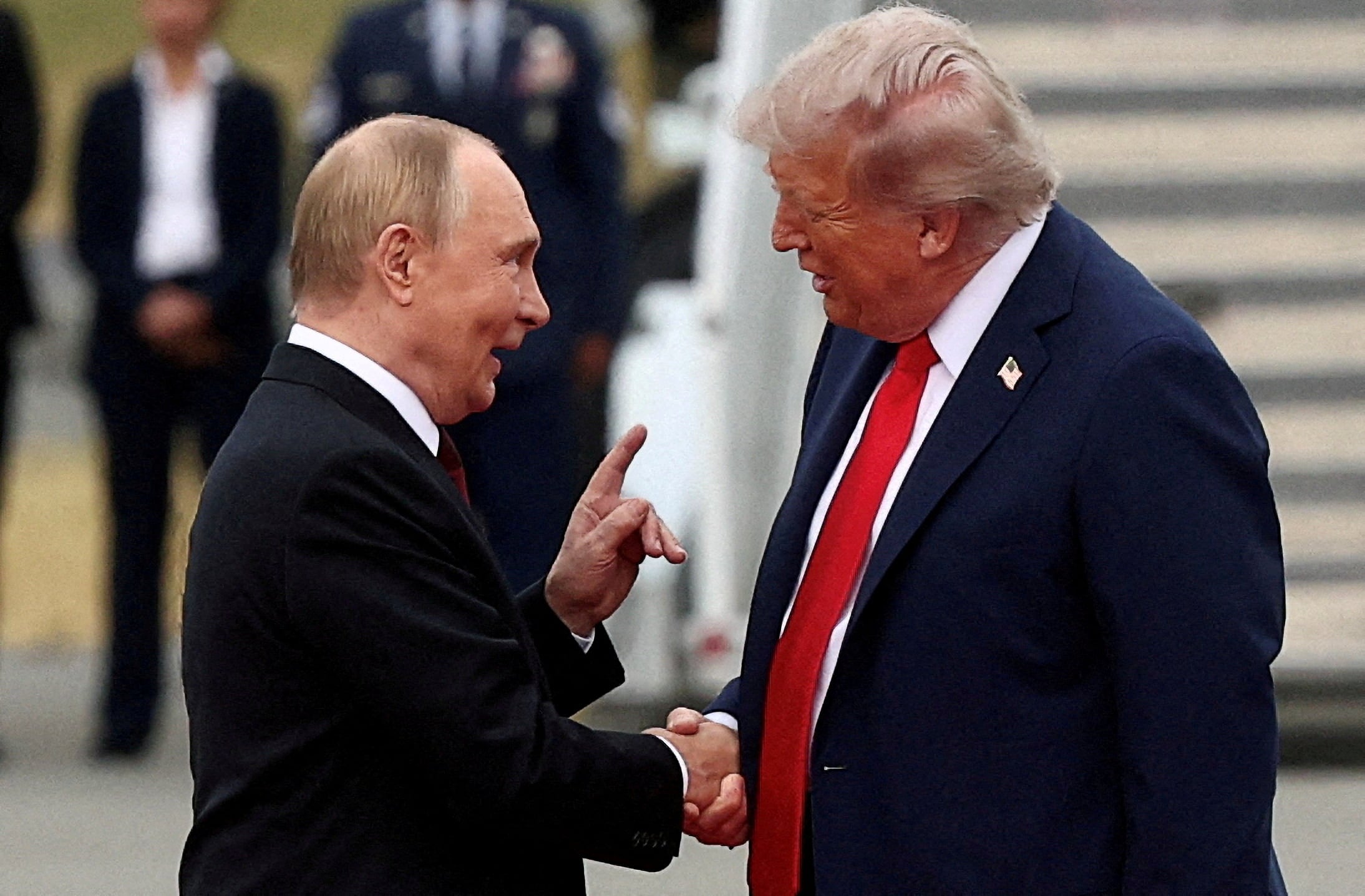
Vladimir Putin is in trouble. The war in Ukraine is not going well for him; casualties are mounting at an alarming rate; discontent in Russian society is growing amid serious economic hardships; and the Kremlin’s inner circle is becoming increasingly perplexed by their leader’s ineffectiveness. His response, for now, is the same as always: escalation. Against Ukraine, with more missiles; against his own citizens, with more repression; and against the EU, with attacks, threats, and provocations of various kinds — sabotage, cyberattacks, incursions — that are becoming increasingly bold and dangerous.
This latest strategy is driven by various motivations. One is to weaken the consensus in Europe behind support for Ukraine by fostering a sense of risk — the feeling that it is better not to get involved in trouble. With U.S. aid withdrawn, it is the EU that is propping up Kyiv’s defense, and for Putin, it is essential to break that pillar. Another motive is to sow discord and chaos within European societies, making them contentious and ineffective. Yet another is to create division within the EU, so that it does not move forward on the path to integration, which is its greatest strength. Putin perceives that he can escalate because Europeans lack a clear course of action in response. Concern over this drift toward Russian escalation is palpable in the public statements of leaders and diplomats from some European countries — and even more so in some private conversations.
It would be extremely naïve to underestimate these risks. Putin is, above all, a KGB operative, and he has a natural propensity to deploy these tactics. But the truly existential mistake is failing to connect this threat with the others coming from the world’s superpowers: the United States and China. They, too — albeit with different nuances — seek to dismantle or weaken the EU, and they act, using various tactics, to destroy or undermine it.
In the case of the United States, the issue is explicit. Washington’s new national security strategy bluntly states its intention to “cultivate resistance” to the EU, which it essentially describes as an adversary. In this case, the strategy involves attempts to provide political and technological support to Europhobic European nationalist groups. Trump’s toxicity has complicated the operation. The rejection he provokes in Europe is so widespread that many ultranationalists prefer to keep their distance. But there is room for moves to show support, and the platform provided by X remains skewed to their advantage.
It is no accident that J. D. Vance, in his famous speech at the Munich Security Conference in 2025, argued that the greatest danger to Europe is not Putin’s missiles but the alleged censorship of free speech — that is, actions to curb manipulations by the extreme right and by those who tilt the playing field in their favor. Nor is it any coincidence that the Trump administration wants to intervene to support Musk in a lawsuit before European courts over a fine imposed on X; or that, while considering withdrawing troops from Europe — thereby punishing certain countries — it is announcing possible new deployments agreed upon with friendly leaders — the president, not the prime minister, of Poland. What Trump, his supporters, and the tech magnates want is to dismantle the EU, which represents a regulatory and sanctioning force for containment and which keeps alive — even with its enormous flaws — an ideal of democracy and multilateralism that they abhor, preferring instead the law of force that works in their favor.
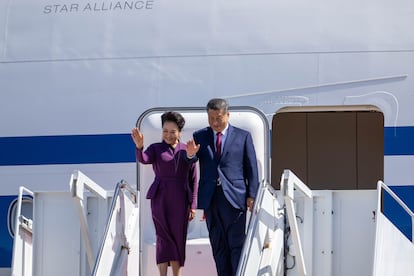
In the case of China, the matter is far more implicit. Beijing holds periodic summits with the EU and expresses interest in cooperating with it. It does not want the EU to suffer an economic downturn, since the bloc is a key customer for its exports. It wants Europeans to drift away from the U.S., and a certain degree of intra-European coordination serves that aim.
But only the naïve or the malicious fail to see that Beijing does not want a united, strong EU, because such a bloc could effectively confront it in its strategy of industrial domination; it prefers to divide and weaken us, and it does so in many ways.
China has been skillful in dealing with us one by one; it has provided lifelines to those who oppose the common project — most notably through massive investments in Viktor Orbán’s Hungary; it has exploited blind spots in the trade relationship to pump up its industrial muscle and destroy our industrial fabric through its talent and effort, but also through massive subsidies, dumping, forced transfers, or outright theft of intellectual property. In high levels of European politics there are those who believe that, among many other motives, China’s support for Russia in its invasion of Ukraine is also intended to wear down the EU, compelling it to commit itself to emergency defense instead of peacefully focusing on improving its competitiveness.
To think the three actions respond to a single, coordinated framework would be conspiratorial excess. But to ignore their contemporaneity, the multiplier effect of their coincidence, and the ease with which Trump courts Xi while inviting Putin to the G-20, would be suicidal folly.
It is equally reckless not to consider what this means given the whirlwind electoral calendar approaching in Europe. Citizens will decide. What is clear is that those three leaders — Putin, Trump and Xi — will be delighted if far-right forces that obstruct EU integration win.
Sign up for our weekly newsletter to get more English-language news coverage from EL PAÍS USA Edition










ChatGPT
From Mamdani’s Veto To Enthusiasm In Estonia: Schools Around The World Are Grappling With The Use Of AI


Sandra Martinez Roe, a mother in Los Angeles, hopes that her son will never use artificial intelligence (AI) in school. “I’m not going to let my children be guinea pigs,” she tells EL PAÍS over the phone. The city’s school board granted her wish, at least temporarily, a couple of weeks ago: the Los Angeles Unified School District (LAUSD) has banned AI from public classrooms this school year.
Martinez Roe is a member of Schools Beyond Screens, a parent group that fights against certain technologies in schools. She attended the board meeting where the decision was made. “We went into the meeting prepared, with our demands, some research and a list of experts,” she explains. “When it ended, they had turned off all the AI tools for all grades and age groups. It was a surprise and a huge victory for us,” she sighs.
Similarly, one of the most striking measures implemented in recent days, this one by New York City Mayor Zohran Mamdani, has been to “prioritize student safety and real, human instruction” by imposing “the most expansive student-facing AI moratorium in the nation,” according to city officials.
“The tech industry wants us to believe that A.I.-powered early education is not only inevitable, but necessary. We do not see it that way,” Mamdani stated.
In contrast to this AI blackout in New York and Los Angeles, however, Estonia — the top-ranked European country and third in the world in the Programme for International Student Assessment (PISA) standings — is turning it on. For a year now, it has been providing 16-year-old students with an adapted version of ChatGPT, OpenAI’s chatbot, which offers students guidance rather than simply answering their questions.
Estonian Education Minister Kristina Kallas emphasized this distinction via video call: “I don’t think banning AI will prevent young people from using it. AI use will just be more clandestine and more hidden from adult view, but they’ll still try to use it.”
The Baltic country is deploying this specialized model, developed in collaboration with OpenAI, because it believes that “general-purpose AI isn’t designed to learn,” the minister warns. She describes the ministry’s tool as a “Socratic” kind of GPT (generative pre-trained transformer) that helps students “develop their critical thinking skills and [boost] cognitive growth.”
Kallas emphasizes that her office hasn’t received a single complaint from any Estonian family about implementing the adapted model. The only complaint she’s heard came from her own son and for a different reason. The minister recounts: “My son had started 11th grade when the tool was introduced last year. I asked him, ‘How’s it going?’ And he said, ‘It’s really annoying, because [the program] doesn’t give me any answers.’”

Kallas asserts that this is only the first step. “We need to redesign the learning process, recognizing that students are already using AI at home when they’re doing their homework,” she points out. “They understand the technology much better than the teachers.”
Still, the Estonian government doesn’t plan on allowing AI to be used by students under the age of 16, a policy it shares, in one form or another, with New York City (which is prohibiting the use of the technology for children 14 and under), Norway and China. However, they’re still training teachers regarding how to navigate AI when it comes to elementary and middle-school students. “These are the ages when we need to develop self-directed learners. Teachers know that a 12-year-old is using AI for homework… so we have to design the assignment in such a way that students are forced to think and learn,” Kallas explains.
The minister believes that this is “the greatest challenge facing humanity.” She continues: “[AI] is a technology that doesn’t force us to think; it makes us dependent on machines. Everything happens very quickly in an education system. And, if we don’t act, all of thinking and memory will be outsourced.” This may sound apocalyptic, but Kallas says that she’s working to prevent an educational collapse. “A [blanket ban] is an option, but banning the tools doesn’t make them disappear. The risk is even greater: that learning in schools will become obsolete,” she points out.
Her own logic isn’t so far removed from that of Los Angeles. The city will review the ban, which affects some 380,000 students, at the end of the 2026-2027 school year, according to a spokesperson for the LAUSD. “Our policy is to restrict student access to generative AI platforms while the district reviews instructional use and safeguards,” the spokesperson clarified, in a statement sent to EL PAÍS.
A total ban
Even though New York is the first city in the United States to issue a total ban on AI in classrooms, it’s not the first major step that its education department has taken when it comes to this issue. The Big Apple actually banned student and teacher access to ChatGPT back in January of 2023, shortly after the chatbot’s launch. The technology had raised concerns in the educational sector, due to the ease with which students could use it to cheat on exams. However, the city reversed the measure in May of that same year, in order to “embrace [ChatGPT’s] potential” – a quote from then-New York City Chancellor of Education David Banks, who wrote an opinion piece that month to explain the change in policy.
If you put New York City and Los Angeles on one side of a spectrum, while placing Estonia on the other end, it’s clear that most educational systems worldwide currently fall somewhere in between, without such specific policies. This is according to Mark West, a researcher at the United Nations Educational, Scientific and Cultural Organization (UNESCO). One exception is the United Arab Emirates (UAE), which designates AI as a mandatory subject, starting in preschool. From the age of four, students in the UAE learn to compare machines to humans, taking their first steps when it comes to using AI applications. Meanwhile, those between the ages of 10 and 14 years must learn how to design artificial intelligence systems.
“At first glance, they seem like two opposite poles, but that’s not the case,” West emphasizes. “If you look more closely, the UAE and Estonia actually teach students about AI. We believe that’s important and urgent. But relying on AI for learning is an entirely different matter.”
Spain already relies on it. According to the PISA report published this past September 8, in the developed world, students from Malta and Spain use AI the most for studying. But the five OECD countries where students use it the least for schoolwork achieve better scores on the tests.
The Spanish Ministry of Education has established general rules for the use of AI in schools, but emphasizes in a response to EL PAÍS that education policy rests with regional governments. A guide published on September 8 by the National Institute of Educational Technologies and Teacher Training (INTEF) states that “AI literacy is now a necessary dimension of students’ comprehensive education.” Currently, Catalonia is the only region of Spain that recommends prohibiting the unsupervised use of AI in classrooms, specifically for children under the age of 14.
Schools worldwide are facing this technology without knowing where it will lead their students, at a time when two key figures in the rise of AI — Dario Amodei and Sam Altman — are proposing that the pace of these models’ development be slowed down. Meanwhile, UNESCO is proposing both safeguarding and accelerating the deployment of AI: “We must ensure that these tools help education and children… and that they’re safe,” West emphasizes.
Sign up for our weekly newsletter to get more English-language news coverage from EL PAÍS USA Edition

Carla Suárez
Y Ahora Sí, España Vuelve A Las Semifinales De La BJKC 18 Años Después Y Acaba Con La Negación



Deliberately Losing A Michelin Star To Try To Win It Back In 52 Days: Apple TV’s Culinary Miracles

How Putin, Trump And Xi Are Aiming To Make The EU Fail
TELL US: Who’s To Blame For Spain’s Housing Crisis?


-

 Alex Saab2 weeks ago
Maduro Ally Alex Saab Pleads Guilty In US Money-Laundering Case
-

 New Developments2 weeks ago
How To Get A Tourist Rental Licence In Andalusia (Spain) – Step-By-Step Guide 2025
-

 %2 weeks ago
Benahavis Wildfire Stabilised: 300 Hectares Burnt
-

 Arganzuela1 week ago
Detenido Un Hombre Por La Muerte De Una Mujer De 47 Años En El Distrito De Arganzuela De Madrid
-

 Coaching2 weeks ago
Svend Brinkmann, Psychologist: ‘If You Place Conditions On Forgiveness, Love Or Freedom, You Have Already Destroyed Them’
-
Best airlines1 week ago
Spanish airline Vueling named Europe’s best low-cost carrier for 2026
-
Latest2 weeks ago
Italy And Spain Extend Tit-For-Tat Border Checks In Wake Of Migrant Rush
-

 %2 weeks ago
Fast Food Chain Soaring Beef Costs