Connect with us

Donald Trump

La Policía Británica Detiene A Cinco Sospechosos Por Manejar Explosivos Cerca De La Base Militar Aérea De Fairford


Published

on

la-policia-britanica-detiene-a-cinco-sospechosos-por-manejar-explosivos-cerca-de-la-base-militar-aerea-de-fairford

La policía británica ha arrestado este domingo por la mañana en la localidad de Whelford a cinco individuos sospechosos de haber cometido delitos relacionados con la Ley de Explosivos, así como de la preparación de un atentado terrorista. Un equipo de artificieros se ha desplazado a la zona para comenzar a inspeccionar una serie de vehículos.

Seguir leyendo

Donald Trump

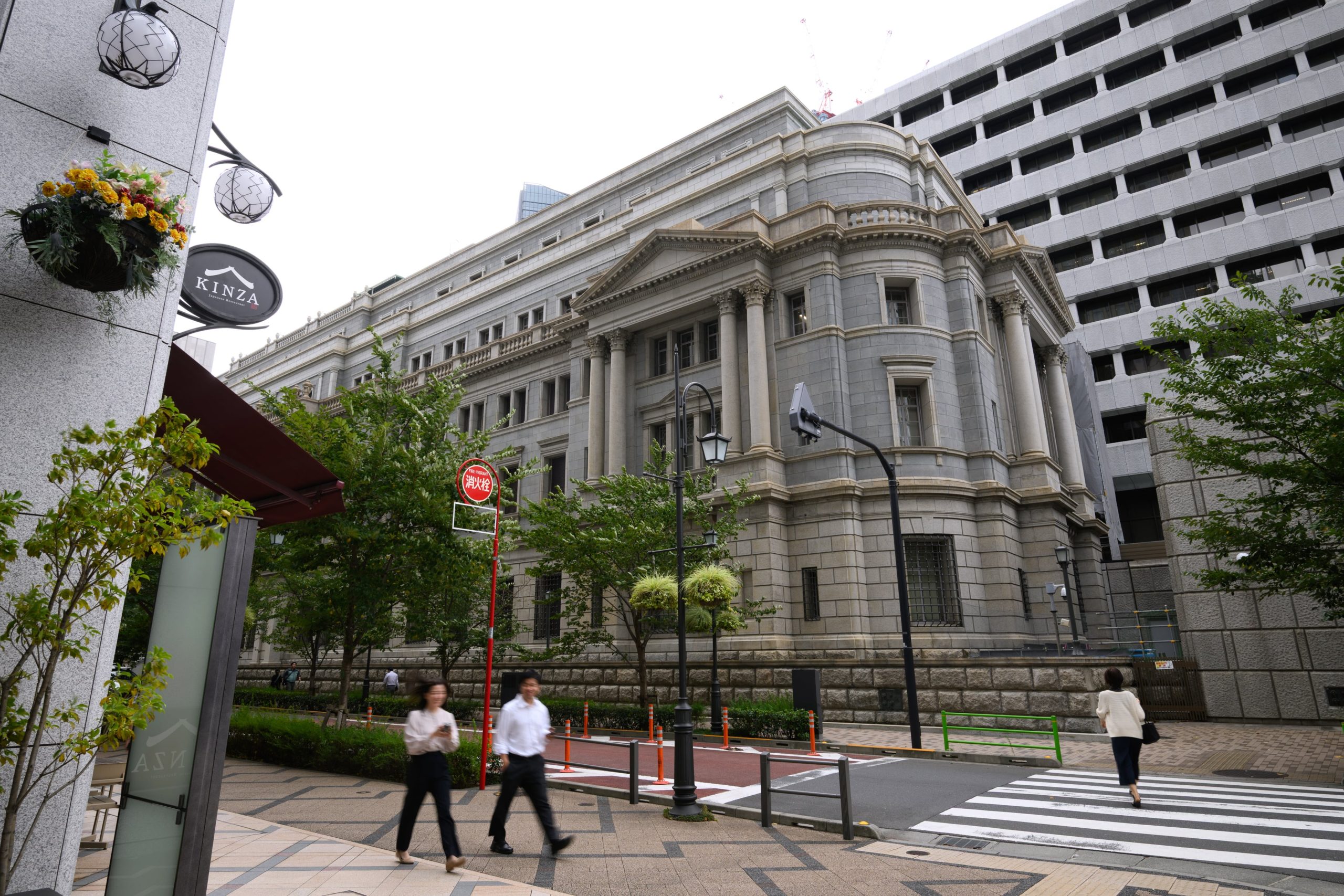
Operation Save The Yen: Japan Partially Turns Off The Cheap Money Tap, With A Little Help From Its ‘American Friend’ 

Published

on

operation-save-the-yen:-japan-partially-turns-off-the-cheap-money-tap,-with-a-little-help-from-its-‘american-friend’ 

The Bank of Japan had already announced an interest rate hike, in order to close the gap somewhat with the U.S. rate. However, by the time Japan’s monetary authority confirmed the increase on Friday, September 18, the Federal Reserve had already preempted it with another hike that further widened the gap between the two economies.

The Japanese increase was 0.25 percentage points. This brought Japan’s rates to 1.25%, a 31-year high that ended decades of ultra-loose monetary policy. The move was widely expected by analysts: U.S. Treasury Secretary Scott Bessent had repeatedly advocated for a stronger yen, while Bank of Japan (BOJ) Governor Kazuo Ueda had expressed support for the measure. The main objective of the rate hike was to curb depreciation of the Japanese currency and get inflation under control.

Sayuri Shirai is a professor at Keio University (Tokyo) and served as a member of the Bank of Japan’s (BOJ) Policy Council from 2011 to 2016. She explains that the underlying tension is between the central bank, which is willing to raise rates in order to strengthen the yen, and the government of Prime Minister Sanae Takaichi, which prefers low interest rates to support its expansionary fiscal policy. However, the academic asserts, American pressure gave the BOJ a pretext to raise rates. She adds that, “until Bessent’s statements, there was no clear direction.”

The risk of a devalued yen

A devalued yen presents a major concern for the United States: when the currency is too weak, Japan is forced to sell off U.S. Treasuries, in order to access physical American dollars (which, in turn, are used to prop up the yen). Hence, with too big of a difference between the two currencies, the fear of massive sell-off becomes imminent. Additionally, with Tokyo having promised to invest $550 billion in the U.S. through 2029 (in exchange for lower tariffs on Japanese goods), a weak yen makes such a commitment more shaky. By raising interest rates, the Bank of Japan makes returns on Japanese assets more appealing to local and foreign investors, thus making the yen stronger and U.S. dollar investment more feasible.

Bessent began his current campaign in favor of a stronger yen with the joint intervention that took place on July 31, when the United States and Japan made massive purchases and managed to lift the Japanese currency, which had fallen to 164 yen to the U.S. dollar, its worst level in 40 years, to 157 yen. It was the first coordinated action between the two countries in defense of the yen since 1998, with the American president describing it as a gesture of friendship toward Japan. In doing so, however, Donald Trump didn’t miss the opportunity for sarcasm: “Japan’s been very good to us, with the exception, of course, of Pearl Harbor.”

Shirai believes that the United States intervened for its own benefit, pointing to the nearly $1.2 trillion in U.S. Treasury bonds held by Japan. Selling them to repatriate yen would increase the cost of U.S. debt.

In an export-oriented economy like Japan’s, dependent on imported materials, currency fluctuations have mixed effects. For companies like Toyota, a one-yen drop in the currency’s value against the dollar increases their operating profit by 50 billion yen (approximately $317 million), according to a study by the local news agency Jiji Press. However, the gross foreign exchange gain is affected by dollar-denominated payments for purchases of steel, electronic components, lithium for batteries, freight and insurance.

Another expert consulted by EL PAÍS, Tsuyoshi Ueno, an analyst at the NLI (Nippon Life Insurance) Research Institute, refers to the past two decades of wage stagnation, during which the average Japanese citizen lost purchasing power, while the country was flooded with tourists whose spending power was multiplied by a weakened yen. He adds that, even though wages have begun to rise, the pressure on households continues, due to the rapid currency depreciation. “Japan is at a turning point,” he warns.

The U.S. Treasury’s support for the yen, he argues, stems from Japan’s inability to curb the currency’s weakness, despite repeated unilateral interventions since 2022. “It was necessary to send a stronger warning to speculators,” he adds, suggesting that, despite Bessent’s defense of American interests, “he may have created a sense of indebtedness and gratitude in Japan.”

Back in 1999, when the BOJ lowered its interest rates to zero, the Japanese currency became a favorite for “carry trades” (borrowing in yen to invest in higher-yielding assets). This fueled one of the largest speculative operations in the global financial system.

Ippei Fujiwara, a professor of macroeconomics at Keio University and the University of Tokyo who was an economist with the BOJ from 1993 to 2011, summarizes the joint intervention as an “alignment of interests” between Japan and the United States. His main concern is the fiscal sustainability of a country with a debt “whose ratio to GDP is 250%,” a figure that includes sovereign bonds and all of Japan’s government debt. Fujiwara fears that the rate normalization process, which is necessary to combat inflation, will increase debt-servicing costs and generate unexpected increases in the sale of new Japanese government bonds (JGBs). He emphasizes the need to monitor who exactly bears this fiscal burden, citing demographics.

Although almost 90% of Japan’s debt is held by Japanese citizens, Fujiwara warns that this financing has thus far relied on the savings of baby boomers, who are now around 75 years old. Facing massive expenses as they pay for medicine and care, they can no longer accumulate money. According to the professor’s scenario, Japan will begin to depend on less-predictable foreign investors.

Rate hikes on the horizon

Ueno, from the NLI Research Institute, outlines a scenario for the coming months, in which there are two 0.25 percentage point interest rate hikes in 2027, one in January and another in July, bringing Japan’s interest rate to 1.75%. The U.S. Federal Reserve’s increase announced on September 16 was also 0.25 percentage points. And, by leaving rates in the average range of 3.87%, it places them around 2.6 percentage points above the BOJ’s rates.

“There’s a slightly greater resolve when it comes to containing the yen’s depreciation,” Ueno concludes. Professor Shirai, for her part, anticipates two similar rate hikes in December of this year and in March of 2027.

Still, the academic considers the expectation that interest rates will reach levels close to 2% to be unrealistic. This is due to the direct effect that this would have on Japanese household mortgages, of which, she notes, more than 70% are based on variable rates that are reviewed every six months.

Despite the pressure being applied on the Bank of Japan by Washington and Takaichi, Shirai supports the monetary authority’s technical independence, although she fears that the public may not feel the same way.

Sign up for our weekly newsletter to get more English-language news coverage from EL PAÍS USA Edition

Continue Reading

Benjamin Netanyahu

Middle East Conflicts Push Europe Toward A Second Energy Crisis In Five Years

Published

on

middle-east-conflicts-push-europe-toward-a-second-energy-crisis-in-five-years

Donald Trump returned to power in Washington with two major foreign policy promises: to end the war in Ukraine “in 24 hours” and to keep his country out of more “forever wars.” Almost two years after his decisive electoral victory, the Russian invasion continues with no sign of a quick end, and the United States has plunged itself into yet another hornet’s nest in the Middle East. Two conflicts of unpredictable outcome have pushed fossil fuel costs to historic highs worldwide and are increasing doubts about whether — with price signals distorted — supply chains will withstand the pressure.

The relentless chain of setbacks is scarcely matched in recent memory. Through the Strait of Hormuz — the unavoidable exit route for oil and gas from the Persian Gulf — only a handful of ships now sail each day, either at their own risk or escorted by the U.S. Navy; a tiny fraction of the traffic that passed through that key waterway before the first strikes on Iran earlier this year.

Saudi Arabia, the world’s largest crude exporter, was put largely out of action for more than a week: attacks by pro-Iran militias forced the East-West pipeline, its only alternative to Hormuz, to shut down, although Reuters reported on September 24 that operations on the pipeline had resumed, with tankers awaiting loading. The Houthi rebels, always dependent on Tehran, are expanding their control over Bab al-Mandab, another crucial maritime passageway. And Russia, with its refineries severely damaged by Ukrainian drone strikes, is about to extend its ban on diesel exports for another month: supplying its domestic market is now almost a pipe dream. A quartet of adverse factors that, in short, leaves the world on the brink of another energy crisis.

“The situation has deteriorated a lot in the past two weeks [since the Houthis took control of the Bab al-Mandab Strait and following the attacks on the Saudi pipeline]. What we are seeing is unprecedented,” Francisco Blanch, global head of commodities and derivatives at Bank of America, tells EL PAÍS by phone. “The disorder in the Middle East is extreme, and there is neither enough crude on the market or, above all, enough refineries available to process it.”

If the main bottleneck in spring was jet fuel, now — mirroring what happened in the early months of Russia’s invasion of Ukraine — concerns center on diesel. Moscow, a historic European supplier, has nearly half of its refining capacity offline. Riyadh has effectively disappeared from the market: with three key facilities operating below capacity — the Yanbu, Samref and Yasref refineries, all on a Red Sea now turned into a tinderbox — it has been forced to pause all crude and fuel shipments to Europe.

“Neither diesel nor heating oil have much of a short-term solution,” Blanch says. And what prices are signaling, with the gallon above $6 in the U.S. and the liter over €2 in most of the EU, is a “major” potential supply problem on the horizon “if supply chains have not been restored by Christmas.”

Could the world slide into a second major energy shock in less than five years? “Definitely,” Thierry Bros, a professor at Sciences Po Paris, replies on the phone. “Especially Europe, because of its external dependence and because fuel subsidies continue to delay electrification. Since we don’t have gas or oil, our only exit is to diversify and to destroy demand.”

In the words of the Bank of America analyst, “very difficult weeks” lie ahead. And there’s one major unknown: what will happen after the U.S. midterm elections on November 3, in which polls point to a historic reverse for the Republican Party, which may even lose both houses of Congress. “The big question is how Trump will react and whether or not that might open the door to diplomacy.”

Far from being isolated compartments, diesel, gasoline and kerosene are largely interconnected. Refineries — especially the most modern and flexible ones — can choose to produce more of one product at the expense of others. And that is exactly what has been happening for several months: facilities that favored jet fuel are now prioritizing diesel. The result: everything is much more expensive and there is a shared feeling among all analysts consulted that, despite prices already soaring, they do not fully reflect the severity of the situation.

There is, Blanch says, one factor that could “make things even worse”: Trump banning U.S. fossil fuel exports. “U.S. consumers might benefit from lower prices, but it would do great harm to the U.S. economy, which is currently being heavily supported by those sales,” he notes. The impact of such a potential veto, Eurasia Group analysts Gregory Brew and Henning Gloystein write in a recent client note, would be particularly severe in two regions: Europe and Latin America — by far the most dependent on U.S.-sourced fuels. Still, Samantha Gross of the Brookings Institution suspects that “real shortages may hit countries that cannot afford to pay much more for fuels.”

If a full-blown energy crisis has not yet arrived it is only thanks to four mitigating factors with few historical precedents. First, the world market was awash in oil before the Trump-Netanyahu duo launched the first strikes on Iran: supply exceeded demand, a structural imbalance that will widen. Second, the increasingly necessary electrification is reducing — and will reduce further — demand for gasoline and diesel. Third, strategic reserves were full; that is no longer the case after their rapid use in the initial stages of the closure of Hormuz. Fourth, the global economy depends far less on oil and its derivatives than ever before, which significantly lightens the burden of high prices.

And then there is gas. The true Gordian knot in Europe’s 2022–23 energy crisis now seems overshadowed by an oil shock that engulfs everything. But there are reasons to stay alert here too: the closure of Hormuz has sidelined the world’s second-largest exporter of liquefied natural gas (LNG), Qatar, which has been forced to cancel the bulk of its sales to the EU and Asia citing “force majeure.”

Continental reserves of LNG, key for industry and heating, are at their lowest in more than a decade and about 20 percentage points below where they usually stand at this time of year. “What we hope is that this winter, like the last, is not too cold in Europe. Because if it is, we could have serious problems,” says Ana Maria Jaller-Makarewicz, an analyst at the Institute for Energy Economics and Financial Analysis (IEEFA).

Unlike 2022 and 2023, when Russia’s invasion of Ukraine suddenly spiked prices and fears of shortages, we are, the IEEFA analyst sketches, “facing a slow-motion crisis.” Qatar is absent from the market. Flows from Norway are near their limit. And competition with Asia for LNG is much greater than a few months ago. Today’s prices of over €70 per megawatt hour have raised electricity costs, but they pale compared with the over €300 of four years ago. “Europe will have to pay more to attract LNG carriers originally destined for other parts of the world,” Gross predicts by email. “Uncertainty is enormous: the only clear thing is that there is no clear solution in sight,” Jaller-Makarewicz concludes.

Sign up for our weekly newsletter to get more English-language news coverage from EL PAÍS USA Edition

Continue Reading

Donald Trump

Xi Grants An Audience To Trump

Published

on

By

xi-grants-an-audience-to-trump

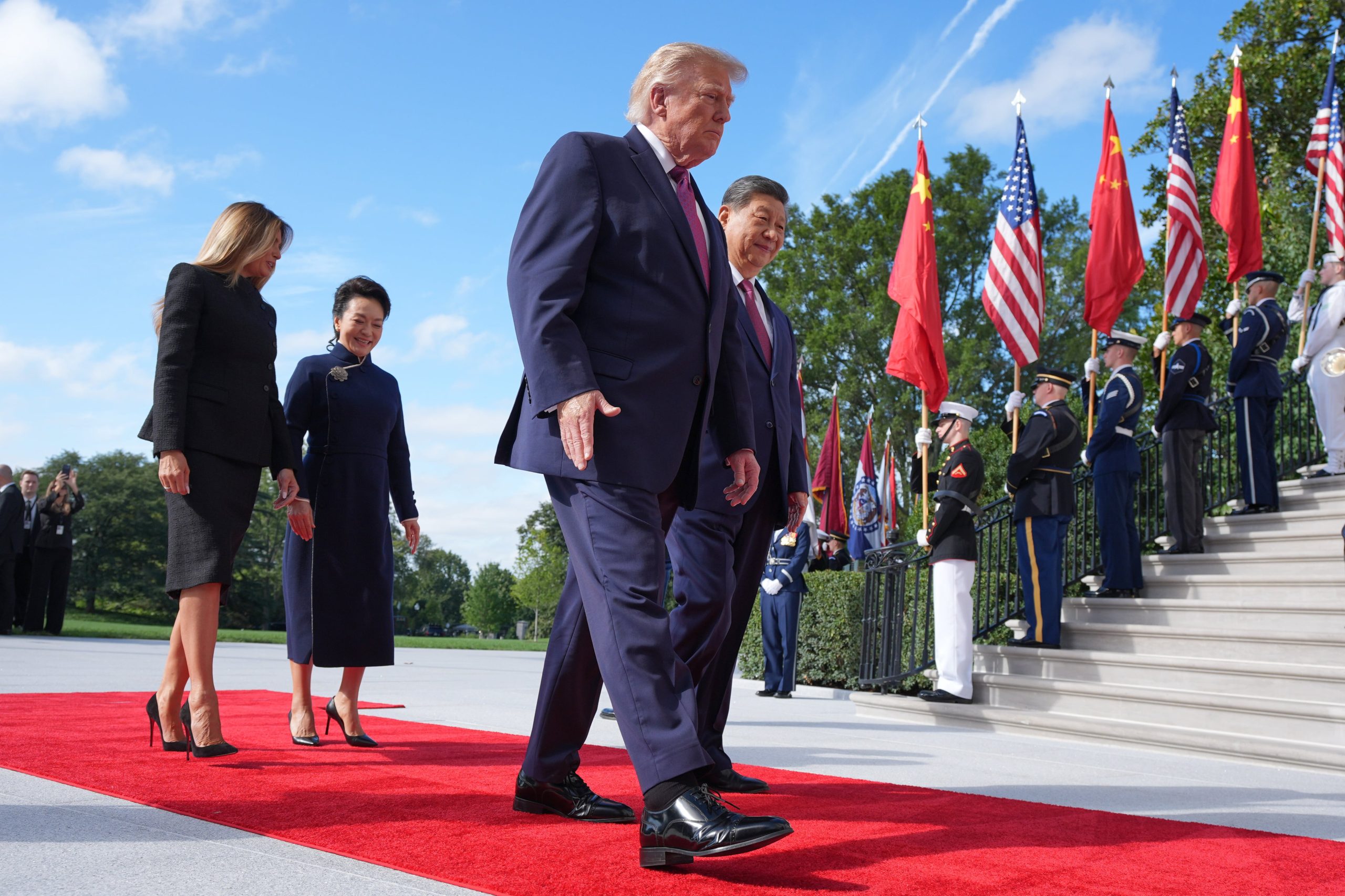
From the plane’s boarding stairs, the whole staging of Xi Jinping’s state visit to the United States became a global semiotic challenge. Every gesture and every word by the Chinese president and his host, Donald Trump, were read in terms of the balance of power between the two great superpowers of the 21st century. The conclusions do not reflect well on Trump. The U.S. president waited for Xi on the runway of a military base on Wednesday night, a highly unusual gesture for Washington diplomacy that made it clear from the very beginning that the Chinese leader is not just another foreign head of state, but an actor whose decisions can alter the trajectory of any conflict. It is the kind of reception Trump also reserved for Vladimir Putin in Alaska. The United States has a president who professes admiration for men with absolute power. It is consistent with that inclination that during the state visit, three major U.S. news outlets were barred from the White House at Trump’s whim.

In his first hours in Washington, Xi said he hoped for “sincere cooperation” between the two countries and “healthy” competition. Trump spoke of “a more balanced trade relationship.” Trade has been the main focus of tension between the two countries since China pushed back against Trump’s capricious tariffs and exposed his weakness. The escalation was paused with a truce that expires in November. [Treasury Secretary Scott Bessent said Wednesday it will be extended two more months]. The world does not need another economic shock. Trump’s political survival right now depends on fuel prices, which depend on the situation in Iran, which in large part depends on China’s moves. This weakness is, moreover, self-inflicted.

It is bad news that there appears to be no substantive dialogue on artificial intelligence, where the risks are multiplying. Trump views it as an existential competition and China is not going to take the first step toward regulation. In this race, full of mutual distrust, the United States is the one that gives the impression of fearing China, not the other way around.

There is no agenda a priori on arms control or an international peace architecture. Trump has also weakened the United States’ traditional alliances in the Asia-Pacific, to Xi’s satisfaction. Taiwan no longer features in Washington’s speeches and at any moment could appear on the state dinner menu. The summit thus presents itself as a replay of the one held in Beijing last May: a display of thaw and courtesy, but without any substance that would allow the world to glimpse what rules will govern how these two superpowers behave in the coming years.

Since Trump’s return to office, every international gesture, including this week’s, has reinforced the idea that China speaks to the United States from a position of equality. Xi has not yielded an inch on commercial or geopolitical matters, while Trump shows an increasing dependence on Beijing’s neutrality, which can no longer be risked in any way. The aphorism “speak softly and carry a big stick” inspired U.S. diplomatic doctrine in the first half of the 20th century. The phrase is usually cited as a way to succeed in the long run. A century later, that diplomacy is run by a charlatan who exposes the limits of his own power every time he acts, as in Iran or in the tariff war. The one who now, increasingly, speaks softly and carries a big stick is the president of China.

Sign up for our weekly newsletter to get more English-language news coverage from EL PAÍS USA Edition

Continue Reading

Trending

Copyright © 2017 Spanish Property & News