Connect with us

%

Immigration Shift In Spain: British Expats Part Of Growing Wave Of New Residents

Published

on

immigration-shift-in-spain:-british-expats-part-of-growing-wave-of-new-residents

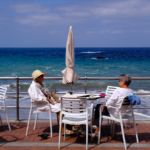
Three communities have been consistently among the most numerous over a long period. Photo credit: Alexandros Michailidis/Shutterstock

Around one in four foreign residents in Spain arrived between 2023 and 2024, according to figures from the Instituto Nacional de Estadística (INE). The data is drawn from Spain’s municipal population register, known as the Padrón Continuo, which records the year in which residents were first registered in the country.

The figure does not refer to annual immigration flows but to the proportion of the current foreign resident population whose arrival dates fall within that two-year period. It reflects how recently a significant share of foreign residents have established themselves in Spain.

Morocco, Romania and the United Kingdom remain the largest communities

The INE data shows that the largest foreign resident groups in Spain continue to be nationals of Morocco, Romania and the United Kingdom. These three communities have been consistently among the most numerous over a long period and remain the main nationalities within the foreign population overall.

The Moroccan community is the largest, reflecting both geographic proximity and long-standing labour migration patterns. Romanian nationals form the largest EU group in Spain, with significant numbers working across construction, agriculture and service sectors. The British population remains one of the most established non-EU communities, particularly concentrated in coastal and rural retirement areas.

Other sizeable communities include Italian nationals, who are increasingly present in urban areas and professional sectors, as well as Chinese nationals, who are often concentrated in commerce and retail activity. Colombian and Venezuelan nationals also form large groups, with numbers that have grown steadily over the past decade.

Recent arrivals dominated by Latin America and North Africa

While long-term resident figures remain dominated by European and North African nationalities, the composition of arrivals in 2023 and 2024 shows a different pattern. A large proportion of new registrations in this period come from Latin American countries, particularly Colombia, Venezuela, Peru and Honduras.

Morocco also continues to represent a major share of new arrivals due to its proximity and established migration links with Spain. In addition, Ukraine appears among recent arrivals, reflecting displacement linked to the war that began in 2022 and subsequent relocation within Europe.

These patterns indicate that recent population growth among foreign residents is being driven by a combination of labour migration, family reunification and humanitarian displacement, depending on country of origin.

What the data measures

The figures are based on the Padrón Continuo, Spain’s continuous population register. This system records residents who are officially registered with local authorities, a requirement for access to healthcare and other public services.

The register includes information such as nationality, place of residence and year of registration. However, it does not measure migration flows directly, meaning it cannot fully distinguish between permanent settlement and shorter-term residence.

Because the data is administrative, it captures individuals who are registered in Spain at a given time, rather than tracking movements in and out of the country in real time.

Where foreign residents are concentrated

Foreign residents are unevenly distributed across Spain. Higher concentrations are found in large urban centres such as Madrid and Barcelona, where employment opportunities are more diverse and housing is more accessible for new arrivals.

Coastal areas, particularly along the Mediterranean and parts of the Canary and Balearic Islands, also show high levels of foreign population. These regions attract both long-term residents and seasonal workers, depending on the local economy.

By contrast, rural inland areas generally have lower proportions of foreign residents, although some agricultural regions depend heavily on seasonal labour migration.

Methodological considerations

The INE register is considered the most comprehensive source of population data in Spain, but it has limitations. It does not distinguish clearly between temporary and permanent residence, and it relies on administrative registration rather than survey-based migration data.

As a result, the figures provide a reliable overview of population structure but not a complete picture of migration behaviour or duration of stay.

Interpretation of recent trends

The fact that a significant share of foreign residents arrived in 2023 or 2024 indicates a period of recent demographic change. It suggests that Spain’s foreign population is not only growing but also being renewed through new inflows.

The contrast between established European communities and more recent arrivals from Latin America and North Africa highlights different migration pathways. European migration is largely linked to mobility within the EU, while Latin American and North African flows are more strongly associated with labour demand and, in some cases, humanitarian factors.

Conclusion

The latest data from the INE shows that around one in four foreign residents in Spain have arrived in the past two years. While Morocco, Romania and the United Kingdom remain the largest communities overall, recent arrivals are more heavily concentrated among Latin American and North African nationalities. The figures reflect recent changes in Spain’s foreign population structure as recorded through the national municipal register.

%

Spain Airport Queues Ease For Some Travellers

Published

on

spain-airport-queues-ease-for-some-travellers

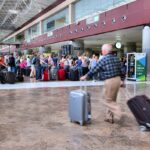
Long airport queues prompt Spain to fast-track some travellers under new EU border system Credit : Tupungato, Shutterstock

If you are flying into Spain this summer, you may not go through the same line as everyone else. Families with young children, passengers with reduced mobility and other vulnerable travellers are now being redirected away from biometric gates, after weeks of long queues linked to the EU’s new Entry Exit System.

The change has already started at major airports and is designed to ease pressure before the busiest travel months. It does not remove border checks, but it changes how some passengers move through them when waiting times get too long.

Who can skip the biometric gates and why it matters

The adjustment is aimed at travellers who may struggle with the new system or who are more affected by long waiting times.

Under internal instructions circulated across Spain’s airport network, border police are now asked to keep a close eye on queues. When waiting times at the automatic kiosks go beyond roughly 25 minutes, certain passengers can be moved to a manual fast track lane.

This applies to families with small children, people with reduced mobility and others considered vulnerable in that context.

The idea is practical. The biometric process takes longer for first time users, and not everyone can move through it at the same pace. Redirecting some travellers helps reduce pressure at the busiest points.

At the same time, airport teams are being told to prioritise passengers who risk missing connecting flights, especially during peak arrival periods.

What caused the queues in the first place

The situation is tied to the rollout of the new European border system.

Since April 10, non EU travellers entering the Schengen area must register biometric data. That includes fingerprints and a facial scan, replacing the traditional passport stamp.

For many travellers, particularly those arriving from the UK and other non EU countries, this is the first time they have had to go through the process.

That initial registration takes longer than a standard check. When several flights arrive close together, queues can build quickly.

In the first weeks after the launch, some passengers reported waiting for hours at Spanish airports. Those scenes quickly raised concerns, especially with the summer season approaching and millions of visitors expected.

Travel companies and airlines warned that long delays at border control could affect the overall travel experience.

What travellers can expect now

The changes being introduced are meant to reduce the impact, but they do not remove the system itself.

If you fall into one of the priority groups, you may be directed to a different line when queues grow. For other travellers, the experience will depend on timing.

At quieter moments, the process may be relatively quick. During peak arrivals, delays are still possible. There is one important detail to keep in mind. The first time you register your biometric data is the slowest step. After that, future entries should be much faster.

That means frequent travellers may notice a clear difference after their initial trip.

In the meantime, being prepared can make things easier. Having your boarding pass ready, along with any supporting documents such as proof of accommodation, can help speed up manual checks if needed. It is also wise to allow extra time, especially if you have a connecting flight.

Why this matters ahead of the summer season

Spain is expecting a high volume of international arrivals in the coming months.

With millions of non EU travellers set to enter the country between May and September, even small delays can quickly turn into longer queues.

The new system is here to stay, but how it is managed is still evolving. Redirecting vulnerable passengers is one way of easing pressure while airports adapt. Mobile registration units may also be deployed during busy periods to increase capacity.

For authorities, the goal is to avoid a repeat of the early weeks, when the system was still settling in and queues grew faster than expected.

For travellers, the change is more subtle but still important.

You may not notice it until you arrive, but the way people are processed at the border is already shifting. And for some passengers, the journey through the airport could now be a little smoother than it was just a few weeks ago.

Continue Reading

%

What Do Paintings Really Mean?

Published

on

what-do-paintings-really-mean?

The Arts Society Costa del Sol closes its 2025/2026 season with a compelling illustrated lecture on the secret symbols hidden in centuries of great art masterpieces, open to non-members for just €10. 

Art: A Detective Story Decoding Symbols in Painting

The final lecture of the season takes place on Monday, May 11 at the Salon Varietes Theatre, Fuengirola, doors open from 4pm, with the talk beginning at 4:30pm. The lecture is titled Art: A Detective Story – Decoding Symbols in Painting, and it promises to change the way you look at every painting you will ever see again.

The premise is simple and fascinating. Paintings are silent, yet they are designed to communicate. Sometimes the message is obvious. More often it is layered, encoded in objects, gestures, colours and figures that carried specific meaning to the audiences of their time. 

From medieval altarpieces and Renaissance portraits to Dutch still lifes, Baroque ceiling paintings and Victorian genre scenes, the lecture traces the rich tradition of symbols, emblems and allegories that artists used to elevate, educate, warn and criticise,  communicating far more than the eye first registers.

Lydia Bauman the lecturer

The talk is delivered by the incredibly impressive Lydia Bauman, a highly experienced art educator working in the field today. Born in Poland, she completed her BA in Fine Art at the University of Newcastle-upon-Tyne, where she was awarded both the John Christie Scholarship and the Hatton Award. She then studied at the Courtauld Institute of Art, London, earning an MA in History of Art with a Distinction for her thesis on Matisse’s Illustrations to Poetry.

Her talents don’t end there, Lydia has taught at London’s National Gallery for more than 35 years, and has lectured intermittently at the Tate Gallery, the National Portrait Gallery, the Boston Museum of Fine Arts, the Hermitage, and the Van Gogh Museum in Amsterdam. Since March 2020 she has delivered more than 180 online lectures through her own programme, Art For The Uninitiated. She is an accredited lecturer with The Arts Society.

Ticket information and how to attend

Admission is free for members of The Arts Society Costa del Sol, whose membership covers the full lecture season. Members of other Arts Society societies are welcome at a discounted rate of €8, payable at the door. Non-members are invited to attend for a donation of €10, also payable on arrival.

The Salon Varietes Theatre is centrally located in Fuengirola. Arriving from 4:00pm allows time to take your seat before the lecture begins at 4:30pm.

More about the society

Founded in 1988 as the Costa del Sol Decorative and Fine Arts Society (DFAS), The Arts Society Costa del Sol was the first society of its kind in Spain and remains part of a global network of Arts Society chapters. The society has members from a number of different nationalities all united by a shared love and interest in art and culture. 

Monthly illustrated lectures run from October to May, covering painting, architecture, history, and cultural heritage, with particular attention to the artistic legacy of Spain. Members have a full social calendar including after-lecture drinks and dinners, a Christmas lunch, an end-of-season dinner dance, a Members’ Forum, and carefully researched cultural day trips to destinations across Spain and Europe.

New members are encouraged and always welcome. For more information visit The Arts Society Costa Del Sol website. 

If you have an interest in art, would like to learn something new, or have a painting in your house that you believe has an inner meaning then this event is perfect for you. 

Art: A Detective Story  – Decoding Symbols in Painting. Monday, May 11, 4:30pm. Salon Varietes Theatre, Fuengirola. Non-members €10, pay at door.

Continue Reading

%

Southern Blues Legends The Gangberries Are Back

Published

on

southern-blues-legends-the-gangberries-are-back

Blues Trio, The Gangberries. Credit: Clarence Jazz Club

Fans of authentic rhythm and soul are in for a treat this month as Southern Spain’s blues favourites, the Gangberries, are returning to Almuñecar. This well-seasoned band brings a wealth of experience to the coast, promising a night that honours the very best of the Southern blues tradition.

Veteran musicians bring decades of mastery

Experience and a history of collaborations with the best define this ensemble. Formed in 2012, the group consists of musicians who have spent over twenty years touring with iconic Spanish bands such as Tabletom, Mama Kin, and the Lito Blues Band. Their deep-rooted connection to the genre guarantees a performance that is both technically flawless and emotionally charged.

The audience can expect a foot-tapping journey through the annals of music history, delivered by professionals who live and breathe the blues. These artists have shared stages with the likes of the Richard Ray Farrell Band, honing a craft that translates perfectly to the intimate setting of a concert hall.

A tribute to rock and blues giants

Reverence for the greats sits at the heart of their setlist. Their repertoire serves as a powerful tribute to legendary figures including B.B. King, Muddy Waters, and Johnny Winter. Listeners will be treated to masterful renditions of classic tracks and the soaring guitar harmonies reminiscent of the Allman Brothers Band. Every note played reflects a dedication to the raw energy of rock ‘n’ roll, making this a must-see event for anyone who appreciates guitar-driven excellence.

The performance will no doubt revive the spirit of the Mississippi Delta and the Georgia woods right here in Almuñécar.

La Cochera Producciones is hosting this cultural event, guaranteeing a high-quality production for all attendees. Early booking is advised as local interest remains high for this specific tour date. Residents from across the province are expected to travel for this display of musical prowess.

Event details:

Continue Reading

Trending

Copyright © 2017 Spanish Property & News