Connect with us

ElPais

Is It Possible To Die Of Grief? Science Confirms That Intense Bereavement Raises The Risk Of Death

Published

on

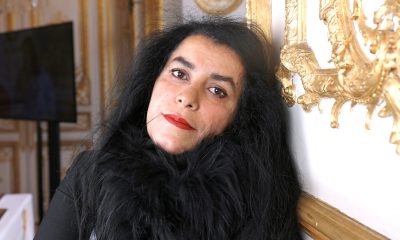
The death, attributed to grief, of the cartoonist and filmmaker Marjane Satrapi, author of Persepolis, has brought back a recurring and widely studied question in the public imagination: is it possible to die of grief? Regardless of Satrapi’s personal circumstances — which remain unknown for now — science points to yes, while reframing the romantic idea within a biological explanation. For example, intense bereavement can worsen mental health, trigger cardiovascular problems and, ultimately, raise the risk of death. Satrapi’s family said on Tuesday that she died “of sadness a little more than a year after the death of Mattias Ripa, her husband and the love of her life.” They gave no further details.

Juan Carlos Pascual Mateo, a psychiatrist and member of the executive committee of the Spanish Society of Psychiatry and Mental Health, dismisses the epic rhetoric that comes with the notion of dying of grief or of love, and points to a biological interpretation instead: “Emotional states have physical effects. There is an impact on the hypothalamic–pituitary–adrenal axis [a neuroendocrine system that regulates the body’s stress response]; cortisol levels increase and this can affect the immune system, making it more depressed and vulnerable. All of that predisposes you to die from some disease. You do not die of sadness, but of another medical cause.”

This happens, for example, with events that favor a depressive clinical picture, such as bereavement. That condition, in turn, can cause other illnesses — depression is associated with poorer cardiovascular and metabolic health, obesity, immune system alterations — and it also raises the risk of suicide, Pascual Mateo illustrates.

Grief after the death of someone who was close is natural; it is part of an adaptation process. It is normal to feel sadness and despondency. The problem arises when those emotions become entrenched and disabling. A Danish study of more than 1,700 people who had lost loved ones found that those with more intense and prolonged grief symptoms visited the doctor more often, used more psychotropic medication (anxiolytics and antidepressants), and had up to an 88% higher risk of death over a 10-year period.

Those entrenched sorrows have a name in medical parlance. Guillermo Lahera, professor of psychiatry at the University of Alcalá, writes in an article in EL PAÍS that “when the grieving process ceases to be adaptive, is persistent and prevents the person from recovering functionality,” it is called prolonged grief disorder. “Its clinical presentation is very similar to major depression and, sometimes, to post-traumatic stress disorder; like those conditions, it is associated with higher mortality from physical causes. The key is not the intensity or duration of the pain, it is its rigidity. Because the transformation implied by adaptive grieving has not occurred, the inner world remains ‘fixed’ on the presence of the absent person, and healing implies ‘betraying’ the deceased,” he says.

The scientific literature on mortality risk among people in grief is mixed. Some studies, like the Danish one, do find an increased likelihood of death and others do not see it as clearly. The Danish authors attribute these discrepancies to the “heterogeneous” profile of bereaved relatives and to multiple risk factors that add to or reduce vulnerability: for example, caregiving for a close person can buffer stress in those experiencing a loss; by contrast, if someone in grief is also suffering distress because of their own physical illness, that may increase vulnerability.

A review in The Lancet found that the probability of mortality is also higher in the first six months after the loved one’s death and declines over time, although in some cases (parents who lose a child, for example) that risk can remain elevated for years.

When the loss is of a partner — most studies focus on that particular scenario — the mortality risk is higher among younger people and among widowed men. Causes of death that were observed range from accidents, violent causes and alcohol-related illnesses to cardiovascular problems and suicide. “Mortality associated with grief is largely attributed to the so-called broken heart. That is, the psychological distress caused by the loss, such as loneliness; and the secondary consequences of that death, such as changes in social ties, living arrangements, eating habits and financial support,” the authors add.

The suffering associated with grief encompasses physical, emotional, cognitive and social dimensions. But not everyone is equally vulnerable to developing pathological grief. According to the Danish study’s authors, a history of mental health problems and a low level of education are risk factors for long-term psychological distress in bereaved relatives.

‘Broken heart syndrome’

The death of a loved one is, in itself, a highly stressful situation. And the emotional burden can also have organic repercussions beyond the impact on mental health. In cardiology, for example, there is a condition closely linked to life events with major impact: Takotsubo syndrome, colloquially known as broken heart syndrome. According to the Spanish Heart Foundation, this condition resembles a myocardial infarction, but, unlike a heart attack, there are no blocked arteries in the heart to explain the cardiac dysfunction.

“Eighty-five percent of reported cases are postmenopausal women [at this stage they have lost the cardiovascular protection provided by estrogens], with sudden and unexpected emotional or physical stress causing an excessive release of adrenaline, which can temporarily damage the heart in some people,” the scientific organization explains. Common triggers include news of an unexpected death of a loved one, a frightening medical diagnosis or stressful situations such as public performance, divorce or natural disasters. Pascual Mateo admits that in three decades of his career he has encountered only one case.

There are many trajectories of grief and most are adaptive, experts remind us. Lahera stresses, in fact, that in the majority of cases this life event should not be treated with medication or therapy, but simply lived through: “Grief is not a linear process, nor a series of phases to be checked off, nor a transient depression caused by mere biochemical imbalance. It is a disorder of time and of the body.”

Sign up for our weekly newsletter to get more English-language news coverage from EL PAÍS USA Edition

Continue Reading
Click to comment

Leave a Reply

Your email address will not be published.

ElPais

Photographer Jack Davison’s Challenge: Three Days In London And 111 Portraits (37 Per Day)

Published

on

photographer-jack-davison’s-challenge:-three-days-in-london-and-111-portraits-(37-per-day)

At the latest edition of Paris Photo, held in November 2025, a series of black-and-white portraits caught the attention of both the public and the media. Their public display followed a large-scale installation from the 2024 edition, dedicated to the complete works of the German portrait photographer August Sander (1876-1964). That year, the newly-renovated Grand Palais had welcomed visitors with his celebrated project, People of the 20th Century.

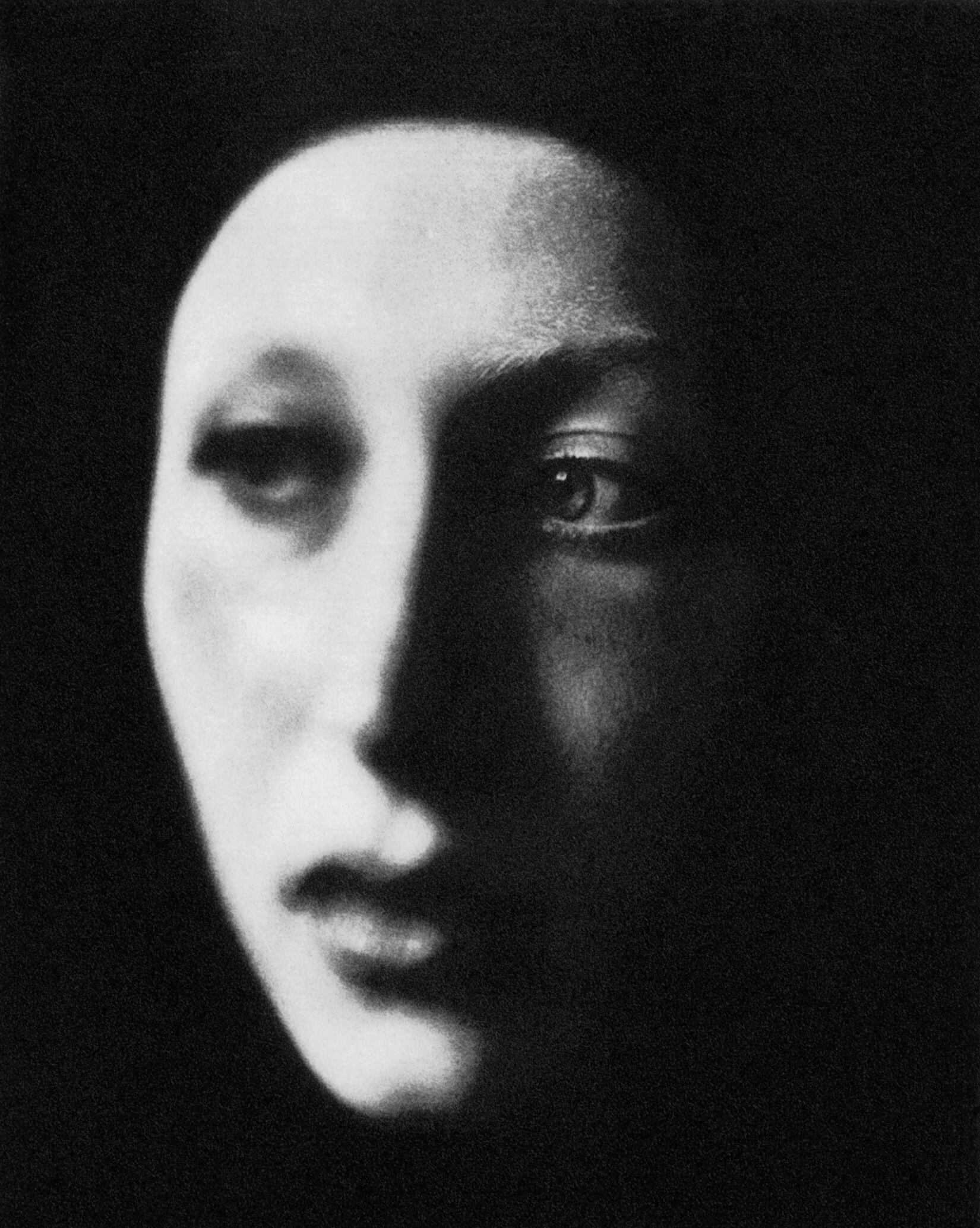
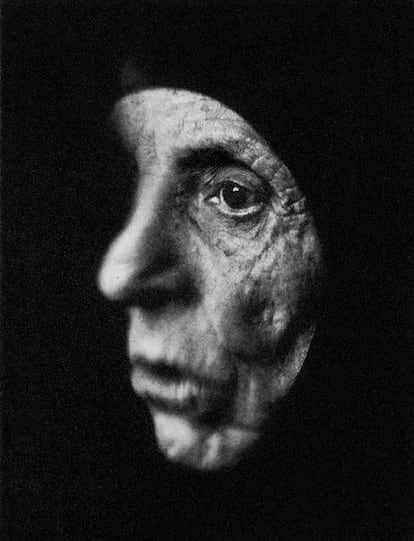
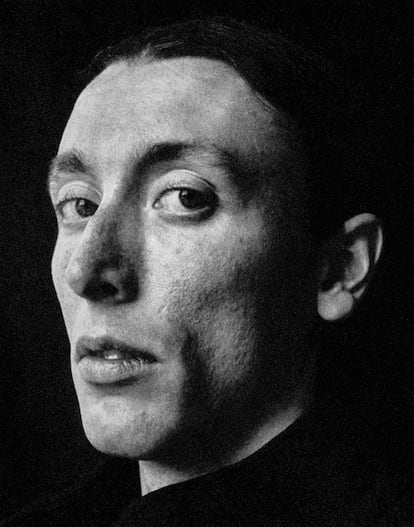
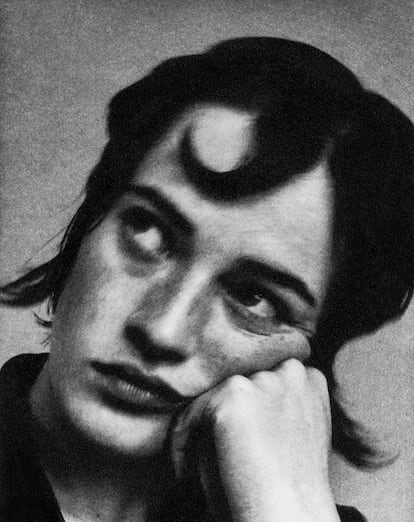
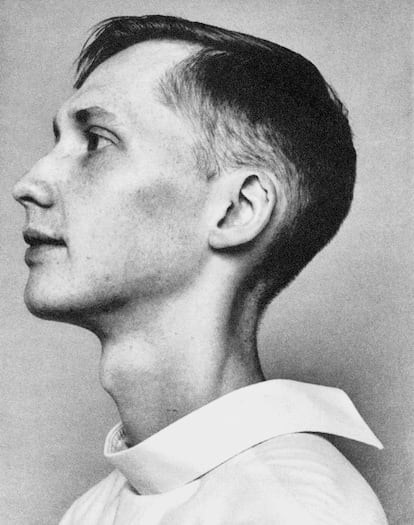
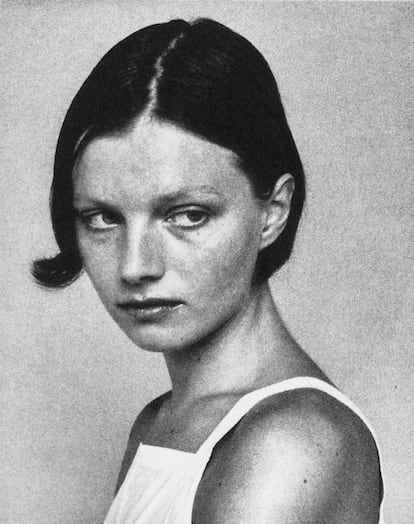
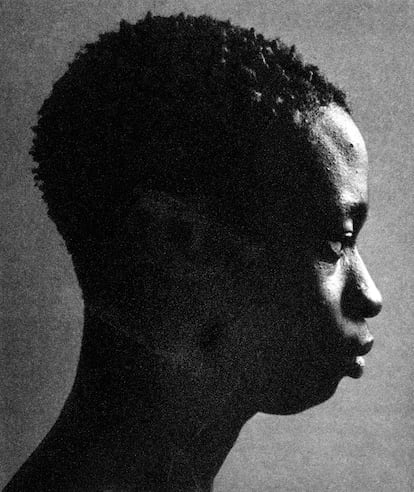
Last fall, 87 photographs by Jack Davison entitled Portraits of London occupied the Cob Gallery’s discreet stand. Small in size, yet powerful in impact, they quickly drew the viewer’s eye; despite being laden with classical references, they felt undeniably contemporary.
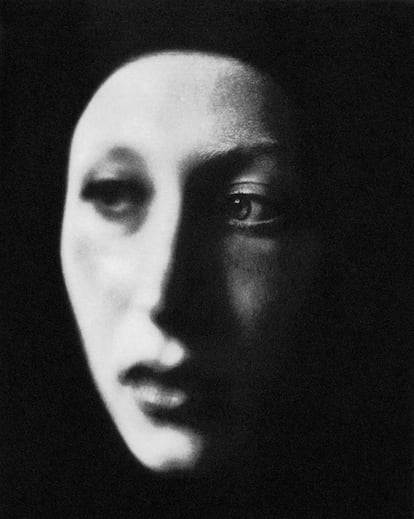
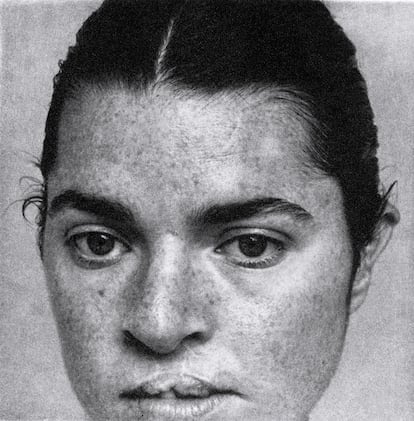
“I’ve always been drawn to the simplicity of the German photographer’s portraits,” the British photographer acknowledged, during a video conference with EL PAÍS. “They convey so much all at once, starting from the bare essentials.” However, the Paris Photo installation didn’t win him over. “The portraits demanded that the viewer engage with them, but [since they were] presented en masse — and at a height that prevented them from being appreciated — I don’t think they achieved their purpose.”

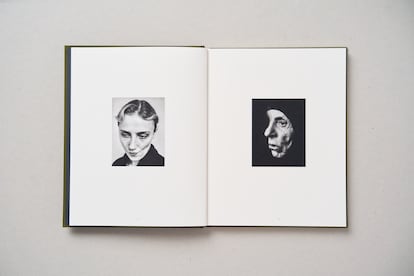
Even so, the refined nature of the work left its mark on the British photographer. He had long felt a need for more portraits and greater restraint in his own practice. He wanted more direct portraits, a more intimate and tactile photography, in keeping with the vernacular photography of the 1930s and 40s, which has always sparked his interest. Hence his decision to undertake an ambitious project in a short period of time: to spend three days in London during the month of November, photographing as many people as possible. From those days emerged the series exhibited at the photography fair, later compiled into a photobook that was released this year: 13-15 November. Portraits: London (2026).

13-15 November. Portraits: London

“It was quite a challenge,” Davison sighs. He’s known as a fashion and documentary photographer, as well as for his use of dramatic chiaroscuro. “I shot 111 people in three days. About 37 portraits a day. The experience reminded me how much I love portraiture. It appeals to me because I love people and I believe in the magic that can happen between photographer and model. In that brief instant, [a result comes about from the] collaboration. I look for those small moments of emotion when someone isn’t consciously revealing themselves… almost when they’re not on the defensive.”

Many of the models were selected on the streets of London by casting director Coco Wu. Others were acquaintances of the photographer. Although they differ greatly from one another, each possesses a unique character that seems to place them outside of time. “I never set out to say, ‘This is London,’ but rather to present a version of an imaginary London,” the photographer explains. “I was drawn to the idea that the November day could have belonged to more recent years, as well as to a hundred years ago.” Printed using the photopolymer intaglio technique, the depth of the different shades of black – as well as their texture – demand the viewer’s closeness, simultaneously offering a tactile and contemplative sensation.

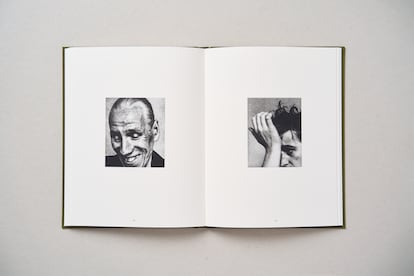
Davison strives to offer the viewer as little information as possible. “Their imagination is as important as mine,” the artist notes. Thus, he focuses on the face, omitting the torso and simplifying the elements, until only an almost-symbolic gesture remains, in pursuit of emotion. The hair, at times, acquires a sculptural texture. Framed in very close-up shots, the subjects sometimes pose while wearing hoods. This allows the artist to conceal any distinctive feature that might diminish the intensity of the expression, or place the photographs in a specific time period. At the same time – with a nod to Ingmar Bergman’s film The Seventh Seal (1957) – this helps to simplify the faces, surrounding them with mystery. “As a whole, there’s something sectarian about [the photographs], which could evoke ideas of both spirituality and other types of communities,” Davison points out.

13-15 November. Portraits: London

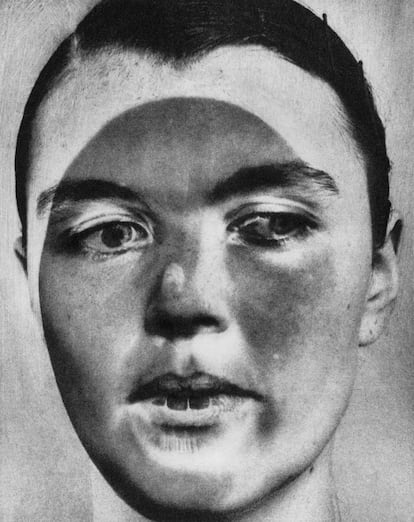
Sometimes, he manipulates images, in order to abstract the faces. “In one of my favorite portraits, I imagined a kind of superimposition, as if two female faces collided, where one is projected as a circle onto the surface of the other,” he explains. “Through this transparency, a mouth and ghostly teeth become visible. I like the idea of approaching a face — which seems orderly — and then encountering an abstraction. It’s about playing with the audience’s expectations.”

The idea is to carry out this project in different locations. And perhaps, in some of them, Davison will use color. Even so, he believes that black and white offer the possibility of perceiving the subtleties of emotion more clearly.

Beyond the series’ formal properties, November 13-15. Portraits: London proposes a contemplative look in a time of visual saturation. Stripped of context, the portraits share an intensity that’s both silent and theatrical, which — without belonging entirely to any particular time — continues to engage the viewer. They demand closeness. And, only upon approaching them, do they seem to speak directly to the viewer.

Sign up for our weekly newsletter to get more English-language news coverage from EL PAÍS USA Edition

Continue Reading

America

California Is Suing The Trump Administration To Block A New ICE Facility

Published

on

california-is-suing-the-trump-administration-to-block-a-new-ice-facility

An agricultural property a few miles from Gilroy, just south of the San Francisco Bay Area, has become the latest flashpoint in the ongoing clash between California and the Trump Administration. California Attorney General Rob Bonta and Santa Clara County filed a federal lawsuit on Wednesday seeking to stop the construction of a U.S. Immigration and Customs Enforcement (ICE) facility that local officials say could be used to temporarily detain migrants as part of the federal government’s intensified immigration enforcement efforts.

The lawsuit, filed in the U.S. District Court for the Northern District of California, seeks to permanently block the project on Holsclaw Road, in an unincorporated area southeast of Gilroy. The plaintiffs argue that the federal government moved forward with construction without completing required environmental reviews, adequately consulting state and local authorities, or complying with restrictions designed to preserve agricultural land.

According to public records, the Department of Homeland Security leased nearly 25 acres from a subsidiary of Elmwood Capital Group under a 20-year agreement valued at $26.5 million. The property includes three buildings, greenhouses, and extensive farmland. Although ICE has maintained that the project is intended as an operations office, state and local officials believe the facility could function as a short-term detention center capable of holding up to 150 people.

“Under this Administration, we’ve seen ICE offices have become mini-detention centers, despite being unequipped for long-term holding,” Bonta said in a statement. “That’s unacceptable.”

President Trump’s mass detention and deportation campaign has led to cruel, inhumane, and unacceptable conditions at immigration holding and detention facilities across California,” he added. “But instead of working to improve conditions at these facilities, instead of enforcing ICE’s own detention standards, the Trump Administration is trying to jam through a new facility on a community that doesn’t want it.”

The lawsuit argues that the project violates several federal and state laws, including the National Environmental Policy Act (NEPA), the Immigration and Nationality Act, the Intergovernmental Cooperation Act, the Administrative Procedure Act, and California’s Williamson Act, which preserves agricultural land through land-use restrictions in exchange for tax benefits.

According to the plaintiffs, the federal government should have completed either an environmental assessment or a full environmental impact statement before signing the lease and beginning construction. They also argue that the property is located in an area that supports threatened and endangered species and is protected for exclusive agricultural use.

The complaint further alleges that the development could damage wildlife habitats, place additional strain on local drinking water, wastewater, and road infrastructure, and result in the permanent loss of protected farmland.

Another central issue in the case is the alleged lack of transparency. Santa Clara County officials contend they were never properly consulted about the project and that the only formal communication they received was a one-paragraph letter sent in June 2023 in which the federal government described its plans as “office and operations space.”

“Part of the problem here is that they are trying to move forward with this project with as little transparency as possible, and hoping that nobody notices, nobody catches on to the details,” Santa Clara County Counsel Tony LoPresti said during a press conference in San Jose. “So, part of what our lawsuit will do is it will force that transparency to occur.”

The lawsuit also raises concerns about environmental safety at the site. According to the plaintiffs, agricultural research companies that previously occupied the property generated hazardous waste that may not have been properly disposed of.

“The federal government’s apparent failure to address —much less mitigate— these risks endanger the construction workers building the site, detainees and employees who will be located at the site, and the environment beneath and surrounding the site,” the complaint states.

Opposition to the project has grown in recent months. Residents and community groups have staged protests since learning of the construction plans, while the neighboring Monterey County Board of Supervisors voted unanimously in late May to oppose the facility.

The lawsuit is the latest in a long series of legal battles between California and the Trump Administration. According to Bonta, it is the 71st lawsuit his office has filed against the federal government since Trump returned to the White House. Santa Clara County, meanwhile, is currently involved in 11 active cases against the administration.

“Since President Trump took office, the County of Santa Clara has made clear that we won’t tolerate a federal government that abuses the law and jeopardizes the rights and well-being of our immigrant communities,” LoPresti said.

Neither ICE nor the Department of Homeland Security has commented on the lawsuit.

Continue Reading

Amy Adams

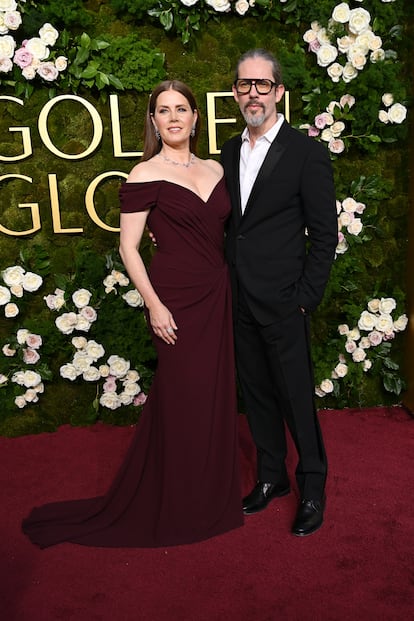
Amy Adams’s Comeback: How The Perennial Oscar Nominee Is Trying To Escape Her ‘era Of Flops’

Published

on

amy-adams’s-comeback:-how-the-perennial-oscar-nominee-is-trying-to-escape-her-‘era-of-flops’

16 fotos

For more than a decade she was one of Hollywood’s most admired performers and a regular presence at awards ceremonies. After several failed projects and a slump that has drawn the attention of cinephiles, Amy Adams returns with ‘Cape Fear’, the series she hopes will rewrite the narrative


Carlos Megía

Continue Reading

Trending

Copyright © 2017 Spanish Property & News