
ElPais
Photographer Jack Davison’s Challenge: Three Days In London And 111 Portraits (37 Per Day)


At the latest edition of Paris Photo, held in November 2025, a series of black-and-white portraits caught the attention of both the public and the media. Their public display followed a large-scale installation from the 2024 edition, dedicated to the complete works of the German portrait photographer August Sander (1876-1964). That year, the newly-renovated Grand Palais had welcomed visitors with his celebrated project, People of the 20th Century.
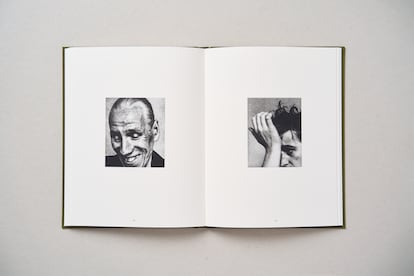
Last fall, 87 photographs by Jack Davison entitled Portraits of London occupied the Cob Gallery’s discreet stand. Small in size, yet powerful in impact, they quickly drew the viewer’s eye; despite being laden with classical references, they felt undeniably contemporary.



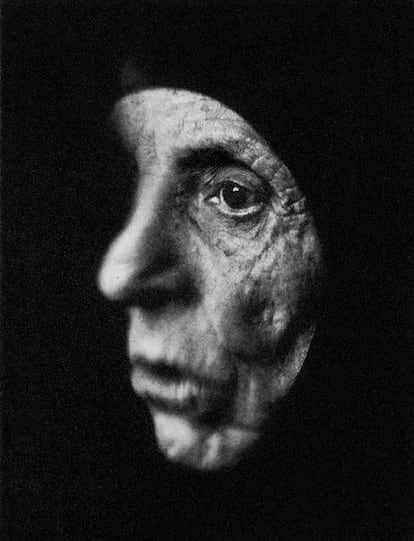
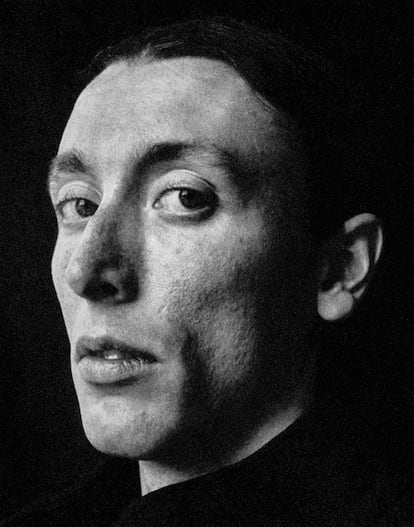

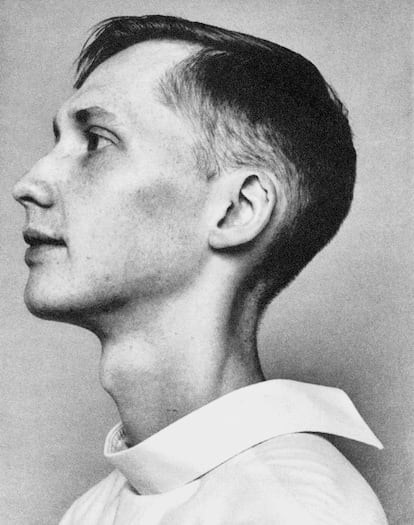
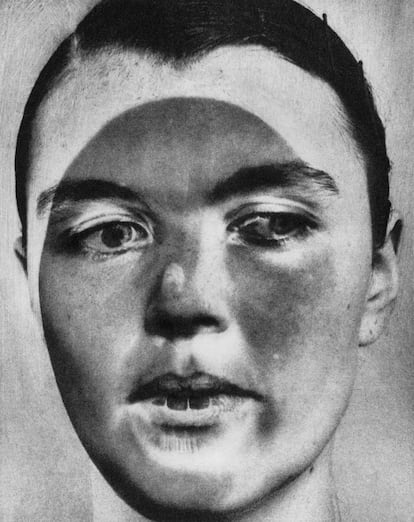



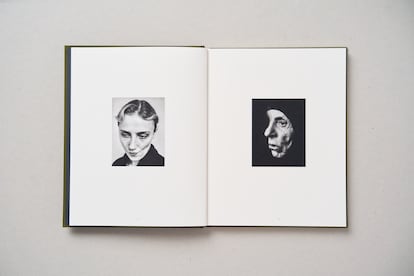
“I’ve always been drawn to the simplicity of the German photographer’s portraits,” the British photographer acknowledged, during a video conference with EL PAÍS. “They convey so much all at once, starting from the bare essentials.” However, the Paris Photo installation didn’t win him over. “The portraits demanded that the viewer engage with them, but [since they were] presented en masse — and at a height that prevented them from being appreciated — I don’t think they achieved their purpose.”
Even so, the refined nature of the work left its mark on the British photographer. He had long felt a need for more portraits and greater restraint in his own practice. He wanted more direct portraits, a more intimate and tactile photography, in keeping with the vernacular photography of the 1930s and 40s, which has always sparked his interest. Hence his decision to undertake an ambitious project in a short period of time: to spend three days in London during the month of November, photographing as many people as possible. From those days emerged the series exhibited at the photography fair, later compiled into a photobook that was released this year: 13-15 November. Portraits: London (2026).
“It was quite a challenge,” Davison sighs. He’s known as a fashion and documentary photographer, as well as for his use of dramatic chiaroscuro. “I shot 111 people in three days. About 37 portraits a day. The experience reminded me how much I love portraiture. It appeals to me because I love people and I believe in the magic that can happen between photographer and model. In that brief instant, [a result comes about from the] collaboration. I look for those small moments of emotion when someone isn’t consciously revealing themselves… almost when they’re not on the defensive.”
Many of the models were selected on the streets of London by casting director Coco Wu. Others were acquaintances of the photographer. Although they differ greatly from one another, each possesses a unique character that seems to place them outside of time. “I never set out to say, ‘This is London,’ but rather to present a version of an imaginary London,” the photographer explains. “I was drawn to the idea that the November day could have belonged to more recent years, as well as to a hundred years ago.” Printed using the photopolymer intaglio technique, the depth of the different shades of black – as well as their texture – demand the viewer’s closeness, simultaneously offering a tactile and contemplative sensation.
Davison strives to offer the viewer as little information as possible. “Their imagination is as important as mine,” the artist notes. Thus, he focuses on the face, omitting the torso and simplifying the elements, until only an almost-symbolic gesture remains, in pursuit of emotion. The hair, at times, acquires a sculptural texture. Framed in very close-up shots, the subjects sometimes pose while wearing hoods. This allows the artist to conceal any distinctive feature that might diminish the intensity of the expression, or place the photographs in a specific time period. At the same time – with a nod to Ingmar Bergman’s film The Seventh Seal (1957) – this helps to simplify the faces, surrounding them with mystery. “As a whole, there’s something sectarian about [the photographs], which could evoke ideas of both spirituality and other types of communities,” Davison points out.
Sometimes, he manipulates images, in order to abstract the faces. “In one of my favorite portraits, I imagined a kind of superimposition, as if two female faces collided, where one is projected as a circle onto the surface of the other,” he explains. “Through this transparency, a mouth and ghostly teeth become visible. I like the idea of approaching a face — which seems orderly — and then encountering an abstraction. It’s about playing with the audience’s expectations.”
The idea is to carry out this project in different locations. And perhaps, in some of them, Davison will use color. Even so, he believes that black and white offer the possibility of perceiving the subtleties of emotion more clearly.
Beyond the series’ formal properties, November 13-15. Portraits: London proposes a contemplative look in a time of visual saturation. Stripped of context, the portraits share an intensity that’s both silent and theatrical, which — without belonging entirely to any particular time — continues to engage the viewer. They demand closeness. And, only upon approaching them, do they seem to speak directly to the viewer.
Sign up for our weekly newsletter to get more English-language news coverage from EL PAÍS USA Edition






America
Andrea Kottow, Essayist: ‘When We Care For Our Parents, We Are Confronted With Our Own Limitations’

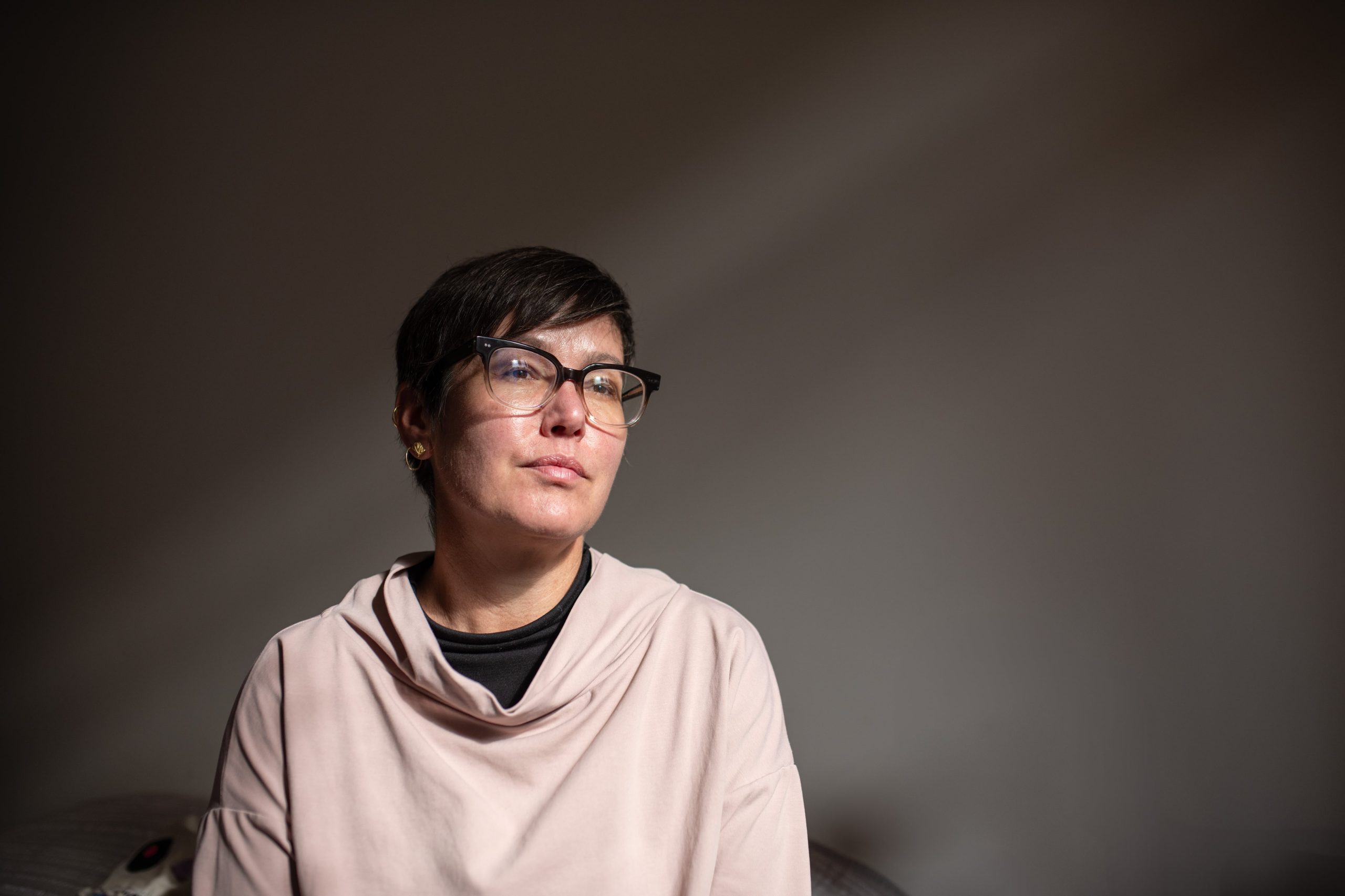
In the summer of 2013, Andrea Kottow, 51, learned of her father’s first fall. Miguel Kottow Lang — a renowned ophthalmologist, academic and bioethics specialist — had been perched on a chair, trying to repair a curtain in the house he shared with Andrea’s mother, when he lost his balance and fell. The fall changed many things, though not immediately. At first, it was just broken ribs, which Miguel silently managed with medication. However, after his mobility difficulties and other symptoms became apparent, the diagnosis came: he had Guillain-Barré syndrome, a rare autoimmune disease that causes the body to produce antibodies against its own tissues.
The illness “changed my father forever,” notes the Chilean academic, who teaches at Adolfo Ibáñez University in Santiago: she did her undergraduate studies in Hispanic Literature at the University of Chile and completed a doctorate in the History of Medicine at the Free University of Berlin. The self-reliant and protective figure she had always known suddenly transformed into a fragile and vulnerable being, who nevertheless managed to complete a book about his experience: El Pa(De)Ciente (2014). This memoir, in turn, inspired the 2021 Spanish-language film of the same name (released in English as (Im)Patient), in which Miguel and Andrea are played by Chilean actors Héctor Noguera and Emilia Noguera, also father and daughter.
The book portrays the predicament of a doctor who is suddenly on the opposite side of a medical system that he harshly criticizes. But it is also – as his daughter would reproach him – a work written by a man who appears to be “alone, without a family.” She “couldn’t believe that all the suffering felt and all the efforts made by those of us around him” were merely a peripheral matter. It was his version of events – he was well within his rights – but she still found the book to be “painful and incomprehensible.”
It was then that, upon seeing her reaction, Kottow Lang told her: “This is how I experienced it. If you want your [experience] to exist, you’ll have to write it yourself.”
And so, she ended up doing just that (although, she clarifies, she didn’t write her own story because she felt provoked by her father). This past April, the author of Spanish-language works translated as Frontiers of the Real (2022) and Diseases of Modernity (2022), among other titles, published Truth Also Moves: An Essay on Literature and Fatherhood (2026). This is an unusual work, where the essay genre allows for the merging of intimate chronicle, self-examination, family genealogy, as well as a look at literature and film, in order to understand father-child relationships. The book has moved both readers and critics: in EL PAÍS, Chilean literary scholar Joaquín Castillo declared it to be “brilliant,” containing “enormous reflective depth.”
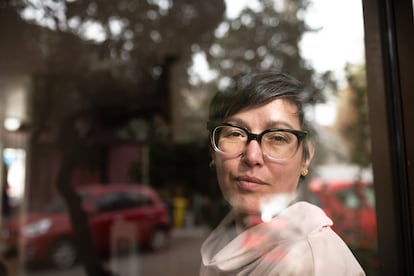
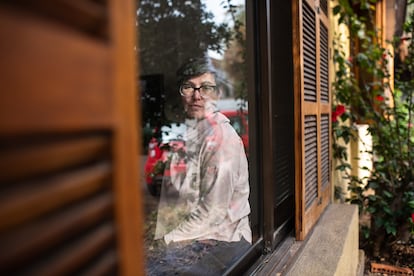
In a conversation with this newspaper in the study-library of her home – located in the northeastern Santiago borough of Ñuñoa, Andrea Kottow comments on some aspects of her latest work.
Caring for those who cared for you
“The most dramatic thing – one that’s already become a cliché – is the reversal of roles,” the essayist comments. Her words flow effortlessly, occasionally revealing a hint of an accent from her time spent in Germany between the ages of four and 13: “With the aging of our parents – their illnesses, their decline, their need for care – we begin to become, in part, ‘the caregiver of the person who once cared for us.’ One could think of this as a kind of cosmic justice: it’s my turn to give back what I was given. And it’s also somewhat about the elderly becoming like children again.” And that’s how, in caring for the elderly, “a lot of our own contradictions and limitations come to the fore.”
Now that elder care is gaining prominence in public discourse, the decline of our own parents becomes an unavoidable issue: it can be the origin of moral, ethical, financial and mental issues that are experienced with varying degrees of intensity. In the case of Andrea Kottow — whose father, now 86, is still able to care for her 90-year-old mother — a critical turning point was the end of his autonomy in 2013, after his fall.
As she recounts in her book, after describing an incident in which she had to help him urinate because he was unable to do so himself, Miguel Kottow became “terrified at the thought of becoming someone who couldn’t take care of himself.” Meanwhile, his daughter recalls, Kottow’s close circle was dealing with the flip side of this predicament.
“There’s a lot of confusion among people who experience their parents aging,” she adds. She explains that there isn’t just a feeling of guilt: quarrels can also emerge among siblings. “Who takes on more responsibility? Who has what role? Why does the other [brother or sister] live so far away? Why can’t one of them make it to [their parents’ place]? How do we divide up shifts?”
Therein lies “an issue that we’ve barely resolved,” she reflects. “We live in an aging society, where life expectancy is increasing dramatically and where tertiary care is extremely expensive. And we don’t know if it’s our responsibility; we weren’t warned that it would be. In older societies, it was obvious that children would take care of their elderly relatives. But we don’t really live that way [today]: we live more with the idea that everyone is independent and has their own life. But suddenly, we’re faced with this problem: [when] should we intervene in someone else’s autonomy? Does the other person want this? To what extent do they allow it? To what extent can someone tell their parents, ‘Don’t do this [activity] anymore, but I have nothing to offer you in return’? What am I offering them in exchange for taking something away from them? What right do I have to take something away from them? I don’t want them to go to the beach by car anymore… but I can’t take them there myself either.”
Having elderly parents “is an experience that we’re all having… and it’s one that I was very interested in reflecting on,” she concludes. However, she understands that the book – written several years after the events it describes, reflects “the perspective of someone who is aging and is much more aware of their own mortality.”
When it came to writing, the themes multiplied: on top of the musings about old age, she needed to add some thoughts about death, or how we’re connected to our mother as the body that gave us life and nourished us, as well as to our father as “the person who gives us our surname, our sense of belonging to a family and the rule of law that either permits or prohibits.” That father whose authority – in Andrea Kottow’s case – suddenly faded away.
The author says that she feels suspicious about “this whole autobiographical [style], which has been so studied and celebrated, as if now everyone has to write about their own life.” That’s why, she continues, she needed “to find the tone of a self that I could empathize with; not so much [writing] from the affective empathy of, ‘oh, poor me,’ but rather [creating] a platform for thinking about the ‘I’ in the collective sense.”
So, what kind of “self” does she describe? It’s one where every reader can say, “‘I also have a father, I also have a mother – or I’ve had them – and I’m also part of a family system. I’ve also thought about what kind of inheritance comes from being part of a family.’ That writing of the self was, for me, the most delicate kind.”
Sign up for our weekly newsletter to get more English-language news coverage from EL PAÍS USA Edition
Coca-Cola
‘The Flight Costs €15, We’re Not Going To Give You A Foot Massage’: Have We Normalized Being Treated Badly By Advertising?

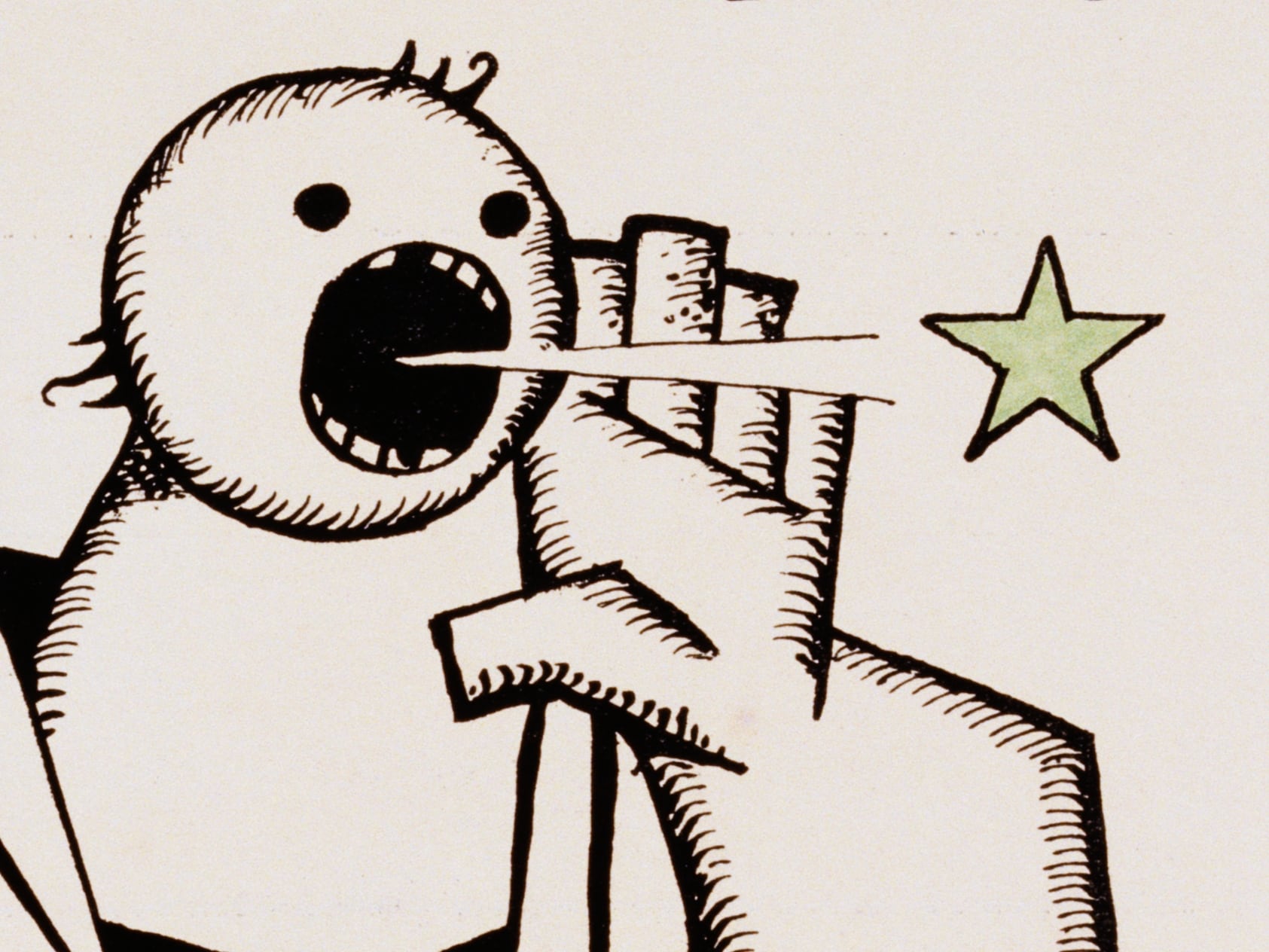
“Random seat? You’ll lose the window.” “The flight costs €15, we’re not going to give you a foot massage.” “You paid for a seat, not a throne.” Ryanair’s official Spanish account on X has posted messages like these over the past month. Far from causing outrage, they have become almost routine. The Irish low-cost carrier has long embraced an acidic, at times offensive, communication style. But it is not alone. Other brands such as U.S. burger chain Wendy’s or even language learning app Duolingo show that provocation has become a marketing lingua franca.
podrás haber reservado una mesa VIP en Ibiza, pero has volado con nosotros…
— Ryanair España (@Ryanair_ES) May 18, 2026
The term rage bait — chosen as word of the year by the University of Oxford — refers to content specifically designed to provoke anger and thus gain reach. The new advertising language has incorporated this concept in its many forms. On one hand there is the more playful, mocking side: the rogue community manager model — those who run brands’ and institutions’ social accounts — epitomized by Ryanair, which gains relevance by responding to customers with cynicism and joining social media trends. On the other hand there is the more controversial approach that appeals to real, latent conflicts.
Sydney Sweeney’s career still bears the mark of a campaign she starred in last summer for American Eagle, which played on the pronunciation of jeans (the denim advertised) and genes. The ad was sharply criticized for making light of racism at a particularly fraught moment in the United States. In that same country, banners from Artisan, an artificial intelligence company, recently went viral with a blunt message: “Stop hiring humans.”
These kinds of strategies are known as prankvertising. José Prudencio Santamarina, a PhD in advertising and a professor of creativity and digital marketing at universities including Camilo José Cela in Madrid, says that although the tactic is by no means new, it has accelerated in recent years. “Brands are fighting for the scarcest thing people have now, which isn’t money but attention. In this landscape of ‘infoxication’ — intoxication from information overload — and endless scrolling, the old mantra ‘better to be talked about badly than not at all’ is truer than ever,” he explains. “They no longer compete only within categories — Coca‑Cola versus Pepsi — but against everything that captures attention: Coca‑Cola versus Adidas, Netflix, influencers, WhatsApp groups, or famous pop groups.”
“This attention‑economy context — in which content is consumed on demand via subscription models without advertising and ad blockers are proliferating — forces brands to rethink how they connect with their audiences,” he adds. In a polarized ecosystem like today’s, especially on social media, this reconnection often comes through confrontation. Lulu Cheng Meservey, a strategic communications guru behind brands such as Shopify and the blogging/newsletter platform Substack, published a manifesto on her own Substack titled Be blunt, in which she broke with conventional practices to free this new kind of marketing. “Those who are stubborn, unconventional and confrontational should not be sugarcoated for fear of upsetting established interests,” she argued. Meanwhile, under the headline “You may hate these companies’ ads. That’s the point,” The Washington Post ran a piece months ago analyzing the reasons behind the rise of this advertising trend.
“Recent research shows that content evoking two emotions — such as anger and anxiety — gets much more audience engagement than content using other approaches,” journalists Tatum Hunter and Nitasha Tiku wrote. However, this logic clashes with the psychological principle of habituation, according to which our response wanes or disappears when we constantly face the same stimulus. In 2026, the era of meticulously planned social media controversies feels distant and audiences are increasingly less impressionable. So it is fair to ask: do these strategies still generate the same interest?
A little pleases, a lot tires
Fernando de Córdoba, a branding expert, commentator, and author of The Secrets of Brands (Kailas Editorial, 2022), values the shock produced by the provocative style of those early community managers: “It was quite a surprise; we were used to brands addressing us formally on special occasions — a leaflet or a TV ad — and then they began talking to us 10 times a day in a very personal way. People received it quite well.” The problem arrived when brands piled on this disruptive tone. De Córdoba distinguishes a brand’s voice, which should be consistent, from its tone, which adapts to context. “Many brands, like [supermarket chain] Alcampo, jumped on the bandwagon without being clear whether that tone contradicted their own voice. In other cases it made more sense: Ryanair has never been known for treating customers exquisitely. It can be coherent, but I don’t think it’s a good solution. Constantly reminding people they fly with you because they can’t afford anything else, I think, borders on humiliation,” he adds.

This moral limit is also generational. The irony and cynicism of early Twitter were an unmistakable sign of the millennials, but after official accounts — even those of the police or the Spanish Civil Guard — adopted that tone, Generation Z developed a different sensitivity. Video and reels replaced Twitter text and brands moved toward Instagram and the irreverent, absurd tone that thrives there. Yet even so, they don’t always manage to capture the attention of younger people.
Gema Bonales Daimiel, a PhD in advertising and a professor at the Complutense University of Madrid, argues that audiences today are more sensitive about setting boundaries. “Audiences are now adept at spotting when a brand is forcing virality or using provocation gratuitously. The public may celebrate a joke one day and harshly criticize it the next if it perceives the brand has crossed an ethical line, ridiculed the consumer, or trivialized a real problem,” she says.
These limits take on special importance at a time when polarizing institutions such as Donald Trump’s administration are adopting the same provocative tone and the same strategy of joining viral trends that brands once embraced. For example, ICE’s anti‑immigration raids were promoted with a Pokémon‑style slogan — “Catch them all” — and in the war in Iran the strikes of Operation Epic Fury were compared to video games like Call of Duty or GTA.
“A few years ago, irreverence could be rewarded in itself; now there is more demand for coherence, authenticity, and responsibility. Rogue communication can work well when there is strategic intelligence behind it, when the tone fits the brand and when the audience understands the humorous pact. But if it becomes contempt, arrogance, or mere pursuit of engagement, it can backfire on the brand,” Bonales warns.
Sign up for our weekly newsletter to get more English-language news coverage from EL PAÍS USA Edition



Brasil – Marruecos: Mundial 2026, En Directo | Comienza El Primer Gran Partido Del Torneo
The Mercadona Shopping Trap That Could Be Making Your Food Bill Higher Without You Realising

Histórico Empate Del Qatar De Lopetegui Ante Suiza


-

 %2 weeks ago
Fake Hacienda Text Targets Taxpayers
-

 Uncategorized2 weeks ago
Montoya vs Brundle BEEF, Newey
-

 Africa1 week ago
Europe Enters The ‘era Of Deportations’
-

 Foreign demand2 weeks ago
German Demand For Spanish Property Cools After A Strong Run
-

 Alberto Fujimori6 days ago
Peru’s Roberto Sánchez And Keiko Fujimori Urge Caution As Vote Count Continues In Very Tight Presidential Election
-

 %2 weeks ago
Major Strike In Portugal To Cause Widespread Disruption To Air And Rail Travel
-

 Uncategorized1 week ago
Max Verstappen F1 future hangs in the balance as three teams block 2027 rule changes
-
 Barcelona1 week ago
Spain, A Country Of 50 Million People With Infrastructure For 40 Million: ‘The Cracks Are Starting To Show’