
Barcelona
Italian Tourist, 21, Fighting His Life In Coma After Brutal Gang Attack Outside Barcelona Nightclub

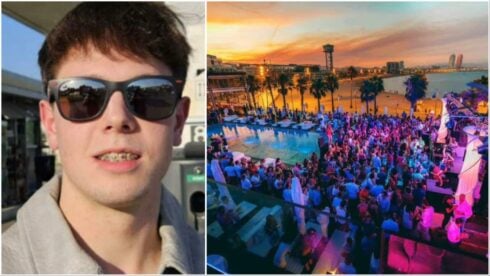
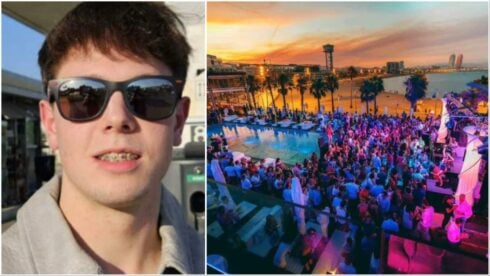 AN Italian tourist has been left fighting for his life in an induced coma after a brutal gang attack outside a Barcelona nightclub. Nicola Maggiotto, 21, was sucker-punched from behind








Barcelona
FROM THE ARCHIVES: ‘I Saw How Catalunya Celebrates St George’s Day… I Wish England Would Take A Page Out Of Their Book!’

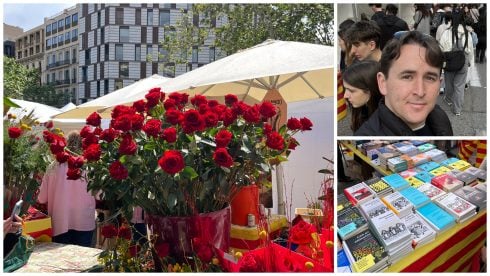
 ALTHOUGH England and Catalunya have the same patron saint, attitudes towards celebrating the historic tale of St George could not be more different. For many proud Catalans, Dia de Sant
Barcelona
‘The Eiffel Tower Is A Suppository Riddled With Holes’: When Great Monuments Aren’t To Everyone’s Liking


If the line between the sublime and the ridiculous is thin – according to the maxim attributed to Napoleon (among others) – in some examples of architectural projects, that line is never even crossed. Everything can coexist: in reality, it just depends on who’s passing judgement. Where many people see an artistic and structural marvel, others may find the grandiose or conventional nature of a design to be jarring, or on the contrary, that it is too modern.
It’s no coincidence that the monuments included in this selection were originally conceived in the last quarter of the 19th century, a critical moment for Western architecture. In the midst of the Industrial Age – while engineering promised a future of iron, steel and glass – much of Europe, perhaps as a reaction, continued to dream of medieval cathedrals, vanished empires and national glories. At the same time, the triumph of Art Nouveau (or modernism) was just beginning, with its undulating forms suited to a bourgeois taste, right when social revolutions were erupting. Suddenly, politics influenced everything, even in the field of architecture.
In this context, rife with conflict and contradictions, buildings as diverse as the Eiffel Tower, the Sagrada Familia, the Sacré-Cœur Basilica, the Altar of the Fatherland, Neuschwanstein Castle and the Almudena Cathedral emerged. All of them have had staunch defenders, but there are also detractors who, for various reasons, have considered them – above all – to be monuments to bad taste.
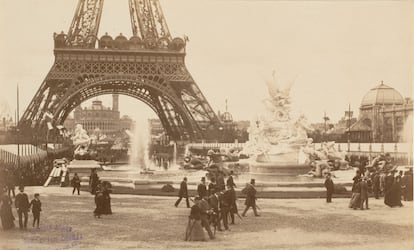
Eiffel Tower, Paris (designed by Maurice Koechlin, Émile Nouguier, Stéphen Sauvestre and Gustave Eiffel, built between 1887 and 1889)
Few examples are more representative of this phenomenon than the Eiffel Tower, which was relentlessly attacked by the most conservative voices during its construction. Today, it’s often dismissed as a mere cliché, worthy of postcards. For one reason or another, this marvel of engineering and iron architecture from the late 19th century has continued to gain enemies, while its mere sight automatically evokes the city of Paris (a destination that receives almost 50 million visitors each year). Originally, the tower was one of the side effects of the 1889 Paris Expo, which commemorated the centenary of the French Revolution. Above all, however, it proposed a new aesthetic repertoire, stemming from another revolution that was reaching its peak: the Industrial Revolution.
In 1887, as soon as construction began, an open letter was published, signed by more than 40 intellectuals. The list included the writer Guy de Maupassant and the composer Charles Gounod; Alexandre Dumas Jr (the son of the famous novelist and author of the decidedly not revolutionary The Lady of the Camellias); the painters Messonier and Bouguereau, as well as the architect Charles Garnier, designer of the opera house that bears his name. Garnier’s neo-Baroque and Beaux-Arts style was much more to the group’s liking.
“[…] the Eiffel Tower that even the commercial Americans didn’t want, will without a doubt dishonor Paris,” the letter declared. Many other notable voices criticized the construction, though rarely with the wit of J.-K. Huysmans, author of the decadent novel Against Nature (1884). He wrote that the tower had the “resemblance to scaffolding,” describing it as a “funnel-shaped piece of wire-netting” and a “lonely suppository full of perforations.” This foreshadowed the worst accusation of all: “It is truly of a disconcerting ugliness and it isn’t even enormous!”
Almost a century and a half later, it’s difficult to find criticisms along those same lines. We can deduce that what many once considered to be an aesthetic aberration has now been universally accepted, in a battle won by the engineers Eiffel and Koechlin, along with their architect accomplices. However, the Eiffel Tower’s inevitable appearances in films and television series set in the City of Lights – as well as its excessive reproduction as a souvenir – have ultimately blurred the distinction between the original craft and the kitsch byproduct of capitalist consumer culture. Furthermore, the Eiffel Tower accurately symbolizes the suffocating process of touristification, which the main European capitals are subjected to.
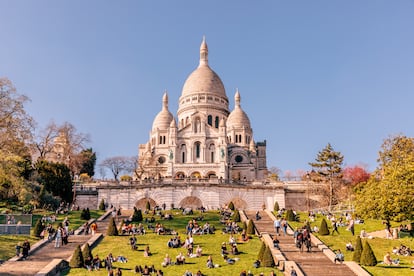
Sacré-Cœur Basilica, Paris (designed by Paul Abadie, constructed between 1875 and 1914)
There’s a hilarious scene in Luis Buñuel’s film The Phantom of Liberty (1974), in which a bourgeois couple – having just intercepted some pornographic postcards that a depraved man has handed to their young daughter – inspect the gift with a mixture of excitement and disgust. But it turns out that the images depict a different kind of obscenity than they had expected: instead of sexual positions, a series of architectural icons parade before their eyes. Finally, the ultimate indecency is reached, preventing them from looking any further. They end up tearing the postcard to pieces in horror: “Oh no, what depravity, this is too much!” The image is of the Sacré-Cœur.
The Sacré-Cœur Basilica of Montmartre – which dominates Paris from the hilltop neighborhood – is one of the city’s main tourist attractions, but also a monstrous neo-Byzantine pastiche that’s been attacked from all sides since the beginning of time and for a variety of reasons.
Émile Zola called it “the Basilica of the Ridiculous,” sarcastically asserting that it must be the penance imposed by the Catholic Church on France for the liberties attained during the Revolution. Although its theoretical intention was to rekindle national pride after the debacle of the Franco-Prussian War and the Siege of Paris (1870-71), it was no coincidence that it was built in the neighborhood of Montmartre, where the Commune uprising had begun in 1871, only to be brutally crushed. Thus, most critics of the day agreed that this building embodied the most antiquated and reactionary values, while its aesthetic appeal was also debated. There was talk about the strangeness of a Byzantine-looking UFO sitting in the middle of Paris, with the dazzling effect of its white travertine facade making it resemble a giant custard cake.
Georges Clemenceau – the atheist and anticlerical statesman – seemed to have a personal vendetta against the basilica, trying to halt its construction on several occasions (unsuccessfully, of course). The anti-Sacré-Cœur attitude of the French left has remained strong ever since, as evidenced by the open animosity expressed during his lifetime by Lionel Jospin, the Socialist politician who served as prime minister of France from 1997 to 2002, under President Jacques Chirac. If he could have demolished any building in Paris, this basilica would have been the prime candidate.
A citizens’ movement opposed its classification as a historical monument, which nevertheless occurred in 2022. This decision was described by another progressive politician – Jean-Luc Mélenchon, a two-time candidate for president and leader of La France Insoumise, the largest left-wing party in the country – as glorifying the murder of the revolutionaries of the Paris Commune.
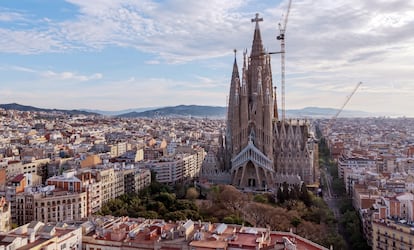
The Sagrada Familia, Barcelona (designed by Antoni Gaudí, under construction since 1882)
In a recent interview with EL PAÍS, Spanish journalist Jordi Amat ironically stated that “the Sagrada Familia – our Sacré-Cœur – is the eighth wonder of the world.” It’s easy to see why. The Parisian basilica began to be built just a few years before the Barcelona one, and the degree of fascination that both inspire in tourists is similar. So, too, is the fury of the criticism they’ve received.
In his autobiographical book, Homage to Catalonia (1938), George Orwell wrote outright that the Sagrada Familia was “one of the most hideous buildings in the world.” He criticized the Spanish anarchists (who had cultivated a reputation for destroying churches during the Spanish Civil War) for their “bad taste” in not blowing it up when they had the chance.
Similarly, Spanish author and journalist Josep Pla defined Gaudí as a “Wagnerian monster of architecture.” He later elaborated: “La Pedrera (the last private residential building designed by Gaudí) on Passeig de Gràcia [in Barcelona] is German music in granite. Wagner, in his era, wanted to [create] the [total work of] art […] and Gaudí wanted to build the anti-Pantheon… that is, the Pantheon of invertebrates. That’s the state of the world today!” Pablo Picasso, for his part, also didn’t particularly appreciate Gaudí’s work.
The criticism has continued since then, because Gaudí left the work unfinished, with numerous design details undefined. While some have advocated for the project to remain incomplete, the institutional view has prevailed. And so, the very long construction process continues.
In the 1960s, Le Corbusier and Alvar Aalto – among others – signed a petition requesting that the work be left unfinished, or that a new architect take over. And, much later, authoritative voices in the field of architecture – such as Oriol Bohigas and David Mackay – echoed this. For Bohigas, who died in 2021, the posthumous completion of the building has made Barcelona “the most reactionary city in Europe.”
The latest chapter in this sprawling saga arrived with the recent inauguration and blessing of the central Tower of Jesus Christ, coinciding with the centenary of Gaudí’s death. Pope Leo XIV presided over the ceremony, which was accompanied by a light and drone show of questionable aesthetic value.
As for Gaudí’s architectural style in general, debates continue about whether it’s absolutely sublime or a dizzying display of excess. But perhaps it’s unnecessary to choose, if we heed the pronouncement made by Salvador Dalí (an admirer of the architect): “Those who have not tasted his superbly creative bad taste are traitors.”
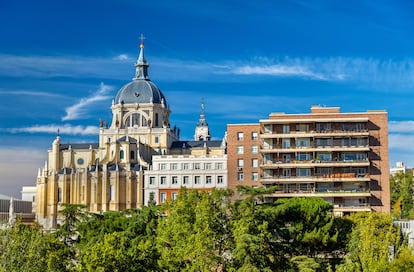
The Almudena Cathedral, Madrid (Fernando Chueca Goitia, Carlos Sidro, Francisco de Cubas and Enrique María Repullés, 1883-1993)
Some say that, actually, Spain’s Sacré-Coeur is really Madrid’s Almudena Cathedral, an argument which is also defensible, especially given the shared aesthetic characteristics (both have large domes and notable grandeur). However, in this case, it’s more difficult to find a balance between proponents and detractors, as the scales tip decisively toward the second group.
Conceived to honor the patron saint of Madrid, it was King Alfonso XII who laid the first stone in 1883. The project would last more than a century – including long pauses – which led to significant changes in the architectural approach. Its intended style was neo-medieval, in the vein of the French architect Eugène Viollet-le-Duc. At least, this was the vision put forward by the Marquis of Cubas, the cathedral’s original architect.
In the end, however, the classical pastiche prevailed, supposedly to avoid clashing with the adjacent Royal Palace. And there were clear nods to the Habsburg imperial style, highly-valued by the Franco regime (hence those 200-foot towers with slate spires). Chueca Goitia, the architect who oversaw this phase, defended his creation, asserting that the people of Madrid really liked it regardless of the critics’ opinions.
Despite the classical façade, the interior adheres to the planned Gothic revival, complemented by a Neo-Romanesque crypt. And, in addition to this unbalanced combination, the stained-glass windows and murals of its apse stand out. This was the handiwork of Kiko Argüello, founder of the Neocatechumenal Way, an ultraconservative Catholic Movement. He made the religious artworks in a style that resembled Byzantine iconography.
In his short story, Fallen from Grace, the Spanish novelist Javier Marías – a declared detractor of the building – referred to “the dreadful Almudena,” an “abject and newfangled” cathedral. He even had the protagonist of his novel, Your Face Tomorrow, Volume Three: Poison, Shadow and Farewell (2009), utter the following:
“The ‘eyesore’ was the Almudena or museum of ecumenical horrors, the ghastly modern cathedral, largely the work of Opus Dei or so it seems, with a statue of the Polish Pope outside, totus tuus, with a bulging forehead, worthy almost of Frankenstein’s monster, and arms flung wide as if he were about to dance a jota; and this, though hideous, is perhaps the least of the uglinesses, because there are, among other monstrosities, some monstrous stained-glass windows made by an unimaginable artist called Kiko (Kiko something-or-other), well, nothing good can come from a man with a name like that.”
In an article for El Confidencial, a Spanish newspaper, art critic Fernando Castro Flórez declared: “It’s a complete eyesore, an architectural monstrosity that crushes the Madrid skyline.” Following this, José María Blanco Corredoira – author of a book translated as Madrid is Beyond Repair (2007) – offered a solution to lessen the cathedral’s overwhelming presence: “Perhaps it could be covered with a canvas, as Christo did with the Reichstag,” referring to a temporary public art installation in Berlin, held in the summer of 1995.
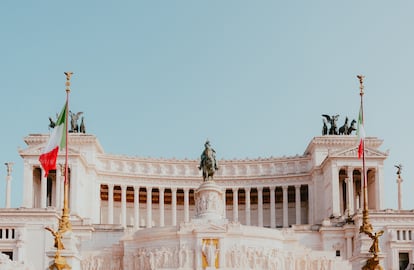
The Victor Emmanuel II National Monument, or Altar of the Fatherland, Rome (designed by Giuseppe Sacconi, built between 1885-1935)
Today, this monument is popularly known in Italy as the macchina da scrivere (“the typewriter”), which is a touch of poetic justice in the land of Olivetti, especially considering that the device has been obsolete for decades.
Built in Rome after the death of King Victor Emmanuel II of Savoy – the first monarch of a unified Italy – it was inspired by the immense altars of the classical world, such as the Altar of Zeus at Pergamon. Its construction required the demolition of a large group of surrounding buildings, including the cloisters of the Convent of Santa Maria in Aracoeli – deconsecrated since Napoleonic times – and many other structures of medieval and Renaissance origin. These demolitions were the subject of much criticism. They became a highly-publicized political issue in Italy, which did little to improve the altar’s popularity.
Predictably, the fascist regime later adopted the monument as a national symbol and the stage for many of its mass rallies, which also contributed to its political significance. Thus, after World War II, it was even proposed that the monument be demolished: it was already perceived as an anachronistic work, an immense wedding cake for the banquet of the imperial past.
In the 1980s, the renowned historian Bruno Zevi followed the tradition (not uncommon for this type of monument) by suggesting the use of dynamite. However, in recent times, there’s been a desire to redefine “the typewriter” – it was restored and made accessible to the public at the beginning of this century. Today, the general view about the memorial is perhaps more serene.
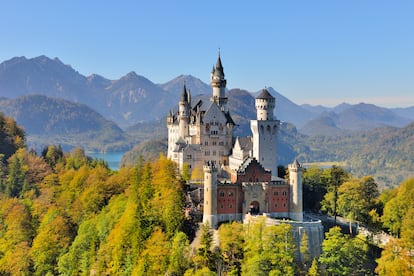
Neuschwanstein Castle, Bavaria (designed by Christian Jank, built between 1869-1892)
The fact that this place served as the main model for the castle in Disney’s Sleeping Beauty (1959) should tell us something. So should the fact that its creator, Christian Jank, wasn’t even an architect: he was a painter and theatrical set designer.
Neuschwanstein Castle was a personal project of King Ludwig II of Bavaria. He died in 1886 at the age of 40, ruined by the financial demands of this bottomless money pit, without even having seen his creation completed. Its design – inspired by Wagner’s operas – reflects a clear idealization of authentic medieval castles. And it also brings together a formal repertoire from different periods, combining Byzantine, Romanesque and Gothic elements.
The structure’s predominantly gray exterior contrasts sharply with interiors that are painted in almost-psychedelic colors. At the same time, it incorporated all the modern comforts of the era (because living in a castle doesn’t mean you have to live like the Middle Ages, without electricity or running water).
After several attempts, in 2025, it was finally declared a UNESCO World Heritage Site, as part of a group that also included the historicist castles of Linderhof, Schachen and Herrenchiemsee. These are also located in the Bavarian Alps and were also built under the initiative of the so-called “Mad King.”
Alexander Wiesneth is the head of architectural research at the institution that manages Bavaria’s state-owned palaces. He admits that these castles have always occupied a place “between kitsch and art.” Bavarian Minister-President Markus Söder celebrated the UNESCO achievement, calling it a “fairy tale come true.” But he also noted that the castles combine art and culture with their fair share of “kitsch and cliché.” Along the same lines, the castle has been described as a “Romanticism theme park.”
Is Neuschwanstein Castle a distillation of the Bavarian essence, or a grand monument to the most reactionary nostalgia? Once again, it proves difficult to separate the two schools of thought. So, perhaps we should conclude that this is a false dilemma in a world where everything is possible, everywhere.
Sign up for our weekly newsletter to get more English-language news coverage from EL PAÍS USA Edition

Feijóo Carga Contra Puente Por “señalar A La Corona” Y Lo Tacha De “tabernario”

“No Tiene Rival”: La Freidora De Aire De Cristal Más Buscada Baja A Su Precio Mínimo Histórico

Gothic Glory: A Ruined 17th-Century Catalan Farmhouse Has Been Rescued From The Brink By An American TV Star


-

 Uncategorized2 weeks ago
Lewis Hamilton hits gold with $10bn jackpot but British star snubs Monaco move: F1 News Recap
-

 Uncategorized2 weeks ago
Racing star was destined for F1, now he
-
airport threat2 weeks ago
Explosive device on drone sparks major German airport investigation
-
Mallorca2 weeks ago
Palma mayor fights to keep TUI water bus project afloat
-
Latest1 week ago
EU Tells Meta, TikTok To Boost Monitoring, Fact-Checking
-
F12 weeks ago
The Grand Prix is back: Madrid prepares for its first F1 race in 45 years
-

 Alexandria Ocasio-Cortez2 weeks ago
Abdul El‑Sayed, Progressive Candidate In The Michigan Democratic Primary, Emerges As Likely Winner
-

 Bogotá1 week ago
Última Hora Del Terremoto En Colombia, En Directo | Al Menos 132 Muertos Y 570 Heridos Por El Seísmo De Magnitud 7,4