
Abelardo de la Espriella
José Manuel Restrepo: ‘Colombia Is An Almost Unconditional And Key Ally For The US To Achieve Its Goals In Venezuela’







Abelardo de la Espriella
Abelardo De La Espriella Embraces Trump’s ‘Donroe Doctrine’ As It Spreads Across Latin America

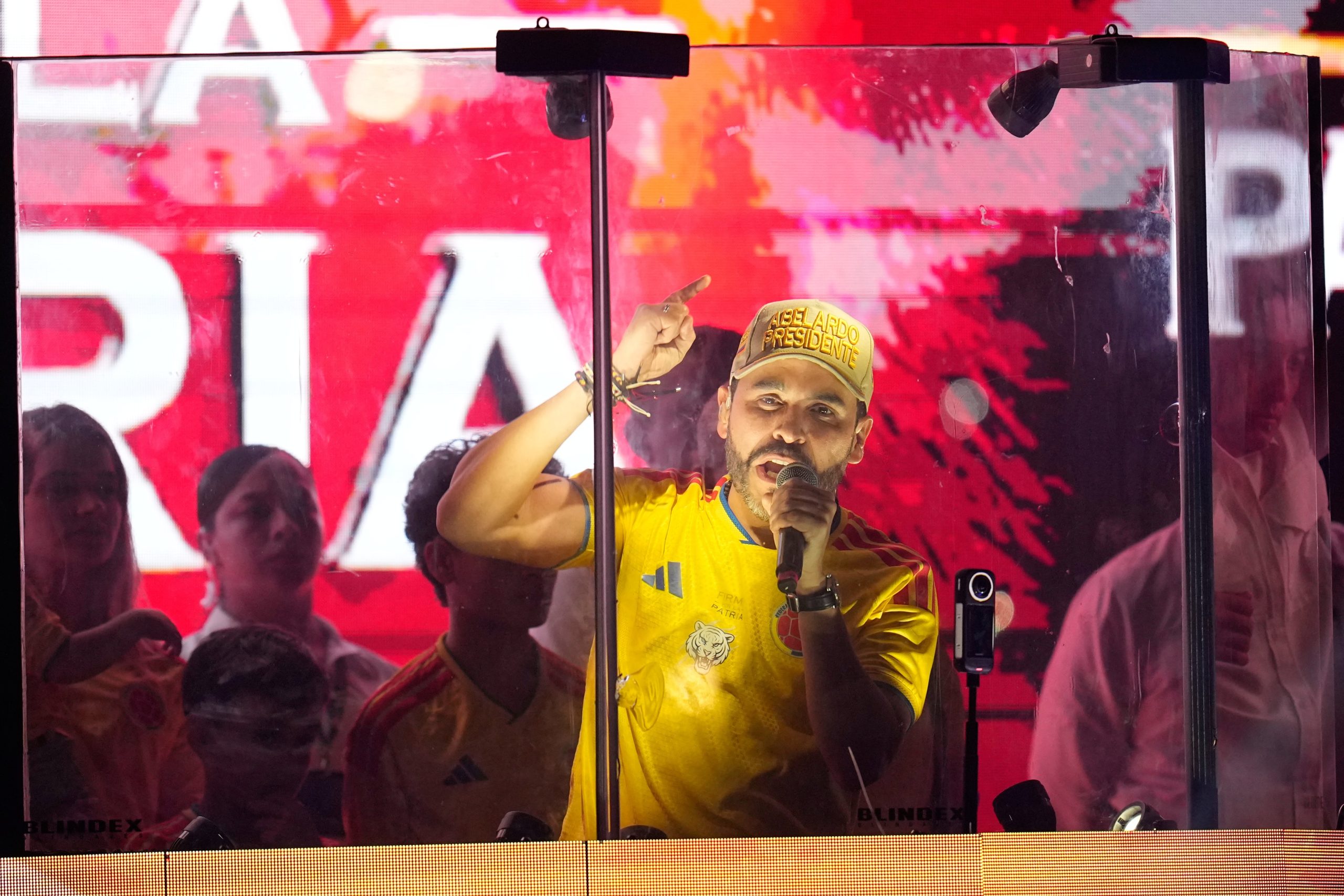
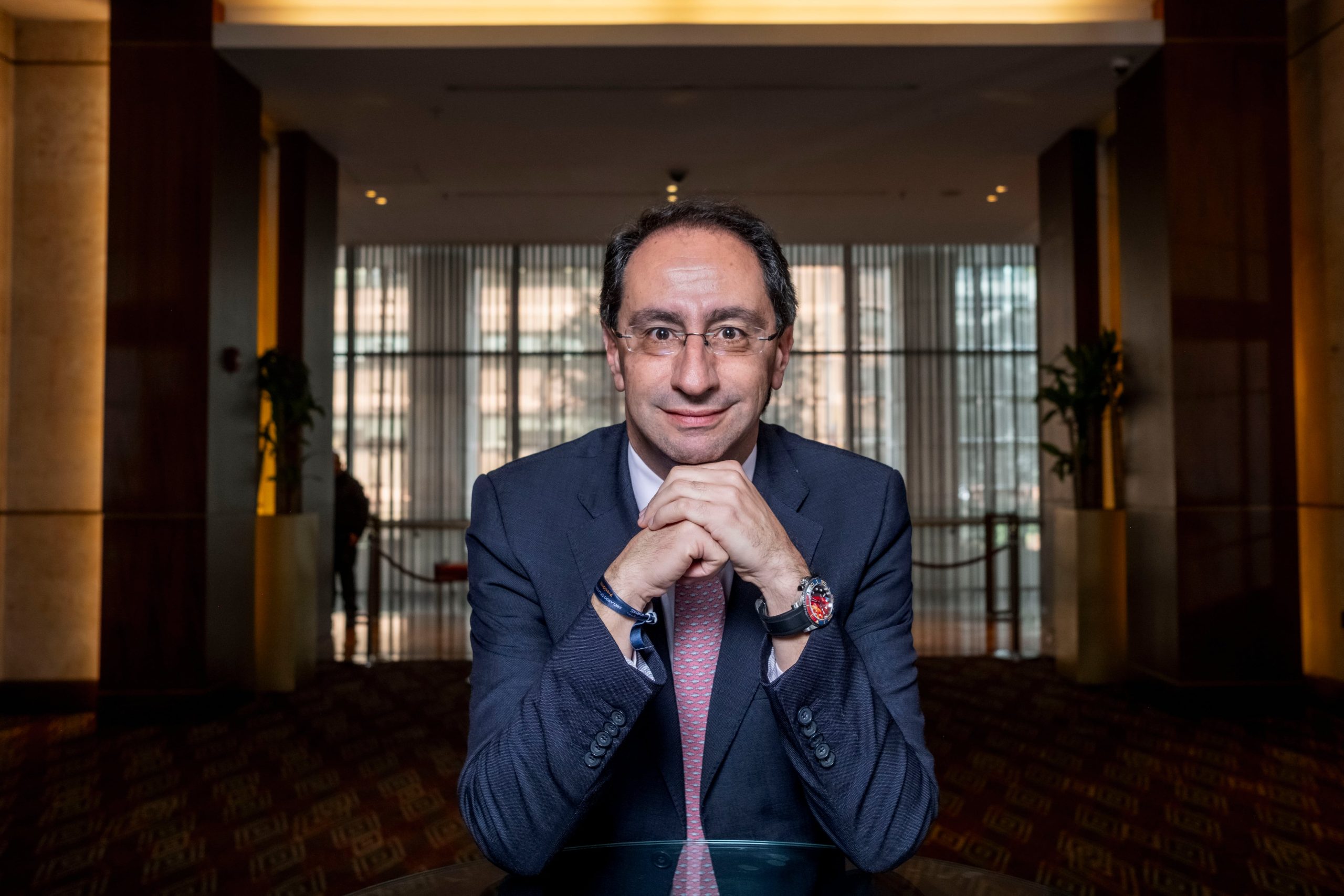
“The king.” That is the nickname Gustavo Petro has given Donald Trump. The outgoing Colombian president says there is a possibility that all of Latin America could end up “under the control” of the United States, he told the Italian newspaper Corriere della Sera this week during a trip to the Vatican. In just over a month, Colombia will cease to be seen by Washington as a “troublemaker” and will once again fall under its wing, as it has for decades. That will happen under Abelardo de la Espriella, who will take office as president on August 7 and has shown total alignment with Trump on security, economic and migration matters.
The international media is echoing the scenario to which Colombia is being added. The Economist calls it the “trumpification” of Latin America, a thesis similar to that of The Guardian: “Trumpism has gone transnational,” ran a recent editorial in the British paper. The White House occupant had already secured major allied victories in the region, such as in Honduras and Chile, but a greater prize was needed: regaining influence in Colombia, the world’s largest producer of cocaine and where, four years ago, the left won for the first time this century.
De la Espriella won the June 21 runoff by a narrow margin (less than one percentage point) over his rival, the left-wing senator and Petro ally Iván Cepeda. Trump claimed the victory with exaggerations and has secured a loyal partner. The far-right candidate proposes a hardline stance against criminals, aerial fumigation of coca crops and military cooperation aimed ultimately at stopping the production and export of the drug.
These initiatives align with the Trump administration’s National Security Strategy, presented in December. Washington’s plan has been to revive the old Monroe doctrine — “America for the Americas” in the sense of the 1970s, when President Richard Nixon opened a new era of U.S. interference in Latin America, its so-called “backyard.” With the so-called Donroe doctrine, the White House seeks to curb migration, “neutralize” drug cartels and reduce Chinese influence in the region. The first step in that direction was the creation of the Shield of the Americas, a coalition of ideologically like-minded countries to combat drug trafficking.

One of De la Espriella’s promises is to join this international alliance on his first day in office; countries such as Argentina, El Salvador, Ecuador and Chile already belong to it, all governed by right- or far-right administrations. It is the first step toward the full cooperation the Colombian has sought with Washington.
Elizabeth Dickinson, a researcher at the International Crisis Group, says the change will not be from zero to 100. “Contrary to what is believed, security cooperation remained almost the same under Petro. What is new is Washington’s focus on restoring its hegemony in the hemisphere, and that will create new priorities for which it needs Colombia,” she says. Among them are the urgency to launch attacks against criminal organizations and an acceleration of extraditions of their leaders.
In the final stretch of his term, Petro has tried to steer relations with the U.S. back on course, after they had been badly damaged politically and diplomatically. Also on a personal level, since the U.S. government revoked his visa and later included him on the so-called OFAC or Clinton list. In one of the measures that reveals that shift, the outgoing president announced this week that he would allow the extradition of Chiquito Malo, the leader of the Clan del Golfo, Colombia’s most powerful criminal group and with whom negotiations had been underway. Petro has also recently highlighted his administration’s progress in the fight against coca crops. Those are two of several signs meant to show that his government has maintained cooperation despite the bumps along the way.
If that is the case with the outgoing president, the incoming one boasts a hardline policy that fits the Trumpist vision. In a recent speech, De la Espriella gave criminal gangs 30 days to submit to justice before pursuing them with the full force of the state. “In my government there will be no generous offers or unacceptable concessions like those made by the regime that is coming to an end,” he said, declaring the total peace policy dead.
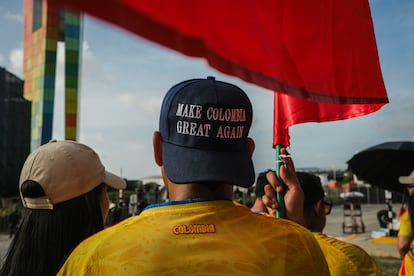
For the operations he promises, the far-right leader expects to count on support from the U.S. army and weapons, as he reiterated during the campaign. According to the expert Dickinson, it is unlikely that the U.S. will provide a large financial package on the scale of Plan Colombia from the early 2000s; instead everything points to more targeted collaborations like those Washington has already carried out with Ecuador or, recently, with Venezuela to kill the leader of the Tren de Aragua. “They can be positive tactically, but there can also be risks if the welfare of civilians living where these groups are present is not taken into account,” she warns.
Another key point on the Shield of the Americas agenda is migration. The Trump administration launched an intense crusade against immigrants in the U.S., and deportation flights have become a constant. Thus thousands of deportees arrive in Colombia every year, despite Petro’s attempts to curb it. Trump applied pressure with tariffs and won the battle, and it is expected that under De la Espriella they will maintain or even increase that pace. Ohio Senator Bernie Moreno, of Colombian origin, said that in a meeting with the president-elect it was agreed that “any Colombian who requests asylum should return to Colombia,” since, he argued, the new government “would guarantee their safety and protection.”
Perhaps the point of greatest friction will be efforts to reduce Chinese influence. Beijing has become a commercial ally of Colombia in recent years, to the point that Colombia joined the Belt and Road Initiative and signed several mega-infrastructure contracts with the Asian giant, such as the Bogotá Metro. De la Espriella’s team has said it will maintain the relationship with “a dose of pragmatism,” without yet detailing how that will translate into commercial or political terms.
The “king” that Petro alludes to has only two years left in office and faces midterm elections that could diminish his power in Congress and, therefore, his international influence. For now, he has placed his bets on a string of regional victories that will help him implement his neo-imperialist vision in Latin America.
Sign up for our weekly newsletter to get more English-language news coverage from EL PAÍS USA Edition

Cómo Regar Tus Plantas En Vacaciones: Cinco Soluciones Fáciles Para Que Sobrevivan Sin Ti

Cataluña Waste Scandal: 46,000 Tonnes Of French Waste Buried In Spain
Majestic Spain Stun France To Reach World Cup Final
Alhaurin el Grande and Coin launch historic 1.5 million kilo season for premium tomato

Cheap Flights And Mass Tourism Are Adding €3,800 To The Cost Of The Average Spanish Home, New Report Warns

Los Aficionados Al Ciclismo En Barcelona: “Que Venga El Tour De Francia Es Como Ir Al Mundial De Fútbol”


-
Alhaurin El Grande2 weeks ago
Alhaurin el Grande and Coin launch historic 1.5 million kilo season for premium tomato
-
 Business & Finance2 weeks ago
Cheap Flights And Mass Tourism Are Adding €3,800 To The Cost Of The Average Spanish Home, New Report Warns
-
 Antoni Gaudi2 weeks ago
Los Aficionados Al Ciclismo En Barcelona: “Que Venga El Tour De Francia Es Como Ir Al Mundial De Fútbol”
-

 Barcelona2 weeks ago
Spain Is Set To Be Swarming With Rock Legends This Weekend – Here’s What You Need To Know
-
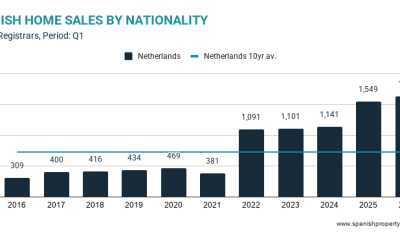
 Dutch demand1 week ago
Dutch Demand For Spanish Property Keeps Rising As Others Cool
-
4 billion fine2 weeks ago
Google loses €4.1bn EU fight over the apps Android users see first
-
Latest2 weeks ago
Conservatives And Far Right To Govern Spain’s Andalusia Region
-
fiestas del rocio2 weeks ago
Where are the crowds? Santa Ponsa venue change sparks criticism from community