Connect with us

%

K-EXPO Spain 2026 Brings The Hallyu Wave To Madrid This Summer

Published

on

k-expo-spain-2026-brings-the-hallyu-wave-to-madrid-this-summer

Madrid hosts major Korean expo with food, beauty and culture. Photo Credit: K-EXPO

This summer, Spain will experience the one of the largest Korean trade fairs in the world, right in the capital of Madrid: K-EXPO Spain 2026, a major event bringing together more than 100 Korean companies in celebration of the country’s gastronomy, culture, cosmetics, and entertainment, is coming to Madrid in mid-June.

The Spanish capital’s South Korean summer

The event, which has already become a major talking point in the United States, the United Arab Emirates, Japan, France, Canada, and more, is set to return to the shining capital of Madrid on June 12, for businesses and networking, and June 13, for the general public. It will take place at the Madrid Exhibition and Events Universe, in Chamartín. Not only this, the event will be completely free to attend, and is already expecting more than 5,000 visitors.

Korean entertainment, K-Beauty, and a whole lot of food: The Hallyu Wave comes to Madrid

More than 100 Korean companies will participate in this major cultural and entertainment event, more than 50 of which specialise in the food and beverage industry. The ‘K-Food’ aspect will be a major draw, as Korean restaurants in Spain surge in popularity, and many Spanish restaurants are incorporating Korean flavours into their cuisine, including ingredients like kimchi (spicy fermented vegetables) and gochujang (a savoury, sweet, and spicy fermented condiment).

Some major and popular gastronomic draws of the exposition will include drinks like Korean teas, kombucha, specialty coffees, artisanal soju, traditional liquors, functional and protein drinks; healthy food like ginseng, fermented products, honey, algae, vegan products and supplements; snacks and gourmet products like appetizers, seaweed, red ginseng, fermented vinegar, condiments and premium convenience products; Korean confectionery including traditional sweets, cookies and rice cakes; ready-to-eat products, and traditional Korean dishes. 

Another major draw of the K-EXPO Spain trade fair will be the K-Beauty experiences. As one of the most lucrative markets, Korean skincare will be a talking point at the fair, with businesses exhibiting popular products. Those who attend will be able to take part in experiences, including receiving personalised skincare routines and AI-assisted skin diagnosis, as well as products like cellulose masks, ampoules, serums, and LED phototherapy devices.

Visitors will also be treated to various workshops during the fair, including doenjang and gochujang making, a kimchi demonstration with master craftsmen, and a free premium photobooth experience.

A chance for networking and connections to major Korean brands

The event will be a chance for consumers as well as companies to create greater ties with Korean businesses and contribute to the Hallyu Wave (the increasing popularity of Korean culture and products on a global scale). K-EXPO Spain 2026 is set to establish Madrid as a key hub for Korean connections in Southern Europe. 

Those interested in attending the event, either as representatives for a business aiming to network with Korean companies, or as a member of the general public, can register on the event’s official website, kexpospain.com/es

%

Spain Confirms V16 Warning Lights Expire

Published

on

spain-confirms-v16-warning-lights-expire

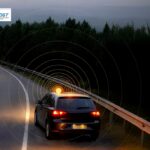
Spain’s connected V16 warning lights became mandatory for drivers on 1 January 2026. Credit : DGT.es

A lot of drivers in Spain bought the new V16 emergency warning lights thinking they were basically a modern replacement for the old warning triangles.

Buy it once, leave it in the car and forget about it.

Turns out it is not that simple.

Spain’s traffic authority, the DGT, has now confirmed that the connected V16 devices eventually expire because of the SIM card installed inside them. And if drivers fail to replace outdated or non approved models in the future, they could end up facing fines of between €80 and €200.

The clarification came after growing confusion around the devices and whether they had an expiry date at all.

During a recent press conference, DGT director Pere Navarro initially said the lights did not expire. Moments later, he corrected himself and explained that they effectively stop being valid after around 11 years because that is when the internal SIM card reaches the end of its service life.

That detail caught many people off guard.Especially because the old emergency triangles could sit in the boot of a car for years without anybody really thinking about them unless they became damaged.

The new devices work very differently.

Why Spain’s V16 lights are connected to the DGT

The entire point of the V16 system is connectivity.

Unlike the old reflective triangles, these warning lights communicate directly with the DGT’s traffic platform through a built in SIM card. Once activated during a breakdown or accident, the device can send the vehicle’s location automatically to traffic authorities.

The idea is that nearby drivers can then be warned much faster about a stopped vehicle ahead.

And to be fair, the safety logic behind the system is easy to understand.

For years, one of the biggest dangers during roadside breakdowns came from drivers having to get out of the vehicle and walk along roads or motorways to place warning triangles properly.

That becomes especially risky at night, during heavy rain or on fast moving roads.

The V16 beacon was supposed to solve that problem.Instead of walking down the road carrying triangles, drivers simply place the flashing light on the roof of the vehicle and remain close to the car.

That is the reason the DGT has defended the system so strongly despite the criticism surrounding it.

But because the device relies on connectivity, it also behaves more like a piece of technology than a traditional safety tool.

It depends on batteries.It depends on a SIM card.

And eventually, according to the DGT itself, it needs replacing.

Many drivers are questioning whether the new system is really better

That is where the debate has started becoming more heated.

Some drivers fully support the move away from triangles and believe the connected lights are genuinely safer. Others feel the system has introduced unnecessary complications for something that used to be very straightforward.

Part of the frustration comes from the fact that many people assumed the V16 light was a permanent purchase.

Now they are discovering it has a limited lifespan.

There have also been complaints about other aspects of the devices. Some motorists questioned their brightness, others raised concerns about durability in bad weather and some criticised the fact that batteries need checking regularly to guarantee the device still works properly.

At one point, there was even controversy surrounding unofficial maps allegedly showing the location of connected beacons online, which triggered privacy concerns among some users.

That controversy helped fuel suspicion around a system many people already viewed as overly technological.

Still, the DGT is making one thing very clear : The connected V16 lights are staying.

Spain’s traffic authority says drivers must already be using approved V16 devices

Pere Navarro also reminded drivers during the press conference that the connected V16 system is already in force in Spain and that motorists are expected to carry approved devices connected to the DGT platform.

That means not every beacon sold online necessarily complies with Spanish regulations.

Drivers must use homologated models capable of connecting to the DGT 3.0 traffic system, which allows authorities to receive the vehicle’s location automatically during a roadside emergency or breakdown.

And yes, the fines are real.

According to the DGT, motorists carrying non approved devices could face penalties of around €80. If the warning light is not used correctly during an emergency situation or breakdown, the fine could reportedly increase to €200.

Even though the 11 year lifespan sounds long, the announcement still changes how many people see the product.

The old triangles were passive objects. You bought them once and they simply existed in the background for years.

The V16 lights are different. They belong to a newer generation of connected driving equipment where even emergency devices now depend on telecommunications systems, batteries and digital infrastructure.

And honestly, that reflects what is happening across modern motoring in general.

Cars themselves are becoming increasingly connected and software dependent. Safety systems that once worked mechanically are now tied to apps, sensors, updates and data platforms.

For some drivers, that feels reassuring and modern. For others, it feels like ordinary driving is slowly becoming more expensive, more monitored and more complicated than it used to be.

Either way, millions of motorists in Spain are eventually going to have to adapt because the old warning triangles are gradually disappearing and the V16 system is becoming the new normal on Spanish roads.

Continue Reading

%

New Studies Link Common Food Additives To Cancer, Diabetes And Heart Disease Risk

Published

on

new-studies-link-common-food-additives-to-cancer,-diabetes-and-heart-disease-risk

Researchers highlighted the large sample size and repeated dietary measurements as key strengths. Photo credit: Serg Grbanoff/Shutterstock

Three new large-scale epidemiological studies have found associations between the intake of specific food additives and an increased risk of type 2 diabetes, cancer, cardiovascular disease and hypertension.

The findings are based on data from the NutriNet-Santé cohort, a French population study following more than 100,000 adults who regularly report detailed dietary intake using repeated web-based food records.

The research was carried out by teams from Inserm, INRAE, Sorbonne Paris Nord University, Université Paris Cité and CNAM.

Findings published in major medical journals

According to Inserm, the results were published in three peer-reviewed journals: Diabetes Care, European Journal of Epidemiology and European Heart Journal.  The studies examined exposure to three main groups of additives: synthetic food colourings, artificial sweeteners, and preservatives, all widely used in processed and ultra-processed foods.

Researchers reported statistically significant associations between higher consumption of some of these additives and increased risk of chronic disease outcomes, after adjusting for diet quality and lifestyle factors.

Data drawn from long-term dietary tracking

Exposure estimates were based on repeated 24-hour dietary records collected over several years.

Participants in the cohort logged thousands of food and drink items, which were then cross-referenced with food composition databases identifying additive content in commercial products. The dataset included more than 100,000 participants and millions of dietary records, allowing researchers to estimate long-term exposure to individual additives and mixtures of additives.

Colourings, preservatives and sweeteners analysed separately

The studies separated additives into specific functional categories rather than treating them as a single group. One of the key findings was a link between synthetic food colourings and an increased risk of type 2 diabetes.

These colourings included additives such as E102 (tartrazine), E110 (sunset yellow), E122 (carmoisine), and E124 (ponceau 4R), which are commonly used in soft drinks, confectionery and processed foods. Preservatives linked to cancer and cardiovascular disease

A second group examined was preservatives, particularly those used in processed meats and packaged foods. These included nitrites and nitrates (E249–E252), commonly used in cured meats such as bacon, ham and sausages, as well as other preservation agents used to extend shelf life in packaged products. Researchers reported associations between higher intake of these preservatives and increased risk of both cancer and cardiovascular disease outcomes.

Artificial sweeteners included in metabolic risk analysis

A third category involved artificial sweeteners, widely used in sugar-free products. These included aspartame, acesulfame-K, and sucralose, which were analysed in relation to type 2 diabetes risk and other metabolic outcomes.

Results varied depending on the compound, with some showing stronger associations than others.

Combined exposure also assessed

Researchers also examined combined exposure to multiple additives, reflecting real-world dietary patterns where individuals consume mixtures of colourings, preservatives and sweeteners.

Higher combined exposure was associated with increased risk of several chronic diseases, although the strength of association varied between outcomes.

Disease outcomes tracked over long follow-up

One study focused on cancer incidence over several years of follow-up. It found associations between higher intake of certain preservatives, particularly nitrites and nitrates, and increased incidence of cancers including breast and prostate cancer in subgroup analyses.

A separate analysis focusing on type 2 diabetes found associations with both synthetic colourings and certain sweeteners. Cardiovascular analysis also identified links between some preservatives and increased risk of heart disease and hypertension.

Not all additives showed consistent associations

Researchers stressed that not all additives studied showed measurable relationships with disease outcomes.

Some compounds showed no statistically significant association after adjustment for confounders such as smoking, alcohol intake, physical activity, age and overall diet quality. The authors emphasised that dietary patterns as a whole may play a larger role in disease risk than any single additive.

Study design and population details

The NutriNet-Santé cohort was launched in 2009 and is one of the largest ongoing nutritional epidemiology studies in Europe. Participants provide repeated dietary records several times per year, allowing researchers to assess long-term dietary exposure. Health outcomes are tracked through self-reported medical data and linkage with national health databases.

Strengths and limitations

Researchers highlighted the large sample size and repeated dietary measurements as key strengths. However, they also acknowledged limitations, including possible measurement errors in self-reported food intake and the inability to fully rule out residual confounding.

The findings are therefore observational and cannot establish direct cause-and-effect relationships.

Scientific interpretation and wider context

Researchers emphasised that results should be interpreted within the context of overall dietary patterns rather than individual foods or additives in isolation. They called for further experimental research to investigate biological mechanisms, particularly involving long-term exposure to additive mixtures.

Previous work from the same cohort has already linked ultra-processed food consumption with increased risk of chronic diseases.

Public health relevance

The studies contribute to ongoing debate about the health impact of processed foods and food formulation practices. Researchers stated that while associations were observed, this does not mean all additives are harmful, but some may require further evaluation.

Conclusion of findings

The studies provide new evidence of associations between specific food additives, including synthetic colourings (E-numbers such as E102 and E110), preservatives (nitrites and nitrates E249, E252), and artificial sweeteners (aspartame, acesulfame-K and sucralose), and increased risk of chronic diseases.

Although causation has not been established, researchers say the consistency of findings across large population datasets warrants further investigation into long-term dietary exposure and health outcomes.

Continue Reading

%

Fuengirola Feria Redesigned Without Motorhomes

Published

on

fuengirola-feria-redesigned-without-motorhomes

Newly painted spaces not thought of for motorhomes. Credit: David White

Fuengirola council teams have cleared motorhomes and caravans from the Feria grounds and repainted all parking and market stall markings with stricter dimensions to stop oversized vehicles.

None of the fresh spaces measure large enough for a motorhome, so none can park legally inside the lines anymore. Motorhomes or caravan towers that attempt overnight stays by crossing the designated lines could receive fines reaching €200.

Motorhome bone of contention

Neighbours in surrounding flats have been voicing complaints for years over the site operating as an unofficial and free camping ground without proper facilities, particularly for grey water discharge that creates unpleasant smells and potential hygiene hazards in the neighbourhood.

Motorhome websites continue to recommend Fuengirola Feria grounds as a free overnight parking spot even after these updates took effect. Motorhomers, while welcome holidaymakers in Fuengirola, will now have to find legal pay sites to camp at.

Feria grounds gain over 700 regulated parking bays

Services from Fuengirola Council push forward with the council parking plan through reorganisation at the Feria grounds. This work supplies more than 700 units for car parking and adds to nearly 500 created earlier in the mandate for a running total above 1,200 spaces.

Mayor Ana Mula inspected the road markings and stated that the Feria grounds always acted as a major parking zone but never received proper regulation or ordering. Teams examined methods to use the asphalt patches at the entrance where fairground attractions normally locate, plus the edges of central and lateral streets.

Changes in the central zone around the casetas have now introduced one-way traffic heading to the Palacio de la Paz, while parking becomes possible on both road sides. Mula said that these modifications will make 700 parking places available for local residents and bring the overall figure close to 1,200 from fresh actions and reorderings such as this in Fuengirola.

Additional parking expansions planned for coming months

Works begin shortly on the initial phase of Montaña del Deporte in Los Pacos to introduce 56 extra spaces in that district.

Designs also include over 1,000 parking spots under the future Santa Fe-Antonio Basilio stadium in Los Boliches once the licensing contracting finishes.

Fuengirola residents at the end of their tether with motorhomes and caravans taking over

Continue Reading

Trending

Copyright © 2017 Spanish Property & News