
Donald Trump
La Policía Británica Detiene A Cinco Sospechosos Por Manejar Explosivos Cerca De La Base Militar Aérea De Fairford







Andy Burnham
La Policía Británica Libera Bajo Fianza A Los Cinco Detenidos Por El Presunto Intento De Atentado Contra Una Base Militar

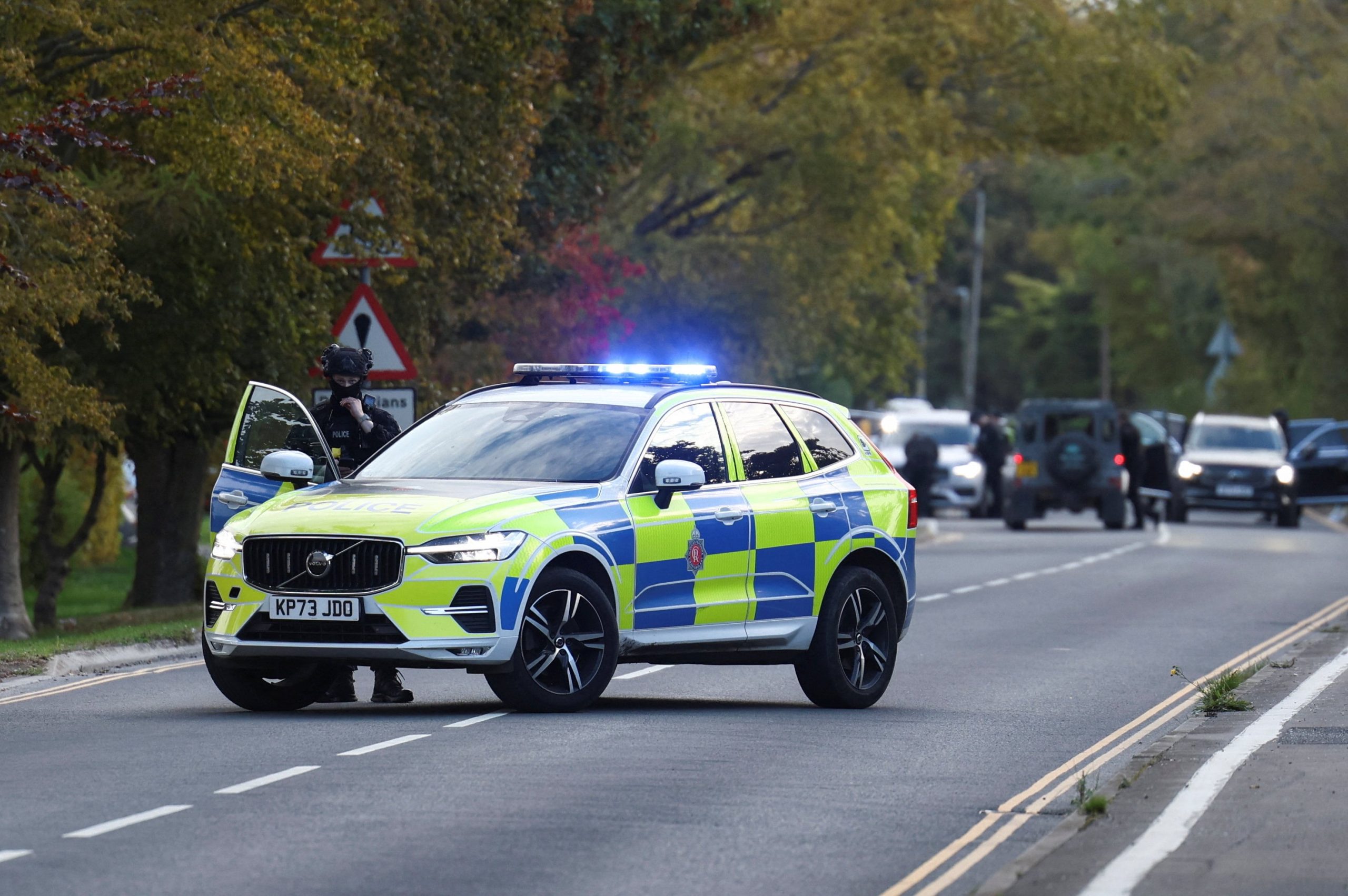
El Gobierno británico, la policía, el departamento antiterrorista y el resto de cuerpos implicados en la investigación del presunto atentado terrorista contra la base militar aérea de Fairford, desarticulado este domingo, se resisten a desvelar identidades, motivos o patrocinadores de los cinco sospechosos arrestados, en una investigación que todavía se halla en sus fases iniciales. Pero la sombra de Irán sobrevuela este incidente. El equipo que encabeza las pesquisas maneja esa hipótesis como una de las más realistas, aunque en estos momentos mantengan otras muchas líneas abiertas.
Los detenidos tienen todos nacionalidad británica, con edades comprendidas entre los 23 y los 25 años y residentes en distintos barrios de Londres. New Scotland Yard ha anunciado este lunes por la tarde que todos ellos han sido puestos en libertad bajo fianza, “con medidas cautelares estrictas”, y que “siguen bajo la investigación policial”.
Donald Trump, que horas antes había celebrado las detenciones (y sugerido la colaboración de Estados Unidos en la operación, para proteger su personal en la base militar), se mostraba “sorprendido” por la liberación de los sospechosos y afirmaba que su país “no los habría liberado”.
“Soy muy consciente de los niveles de especulación surgidos en torno a la motivación detrás de este incidente, y de las cuestiones geopolíticas que ha suscitado. Pero, a estas alturas de la investigación, pido que se dé a la Policía Antiterrorista espacio para trabajar de modo meticuloso y claro”, ha pedido este lunes Vicki Evans, la subcomisaria adjunta al frente de ese departamento.
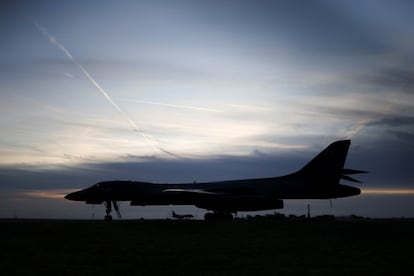
La base militar localizada en el condado de Gloucestershire ha sido utilizada en los últimos meses por cazas de combate estadounidenses para participar en la ofensiva bélica contra Irán. Y el ministro británico de Asuntos Exteriores, Ed Miliband, advirtió la semana pasada a su homólogo iraní, Abbas Araghchi, durante un breve encuentro en Nueva York, que “el Reino Unido no iba a tolerar intimidaciones, amenazas o actividades hostiles en su territorio”. Los servicios de seguridad sospechan que la mano de Teherán está detrás del atentado que provocó el incendio de varias ambulancias pertenecientes al servicio de emergencias Hatzola, de la comunidad judía de Golders Green, en Londres. O detrás del incendio provocado en una estación eléctrica en julio.
La base militar de Fairford ha sido usada por cazas militares estadounidenses como parte de su operación bélica contra Irán, que comenzó el pasado 28 de febrero. Aunque en un principio el Gobierno británico del anterior primer ministro, Keir Starmer, denegó a la Administración de Donald Trump la autorizaón para el uso de sus bases, en una decisión posterior dio luz verde a ese uso siempre que fuera para la realización de acciones defensivas. A ojos de Teherán, ese matiz resulta irrelevante, y considera a Londres cómplice de la ofensiva.
En julio también, la Guardia Revolucionaria Islámica de Irán señaló la actividad en Fairford, y advirtió de que “cualquier base usada para la agresión contra el territorio de Irán constituye un objetivo legítimo para nuestras fuerzas”.
La embajada de Irán en Londres ha rechazado categóricamente cualquier sugerencia de la implicación de su país en el incidente. En su cuenta de la red social X ha asegurado que “condena firmemente las especulaciones malintencionadas y sin fundamentos publicadas por algunos individuos y medios británicos”, y añade: “La difusión de especulaciones fabricadas como esas, especialmente tras los actos criminales de agresión cometidos por Estados Unidos y el régimen israelí contra el pueblo iraní, solo logrará alimentar la ‘iranofobia’ en el Reino Unido.
Al anunciar la liberación bajo fianza de los sospechosos,la policía ha señalado que los supuestos hechos delictivos que están investigando podrían haber sido cometidos por “individuos que eran o no conscientes de que estaban trabajando en nombre de un estado extranjero”.
Una extraña coincidencia
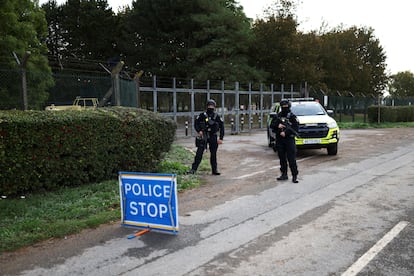
La policía intervino, según la versión oficial, después de que una vecina, que no ha sido identificada, advirtiera de la presencia en la zona de un grupo de cinco hombres camuflados con sus capuchas, que maniobraban alrededor de tres furgonetas en las cercanías de la base militar. Al verla, ha contado a la BBC, todos huyeron campo a través.
Sin embargo, horas después de que se hiciera pública la operación, el presidente de Estados Unidos, Donald Trump, celebraba ante la prensa la captura y daba por sentado que británicos y estadounidenses estaban sobre la pista. “Ha sido un trabajo fantástico. Los teníamos bajo investigación, y pretendían causar serio daño a nuestras instalaciones. Trabajar con los británicos ha sido estupendo”, dijo en Chicago. “Llevábamos mucho tiempo siguiendo su rastro y ya les hemos pillado”.
El ministro británico de Defensa, Wes Streeting, admitía de modo indirecto esta versión a primera hora de la mañana en la BBC, al agradecer su esfuerzo a la ciudadana que dio la alerta, pero matizar al mismo tiempo que su versión era solo “una imagen parcial” de lo ocurrido, sugiriendo de ese modo que las detenciones no habían sido fruto de la coincidencia.
Los cinco sospechosos están acusados de varios delitos conectados con la Ley de Explosivos y con la Ley Antiterrorista, y la normativa británica permite hasta 14 días de retención incomunicada en estos casos, aunque todos ellos han sido liberados poco más de 24 horas después de su arresto.
La Unidad de Policía Antiterrorista asumió desde el inicio la investigación, a pesar de que las primeras actuaciones corrieron a cargo de la Policía de Gloucestershire, convencida de que los detenidos se disponían a cometer un atentado terrorista.
La zona de los arrestos ha sido acordonada con un amplio perímetro de seguridad de más de 400 metros, y al menos 80 residencias han sido evacuadas. Todos esos vecinos pasaron la noche del domingo al lunes en casas de familiares o en un centro municipal habilitado al respecto.
Las imágenes aéreas mostradas por las televisiones y otros medios británicos a lo largo del fin de semana mostraron a un robot del equipo de artificieros de la policía inspeccionando las furgonetas. Los responsables del equipo de investigación han mostraron inicialmente su convicción de que el material incautado servía para la fabricación de explosivos, pero la liberación bajo fianza de los sospechosos ha dejado claro que no había en los vehículos ningún tipo de bomba.
La ministra del Interior, Shabana Mahmood, ha confirmada a media tarde del lunes que la zona del incidente “ya es segura”, y que, por tanto, había concluido la tarea de los articieros los vecinos evacuados podían comenzar a regresar a sus hogares.
Los detenidos pudieron ser vistos en el suelo, sentados y esposados, despojados de sus camisas, lo que indica que la policía quiso descartar desde un primer momento que portaran algún tipo de chaleco explosivo.
Las furgonetas aparentemente usadas para el intento de atentado llevaban el logotipo de una compañía energética, que ha lamentado en un comunicado que su nombre hubiera sido utilizado por los detenidos.
El primer ministro británico, Andy Burnham, que se encuentra en Liverpool para participar en el congreso anual del Partido Laborista, ha cancelado algunas de sus actividades previstas para seguir al minuto el desarrollo de la investigación. El Gobierno “adoptará siempre las medidas necesarias” para proteger a los ciudadanos, ha dicho Burnham, consciente de que se enfrenta a su primer grave desafío de seguridad desde que accedió a Downing Street el pasado julio.
El Gobierno ha organizado una reunión de su gabinete de crisis, conocido con el acrónimo COBRA, para media tarde de este lunes.

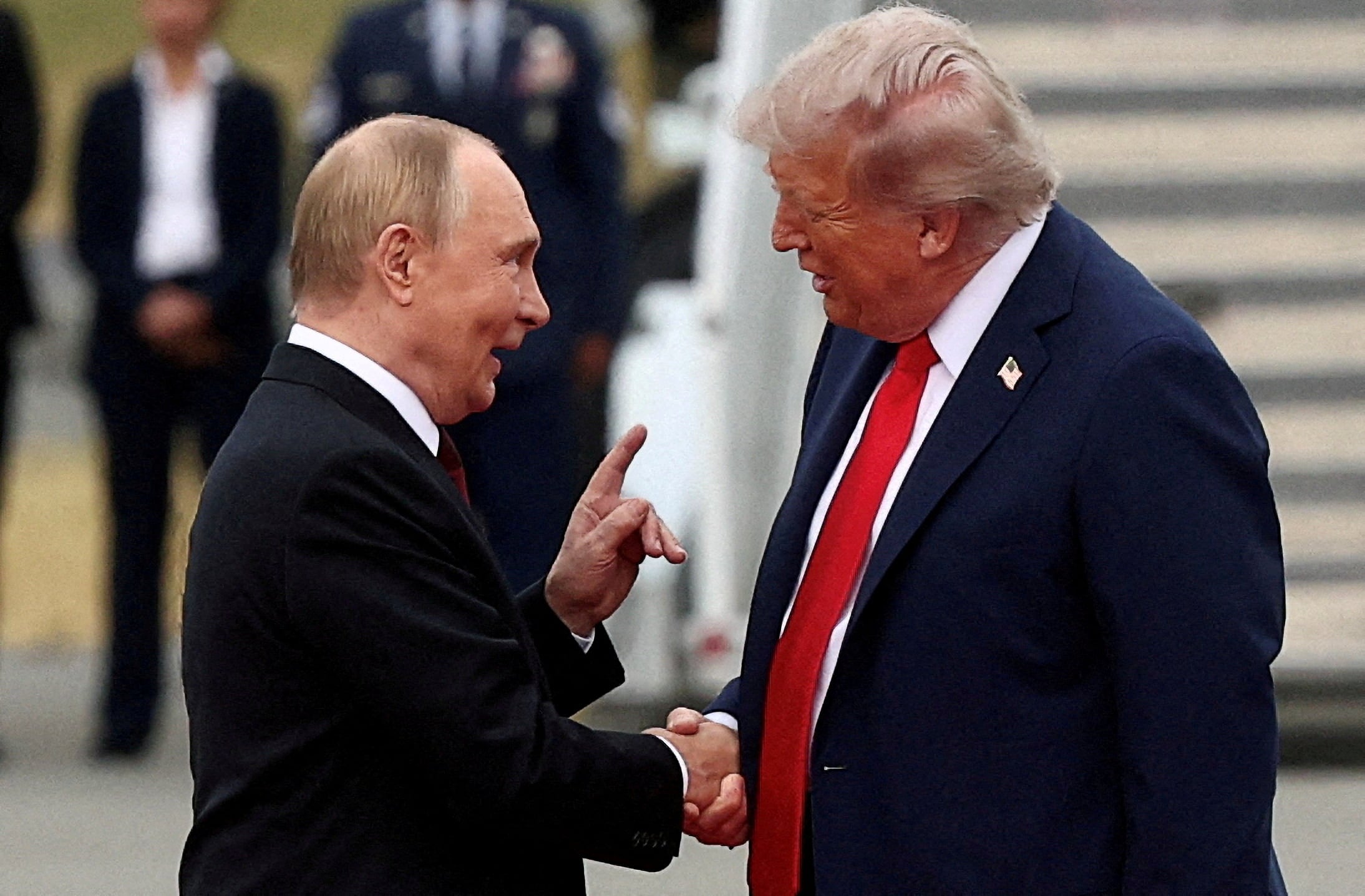
Vladimir Putin is in trouble. The war in Ukraine is not going well for him; casualties are mounting at an alarming rate; discontent in Russian society is growing amid serious economic hardships; and the Kremlin’s inner circle is becoming increasingly perplexed by their leader’s ineffectiveness. His response, for now, is the same as always: escalation. Against Ukraine, with more missiles; against his own citizens, with more repression; and against the EU, with attacks, threats, and provocations of various kinds — sabotage, cyberattacks, incursions — that are becoming increasingly bold and dangerous.
This latest strategy is driven by various motivations. One is to weaken the consensus in Europe behind support for Ukraine by fostering a sense of risk — the feeling that it is better not to get involved in trouble. With U.S. aid withdrawn, it is the EU that is propping up Kyiv’s defense, and for Putin, it is essential to break that pillar. Another motive is to sow discord and chaos within European societies, making them contentious and ineffective. Yet another is to create division within the EU, so that it does not move forward on the path to integration, which is its greatest strength. Putin perceives that he can escalate because Europeans lack a clear course of action in response. Concern over this drift toward Russian escalation is palpable in the public statements of leaders and diplomats from some European countries — and even more so in some private conversations.
It would be extremely naïve to underestimate these risks. Putin is, above all, a KGB operative, and he has a natural propensity to deploy these tactics. But the truly existential mistake is failing to connect this threat with the others coming from the world’s superpowers: the United States and China. They, too — albeit with different nuances — seek to dismantle or weaken the EU, and they act, using various tactics, to destroy or undermine it.
In the case of the United States, the issue is explicit. Washington’s new national security strategy bluntly states its intention to “cultivate resistance” to the EU, which it essentially describes as an adversary. In this case, the strategy involves attempts to provide political and technological support to Europhobic European nationalist groups. Trump’s toxicity has complicated the operation. The rejection he provokes in Europe is so widespread that many ultranationalists prefer to keep their distance. But there is room for moves to show support, and the platform provided by X remains skewed to their advantage.
It is no accident that J. D. Vance, in his famous speech at the Munich Security Conference in 2025, argued that the greatest danger to Europe is not Putin’s missiles but the alleged censorship of free speech — that is, actions to curb manipulations by the extreme right and by those who tilt the playing field in their favor. Nor is it any coincidence that the Trump administration wants to intervene to support Musk in a lawsuit before European courts over a fine imposed on X; or that, while considering withdrawing troops from Europe — thereby punishing certain countries — it is announcing possible new deployments agreed upon with friendly leaders — the president, not the prime minister, of Poland. What Trump, his supporters, and the tech magnates want is to dismantle the EU, which represents a regulatory and sanctioning force for containment and which keeps alive — even with its enormous flaws — an ideal of democracy and multilateralism that they abhor, preferring instead the law of force that works in their favor.
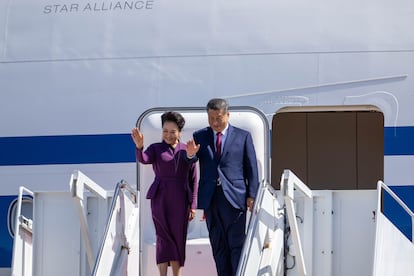
In the case of China, the matter is far more implicit. Beijing holds periodic summits with the EU and expresses interest in cooperating with it. It does not want the EU to suffer an economic downturn, since the bloc is a key customer for its exports. It wants Europeans to drift away from the U.S., and a certain degree of intra-European coordination serves that aim.
But only the naïve or the malicious fail to see that Beijing does not want a united, strong EU, because such a bloc could effectively confront it in its strategy of industrial domination; it prefers to divide and weaken us, and it does so in many ways.
China has been skillful in dealing with us one by one; it has provided lifelines to those who oppose the common project — most notably through massive investments in Viktor Orbán’s Hungary; it has exploited blind spots in the trade relationship to pump up its industrial muscle and destroy our industrial fabric through its talent and effort, but also through massive subsidies, dumping, forced transfers, or outright theft of intellectual property. In high levels of European politics there are those who believe that, among many other motives, China’s support for Russia in its invasion of Ukraine is also intended to wear down the EU, compelling it to commit itself to emergency defense instead of peacefully focusing on improving its competitiveness.
To think the three actions respond to a single, coordinated framework would be conspiratorial excess. But to ignore their contemporaneity, the multiplier effect of their coincidence, and the ease with which Trump courts Xi while inviting Putin to the G-20, would be suicidal folly.
It is equally reckless not to consider what this means given the whirlwind electoral calendar approaching in Europe. Citizens will decide. What is clear is that those three leaders — Putin, Trump and Xi — will be delighted if far-right forces that obstruct EU integration win.
Sign up for our weekly newsletter to get more English-language news coverage from EL PAÍS USA Edition


Mazarron Hosts Hydro-Fly World Championship With Crowds And Global Riders

Acampada En Sol Por La Vivienda, En Directo | Continúa La Negociación Entre El PSOE Y Sumar En Moncloa A Pocos Minutos Del Consejo De Ministros

Evicted Madrid Pensioner Can Return To Her Home Of 70 Years After Lawyer Strikes Deal With Property Owners

Maduro Ally Alex Saab Pleads Guilty In US Money-Laundering Case

How To Get A Tourist Rental Licence In Andalusia (Spain) – Step-By-Step Guide 2025

Detenido Un Hombre Por La Muerte De Una Mujer De 47 Años En El Distrito De Arganzuela De Madrid


-
 Alex Saab2 weeks ago
Maduro Ally Alex Saab Pleads Guilty In US Money-Laundering Case
-
 New Developments2 weeks ago
How To Get A Tourist Rental Licence In Andalusia (Spain) – Step-By-Step Guide 2025
-
 Arganzuela1 week ago
Detenido Un Hombre Por La Muerte De Una Mujer De 47 Años En El Distrito De Arganzuela De Madrid
-

 Coaching2 weeks ago
Svend Brinkmann, Psychologist: ‘If You Place Conditions On Forgiveness, Love Or Freedom, You Have Already Destroyed Them’
-
Best airlines2 weeks ago
Spanish airline Vueling named Europe’s best low-cost carrier for 2026
-

 Claudia Sheinbaum2 weeks ago
The Azcatitlan Codex Returns To Mexico From Europe After Nearly Two Centuries
-

 %2 weeks ago
Mallorca Property Overrun By Wild Goats
-
Latest2 weeks ago
Italy And Spain Extend Tit-For-Tat Border Checks In Wake Of Migrant Rush