
ElPais
Leo XIV’s Plan To Combat Child Sexual Abuse Remains A Mystery: ‘They’re Trying To Hold Him Back, And He Doesn’t Know Who He Can Trust’

EL PAÍS launched an investigation into child sexual abuse in the Spanish Catholic Church in 2018 and maintains an up-to-date database of all known cases. If you know of a case that has not yet been made public, you can contact us at abusos@elpais.es. For cases in Latin America, please write to abusosamerica@elpais.es.
───────────
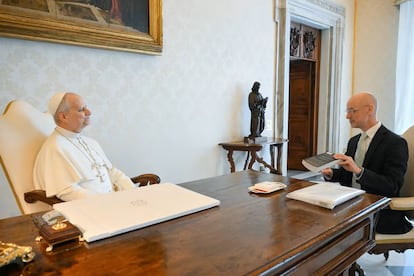
British journalist Gareth Gore, author of Opus, an investigative book about Opus Dei, went to meet Pope Leo XIV last March and handed him a dossier of documents detailing allegations of abuses of power, spiritual abuse and sexual abuse within the Catholic organization. But, as Gore has now recounted, the Pope’s reaction left him stunned.
“As I handed over the documents, the pope said something that left me stunned. ‘Thank you for bringing these,’ he said, before adding: ‘I’m going to lock them away in my room because, if I hand them to anyone around here, they will just disappear,’” Gore wrote in an article.
Then, he says, referring to Opus Dei, the pope pointed around the room and told him: “You know, these people are very powerful around here.”
Gore has now disclosed these details because eight months have passed since the meeting and, he says, nothing has changed. He believes the pope is being kept in the dark.
“I offered to help put him in touch with 100 or 200 former members and former leaders of Opus Dei who can help the church itself understand the problem. They haven’t responded. It’s as if they don’t want to know anything about it,” he explains over the phone. “It was very difficult for me to write the article because I wanted to strike the right tone. I didn’t want to directly criticize the pope, because I believe he genuinely wants to address these issues. But I think the problem lies in the church’s structure and in those who have spent years trying to avoid confronting these scandals. I believe there are many people trying to hold the pope back, and he doesn’t know who he can trust.”
It is a reflection that applies to the entire scandal involving abuse and child sexual abuse in the Catholic Church, church sources confirm.
Gore says that when he met with Pope Leo XIV, it was the pontiff himself who wanted the meeting to be made public. It was the first strong, clear indication that he wanted to get to the bottom of serious allegations of abuse. This was all the more significant given that Opus Dei itself had accused the book of being full of falsehoods.
“I still believe his compassion was genuine,” says Gore. “However, I also came away with the unsettling impression of a man surrounded by powerful interests. Perhaps that explains the gap between his public promises and the church’s response to the allegations against Opus Dei. But it cannot justify it.”
The future of Opus Dei is one of the thorny issues Francis left for Leo XIV to address. The Argentine pope curbed the organization’s power and ordered it to rewrite its statutes. His death left the process unfinished, and Opus Dei finally submitted its proposal in 2025. But the new pontiff has yet to make a decision — one of the most eagerly awaited within the church.
There is a related dispute in Spain, where another unresolved issue pits the bishop of Barbastro-Monzón, Ángel Pérez Pueyo, against Opus Dei over control of the Torreciudad shrine, a spiritual stronghold of the organization.
“I told the pope that it is impossible to decide what should be done with Opus Dei because the church itself does not understand what it is,” Gore says. “It has never tried to speak to former members or victims. They don’t know what the problem is, and that makes it impossible to decide what should be done.” Asked to comment on Gore’s article, Opus Dei declined to do so.
EL PAÍS also personally handed the pope a USB drive last June, aboard his flight to Spain, containing extensive documentation on the scale of the child sexual abuse scandal in the Spanish Catholic Church. It included the six reports published by this newspaper since 2021, containing more than 800 testimonies; another report on cases in Latin America; and a list of seven cardinals, 61 bishops and 26 heads of religious orders in Spain accused of covering up abuse cases.
But there has been no response to that material either. In fact, there has been no response at all in five years, despite the documents having been submitted to the Dicastery for the Doctrine of the Faith over that period. The department is dominated by a bureaucratic outlook that views allegations with suspicion and has no direct contact with victims. Most of the Spanish Catholic Church has also consistently failed to respond to this newspaper’s requests for information. Since Robert Prevost became Pope Leo XIV in May 2025, nothing has changed.
A year and a half into his pontificate, the pope’s plan for addressing abuse in the church remains a mystery. Those who know him say he always takes his time when confronting a problem, studying it thoroughly before acting — but once he does, he acts decisively. On this issue, however, he has yet to make a move. There have been no changes to the law, the church’s structure or its methods. Nor has he delivered any notable speeches about the scandal.
The one clear sign of progress is the major Vatican investigation into abuse within the Sodalicio de Vida Cristiana, the ultraconservative Peruvian organization dissolved by Francis in 2025, shortly before his death. The current pope played a decisive role in that effort when he was bishop in Peru. Leo XIV has entrusted the investigation to a special commissioner, Spanish priest Jordi Bertomeu. It could set a precedent for addressing all forms of abuse, including financial misconduct, in other similar organizations.
But beyond that, victims are still waiting for something to change. Investigations continue to stall, and most end in disappointment. In Spain, where bishops make compensation payments only sporadically, there are extraordinary cases like that of Carlos, the fictitious name of a former seminarian from Toledo who has been waiting 17 years for a response after reporting abuse by a priest in 2009.
Both the Spanish Catholic Church and the Vatican offer no transparency whatsoever: no information is provided, and many cases are simply shelved or dismissed. And that is only the cases that make it to Rome. The rules continue to be flouted, and cases are not reported to the Dicastery for the Doctrine of the Faith.
The prevailing mood in the Vatican, as in the Spanish Catholic Church, is that the crisis is behind them and it is time to move on. One remark Leo XIV made in his first interview, shortly after becoming pope, looms large: “We can’t make the whole Church focus exclusively on this issue, because that would not be an authentic response to what the world is looking for in terms of the need for the mission of the Church.” His main concern, moreover, is to ease tensions within the church, and he knows this is a deeply divisive issue.
The pope has already made clear during his trips that this is not a priority for him, and his latest visit to Uruguay, Argentina and Peru has confirmed that impression. Spain was the first country he visited where the scandal was on the agenda, but he referred to it only in passing, and a meeting with victims was arranged under a veil of secrecy. With the exception of France, where the event was announced in advance and well-known victims attended before holding a news conference, the same pattern has been followed in Argentina and Peru.
Gareth Gore, in fact, has broken his silence after discovering that in Argentina, as in Spain, victims of Opus Dei were not invited to the meeting with the pope. “These meetings are tightly controlled by each local church. They select people who won’t cause controversy or engage in debate,” the journalist says.
In his view, the pope “cannot limit himself to being someone who listens with empathy.” “He has the authority to demand answers, compel cooperation and ensure that allegations are investigated independently. He must exercise that authority now,” Gore says.
A complaint involving the Augustinians, the pope’s own religious order
Meanwhile, the system remains a maze for those who dare to come forward. A case uncovered by EL PAÍS involving the pope’s own religious order, the Augustinians, is a telling example. Alicia, a pseudonym used to protect her identity, illustrates the secrecy and silence that surround religious orders. She reported being sexually abused by Father Álvaro Martín Fuente, a priest at the Augustinian-run Buen Consejo school in Madrid, where her siblings were students. The order learned of the allegations 16 years ago, covered them up and did nothing. Despite EL PAÍS publishing the case shortly before the pope’s arrival in Spain, the friar who covered it up, Agustín Alcalde, took part in Leo XIV’s meeting with Spanish Augustinians during his visit.
Alicia gave testimony to the order on May 12. More than six months later, she still has no information about her case or whether it has been forwarded to the Dicastery for the Doctrine of the Faith. She also points to “gaps and shortcomings” in the process. On July 13, the vicar general handling the case, Tomás Marcos Martínez, emailed her to say they were “nearing the end of the internal investigation” and that, “as is often the case, the accounts given by those who testified differ.” He therefore asked her to provide medical records showing her prescribed medication.
Alicia was astonished. She replied that those documents, including a psychological report, had already been submitted in March. She also told him she wanted the investigation to end because the process had been “an ordeal” for her. The vicar general replied that he was sorry and advised her to “move on.” “The best thing is to forget, try to rebuild your life and be happy,” she says he told her.
Last week, Alicia wrote to the vicar general again, asking for an update on her complaint and when it had been sent to the Dicastery for the Doctrine of the Faith. She also requested a case reference number or acknowledgment of receipt. The priest replied: “I can’t answer, not because I don’t want to, but because I don’t know. After the internal investigation, I gave my assessment (vote) to the provincial prior in July. He must then give his assessment to the prior general, who in turn must convey his opinion to the Vatican Dicastery.”
He added: “As you can see, it’s a somewhat complicated and slow process. Each person knows their own part; I don’t know what happens next.”
Alicia then asked for the prior general’s contact details, but the vicar replied that he could not “give her information about the other people involved in the process.” He urged her to trust them.
“How can I do that when they won’t even give me information they are required to provide under Article 164 of the Dicastery’s vademecum?” Alicia asks. This is happening within the pope’s own religious order.
Sign up for our weekly newsletter to get more English-language news coverage from EL PAÍS USA Edition









ElPais
‘Why Do You Think That You Could Do That?’: The ‘misogynistic’ Interview That Questioned Hailey Bieber’s Business Credentials

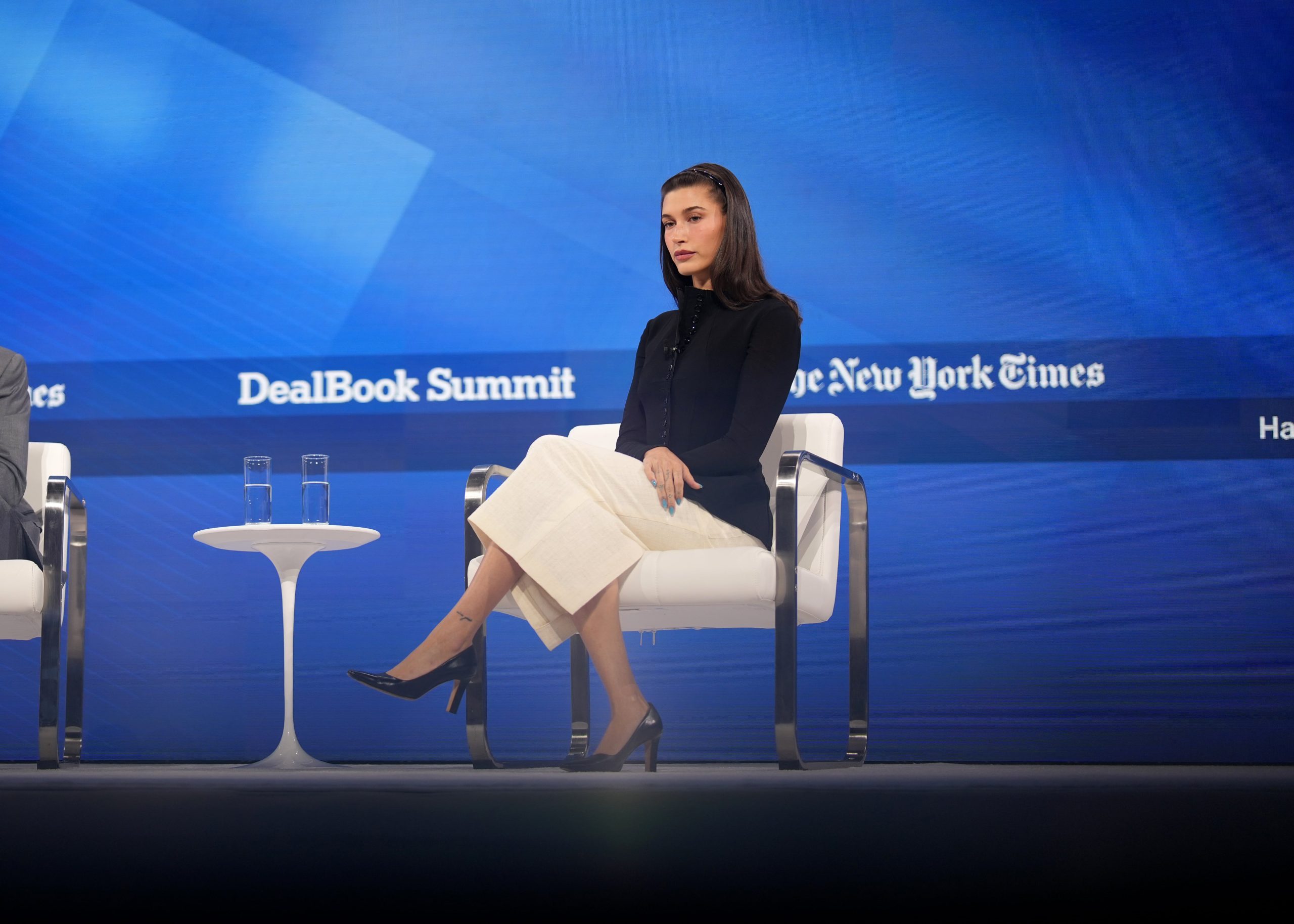
On Wednesday, November 18, model Hailey Bieber sat down with Andrew Ross Sorkin, columnist and founder of DealBook, a daily business and politics newsletter, for an in-depth conversation about the rise and fall of her beauty brand, Rhode.
Bieber’s presence (she is not only an entrepreneur and model, but also the wife of Justin Bieber) proved to be a major draw, even alongside speakers such as Elon Musk, Sam Altman of OpenAI, Satya Nadella, Microsoft’s CEO, and Zohran Mamdani. And her appearance did not disappoint, at least not social media users, who quickly turned the event viral for a variety of reasons, some more justified than others.
At first, much of the commentary focused on Bieber’s stylistic tribute to Carolyn Bessette-Kennedy. She wore a black wool-blend jacket from Yohji Yamamoto’s Spring/Summer 1998 collection, the same design Bessette-Kennedy had worn in June 1998 when she was photographed alongside John F. Kennedy Jr. at a charity event (fashion enthusiasts can be that specific). The internet, along with several leading fashion publications, became consumed with speculation over exactly where the coveted vintage piece had been sourced, especially after an identical jacket sold on The RealReal for $7,025 shortly before the DealBook Summit. It later emerged, following confirmation from her stylist, that the garment had been purchased from Tab Vintage.
The episode was both ironic and telling. When the entrepreneur in question is a woman working in a profession often dismissed as “frivolous,” discussion can quickly gravitate toward what she is wearing rather than what she is saying.
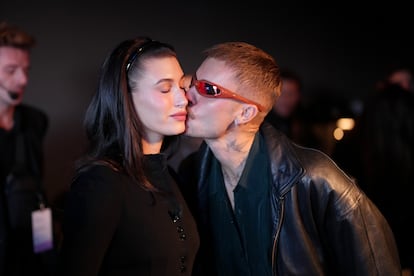
This annual summit brings together some of the most influential figures in U.S. business, finance, politics and culture for a series of live, onstage interviews, and it is not the first time it has featured high-profile celebrity guests. Previous editions have included personalities such as Kim Kardashian, Serena Williams and Gwyneth Paltrow.
What is unprecedented, however, is that both the interview’s perceived misogyny and the claims of Bieber’s incompetence became social media talking points and subjects of debate in the mainstream press.
Sorkin opened the roughly 20‑minute interview by introducing Bieber as something of a cultural force whose influence extends beyond the beauty industry and into the broader economy.
“We spent a lot of time at DealBook talking about people who shape the economy. And our next guest shapes the economy. But increasingly, some of the most consequential business stories, I think, begin with people who really also shape culture. And few people understand that intersection better than our next guest. Hailey Bieber,” he said.
The host then explained that, in 2022, Bieber launched a beauty brand called Rhode and that, less than three years later, it was acquired by e.l.f. Beauty in a deal worth up to $1 billion. It was a question about that figure that sparked much of the debate that followed. Sorkin asked whether the model had ever imagined Rhode would reach a $1 billion valuation. Patient but visibly nervous, she replied: “I said I would not sell it for less than that. […] That felt crazy. That’s like shooting for the stars.”
Sorkin then pressed her further, asking in a slightly mocking tone what had given her the confidence to believe she could achieve such a valuation. “Really? Why do you think that you could do that?” he asked. It was this final question, in particular, that set off a wave of commentary and debate.
Numerous Reddit threads, home to both Hailey Bieber’s fans and detractors, sprang up within hours of the interview. Bieber has long been the target of online smear campaigns since her relationship with singer Justin Bieber became public. Many supporters of Selena Gomez have accused the singer of leaving Gomez for Hailey Bieber (née Baldwin).
Some users objected to what they saw as misogynistic treatment from the journalist. “Does anyone else think this interview was really bad?” one Reddit user wrote in a post that drew more than 200 replies. “I’ve seen clips on IG [Instagram] and reactions on Twitter, and I just didn’t like it at all. The questions were awful — I don’t get how her team approved them. It honestly felt like the interviewer was mocking her. Maybe that’s just his style, idk, but the questions he asked other people were way better.”
Another user, whose post generated a similar number of responses, complained: “The interviewer was clearly misogynistic even if he is not in real life, that’s how he appeared in that entire interview.”
The trade publication Business of Fashion also devoted a lengthy article to the interview, gathering reactions from other founders of billion-dollar beauty brands, including Charlotte Palermino, co-founder of Dieux. Palermino argued that this kind of treatment is, unfortunately, common for women in the industry: “It is woefully uneducated in this industry to say, ‘Wow, a billion dollars for a beauty company?’ Beauty companies do it every day.”
However, on Reddit, the model’s critics were just as active, echoing a point made by a number of commentators on platforms such as Instagram: that Bieber appeared ill-prepared to answer detailed questions about business management and that her performance suggested Rhode’s success was not thanks to her efforts.
The Business of Fashion article also acknowledged that some of the criticism had merit. Its author noted that, when explaining Rhode’s success, Bieber often leaned on concepts such as manifestation and optimism rather than offering more technical or business-oriented explanations.
Beyond the beauty business, Bieber also reflected on her complicated relationship with social media. Although she has relied on these platforms to build both her public image and the universe surrounding her brand and growing beauty community, she acknowledged their potentially damaging psychological effects. Bieber spoke candidly about the hostility she has faced online and admitted how deeply the negative comments had affected her mental health. “I had people telling me to kill myself in the comments every single day,” she said.
Judging by the reaction that followed the DealBook interview, things do not appear to have improved very much.
Sign up for our weekly newsletter to get more English-language news coverage from EL PAÍS USA Edition
brad pitt
David Fincher, Filmmaker: ‘The AI Debate Masks A Culture War. It Has Nothing To Do With Movies’

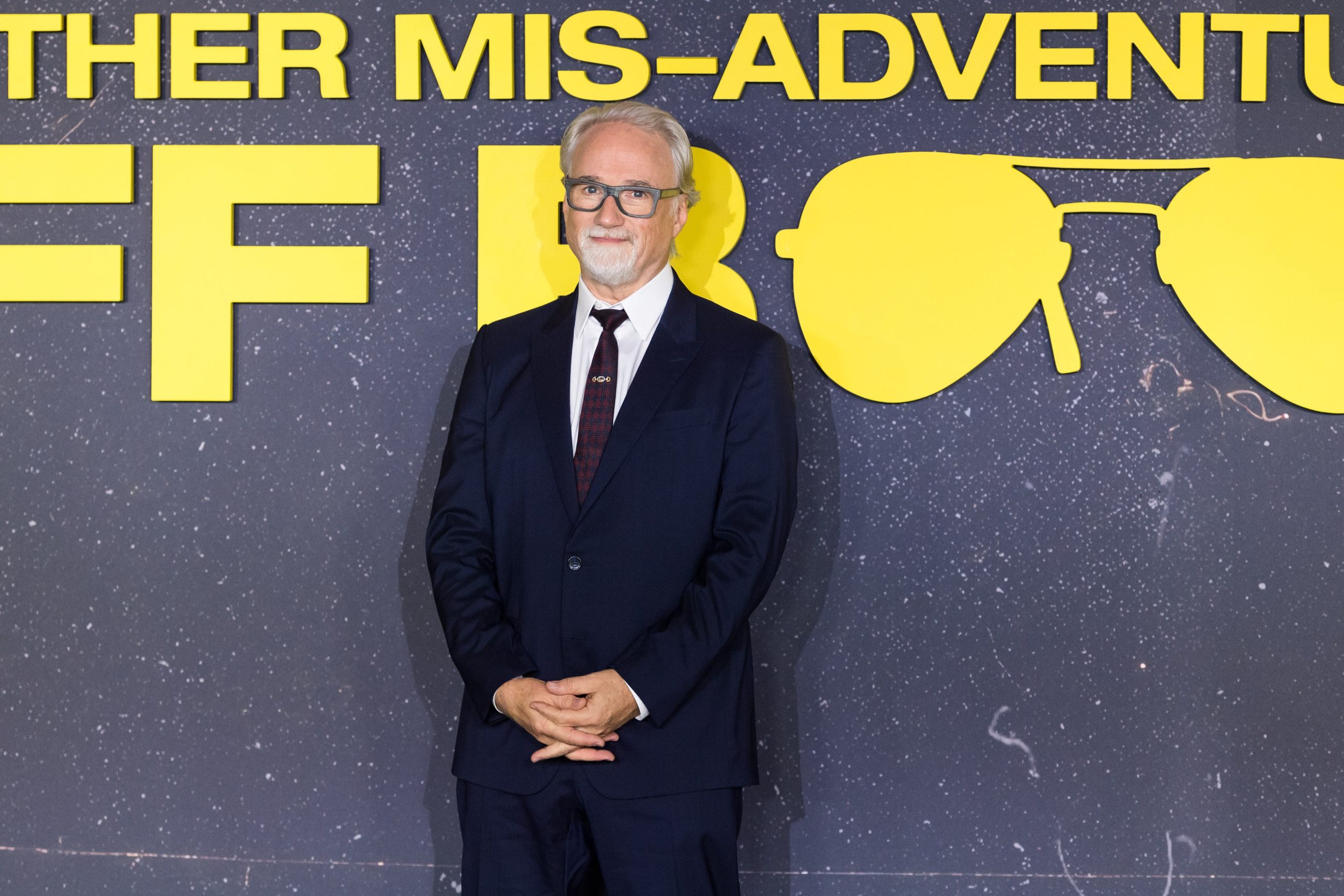
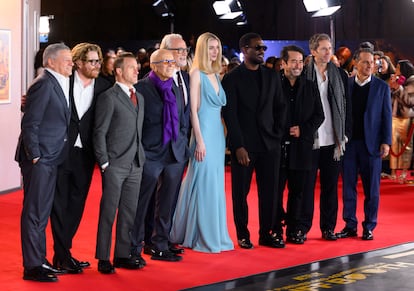
Quentin Tarantino has just become a father for the third time, and Brad Pitt is laid up in bed with the flu. So, in the absence of both the screenwriter and its leading man, director David Fincher, 64, took center stage at the European premiere of The Further Mis-Adventures of Cliff Booth, held in London on Monday night.
Eight years after the events depicted by Tarantino in Once Upon a Time in… Hollywood, Cliff Booth, the stuntman played by Pitt, remains stuck in Los Angeles. He lives with his father and drifts from one job to another, far removed from the glamour of doubling for the character portrayed by Leonardo DiCaprio. Some of those jobs are criminally dirty, though all are connected to the movie business in one way or another.
With his trademark darkness and bitterness, Fincher turns his gaze on a fading Los Angeles in 1977, during the months surrounding the release of Star Wars. Hence the word “misadventures” in the film’s title. The movie arrives in theaters on Wednesday before becoming available on Netflix.
On a cold Tuesday morning in London, a smiling Fincher greets the journalist warmly. The trip for this interview was financed by the streaming platform as part of the promotional campaign marking the end of Fincher’s seven-year relationship with the company.
Question. Your contract with Netflix has ended. Do you feel happy, liberated?
Answer. [Laughs] I’ve never been a happy person. I’ve had some good times at Netflix. I’ll answer in parts. Right now I’m exhausted; I feel like when a woman, after giving birth, is asked if she’d do it again and she says no. It’s the same thing. That said, ask me in six months [laughs]. Here in London, jet lag is adding to it. But what I am relieved about is that right now I don’t have any projects lined up; I’m free of any commitments.
Q. What did you connect with in the script that led you to accept the project?
A. I was working on several projects when Brad Pitt — with whom I’d already made three movies — called me and said he had a script he wanted me to read. Now, did he have the author’s permission? Brad called me back and confirmed that he did, that Tarantino would be flattered if I was interested in taking on the project. That really excited me. Do you know what drew me in? Following Pitt’s character and telling Booth’s story. And we started putting the cast together: Scott Caan was in the script from the start; Elizabeth Debicki was my choice; everything just fell into place.
Q. You cut 60 pages of dialogue from Tarantino’s 230-page script. Did he essentially accept that the film was yours, that it was a Fincher film?
A. The thing is, I didn’t cut any scenes. It was all dialogue. And as we refined the script, Debicki’s role actually grew, for instance. Tarantino had only one goal: to get the film made. It’s been fun because, really, think about my films. Think about Zodiac: it’s about losing hope. And in Cliff Booth, despite all the villains and the killings, and I’ve never had so many deaths on screen, the tone is different.
Q. There’s a bit of Robert Towne and a bit of Hal Ashby in this film.
A. Thank you. I collaborated with Towne twice on two separate projects — each lasting three years — and they didn’t pan out. And I hope Cliff Booth’s women remind you of Towne’s, strong and resolute. I explained to Pitt that Crosby, the character played by Debicki, would never be a mere prop. That the romantic element, which is obviously there, wasn’t the main focus. She’s sophisticated; she’s driven by her own thoughts. Pitt loved it; it almost came as a relief to him. And my editor said this movie is Shampoo [Ashby’s classic] with killings.
Q. You were a teenager in 1977, the year Cliff Booth takes place. What do you remember about the movies from that era?
A. Pitt really likes The Towering Inferno from those years. And of course, I also enjoyed [Paul] Newman and [Steve] McQueen. But those studio films overshadowed the work of, say, Hal Ashby. That’s why I was interested in this script. Let me go back to the beginning: Cliff is over 50, his father lives with him, and he’s facing and navigating his retirement.
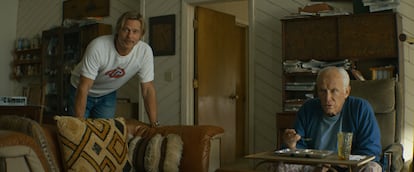
Q. In recent days, there has been a heated debate about the use of AI in your film to reconstruct that version of Los Angeles and what’s shown on TV. Did you see this coming?
A. You know what the thing is? The debate over AI masks a culture war; it has nothing to do with movies. I’ve never been in a situation where people cared about the tools I used. Look, my goal is to tell a story. You have a certain amount of money, you have to shoot a certain number of sequences, and you have to animate them, bring them to life.
Q. Are you interested in the new generation of horror directors coming out of YouTube? I’m referring to the creators of Obsession and Backrooms.
A. I have to admit I haven’t seen them because I’ve been a little busy [laughs]. But yes, I’m very interested. I had an interesting conversation a couple of weeks ago with some people who work in intellectual property, actually, on the studio side. They were talking about this new boom happening in horror, but mostly because they were interested in these new properties and new ways of thinking about horror. And they asked me: Why do you think this is happening in horror? I replied: Think about it. Horror filmmakers have to come up with a new way to kill someone every month. Twelve times a year. And they have to evolve, create new ways to scare people. They’re forced to continually evolve in how they build suspense, the killer’s identity, and their motivation. See how you tie it all together. And another detail that bothers Hollywood: there’s no one like them involved. There’s no adult oversight. When you watch these films, they’re cheap. And yet they pay for the cars, the lighting, the actors’ union… Where do they save money? Well, they don’t pay all those executives. And then, horror is very personal — everyone is scared by something different — so you can find success with different audiences.
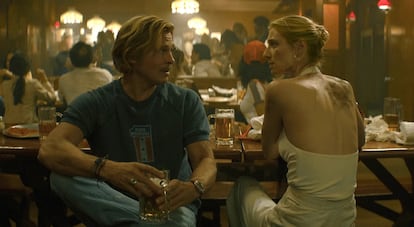
Q. Speaking of personal fear, how do you feel about the United States today?
A. Right now? Politically, in the United States, the situation has been very difficult over the past 12 years. We’re in the midst of a culture war. It’s funny. We’re a country of “comrades” — I don’t mean to sound like I’m trying to be funny — we really support each other as colleagues, which is actually kind of fun, but that also means we get worked up when talking about our desires, and our anger can also be very… intense.
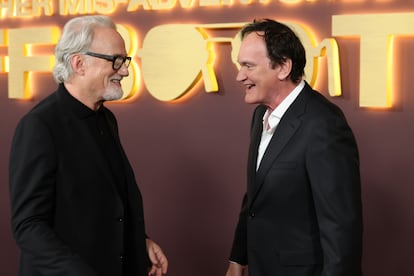
Q. You say that if you achieve 60% or 65% of what you planned for a movie, you’ve succeeded. What about this one?
A. Let me explain. What I mean is that in my head, I work on movies; I build them there. Then you have to make them, and that’s when you transform them into something tangible. And that’s where that percentage comes from. Of course, in my head they’re perfect… I’ll also tell you that lately I’ve been having a lot of conversations with friends, enemies, all kinds of people, and I’m surprised by how much complaining there is and how much people look back. Film distribution and production were also complicated decades ago. I’m much more interested in the conversation about where we want to go. It has to do with AI. We’ve been painting on walls for thousands of years and shooting films for a century. I’m not willing to get swept up in that melancholy notion that VistaVision — which was born in 1954 — was the best format. And I don’t think that’s true. Let’s move forward; there’s so much to explore. I’m collaborating with [Spanish director] Alberto Mielgo right now. This guy is a genius; he’s doing some incredible things… When I show our work to my friends, they say, “What is this?” They can’t believe it. So we’re not done yet.
Sign up for our weekly newsletter to get more English-language news coverage from EL PAÍS USA Edition



Manifestaciones 25-N Contra La Violencia De Género, En Directo | Miles De Personas Recorren Las Calles De Las Principales Ciudades Contra La Violencia De Género

‘Why Do You Think That You Could Do That?’: The ‘misogynistic’ Interview That Questioned Hailey Bieber’s Business Credentials

David Fincher, Filmmaker: ‘The AI Debate Masks A Culture War. It Has Nothing To Do With Movies’


-

 New Developments4 weeks ago
Luxury Villas For Sale, Estepona – ProjectL1
-

 New Developments3 weeks ago
The San Roque Club – Townhouses For Sale
-
countryside4 weeks ago
Rural revival: Five Almeria villages make moving inland easier and more enticing
-
costa blanca live music3 weeks ago
Beatles tribute: The Liverpool Band returns to Orihuela Costa
-

 New Developments3 weeks ago
Stylish 3-Bedroom Apartment With Panoramic Sea Views – Benalmádena
-

 America3 weeks ago
Así Ha Sido La Primera Jornada Del World In Progress 2026: Del Anuncio De Sánchez De Ayudas Para Las Víctimas De Urda A La Reivindicación De Rebeca Grynspan Del Papel De La ONU
-
Eating out in Gibraltar4 weeks ago
Young woman left horrified after Gibraltar restaurant receipt carries shocking racist slur
-
All Saints4 weeks ago
Driving to Andalucía this weekend? DGT warns of extra traffic after train crash