
ElPais
Maricarmen: Eviction Of Elderly Woman In Madrid Sparks Social And Political Outrage

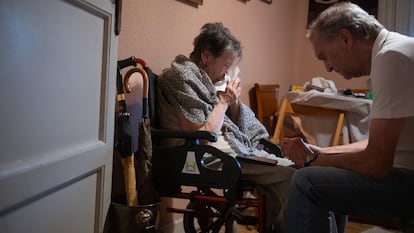
Maricarmen Abascal is 87 years old and for the last 71 years she had lived in the same apartment in Madrid’s central Retiro neighborhood. On Wednesday, September 23, 2026, she was taken out on a stretcher after the police carried out her eviction on their fourth attempt. Hundreds of people were waiting for her outside. For months neighbors, activists and cultural figures had been trying to prevent her from losing a home that has been part of her entire life. Maricarmen spent her first night outside her home at Gregorio Marañón Hospital, where she is being treated for exhaustion, stress and anxiety produced by recent events.
Her story has sparked outrage both in the political sphere and in society, touching a chord among many Spaniards struggling to find housing in an increasingly unaffordable market. There are an average of three evictions a day in the Madrid region, but this one has become the symbol of a movement to defend the right to housing.
Thousands of people, including numerous youths, protested in Madrid in a spontaneous demonstration that began in front of a controversial luxury penthouse that the Madrid regional government, led by Isabel Díaz Ayuso of the conservative People’s Party (PP), recently purchased for unclear purposes.
The protest attracted 10,000 people, according to the central government, and grew in size throughout the day, forcing the police to cut off General Martínez Campos Street. Dozens of officers with riot gear watched the scene unfold as protesters cried out “Ayuso’s penthouse for Maricarmen!” and “Shame! Shame!”
Emilio Díaz, a 90-year-old pensioner watching on the sidelines, expressed satisfaction at what he was seeing. “I’m surprised this hasn’t happened earlier,” he said, noting that “young people are responding. Up until now it was like they didn’t exist.”
Rodrigo, a college student who declined to give out his last name, said the protest was justified. “Housing is a right, not an asset,” he said. Marina Martín, a 25-year-old nurse, added that “it is impossible to buy a home, and renting is really tough. All your money goes into paying rent and there’s barely anything left for other expenses.”
An expanding movement

The Madrid protest was the epicenter of a broader campaign that is extending throughout Spain. The platform #Niundesahuciomás (Not One More Eviction) called simultaneous protests in Ávila, Barcelona, Cádiz, Oviedo, Sevilla and Valencia.
The issue even made its way to the United Nations General Assembly in New York, where Prime Minister Pedro Sánchez, of the Socialist Party, called the eviction “a social tragedy that we cannot accept as a country.” He placed the blame on the local and regional governments of Madrid, governed by the PP.
Inside Spain’s Congress of Deputies, Housing Minister Isabel Rodríguez García said that the eviction “evidences the consequences of savage speculation and of rolling out the red carpet to the vultures and the speculators.”
The dispute stems from a rent-capped lease contract signed by Maricarmen’s father in 1956. The lease later passed to her mother and, after her mother’s death, to Maricarmen. For years she continued to pay rent every month, but the current owner, an investment firm named Urbagestión, sought to terminate the contract after raising her rent from €500 ($572) to €2,650. It later lowered it to €1,650, but Maricarmen still could not afford it with her monthly pension of €1,350. Maricarmen won her case in court, but an appeals judge overturned that ruling and the Supreme Court ultimately sided with the owners.
The company also rejected a last-minute offer by a well-known writer (who requested to remain anonymous) to pay Maricarmen’s new rent for the rest of her life. And the Housing Minister said it tried to purchase the apartment, but that their offer was refused. “They want to throw her out, that’s all,” said a ministry source. “They don’t want to hear about solutions.”
Sign up for our weekly newsletter to get more English-language news coverage from EL PAÍS USA Edition











Acapulco
Acapulco Shuts Down Amid Fear Of Hurricane Polo: ‘Three Days Not Knowing What’s Going To Happen’

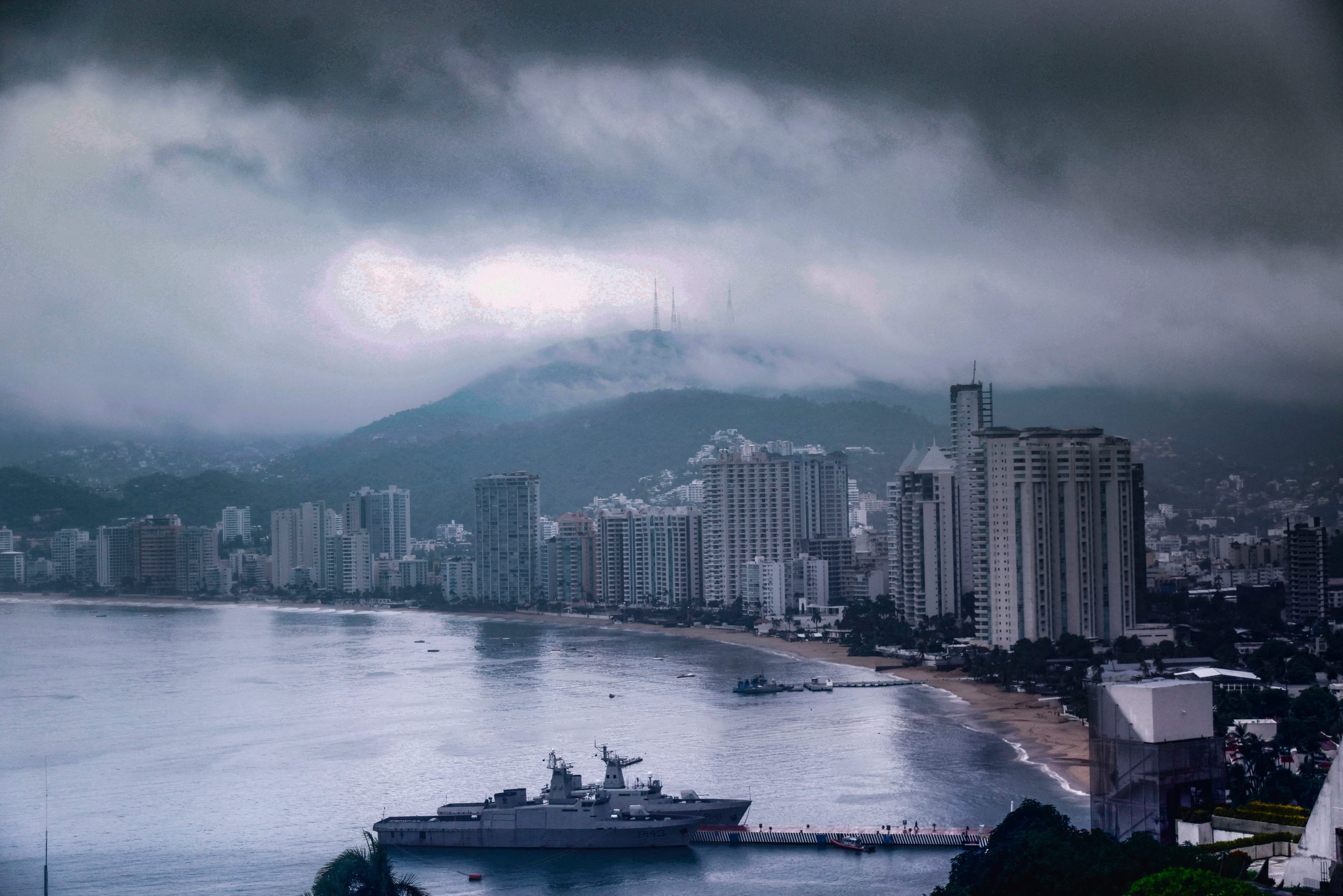
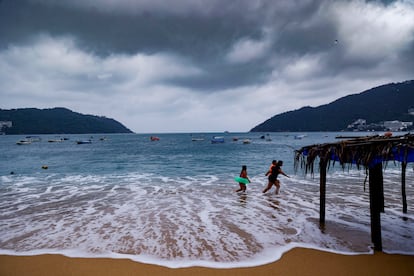
A large white cloud envelops the beach, the boardwalk, the palapas and the nightlife bars that earned Acapulco the nickname The Pearl of the Pacific. Deserted streets and closed shops along the famed Costera Miguel Alemán give the impression that something is about to happen. The white cloud brings rain, high surf and a wave of uncertainty that have inundated the city.
These are the effects of Hurricane Polo, which has been stalled since Tuesday off the coast of Guerrero after reaching Category 5, the highest level, in record time and later weakening to Category 4. Experts say the cyclone will not make landfall, but the locals — who still remember the effects of Hurricane Otis in 2023 — have thrown themselves into preparations “for whatever comes,” says Carolina Esquivel, a 43-year-old merchant with a business downtown.
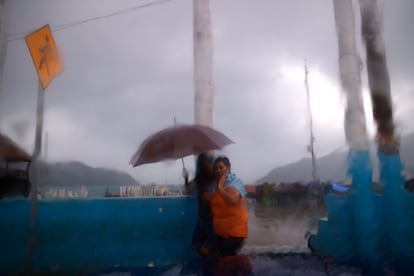
Far from the luxury hotels and the sunbeds, Esquivel’s cellphone repair shop shutters at 1.30 pm, six hours earlier than usual. She fears both looting and the rising waters from the flood that formed in front of her workplace. “People haven’t come out in three days. Three days not knowing what’s going to happen,” she explains. “Everyone is sitting at home in fear,” she says. “We’ve been preparing for days — stocking beans, rice, eggs, whatever we can in case,” adds her neighbor from the flower shop. “Who’s going to come by now? There are no sales, but you still have to open,” she explains. Torn between the need to work and their fear, they agreed to open at least a few hours a day before taking shelter. Only major stores, banks and supermarkets remain open.
The Mexican government has also focused on prevention. Classes remain suspended for 500,000 students in the state of Guerrero, municipal administrative work has been halted, and more than 600 shelters have been set up that no one has used so far. The port remains closed to navigation. In addition, nearly 14,000 members of the Armed Forces across the country are on standby in the preventive phase of civil protection plans. In Acapulco, troops are on the streets and in shopping plazas, supervising and warning the population about the danger of Polo. “We have the necessary equipment to respond to an emergency,” the Navy said in a video shared on social media. So far, the local media reports no casualties from Polo, which has caused standing water, floods and some trees to fall.
Operations extend beyond the tourist area to the Costa Grande, Costa Chica, the mountain region and the sierra. In the capital, Chilpancingo, “it rains and then stops, it rains and then stops,” says Carlos Ruiz, a 43-year-old sunglasses vendor. In the last two days he has seen “many military personnel” passing through his city en route to the beaches or smaller towns “to make sure everything is okay,” he says, “but for now everything is normal.” That’s where “things are complicated,” he believes. “There” is the port. The hourlong drive that separates a partly cloudy, humid Chilpancingo from Acapulco, where the rain does not stop, reflects the change Ruiz describes.
Considered by the United States National Hurricane Center an “extremely dangerous” phenomenon, Polo on Wednesday began slowly moving away from Guerrero. But the depth, pressure and other technical terms mean little to Roberto Martínez, 27, who is trying to attract customers to an empty restaurant. “I just hope it calms down so we can get back to work as soon as possible,” he says. Here, money comes with tourism, and hurricanes scare away the few visitors who come in the low season.
Sign up for our weekly newsletter to get more English-language news coverage from EL PAÍS USA Edition
ElPais
Gael García Bernal: ‘The Common Good Is No Longer A Political Slogan. Democracy And The Use Of Power Are Almost Like A Reality Show’


There are film projects that do not arise from a rigid outline but from years of sediment and personal crossroads. For Gael García Bernal, 47, Hombre al agua, his latest feature which he co-wrote, directed and stars in, took more than 15 years to take its final shape, having been seeded at the exact moment he became a father.
The story follows Camilo (played by García Bernal), a Cuban lifeguard who rescues a Mexican businessman named Abel (Jorge Salinas) from drowning in the Caribbean Sea. Grateful, Abel “saves” Camilo by offering to bring him to Mexico and make him his right-hand man. Abel introduces him to his daughter Juana (Esmeralda Pimentel), whom Camilo marries; they later have a daughter. But he soon discovers that everything was part of a Machiavellian scheme of manipulation and control. With his new life collapsing, Camilo must uncover who is behind the plot and take control of his own fate.
In Hombre al agua — his third film behind the camera after Déficit (2007) and Chicuarotes (2019) — which premiered at the Venice Film Festival and at the Toronto film festival, García Bernal makes use of metacinema, a cinematic practice and subgenre in which film turns a mirror on itself to reflect on its own creation processes, codes and fictional nature, as well as comedy, irony and the absurd, weaving together the crisis of masculinity, the exercise of power, migration, political disorientation in Latin America and the perpetual search for redemption in a society marked by simulation.
Question. How did the idea for this comedy with shades of drama and irony originate?
Answer. I began imagining three opening scenes in which the couple is interrupted by the baby and then the father goes to watch a Brazilian telenovela. At the time Lula [president of Brazil] was in prison, and it seemed like a great starting point to imagine a telenovela produced as if Carl Dreyer had been hired by TV Globo to portray the life of Lula and his then-wife Marisa. The mix began to coalesce like a strange geode. I knew it wasn’t a linear A-to-B film; we weren’t telling a conventional story but experimenting with the crisis of masculinity, fatherhood, separation, the Latin American political body, the use of power and migration. All within an archetypal rereading of the genie-in-the-bottle trope, where rescuing a person comes with a desire that always exacts a price.
Q. In the plot we see a film within a film, shifting biographies, a telenovela and even a documentary. How did you build this meta-universe that functions as both a love letter to and a critique of the industry?
A. It emerged as a fundamental dramaturgical device alongside Mariano Pensotti, with whom I co-wrote the script. He proposed that cinema become the vehicle for the sublimation of all the characters. Metacinema, besides being fun, supports our argument about daily simulation and masks. Very much in the spirit of Hamlet, the staging allows us to expose and denounce reality. We were inspired by filmmakers who never feared comedy as a tool to disarticulate truths: Tomás Gutiérrez Alea, Ettore Scola, Luis Buñuel, Jean-Luc Godard and Miloš Forman. Comedy is a genre that opens up, unravels and dismantles many things. It’s extremely hard to do well. It’s one of the most undervalued genres, but also one of the most difficult and complex to execute properly.

Q. In Déficit, Chicuarotes and your recent work you explore characters confronted with realities that are not what they seem. What concerns unite the films you aim to make as a director?
A. There is a clear obsession with inheritance, with what we receive from our parents. I’m deeply intrigued by people who inherit money or positions of power and, along with them, gigantic existential problems. To justify their situation, they construct a daily psychoanalytic architecture and a simulation to convince themselves that nothing is wrong, asking why the world would be against them. In Latin America we keep inheriting vendettas, archaic problems and privileges from generation to generation and try to solve them without ever succeeding. Seeing those human passions exposed through comedy is revealing. I like to close films with an elevated Aristotelian structure, leaving the question open that something good must come.
Q. There have been gaps of 12 and five years between your films. How has your work behind the camera evolved?
A. Many things have landed. As an uncle in Sinaloa says: “You’d better have time serve you as an actor, because if not, what a waste of time.” Experience allows me to arrive on set with enormous enthusiasm and to infect the actors with the notion that making the film you want is a rare privilege. I feel more confident pursuing difficult questions through humor. That said, acting and directing at the same time is exhausting; I doubt I’ll do it again in the short term.
Q. The film tackles the crisis of masculinity in a setting marked by politics and the rise of the so-called manosphere. How does the central character fit into that debate?
A. Camilo’s character, a Cuban in a survival context, is forced to shape his identity according to what circumstances demand: he must be a father, a good husband, a bodyguard, a butler and chief of staff for a potential candidate. His masculinity is bombarded from all sides. There are still sectors determined to reclaim that absurd and ridiculous figure of the “perfect man” that helped trigger the two great wars of the 20th century. Fortunately, thanks to feminism, today we have greater introspection and sensitivity. Men today can carry our babies strapped to our chests, something we perhaps haven’t experienced since the nomadic era. Those questions about masculinity have been present in my work since Y tu mamá también.
Q. The film also exposes messianism, democratic crises and mistreatment of migrant populations. How urgent is this reflection today?
A. The film speaks of imposed realities. We see the millionaire who, from his hubris, believes he can fix everything, and democracy turned into a playing field where a magnate campaigns under the slogan “someone like you.” It’s the cynicism of imposing the idea that the real winner is the one who best knows how to take advantage of others. Leonardo Padura’s latest novel [Morir en la arena, Tusquets] sums it up well: Cubans were hit with the certainty that the worst predictions about capitalism turned out to be true, while the promises of socialism proved to be false. We live in rampant capitalism, with structures in crisis across Latin America. Today the figures of the manosphere do not debate public health, universal education or decent housing; they only talk about security, police and private property. The common good is no longer a slogan of political parties. We are in a complex moment in the world and in Mexico, where politics, democracy and the use of power are almost like a reality show, and we must be extremely alert not to fall into that trap.
Sign up for our weekly newsletter to get more English-language news coverage from EL PAÍS USA Edition


Your Community President Could Get Your Phone Number Without Asking You In Spain

Join The Classic Sportscar Club Dinner
‘It’s The Law Of The Jungle’: Pensioner’s Eviction Exposes Spain’s Housing Crisis


-
Latest1 week ago
The Vocabulary You Need To Understand The Spanish Citizenship Process
-

 Argentina2 weeks ago
The Falklands: The Open Wound That Unites Argentines
-

 Energy efficiency & certificates2 weeks ago
94% Of Spanish Homes Are Energy Inefficient – Could Tighter Rules Be Coming?
-

 Alex Saab1 week ago
Maduro Ally Alex Saab Pleads Guilty In US Money-Laundering Case
-
easyJet2 weeks ago
146 slide off easyJet flight after powerbank fire at Milan airport
-

 New Developments2 weeks ago
Inside The Most LUXURIOUS Apartment Building In Spain!
-

 Uncategorized1 week ago
‘Lewis will never trust Charles again’ – F1 journalist issues shocking Ferrari statement – GPFans.com
-

 New Developments1 week ago
How To Get A Tourist Rental Licence In Andalusia (Spain) – Step-By-Step Guide 2025