Connect with us

%

Mazarron Launches Music Walk To Boost Spring Fitness

Published

on

mazarron-launches-music-walk-to-boost-spring-fitness

Mazarron launches coastal music walk promoting fitness, fun and wellbeing. Photo Credit: CaminaFit

The Department of Youth of the Mazarron Town Council is preparing to launch a new healthy springtime initiative in the month of May, the CaminaFit Music Walk. This activity will come to the municipality for the very first time and combine sport, music, and entertainment in a fun initiative by the municipality’s famous seaside.

An immersive music experience along the coastline

The CaminaFit Music Walk will consist of an immersive walk along five kilometres of the coastline, where participants will walk to music through wireless headphones. This will merge physical exercise, dance, and fun in this workshop designed for people of all ages and fitness levels to participate.

With this initiative, Mazarron officials aim to promote healthy lifestyle habits and offer active leisure alternatives, while also contributing to the physical and emotional wellbeing of the residents of the municipality. The experience will be fun, dynamic, and high in participation, so any interested parties are encouraged to register.

How does the CaminaFit Music Walk work?

Led by an energetic trainer, the CaminaFit Music Walk experience is a highly popular one not only on the Costa Calida, but in the whole of Spain. Various other municipalities along the Mediterranean coastline have taken part in this fun-filled activity, and it is a great way to socialise and get active. 

The meeting point for the activity will be the Rihuete parking lot next to the Bowling Club. Check-in will begin at 9:30am and departure is scheduled for 10:00am. Registration costs just €5 and requires prior booking through the official website, caminafit.com. CaminaFit organisers will provide headphones to the participants. The Youth Department has encouraged residents and visitors to take part in this programme that will merge sport, a beautiful coastline, and socialising among Mazarron neighbours.

Murcia, the destination of choice for sport leisure

Murcia is increasingly a leisure and sport destination, with the Costa Calida being a popular hotspot for these kinds of sporting and health initiatives. The Region of Murcia is known for active initiatives, as well as those that prioritise health; recently, the region impressed with surging numbers of registrations for bone marrow donors after a successful campaign. 

Additionally, triathlons, 5K races, and other types of sporting initiatives are picking up traction on the Costa just ahead of peak season. Whether walking with neighbours or taking part in an epic battle of athleticism, the residents of Murcia are showing their prowess when it comes to staying active.

%

Horror In Modena As Car Rams Into Pedestrians On Busy Italian Street

Published

on

horror-in-modena-as-car-rams-into-pedestrians-on-busy-italian-street

Aftermath of attack in Modena. Credit: Visgrad X

A 31-year-old driver ploughed a Citroën C3 into crowds on Via Emilia in central Modena on Saturday, May 16, striking at least ten people before smashing into a shop front. Police have confirmed seven individuals suffered injuries, with four in serious condition and one woman losing both legs in the violent episode. People pursued the suspect on foot after he abandoned his car and attempted to stab a passer-by who tried to stop him.

High-speed impact shocks local residents

People in the area saw the car accelerate rapidly towards the pavement in a pedestrian zone. Witnesses recalled the vehicle reaching speeds estimated at 80 kilometres per hour, sending victims flying and sparking immediate panic. The driver, originally from Seriate near Bergamo and with Tunisian roots, continued his path until the collision with the shopfront. He then fled the scene on foot through the historic centre, raising fear levels among bystanders.

Citizens help with quick arrests

Several locals joined forces to chase and restrain the man until police arrived. Modena mayor Massimo Mezzetti publicly thanked those who intervened, thanking them for their bravery during the chaotic moments. Officers from the Carabinieri, state police, and Guardia di Finanza responded rapidly, cordoning off the street with red and white tape while emergency teams treated the wounded on site. Paramedics transported victims to regional hospitals, including Maggiore in Bologna.

Background of suspect under scrutiny

Investigators question the detained man, who sustained injuries in the crash himself, at a local station. Records show he holds Italian citizenship, possesses no prior criminal history, and drove the small hatchback. Police continue to examine all possible explanations for the event, ranging from a traffic accident to deliberate action, without confirming any precise motive so far.

Community reacts to tragic events

Mezzetti described the episode as deeply disturbing and called for full clarity on what occurred. Emergency services maintained a strong presence in the area for hours afterwards to manage the scene and gather evidence. This incident has left residents in the northern Italian city shaken, with questions lingering about safety in popular urban zones.

Medical updates indicate varying degrees of harm among those struck, including a cyclist caught in the initial impact. Local media outlets report ongoing efforts to reconstruct the sequence using CCTV and statements from those present.

Wider questions arise from Modena events

Italian authorities focus on piecing together timelines from multiple sources to understand the full picture. The episode draws attention to risks in crowded city streets and the role of rapid public response in such crises. As details develop, Modena officials stress support for affected families while ensuring thorough probes proceed.

Continue Reading

%

Cartagena Celebrates Family Day With Community Activities And Family Support Initiatives

Published

on

cartagena-celebrates-family-day-with-community-activities-and-family-support-initiatives

Cartagena Family Day promotes community, support programmes, and work-life balance. Photo Credit: Cartagena City Hall

Cartagena held a major celebration on Saturday, May 16, in Los Juncos Park, with their Family Day workshop. The activity was a chance for children, young people, parents, and grandparents to get together and enjoy a variety of leisure activities, fostering both participation, healthy activity, and coexistence among neighbours.

A celebration that brought young people, parents, and grandparents together in Los Juncos Park

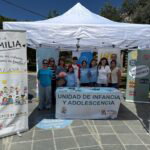
During the Family Day celebration, attendees enjoyed a mobile disco, a family photobooth, a car circuit, games, and workshops, including for makeup, canvas-painting, and badge-making. The initiative was also aimed at helping families through various programmes and resources. The Cartagena City Council had set up an information tent to make resources available for children, adolescents, and families. 

One of the main focuses of the day was to continue promoting the need for policies to help families and facilitate a work-life balance, with measures that improve well-being in the municipality and help families financially.

Aid to families: How Cartagena helps struggling parents with financial aid and free programmes

Additionally, it was noted that Cartagena has more than 1,000 available free slots in municipal nursery schools, helping families save more than €500,000 a year and making it easier for parents to balance their work and family life.

The Cartagena City Council, during the event, also informed attendees of the direct maternity aid promoted by the city’s officials, as well as the family respite programmes, and the home help and care programmes for those dependent on it.

Social groups participate in the event

During the event, a variety of social entities and groups that work in favour of child protection, inclusion, and family support participated. It was a day that fostered inclusion and connecting as a community, as well as promoting work-life balance, equal opportunities for all, and support for struggling households in the municipality.

Continue Reading

%

New Spain Radars Could Catch Drivers Sooner

Published

on

new-spain-radars-could-catch-drivers-sooner

Spain’s DGT is expanding the use of advanced radar technology as speed enforcement becomes more precise across the country. Credit : RVillalon, Shutterstock

A lot of drivers in Spain still react to speed cameras the same way. Spot the radar at the last second, hit the brakes quickly, slow down for a few seconds and then carry on.

The DGT’s newer radar systems may put an end to that habit.

According to reports, Spain’s traffic authority is introducing a new generation of 3D LIDAR speed cameras capable of detecting vehicles from around 200 metres away. In practice, that means many drivers could already have been recorded before they even notice the radar box sitting further down the road.

The technology is also said to be far more precise than older systems, particularly when identifying different types of vehicles including motorcycles, cars and heavy goods vehicles.

And while the DGT continues framing the rollout as a road safety measure, plenty of motorists will probably see it as another sign that avoiding speeding fines in Spain is becoming increasingly difficult.

The old ‘brake at the radar’ trick may stop working

For years, many drivers relied more on spotting speed cameras than actually watching their speed consistently.

Navigation apps helped too. Drivers shared radar locations online, warned each other about mobile controls and often treated fixed cameras as predictable points on familiar roads.

That mentality developed partly because older radar systems gave drivers a little room to react once the camera became visible ahead.

The newer LIDAR based systems reportedly work very differently.

Instead of simply measuring speed at one specific point on the road, the technology creates a more detailed three dimensional reading of traffic movement. The radar analyses not only speed but also the size and type of vehicle travelling through the area.

That allows the system to distinguish much more accurately between different vehicles sharing the same road.

Motorcycles are a particularly important example here.

Older radar systems sometimes struggled to detect motorbikes properly because of their smaller profile and the way riders move between traffic. The newer technology appears designed specifically to improve that accuracy.

And because the cameras can reportedly detect vehicles from around 200 metres away, drivers may no longer have enough time to react once they physically spot the radar itself.

For people who only slow down after seeing the camera, that changes things considerably.

Spain is investing heavily in smarter traffic surveillance

The DGT has spent years expanding traffic enforcement technology across Spain.

Fixed radars, mobile controls, section speed cameras and AI based traffic monitoring systems have all become increasingly common on Spanish roads, especially on routes with high accident rates.

Authorities argue the objective is reducing dangerous driving rather than simply increasing fines.

Speed remains one of the main factors linked to fatal accidents across Europe, particularly on secondary roads where collisions often happen at much higher impact speeds than drivers realise.

The DGT frequently points out that many motorists underestimate stopping distances and overestimate how much control they have while speeding.

That partly explains why traffic authorities continue investing in systems capable of monitoring roads more efficiently and with greater accuracy.

The newer LIDAR radars are also being presented as useful beyond catching speeding drivers.

According to reports surrounding the rollout, the technology could help identify broken down vehicles, unusual traffic situations or accidents more quickly by analysing movement patterns on the road in real time.

Traffic management centres may eventually use that information to improve congestion monitoring and react faster during emergencies. But realistically, most drivers are probably going to focus on one thing first : The fines.

Drivers in Spain are being warned to pay attention even on familiar roads

One reason these newer radar systems may catch more drivers is simply habit.

People tend to relax on roads they know well. They stop checking signs carefully, rely on memory and often drive slightly faster without fully realising it.

Tourist areas create another problem entirely.

Spain receives millions of foreign drivers every year, especially during summer. Many are using unfamiliar roads, rental cars and navigation apps at the same time. In those situations, it becomes very easy to miss sudden speed limit changes.

The DGT has repeatedly warned that relying entirely on GPS instructions instead of road signs is becoming increasingly common.

That behaviour can quickly become expensive if radar systems are capable of identifying speeding vehicles long before drivers notice the control point itself.

And unlike older radar setups that drivers often learned to recognise visually, newer systems may blend much more naturally into existing road infrastructure.

For motorists, the safest approach increasingly seems to be exactly what traffic authorities have been saying for years.

Do not drive according to where you think the radars are. Drive according to the speed limit the whole time.

That advice may sound obvious, but the newer technology suggests Spain’s traffic controls are moving towards something much more difficult to outsmart through habit alone. Because if these systems really can identify vehicles from 200 metres away with greater precision than older radars, then spotting the camera itself may no longer matter very much anymore.

By the time drivers see it, the photo may already have been taken.

Continue Reading

Trending

Copyright © 2017 Spanish Property & News