
Latest
S

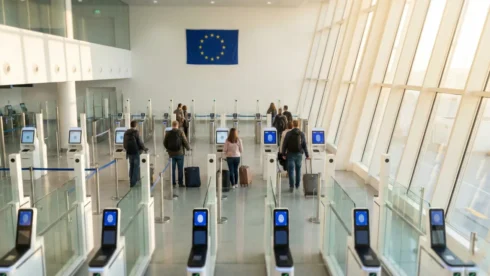








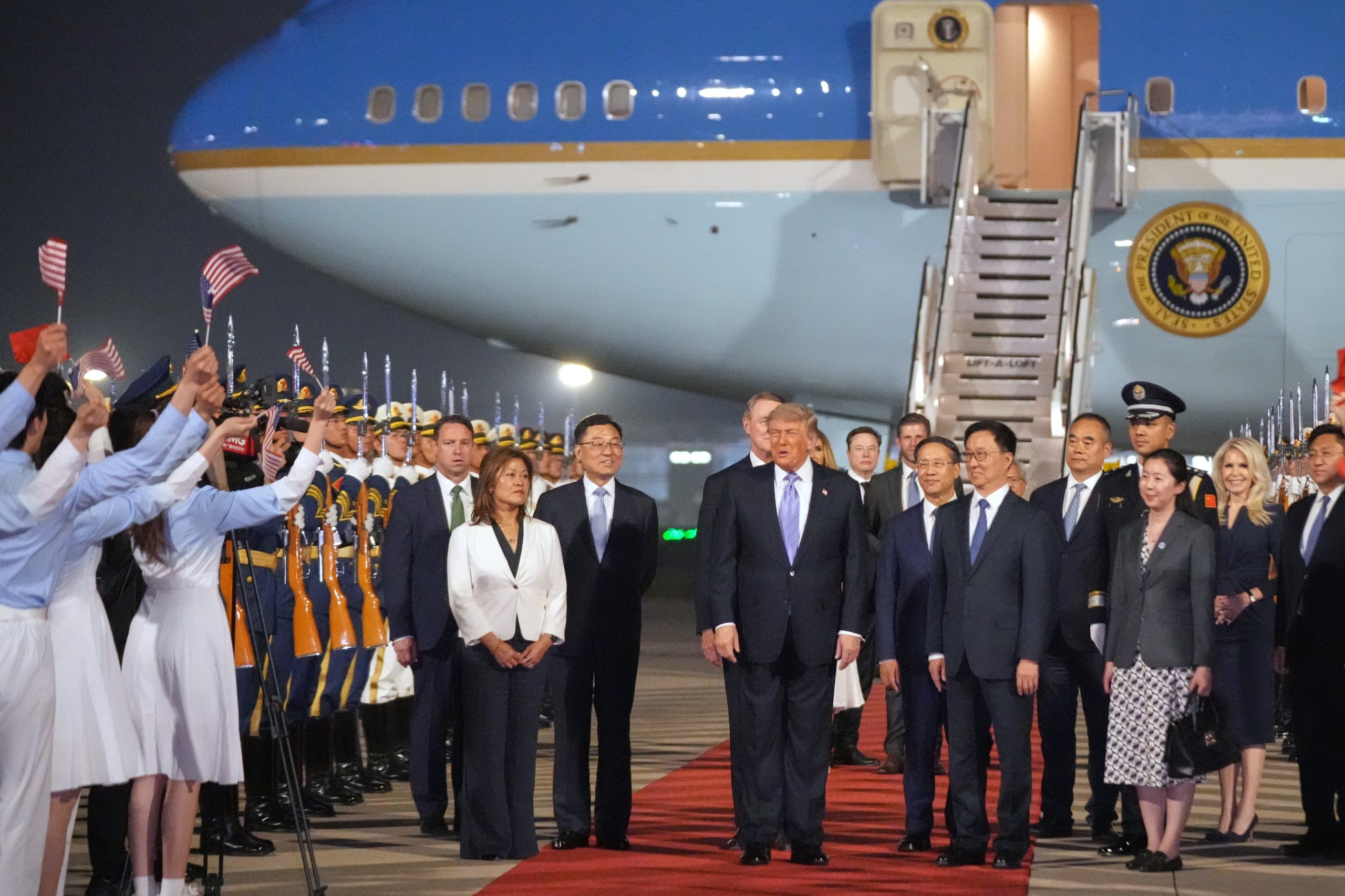
U.S. President Donald Trump landed at Beijing airport on Wednesday evening for a summit with Chinese President Xi Jinping. The visit is expected to be marked by an elaborate reception, judging by the heavy security presence already in place since the morning around the cordoned-off hotels where the Republican leader and his entourage will be staying.
Trump’s visit to China follows years of tensions and marks the first time in almost a decade that a leader of the world’s largest economy has set foot in the second largest. The last time this happened was in 2017, when Trump himself visited China.
The meeting will serve to gauge the balance of power between the two superpowers after a 2025 marked by tariffs, in which the two leaders pushed the trade war to the limit — right to the brink — before sealing a fragile pause last October in Busan, South Korea. After a first night of theoretical calm, with no scheduled agenda, Xi will receive Trump on Thursday morning at the Great Hall of the People, the gigantic building reserved for major political events.
On Wednesday, Trump appeared at the door of the enormous presidential aircraft at exactly 8:08 p.m. in Beijing, in what seems like a highly calculated gesture to start off on the right foot — the number 8 is considered lucky in China — and from the top of the stairway, pumped his fist in his characteristic manner. On the ground, he was received by Chinese Vice President Han Zheng, while 300 Chinese teenagers waved flags from both countries to the rhythm of a military march.
Economic issues are expected to dominate the face-to-face talks, including discussions on trade imbalances, transactions, and investments; Trump and Xi will most likely address the thorny issue of the war in the Middle East; and Trump already said on Monday that he also plans to broach what may be China’s most existential issue — Taiwan — raising some alarm on the self-governed island that Beijing considers an inalienable part of its territory.
With the U.S. attack on Iran still raw and its lightning operation in Venezuela still smoldering, an opening has emerged for China to put its interests regarding Taiwan on the table.
Trump has travelled to China accompanied by a large delegation of multinational executives, underscoring the economic focus of the trip. Trump sees the meeting as an opportunity to expand business and investment, in line with what the two governments’ envoys — Vice Premier He Lifeng and U.S. Treasury Secretary Scott Bessent — set out on Wednesday during a last-minute preparatory meeting in Seoul.

Mid-flight, Trump offered clues about the friendly tone he intends to strike during his visit to the “Great Country of China,” as he called it on his Truth Social platform shortly after departing the United States. In a post, he listed the striking lineup of executives travelling with him: from his rekindled ally Elon Musk (Tesla, SpaceX) to Tim Cook (Apple), as well as Larry Fink (BlackRock, the world’s largest investment fund) and Jensen Huang (Nvidia, the chip designer and the world’s most valuable company by market capitalization).
“I will be asking President Xi, a Leader of extraordinary distinction, to ‘open up’ China so that these brilliant people can work their magic, and help bring the People’s Republic to an even higher level,” Trump wrote. “I promise, that when we are together, which will be in a matter of hours, I will make that my very first request. I have never seen or heard of any idea that would be more beneficial to our incredible Countries!”
In addition to calls for greater openness — a recurring theme in dealings with China — the real estate magnate is also expected to press Beijing to use its influence with Tehran to help stabilize the fraught situation in the Middle East, where the fragile ceasefire is on shaky ground.
For China, the meeting offers a chance to project an image of stability, composure, and cooperation, after standing firm against Washington’s tariff pressure by leveraging its dominance in rare earths.
Beijing sees itself with room to manoeuvre and partly victorious in this latest trade battle. Many analysts expect it to use Washington’s weakness to push for a reduction in arms support for Taiwan and a shift in the long-standing ambiguous language underpinning the delicate balance in the strait.
“China understands that Taiwan independence would change the status quo. That is why it will ask Trump to openly declare that the United States opposes Taiwan independence,” says Wang Yiwei, director of the Institute of International Studies at Renmin University in Beijing.
The issue of arms sales was already made clear by Xi Jinping in a phone call with his counterpart in February, shortly after Washington approved in December the sale of a landmark $11 billion weapons package.
In his readout of what he described as an “excellent” conversation, Trump largely glossed over Taiwan. The official Chinese readout was far more emphatic: Xi told him that the U.S. position on Taiwan “is the most important issue in China-U. S. relations,” and stressed that China “will never allow Taiwan to be separated from China.” Xi issued a warning: “The U.S. must handle arms sales to Taiwan with extreme caution.”
Wang summed up Beijing’s position this way: “China has asked that the U.S. not sell arms to Taiwan; otherwise, we cannot purchase the so-called three Bs,” he said, referring to soybeans, beef, and Boeing aircraft— three of the economic demands Trump is bringing to the meeting. He believes the upcoming midterm elections, and Trump’s need to shore up part of his electorate, will tilt the balance in Beijing’s favour: “I don’t think he will sell [the arms].”

A change in the language of any statement “would probably be considered Xi’s biggest victory,” noted George Chen, an analyst at The Asia Group, on Wednesday during an online discussion about the summit. Evan Medeiros, also from The Asia Group and a former Obama adviser on China and Asia affairs, listed among the “risks” to watch — not only Taiwan, but also China’s “reluctance” to help on Iran.
But there are signs it may step up. Late on Tuesday, China’s top diplomat, Wang Yi, held a phone call with Pakistan’s foreign minister — the country leading the peace talks — and urged him to “step up mediation efforts, and contribute to properly addressing issues related to opening the Strait of Hormuz.”
At roughly the same time, U.S. Defense Secretary Pete Hegseth revealed he would join the delegation heading to China. U.S. Secretary of State Marco Rubio has also traveled to China, along with more than a dozen senior officials, but Hegseth’s presence is unusual: defence chiefs rarely take part in state visits.
Sign up for our weekly newsletter to get more English-language news coverage from EL PAÍS USA Edition
Argentina
Painting Stolen By The Nazis Surfaces In The Netherlands Thanks To A Man Who Was Unaware He Was A Descendant Of An SS General

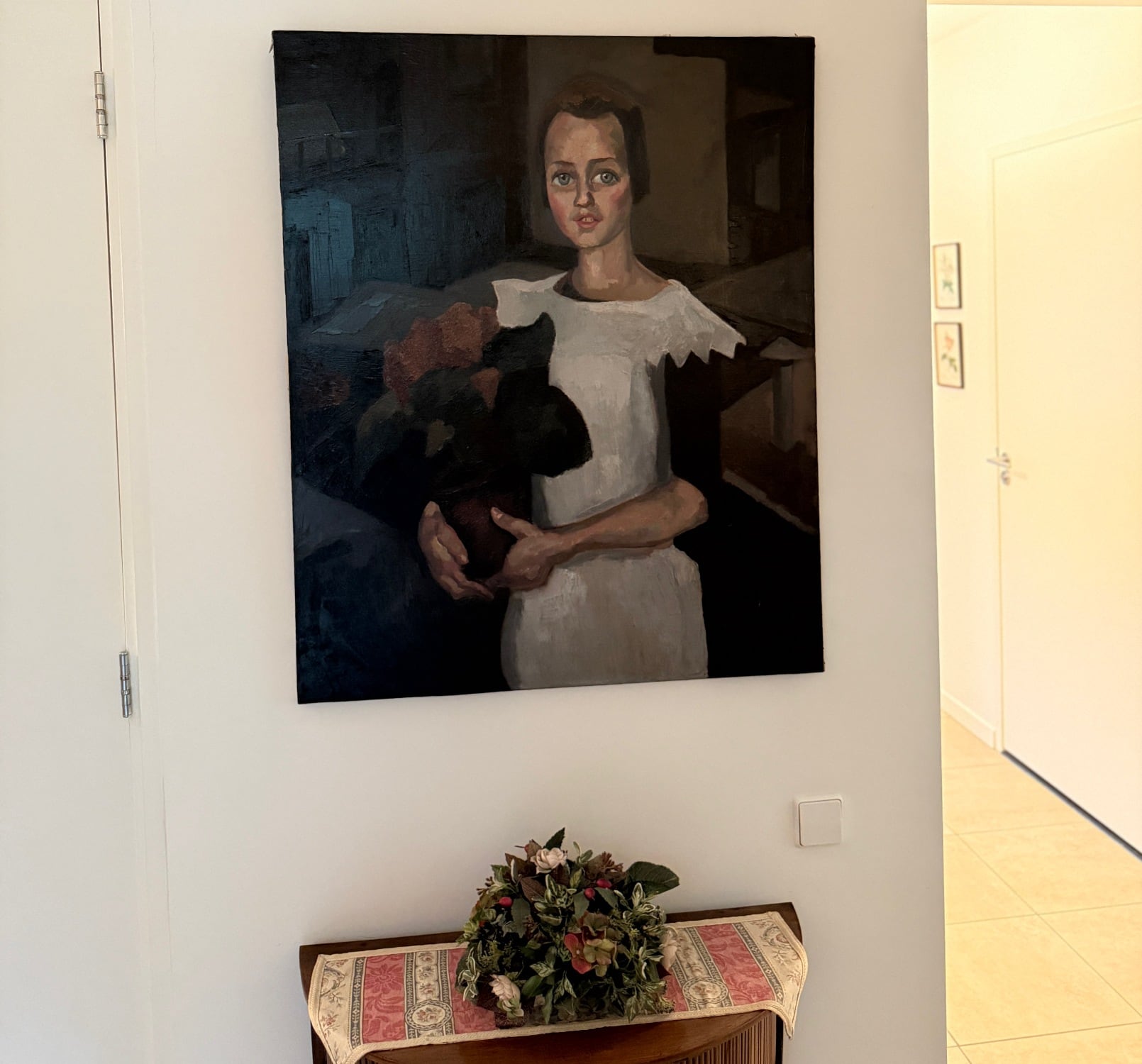
A painting by the artist Toon Kelder (Rotterdam, 1894-1973), titled Portrait of a Young Woman, stolen by the Nazis from the renowned art dealer Jacques Goudstikker, has surfaced at the home of the granddaughter of Hendrik Alexander Seyffardt, a Dutch general who commanded the Netherlands Volunteer Legion during World War II, a Waffen-SS unit that fought on the Eastern Front. A descendant of Seyffardt, unaware of the relationship, made the painting’s existence public through Arthur Brand, nicknamed the “art detective.”
The story of the painting is doubly painful for the relative in question, “whose identity we are keeping anonymous,” says Brand, speaking by phone. On the one hand, there is the profound emotional shock suffered, since “the informant was unaware that his relative had been one of the most prominent Dutch collaborators with the Nazi regime.” In 1943, Hendrik Alexander Seyffardt was shot in his home in Scheveningen — the coastal district of The Hague — by two well-known resistance fighters, Gerrit Kastein and Jan Verleun. The general died the following day, and his two assailants were arrested and later killed by the Nazis. Seyffardt had a son, Hendrik, who also collaborated with the occupiers. Married and divorced in 1944, his wife — the general’s daughter-in-law — with whom he had children, changed her surname, and the family’s past was never discussed again. “That new surname, which we are not revealing, is the one borne by the descendant who contacted me, and the painting has remained with the family since the war,” Brand explains.
The second blow to his informant was the discovery that the painting by Kelder belonged to the collection of Goudstikker, an expert in Old Masters and one of the most renowned art dealers of his time in Amsterdam. His collection was looted and remains one of the most significant claims of art stolen by the Nazis. Hermann Göring, commander-in-chief of the German air force, acquired the entire collection in a forced purchase. “That painting must never be sold because it is looted Jewish art, stolen from Goudstikker. It is unsellable. Don’t tell anyone,” the granddaughter warned the relative who had revealed its existence. Together, they took it down, and on the back, on the frame, was a label with Goudstikker’s name.
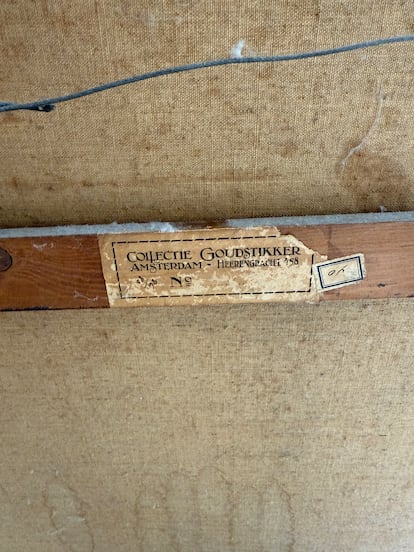
After receiving the call from the intermediary, Brand confirmed that Portrait of a Young Woman was part of the lot looted by the Nazis. It hadn’t been sold independently by Goudstikker. On October 9, 1940, the Frederik Muller auction house in Amsterdam presented a portion of the art dealer’s collection. “A few months earlier, it had passed into Göring’s hands, so that auction is considered looted art,” says Brand. He searched for the signature of the painter Toon Kelder and found three works. “One of them was number 92, the same one that appears on the back of this canvas.” He then contacted the lawyers representing Goudstikker’s heirs. In their response, they indicated that they could “determine that these three works were included in the Frederik Muller auction.” They added that “the number 92, written in chalk on the back of the work, is further proof that it was in the auction.” “We have seen that type of inscription on other pieces included in that sale and which have since been returned,” they replied.
The “art detective” was then certain that the painting had been looted and the dealer’s descendants wanted it back. “I relayed my discovery to the intermediary, who spoke with the family member,” Brand continues. “This person wanted to do everything possible to return the painting and gave permission to make the story public.” He asserts that he “feels a deep shame about the family’s past and is furious about the years of silence.”
From a legal standpoint, the Dutch police cannot confiscate the painting because the statute of limitations has expired. Furthermore, the Restitution Committee, which advises the government on art stolen by the Nazis, lacks the authority to order searches or seizures. It only deals with claims made against the Dutch state and has no jurisdiction over private individuals.

“It’s possible that Seyffardt bought the painting at the Muller auction in 1940. And it’s also possible that it passed into the hands of his son, Hendrik, after his father’s assassination,” Brand reflects. He also considers it likely that Hendrik’s ex-wife “took it after their divorce in 1944, because it now hangs in the home of a daughter: the granddaughter of the general who collaborated with the Nazis.” The expert acknowledges that this has been “the strangest case” of his entire career. He recalls that “thousands of young men lost their lives under Seyffardt’s command, and after his assassination, dozens of innocent civilians perished in retaliation.” At the end of the conversation, he emphasizes that while the family “bears no personal guilt for these crimes, they had the opportunity to return the painting.” “They chose not to,” he concludes.
Another piece from the Goudstikker collection, Portrait of a Lady, from around 1710 and attributed to the Italian artist Giuseppe Vittore Ghislandi, surfaced in 2025 in a house in Mar del Plata, Argentina. It was spotted in a real estate advertisement. Argentine authorities acted swiftly, and the family handed over the painting in September 2025. It had arrived there in the possession of Friedrich Kagdien, a financial advisor to Göring, who fled to Argentina after the war and lived there until his death.
Sign up for our weekly newsletter to get more English-language news coverage from EL PAÍS USA Edition


S

Donald Trump Lands In China For A High-Stakes Summit With Xi Jinping

Painting Stolen By The Nazis Surfaces In The Netherlands Thanks To A Man Who Was Unaware He Was A Descendant Of An SS General


-

 New Developments4 weeks ago
How To Get A Tourist Rental Licence In Andalusia (Spain) – Step-By-Step Guide 2025
-

 Uncategorized4 weeks ago
Max Verstappen Nurburgring LIVE: NLS5 Schedule, start times and free live streams
-

 Competiciones2 weeks ago
E
-
cabin crew4 weeks ago
Spain’s Supreme Court rules EasyJet must reveal cabin crew identities
-
Costa Blanca South4 weeks ago
Fire forces evacuation of six-storey building in Torrevieja
-

 Carles Puigdemont4 weeks ago
El Supremo Autoriza A Los Mossos A Destruir Las Pruebas Del Referéndum Del 1-O, Pero Ordena Conservar Una Muestra De Cada Una
-

 Uncategorized4 weeks ago
Lando Norris unleashes F1 2026 criticism after Nurburgring test
-
Illegal building4 weeks ago
Mallorca’s building amnesty: A route out of legal limbo for rustic homes