Connect with us

%

Mazda 6e – New Generation For Mazda’s 6

Published

on

mazda-6e-–-new-generation-for-mazda’s-6

The first Mazda6e will arrive this summer. Credit: Mazda

Revealed at last year’s Brussels Motor Show, and on sale in Europe since last Autumn, the Mazda6e will finally arrive in the UK this summer with a new 78kWh single battery specification – priced at £38,995 for the Takumi and £39,995 for Takumi Plus. Mazda say the car reinvents the Mazda6 for the electric age.

Bringing a fresh take to the well-regarded Mazda6, which across three generations from 2002 to 2023 was a popular model in the UK fleet market, the Mazda6e represents a fresh take on its predecessors, featuring a modern flowing exterior and sleek cabin design.

Launched in Europe with two powertrain options – a 68.8kWh LFP or 80kWh NCM battery, the UK specification Mazda6e simplifies the range with a single 78kWh LFP battery that combines the best of both in terms of range, performance and charging times. The new 78kWh battery delivers a combined range of 348 miles, while 10 to 80 per cent charging time can be as little as 24 minutes. With a 258ps power output the rear-wheel drive Mazda6e will reach 62mph in 7.9 seconds and delivers 290Nm of torque.

Standout design details include frameless doors and at the rear the Mazda6e’s while newly designed Mazda lettering replaces the brand logo badge at the rear of the car. Another unique for Mazda feature is the electronically extendable rear spoiler that enhances stability at speed.

Inside, the Mazda6e’s cabin a panoramic roof contributes to an airy ambiance and sense of space. A floating centre console and instrument panel along with premium materials feature throughout both the available trim levels: Takumi and Takumi Plus. Takumi models will feature black or stone Maztex^ artificial leather, while Takumi Plus offers premium tan Nappa leather with Artificial Suede Cloth woven fabric seat trim.

The smart driver-focused cockpit features a 14.6-inch touchscreen and a 10.2-inch instrument set, complemented by an augmented reality head-up display. Mazda has always had a deserved reputation for quality and premium build quality and the company hopes that together, the exterior and interior elements create a blend of style, comfort and functionality that will attract drivers to the new generation electric Mazda 6.

Available to configure and order now, the first Mazda6e will arrive this summer, while later in the year the next chapter in Mazda’s BEV story will arrive in the UK – with the debut of the all-new Mazda CX-6e SUV.

%

Government In Spain Classifies Immigration Regularisation Documents Under Secrecy Law

Published

on

government-in-spain-classifies-immigration-regularisation-documents-under-secrecy-law

The classification was approved during a meeting of the Council of Ministers Photo credit: Pool Moncloa/Fernando Calvo

The government of Spain has approved the classification of certain reports and administrative documents relating to immigration policy under official secrecy provisions, restricting public access to parts of the material used in decision-making on regularisation processes. The measure was adopted by the Council of Ministers and applies to specific internal documentation connected to immigration management.

It does not apply to all information on immigration policy, but to selected reports and records considered sensitive under existing legal categories. The classification uses two levels defined in Spanish law: “secreto” and “reservado”, which determine the degree of restriction applied to government-held information.

Legal framework governing classified information

The decision is based on the Ley de Secretos Oficiales, which allows the government to classify information when disclosure is considered capable of affecting state interests. The law establishes the categories of “secret” and “restricted”, which limit access to documents for defined periods.

Under this framework, classification can be applied to administrative reports, security-related material and other government documents where disclosure is deemed inappropriate under legal criteria. The system is not specific to immigration policy and has been used across different areas of government administration.

The law also sets out procedures for classification and declassification, although critics have previously argued that it provides limited oversight mechanisms compared with modern transparency standards in other European countries.

Scope of the classified material

The documents affected include internal reports and assessments used in the administration of immigration policy, including processes linked to regularisation of undocumented migrants.

Regularisation procedures in Spain involve administrative decisions that determine eligibility for residence status under specific legal conditions. These processes are supported by internal evaluations and technical reports produced by government departments.

The classification applies to selected material within this administrative framework. Publicly available legislation, policy announcements and general procedural rules remain accessible.

Government procedure and approval

The classification was approved during a meeting of the Council of Ministers, which is responsible for authorising the designation of official secrecy status on government documents.

Once approved, classified material is subject to access restrictions, meaning it cannot be disclosed without authorisation under the terms of the relevant law. The duration of classification depends on the category assigned and the legal criteria applied at the time of designation.

No timeline has been provided for declassification of the documents involved in this case.

Context of immigration policy administration

Immigration policy in Spain is managed through a combination of national legislation and administrative procedures overseen by government departments. Regularisation processes are used in certain circumstances to grant legal status to individuals who meet defined requirements.

These processes are supported by internal assessments, statistical data and policy evaluations used by government bodies in decision-making. The classification affects access to some of this supporting material rather than the legal framework itself.

Spain has previously carried out regularisation programmes under different administrations, each involving administrative review of eligibility criteria and documentation requirements.

Transparency and access considerations

The use of secrecy classifications has periodically been a subject of debate in Spain, particularly in relation to access to public information. The current legal framework predates the modern Spanish constitution and has been the subject of calls for reform from various institutions and civil society groups.

Supporters of reform argue that updated legislation would provide clearer rules on access to government documents and improve transparency. The existing system remains in force and continues to regulate the handling of classified material.

The government has not indicated that the classification decision represents a change in overall immigration policy, focusing instead on the handling of specific internal documents.

Implications for public access to information

As a result of the classification, access to the affected reports is restricted to authorised government personnel. External disclosure is not permitted under the terms of the law unless the documents are declassified through formal procedures.

The decision applies only to the specified material and does not alter existing immigration laws or public-facing policy information. Administrative processes relating to immigration continue to operate under established legal frameworks.

Further details on the scope of the classification or the specific documents involved have not been made public beyond the formal decision of the Council of Ministers.

Continue Reading

%

Ted Turner, Creator Of 24-Hour News Channel CNN Dies At 87

Published

on

ted-turner,-creator-of-24-hour-news-channel-cnn-dies-at-87

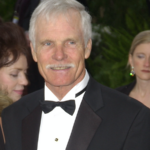
In 2018, Turner disclosed that he had been diagnosed with Lewy body dementia. Photo credit: Featureflash Photo Agency/SHutterstock

Ted Turner, the American businessman who founded CNN and helped establish the 24-hour news format, has died at the age of 87. His death was confirmed on May 6 by representatives of Turner Enterprises and CNN. No immediate cause of death has been publicly announced.

Turner was widely known for launching CNN in 1980, creating the first television channel dedicated to continuous 24 hour news coverage. The network introduced a model that would later be adopted by broadcasters around the world.

Early career and expansion into broadcasting

Born in 1938 in Cincinnati, Ohio, Turner took over his father’s advertising business following his death and expanded it into broadcasting. He acquired a struggling television station in Atlanta, which became the foundation for his media operations.

During the 1970s, he developed a network of stations that evolved into what became Turner Broadcasting System. His approach relied on distributing content nationally via satellite, increasing the reach of his channels beyond local markets.

This expansion laid the groundwork for the launch of CNN at the start of the following decade.

Creation of CNN and global reach

When CNN began broadcasting in June 1980, it operated continuously, providing news updates at all hours. At the time, this approach was considered uncertain within the industry, where scheduled bulletins were the norm.

The network gained wider recognition during major international events, including the Gulf War in 1991, when its live coverage reached audiences across multiple countries. This period established CNN as a global news provider and demonstrated the viability of round-the-clock reporting.

Turner remained closely associated with the network during its early development and expansion into international markets.

Business changes and later role

In 1996, Turner Broadcasting merged with Time Warner in a deal that brought CNN and other Turner assets under a larger corporate structure. Turner became vice chairman of the combined company but later stepped back from day-to-day management.

The merger marked a shift from his role as an independent media owner to a senior figure within a larger organisation. He remained involved in the industry but was no longer responsible for direct operational control.

Health and later years

In 2018, Turner disclosed that he had been diagnosed with Lewy body dementia, a progressive neurological condition. He spoke publicly about the diagnosis in interviews at the time.

In his later years, he reduced his public appearances and business activity. He continued to be associated with philanthropic work through Turner Enterprises and related initiatives.

Philanthropy and environmental work

Turner was also known for his involvement in environmental and charitable activities. In 1997, he pledged one billion dollars to support United Nations programmes, one of the largest individual donations made at the time.

He established the United Nations Foundation to support international initiatives in areas including health, development and environmental protection. He also funded conservation projects in the United States, focusing on land preservation and wildlife management.

Legacy in broadcasting

Turner’s role in establishing continuous television news had a lasting effect on the media industry. The model introduced by CNN has been replicated by numerous broadcasters internationally.

His approach to distribution and programming contributed to changes in how audiences access news, particularly during major events requiring live coverage.

Turner is survived by his family. Further details regarding memorial arrangements have not been announced.

Continue Reading

%

Mission Impossible With Koen Darras

Published

on

mission-impossible-with-koen-darras

Koen Darras & Lio at Marbella Beach. Credit: Nicole King

I recently met a young man called Koen Darras, a self-proclaimed “Adventurer, Keynote Speaker and Content Creator”. He is the first person in history to climb the ten highest mountains of South America and Africa in succession and conquer the iconic peaks Mont Blanc, Matterhorn, and Eiger in just nine days.

From summiting Denali in Alaska to traversing entire continents, Koen is an undeniable risk-taker and he likes to film it all. He hopes that by pushing his own limits and sharing these expeditions as a full cinematic experience, he may inspire others to step out of their comfort zones too.

Once of his next objectives is to be the world’s first person to cross the Atlantic by kitesurf, some 5,000 kms and 60 days at sea. He plans to start out from the Canary Islands, travel via Cape Verde and then head towards the Caribbean. Although Koen will surf alone he will be accompanied by a sailing boat all the way and a very dedicated team.

In order to prepare for this 2027 mission Koen had been training in the Canary Islands and took the time to come to Marbella on his way back to Belgium to share his passion for this very ambitious adventure.

Koen was accompanied by his 10 year old daughter Lio, who kindly helped me with some recording for the TV interview that I with her dad. From just the brief encounter it was easy to see that she, like her father, embraces the belief that limits are only invitations.

What a great team they make and what an inspirational encounter all round.

Continue Reading

Trending

Copyright © 2017 Spanish Property & News