
ElPais
Mckenna Grace, The Actress Who Grew Up In Front Of The Cameras And Used To Write Fan Fiction About ‘The Hunger Games’


Before Katniss Everdeen, played by Jennifer Lawrence, became a symbol of rebellion in The Hunger Games series, there were other tributes who left an indelible mark on the history of Panem. With the fifth film, Sunrise on the Reaping, it’s time to learn more about Haymitch Abernathy, first played by Woody Harrelson and now by Joseph Zada. Although Abernathy is the protagonist of the new installment, released on November 20 in U.S. theaters, there’s another character who has managed to capture everyone’s attention: Maysilee Donner, played by McKenna Grace (Grapevine, Texas, 20). The actress has wowed every red carpet she’s walked on to promote the film thanks to her outfits, which pay homage to the young adult dystopian saga. But she’s no newcomer to the film industry. Despite her age, she’s already appeared in more than 90 projects. That’s no small feat. “I’m 14 years into being in the industry, and I still work just as hard as the day that I got to L.A.,” she said in 2025 in an interview with Teen Vogue.
From a young age, Grace was drawn to all kinds of activities: ballet, tap dancing, gymnastics, children’s beauty pageants… and acting. She wasn’t even five years old, but she already knew that acting was her calling. Mother and daughter traveled to Los Angeles for her first audition; her father stayed in Texas to finish his medical degree. “Chasing a dream with no money out in the middle of L.A.,” the actress recalled during that interview. Eventually, her father secured residency in the Californian city, and the family settled in Ventura, just under two hours from Hollywood. She then landed her first on-screen role: it was on the series The Goodwin Games, where she co-starred with Sabrina Carpenter in 2013.
From that point on, projects came one after another, often overlapping. “It is tiring at times, but I dig it. Grass is always greener. I’d rather be doing 20 million things at once than just sitting at home and being like, ‘Shoot. When can I get back to work?’” she emphasized in Teen Vogue. For that very reason, Grace doesn’t measure time in years, but in film projects. Each one serves as a reference point to remember what was happening in her life and how she was feeling. “I really love what I do, and I don’t think that there’s another way that I would’ve rather grown up. I love having gotten to grow up on movie sets and getting to do what I love,” she reflected in Business Insider in 2023. “I’ve had a pretty weird childhood, but I’ve had a really happy one.”
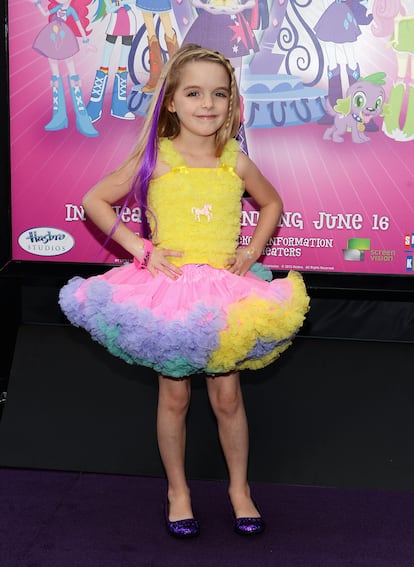
Throughout her long acting career, she has appeared in Independence Day: Resurgence (2016), Gifted (2017), I, Tonya (2017), Captain Marvel (2019), Ghostbusters: Afterlife (2021), The Handmaid’s Tale (2021), and Scream 7 (2026). But things could have turned out differently after she underwent spinal surgery at age 15. “It was the hardest thing I’ve ever done,” she told Teen Vogue. She couldn’t walk for a month, and when she was able to move again, she had to learn to walk all over again: “Truly, I’m so grateful I did it, but at the time, I remember in my recovery, I just spent hours sobbing on the couch like, ‘I’m never going to be better. I’m going to be like this forever. And my back, I’m just going to be in pain forever.’” Nothing held her back, and that same year she became one of the youngest actresses in history to be nominated for an Emmy thanks to her role in The Handmaid’s Tale.
That nomination would mark a turning point in her career — a confirmation that what she was doing was worthwhile and that the industry was beginning to appreciate her and see something more in her. “The worst part about this industry and this job is that your whole thing is to make people like you — and there’s always going to be somebody who doesn’t like what you do…” she noted in Teen Vogue. What few people knew was that, just as her life was taking a 180-degree turn, she wanted to be an anonymous girl writing fan fiction about The Hunger Games. She read the books and saw the movies for the first time when she was 11, and, as fate would have it, she ended up being one of the stars of the franchise. “There may or may not be a few McKenna Grace-made Hunger Games edits floating around the internet. From, like, three years ago. I hope to God [they don’t pop up]… I’m still so tapped in with that community,” she said last year.
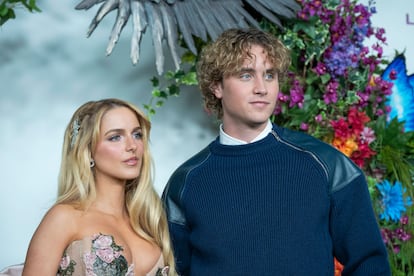
A community she is now a part of. On its first day at the box office in the United States, the movie grossed $56 million — figures far exceeding initial estimates. And in its first weekend in theaters, it reached a global box office total of $225 million. “This cast has become like a family to me, so to get to do it alongside them nonetheless is so special. But to get to be a part of something that I’m such a big fan of and so many people are such big fans of [and] to get to play a character that’s so beloved and also so different from myself. It’s been a blast, and it’s been so surreal and insane,” she said in a recent interview with People. She also sings one of the songs on the soundtrack, Half Alive.
She’s very clear about what she wants to do in her acting career, but not at any cost. The last thing she wants is for people to get overwhelmed by seeing her in every movie. “Now with social media, people get really sick of seeing people really fast. It’s like, ‘This is the hot new commodity, the new face we’ve been wanting.’ Three weeks later, everybody is hating on them,” she reflected in an interview with Cosmopolitan published on November 2. There’s another line she doesn’t want to cross: nudity. “At this point, I definitely don’t do nudity or very hypersexual things. I respect anybody who can, but it’s terrifying to me. I don’t know if that’ll ever change. It’s not like I only do wholesome things — my character literally gets gutted by Ghostface in Scream — but my dream is to try and be a Disney princess someday.”
Another of her limitations is avoiding competition with fellow professionals. “Sometimes I feel like I do extra work because this industry is so cutthroat at times. Of course, I put my career at very high importance, but I wouldn’t want to put that over somebody else’s expense, or step on somebody else to make my way up. It scares me, and I don’t think I would like myself very much if that’s who I became, or if that’s who I let this industry make me,” she told Teen Vogue.
Since last year, Grace has been in a relationship with her co-star in Regretting You (2025), Mason Thames, whom she also describes as her “best friend.” “There are moments that are just for you and your person. But I don’t see the point in not celebrating who you’re in love with,” she told Cosmopolitan.
She has grown up in the media spotlight, knowing that every move she makes could be criticized or scrutinized. “I’m not going to be able to control what’s said about me online. I haven’t been able to do that for 90% of my life, so I don’t care. I try not to let it affect me or worry me too much,” she adds. For now, she has four more projects coming up in the next few months. One of them is the series Scooby-Doo: Origins, a story that also reflects her personality and tastes: her dog’s name is Scooby-Doo.
After 15 years in the industry, she says she still feels excited about every project that comes her way, “even though it’s tiring” and, at times, “I get bruised”: “I’m thankful to still be feeling that way 15 years in, so I hope that 25 years in, I feel the exact same way.”
Sign up for our weekly newsletter to get more English-language news coverage from EL PAÍS USA Edition









ElPais
‘Why Do You Think That You Could Do That?’: The ‘misogynistic’ Interview That Questioned Hailey Bieber’s Business Credentials

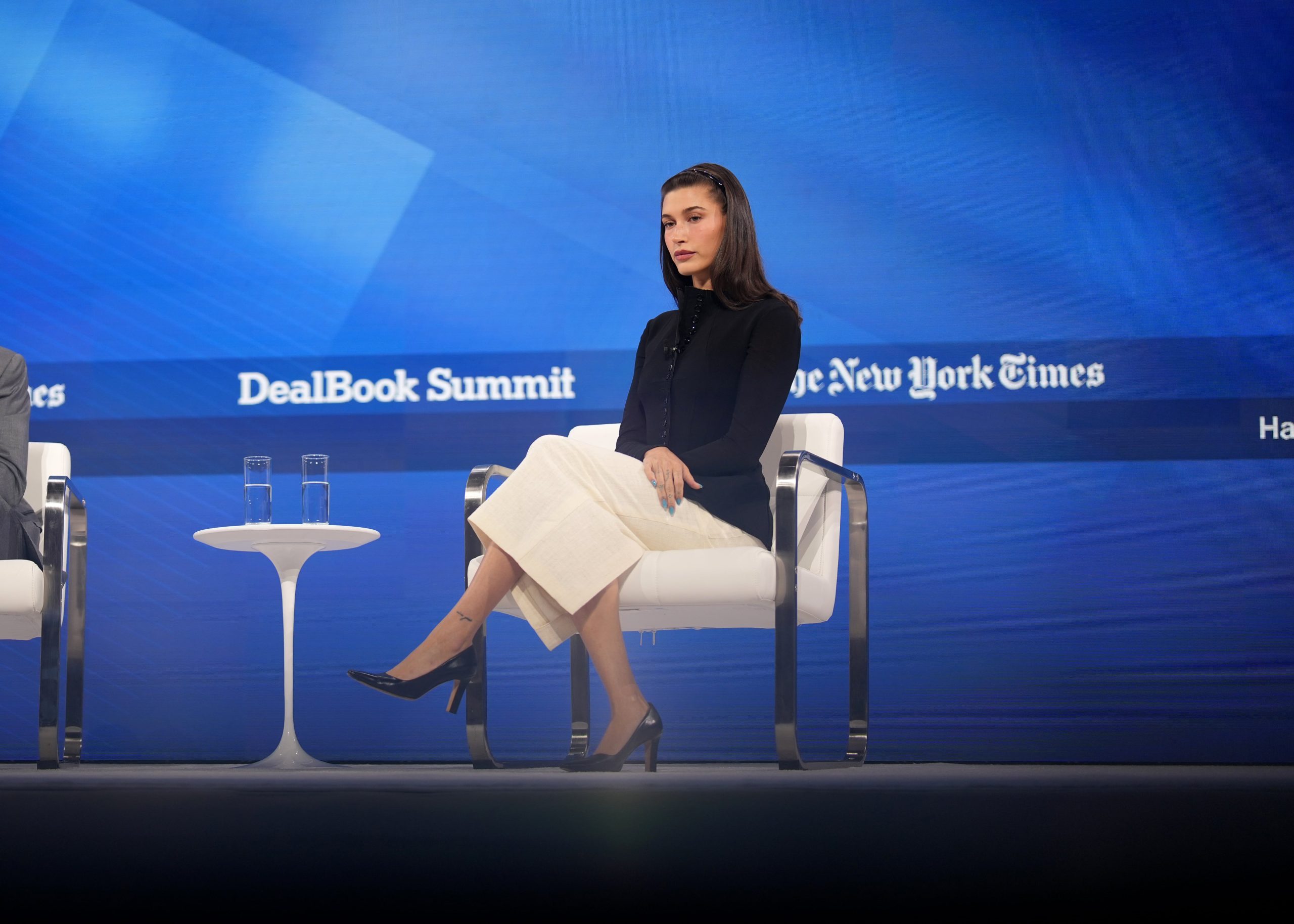
On Wednesday, November 18, model Hailey Bieber sat down with Andrew Ross Sorkin, columnist and founder of DealBook, a daily business and politics newsletter, for an in-depth conversation about the rise and fall of her beauty brand, Rhode.
Bieber’s presence (she is not only an entrepreneur and model, but also the wife of Justin Bieber) proved to be a major draw, even alongside speakers such as Elon Musk, Sam Altman of OpenAI, Satya Nadella, Microsoft’s CEO, and Zohran Mamdani. And her appearance did not disappoint, at least not social media users, who quickly turned the event viral for a variety of reasons, some more justified than others.
At first, much of the commentary focused on Bieber’s stylistic tribute to Carolyn Bessette-Kennedy. She wore a black wool-blend jacket from Yohji Yamamoto’s Spring/Summer 1998 collection, the same design Bessette-Kennedy had worn in June 1998 when she was photographed alongside John F. Kennedy Jr. at a charity event (fashion enthusiasts can be that specific). The internet, along with several leading fashion publications, became consumed with speculation over exactly where the coveted vintage piece had been sourced, especially after an identical jacket sold on The RealReal for $7,025 shortly before the DealBook Summit. It later emerged, following confirmation from her stylist, that the garment had been purchased from Tab Vintage.
The episode was both ironic and telling. When the entrepreneur in question is a woman working in a profession often dismissed as “frivolous,” discussion can quickly gravitate toward what she is wearing rather than what she is saying.
This annual summit brings together some of the most influential figures in U.S. business, finance, politics and culture for a series of live, onstage interviews, and it is not the first time it has featured high-profile celebrity guests. Previous editions have included personalities such as Kim Kardashian, Serena Williams and Gwyneth Paltrow.
What is unprecedented, however, is that both the interview’s perceived misogyny and the claims of Bieber’s incompetence became social media talking points and subjects of debate in the mainstream press.
Sorkin opened the roughly 20‑minute interview by introducing Bieber as something of a cultural force whose influence extends beyond the beauty industry and into the broader economy.
“We spent a lot of time at DealBook talking about people who shape the economy. And our next guest shapes the economy. But increasingly, some of the most consequential business stories, I think, begin with people who really also shape culture. And few people understand that intersection better than our next guest. Hailey Bieber,” he said.
The host then explained that, in 2022, Bieber launched a beauty brand called Rhode and that, less than three years later, it was acquired by e.l.f. Beauty in a deal worth up to $1 billion. It was a question about that figure that sparked much of the debate that followed. Sorkin asked whether the model had ever imagined Rhode would reach a $1 billion valuation. Patient but visibly nervous, she replied: “I said I would not sell it for less than that. […] That felt crazy. That’s like shooting for the stars.”
Sorkin then pressed her further, asking in a slightly mocking tone what had given her the confidence to believe she could achieve such a valuation. “Really? Why do you think that you could do that?” he asked. It was this final question, in particular, that set off a wave of commentary and debate.
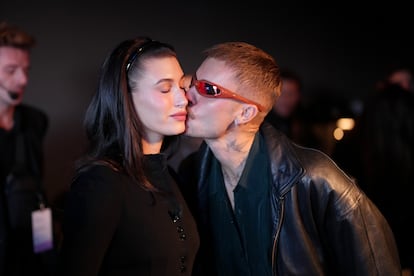
Numerous Reddit threads, home to both Hailey Bieber’s fans and detractors, sprang up within hours of the interview. Bieber has long been the target of online smear campaigns since her relationship with singer Justin Bieber became public. Many supporters of Selena Gomez have accused the singer of leaving Gomez for Hailey Bieber (née Baldwin).
Some users objected to what they saw as misogynistic treatment from the journalist. “Does anyone else think this interview was really bad?” one Reddit user wrote in a post that drew more than 200 replies. “I’ve seen clips on IG [Instagram] and reactions on Twitter, and I just didn’t like it at all. The questions were awful — I don’t get how her team approved them. It honestly felt like the interviewer was mocking her. Maybe that’s just his style, idk, but the questions he asked other people were way better.”
Another user, whose post generated a similar number of responses, complained: “The interviewer was clearly misogynistic even if he is not in real life, that’s how he appeared in that entire interview.”
The trade publication Business of Fashion also devoted a lengthy article to the interview, gathering reactions from other founders of billion-dollar beauty brands, including Charlotte Palermino, co-founder of Dieux. Palermino argued that this kind of treatment is, unfortunately, common for women in the industry: “It is woefully uneducated in this industry to say, ‘Wow, a billion dollars for a beauty company?’ Beauty companies do it every day.”
However, on Reddit, the model’s critics were just as active, echoing a point made by a number of commentators on platforms such as Instagram: that Bieber appeared ill-prepared to answer detailed questions about business management and that her performance suggested Rhode’s success was not thanks to her efforts.
The Business of Fashion article also acknowledged that some of the criticism had merit. Its author noted that, when explaining Rhode’s success, Bieber often leaned on concepts such as manifestation and optimism rather than offering more technical or business-oriented explanations.
Beyond the beauty business, Bieber also reflected on her complicated relationship with social media. Although she has relied on these platforms to build both her public image and the universe surrounding her brand and growing beauty community, she acknowledged their potentially damaging psychological effects. Bieber spoke candidly about the hostility she has faced online and admitted how deeply the negative comments had affected her mental health. “I had people telling me to kill myself in the comments every single day,” she said.
Judging by the reaction that followed the DealBook interview, things do not appear to have improved very much.
Sign up for our weekly newsletter to get more English-language news coverage from EL PAÍS USA Edition
brad pitt
David Fincher, Filmmaker: ‘The AI Debate Masks A Culture War. It Has Nothing To Do With Movies’

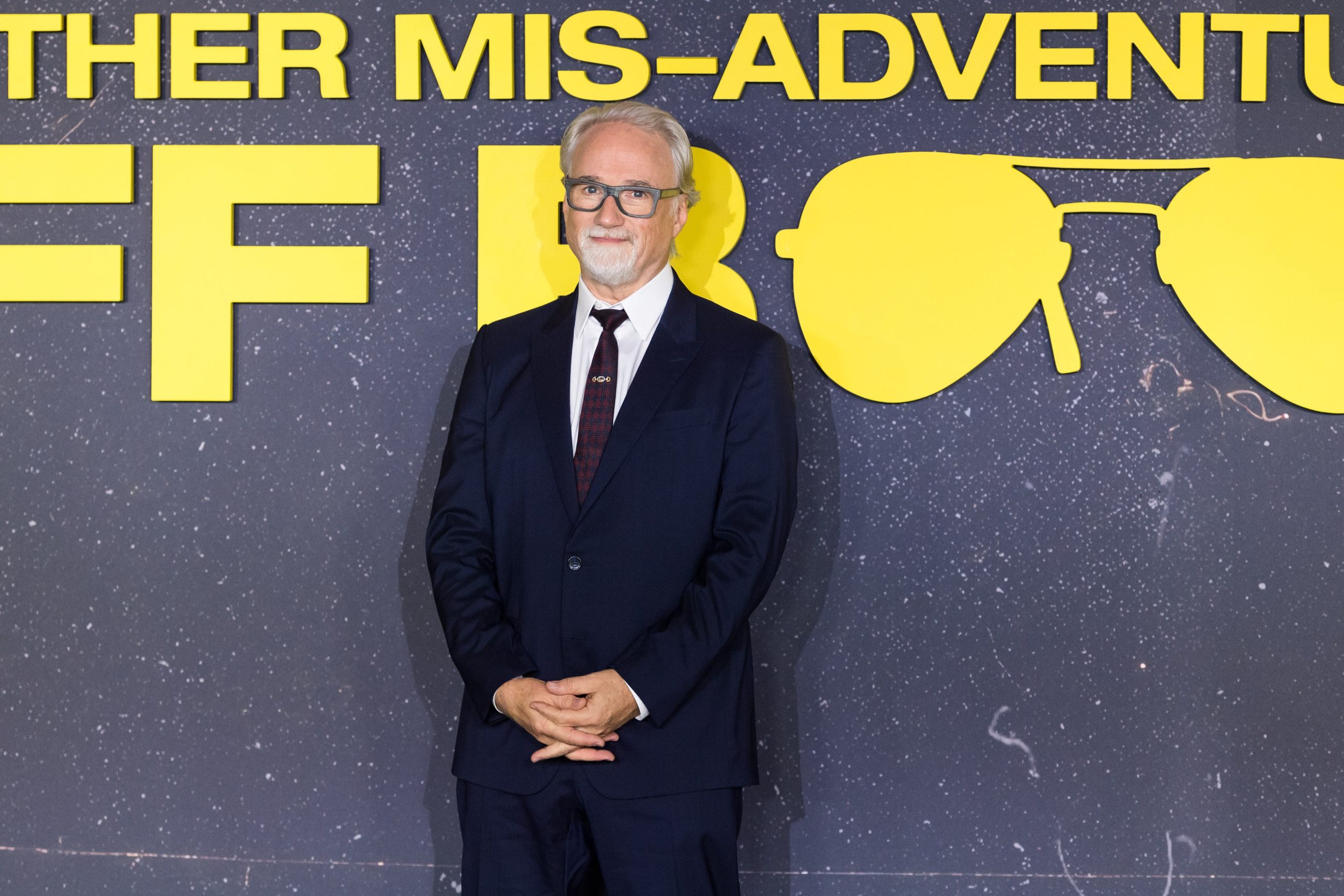
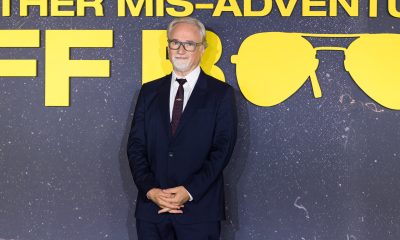
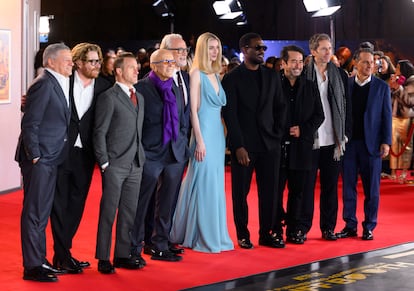
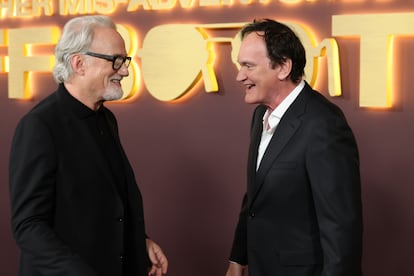
Quentin Tarantino has just become a father for the third time, and Brad Pitt is laid up in bed with the flu. So, in the absence of both the screenwriter and its leading man, director David Fincher, 64, took center stage at the European premiere of The Further Mis-Adventures of Cliff Booth, held in London on Monday night.
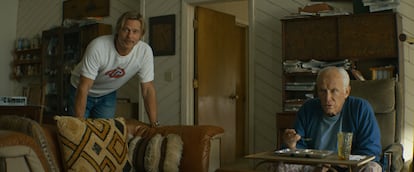
Eight years after the events depicted by Tarantino in Once Upon a Time in… Hollywood, Cliff Booth, the stuntman played by Pitt, remains stuck in Los Angeles. He lives with his father and drifts from one job to another, far removed from the glamour of doubling for the character portrayed by Leonardo DiCaprio. Some of those jobs are criminally dirty, though all are connected to the movie business in one way or another.
With his trademark darkness and bitterness, Fincher turns his gaze on a fading Los Angeles in 1977, during the months surrounding the release of Star Wars. Hence the word “misadventures” in the film’s title. The movie arrives in theaters on Wednesday before becoming available on Netflix.
On a cold Tuesday morning in London, a smiling Fincher greets the journalist warmly. The trip for this interview was financed by the streaming platform as part of the promotional campaign marking the end of Fincher’s seven-year relationship with the company.
Question. Your contract with Netflix has ended. Do you feel happy, liberated?
Answer. [Laughs] I’ve never been a happy person. I’ve had some good times at Netflix. I’ll answer in parts. Right now I’m exhausted; I feel like when a woman, after giving birth, is asked if she’d do it again and she says no. It’s the same thing. That said, ask me in six months [laughs]. Here in London, jet lag is adding to it. But what I am relieved about is that right now I don’t have any projects lined up; I’m free of any commitments.
Q. What did you connect with in the script that led you to accept the project?
A. I was working on several projects when Brad Pitt — with whom I’d already made three movies — called me and said he had a script he wanted me to read. Now, did he have the author’s permission? Brad called me back and confirmed that he did, that Tarantino would be flattered if I was interested in taking on the project. That really excited me. Do you know what drew me in? Following Pitt’s character and telling Booth’s story. And we started putting the cast together: Scott Caan was in the script from the start; Elizabeth Debicki was my choice; everything just fell into place.
Q. You cut 60 pages of dialogue from Tarantino’s 230-page script. Did he essentially accept that the film was yours, that it was a Fincher film?
A. The thing is, I didn’t cut any scenes. It was all dialogue. And as we refined the script, Debicki’s role actually grew, for instance. Tarantino had only one goal: to get the film made. It’s been fun because, really, think about my films. Think about Zodiac: it’s about losing hope. And in Cliff Booth, despite all the villains and the killings, and I’ve never had so many deaths on screen, the tone is different.
Q. There’s a bit of Robert Towne and a bit of Hal Ashby in this film.
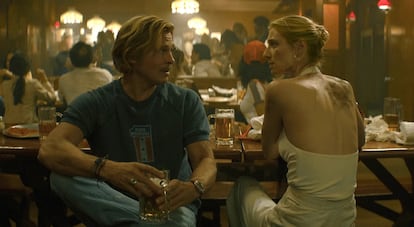
A. Thank you. I collaborated with Towne twice on two separate projects — each lasting three years — and they didn’t pan out. And I hope Cliff Booth’s women remind you of Towne’s, strong and resolute. I explained to Pitt that Crosby, the character played by Debicki, would never be a mere prop. That the romantic element, which is obviously there, wasn’t the main focus. She’s sophisticated; she’s driven by her own thoughts. Pitt loved it; it almost came as a relief to him. And my editor said this movie is Shampoo [Ashby’s classic] with killings.
Q. You were a teenager in 1977, the year Cliff Booth takes place. What do you remember about the movies from that era?
A. Pitt really likes The Towering Inferno from those years. And of course, I also enjoyed [Paul] Newman and [Steve] McQueen. But those studio films overshadowed the work of, say, Hal Ashby. That’s why I was interested in this script. Let me go back to the beginning: Cliff is over 50, his father lives with him, and he’s facing and navigating his retirement.
Q. In recent days, there has been a heated debate about the use of AI in your film to reconstruct that version of Los Angeles and what’s shown on TV. Did you see this coming?
A. You know what the thing is? The debate over AI masks a culture war; it has nothing to do with movies. I’ve never been in a situation where people cared about the tools I used. Look, my goal is to tell a story. You have a certain amount of money, you have to shoot a certain number of sequences, and you have to animate them, bring them to life.
Q. Are you interested in the new generation of horror directors coming out of YouTube? I’m referring to the creators of Obsession and Backrooms.
A. I have to admit I haven’t seen them because I’ve been a little busy [laughs]. But yes, I’m very interested. I had an interesting conversation a couple of weeks ago with some people who work in intellectual property, actually, on the studio side. They were talking about this new boom happening in horror, but mostly because they were interested in these new properties and new ways of thinking about horror. And they asked me: Why do you think this is happening in horror? I replied: Think about it. Horror filmmakers have to come up with a new way to kill someone every month. Twelve times a year. And they have to evolve, create new ways to scare people. They’re forced to continually evolve in how they build suspense, the killer’s identity, and their motivation. See how you tie it all together. And another detail that bothers Hollywood: there’s no one like them involved. There’s no adult oversight. When you watch these films, they’re cheap. And yet they pay for the cars, the lighting, the actors’ union… Where do they save money? Well, they don’t pay all those executives. And then, horror is very personal — everyone is scared by something different — so you can find success with different audiences.
Q. Speaking of personal fear, how do you feel about the United States today?
A. Right now? Politically, in the United States, the situation has been very difficult over the past 12 years. We’re in the midst of a culture war. It’s funny. We’re a country of “comrades” — I don’t mean to sound like I’m trying to be funny — we really support each other as colleagues, which is actually kind of fun, but that also means we get worked up when talking about our desires, and our anger can also be very… intense.
Q. You say that if you achieve 60% or 65% of what you planned for a movie, you’ve succeeded. What about this one?
A. Let me explain. What I mean is that in my head, I work on movies; I build them there. Then you have to make them, and that’s when you transform them into something tangible. And that’s where that percentage comes from. Of course, in my head they’re perfect… I’ll also tell you that lately I’ve been having a lot of conversations with friends, enemies, all kinds of people, and I’m surprised by how much complaining there is and how much people look back. Film distribution and production were also complicated decades ago. I’m much more interested in the conversation about where we want to go. It has to do with AI. We’ve been painting on walls for thousands of years and shooting films for a century. I’m not willing to get swept up in that melancholy notion that VistaVision — which was born in 1954 — was the best format. And I don’t think that’s true. Let’s move forward; there’s so much to explore. I’m collaborating with [Spanish director] Alberto Mielgo right now. This guy is a genius; he’s doing some incredible things… When I show our work to my friends, they say, “What is this?” They can’t believe it. So we’re not done yet.
Sign up for our weekly newsletter to get more English-language news coverage from EL PAÍS USA Edition
Colin Farrell
Colin Farrell And Emma Fogarty: The Friendship That Led The Hollywood Star To Open Up About His Private Life

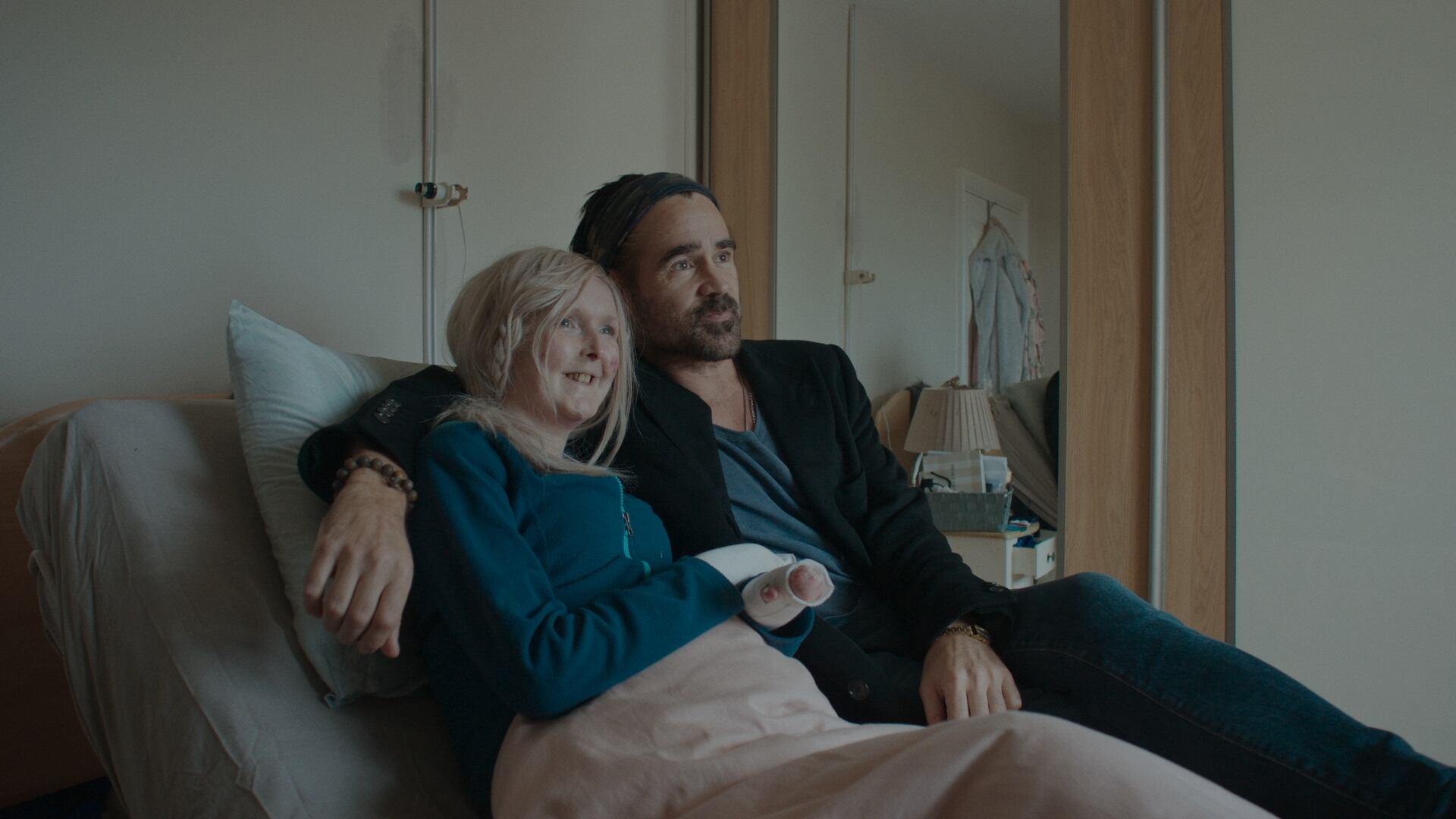
“I know your dreams have been taken from you. I have a dream now to make this film together,” Colin Farrell says in an audio message he sends to Emma Fogarty. He is a renowned Hollywood star. She is an Irish woman who has spent her entire life defying expectations.
Fogarty was born with epidermolysis bullosa (EB), also known as butterfly skin disease, an extremely rare and painful condition that causes the skin to blister and tear at the slightest touch. Their shared dream is to complete the final four kilometers of the Dublin Marathon together, one kilometer for each decade of Fogarty’s life. When she was born, doctors told her parents she would not survive a week, and that this would be for the best. It is a harrowing memory that she recounts herself in the documentary The Slightest Touch, which premieres on HBO Max on Wednesday, November 25.
The film follows the months leading up to the October 2024 marathon in the streets of the Irish capital, where completing the race and raising funds are the central goals. Over the course of its 90 minutes, however, the documentary unfolds as the story of a friendship. It also chronicles the struggles of Fogarty, now 42, the oldest living person in Ireland with the condition, and the chronic pain she endures. At the same time, Farrell, star of films such as Minority Report (2002), In Bruges (2008) and the series The Penguin (2024), reflects on his own challenges. That is notable given the 50-year-old actor’s reputation for fiercely protecting his private life.
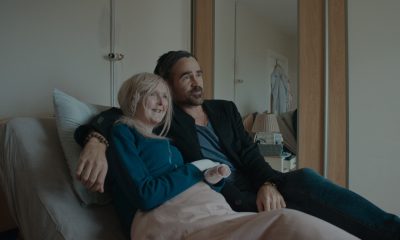
“I have never had a camera crew come near my home. The reason I’m here is the same reason you’re here: it’s for Emma. Just those three words: It’s for Emma. It’s for Emma. It’s for Emma,” Farrell says at the beginning of the documentary, speaking directly to camera from a sofa in his Los Angeles home.
The film not only offers glimpses inside his house, but also introduces his two sons, James and Henry. Farrell touches on his complicated relationship with his father and speaks candidly about addictions he overcame years ago.
The actor appears alongside his son James, born on September 12, 2003, during his relationship with model Kim Bordenave. James has Angelman syndrome, a rare neurogenetic disorder that causes severe intellectual, speech and developmental impairments. Father and son share an intimate moment in the living room of their California home. The only previous occasion on which Farrell had publicly appeared with his eldest son was in August 2024, when he announced in People magazine the launch of the Colin Farrell Foundation to support young adults with intellectual disabilities through educational programs, resources and other forms of assistance.
The film also shows Farrell reflecting on his relationship with his eldest son, James. “My son James, with the struggles he has… somehow that opens people’s hearts up, and allows them access to the best parts of themselves,” reflects Farrell at one point. “I think Emma, as well… She makes the best out of everyone.”
Farrell and Fogarty met around 15 years ago when they were seated together at a fundraising event aimed at raising awareness of and combating epidermolysis bullosa. Their relationship initially consisted of two or three emails a year.
Today, they exchange WhatsApp messages, voice notes and video calls that end with “I love you.” Whenever Farrell returns to his native Ireland, he makes time to visit Abbeyleix and spend time with Fogarty and her parents, with whom she has lived since breaking her leg at age 23 and being forced to move back home, never to regain her independence. Today, around 90% of her body is covered in wounds, and her leg was amputated due to cancer, a disease she has beaten twice.
Turning 40 was also an emotional milestone for Fogarty. In the film, she reflects on the anxiety she felt approaching an age, given that no one with her condition has reached the age of 50.
Elsewhere, she describes Farrell as a constant source of support. What she values most, she says, is his willingness to listen without judgment and to engage openly not only with the physical realities of her condition but also with its emotional and psychological toll.
Fogarty wanted cameras to capture the moment when the dressings covering most of her body are changed. The process can take up to four hours and, she says, there is only one day each year when she does not go through it: Christmas Day. “When I walk into a room, people see my hands bandaged and my arms bandaged. It’s intense, but what they see is bandages,” she said. “Until somebody sees a wound, it’s very hard to picture what a wound looks like.”
Farrell took up running while filming Thirteen Lives, the dramatization of the rescue of a youth soccer team trapped in Thailand’s Tham Luang cave system by torrential rains and dangerous flooding. In the film, he played John Volanthen, a passionate marathon runner.
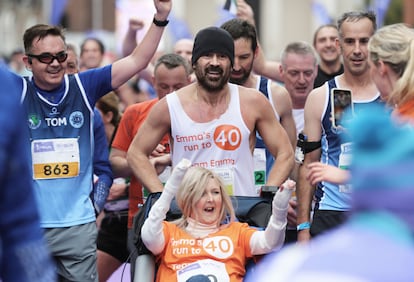
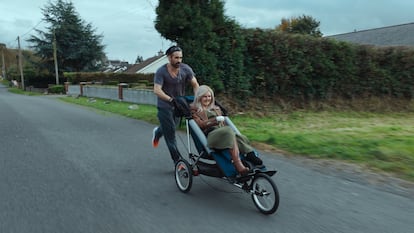
The documentary shows how seriously Farrell approaches what becomes his second marathon, one he ultimately runs in full. Viewers see him training shirtless through the streets of Los Angeles and later in Macau, where he travels for a shoot ahead of the Dublin race. They also see him in Fogarty’s hometown, worrying about the potholes and uneven terrain they will encounter during the final four kilometers and testing the specially adapted wheelchair in which she will complete the route. First, he tries it alone; then with Fogarty seated in it.
In a hotel room in Macau, where he was filming scenes for Bad Luck (2025), Farrell reflects on his past struggles with addiction. He recalls beginning to drink as a young teenager and describes how alcohol initially helped him overcome his shyness and connect with others. What followed, he says, were years of substance abuse and emotional confusion, during which he lacked the tools to understand or process what he was feeling. Looking back, he sees it as a period that could easily have ended very differently and says he feels fortunate to have survived.
The actor becomes emotional when talking about his son James, explaining that he achieved sobriety when the boy was about two and a half years old. “I realized he needed a dad,” he said in the film. “And more than other kids, because he would never be able to take care of himself.”
He credits both of his children with fundamentally changing him and helping him mature. Fatherhood, he says, also transformed his relationship with his own father. It gave him a greater sense of empathy and allowed him to see his father’s shortcomings in a different light. While he spent years seeking his approval, he now views those unresolved feelings as his own responsibility rather than something that defines their relationship.
“I’m this smalltown girl who has a terrible disability, and he’s this huge superstar in Hollywood,” Fogarty said in an interview with The Guardian on November 1. “Two totally different lives that you would never put together in a million years. But somehow, we have found this wonderful friendship”
The pair watched the documentary together at its London premiere, but Farrell later told the British newspaper that he had no desire to revisit it. “It’s enough to live in my life,” he said. “To see it played back in that way, it was too much for me. But I would do it all over again and again to get Emma’s story out there, because her spirit is so inspiring. In my 50 years of living, she baffles me still to this day.”
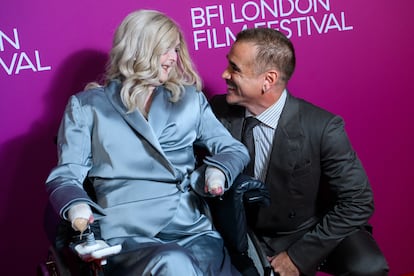
For the London premiere in October, HBO chartered a private jet — not for the Hollywood star, but for the star of the documentary. It is physically impossible for her to fly on a commercial flight.
“I haven’t been on a plane in many many years. My dreams came true with the help of so many people. I can’t thank everyone enough!! Trip a lifetime,” Fogarty shared on Instagram, where she has more than 17,000 followers.
On Monday, Farrell published a letter to Fogarty on Variety, paying tribute to her perseverance and the impact of her advocacy. As an ambassador and one of the most visible figures associated with DEBRA Ireland, the charity supporting people with epidermolysis bullosa, Fogarty has helped raise more than $1.1 million for the cause.
“While promoting the documentary, some folks have asked me what it is about Emma or our friendship that makes it so special,” he wrote. “I struggle to answer such an honest and simple question because I live inside our friendship and have never objectified it. It’s always been easy with Em. She’s just my dear friend, and it’s a friendship that has deepened through the years. She’s allowed me to be there for her and has shared her trials and triumphs and fears with me. What a great gift. This intensely spirited and brilliant woman has also been there for me. One such example was during the days after my father’s passing […] That day marked what Emma is to me: a true friend, and someone who would be there for me through thick and thin.”
In April 2025, just months after the documentary was completed, Farrell lost his father. Fogarty attended the funeral despite the physical toll it required: getting ready, leaving home, travelling by car and coping with the journey back. For someone living with epidermolysis bullosa, even the simplest movements can be exhausting and painful. Her presence that day serves as another example of both the strength of their friendship and the extraordinary resilience that runs through the documentary.
Sign up for our weekly newsletter to get more English-language news coverage from EL PAÍS USA Edition

Andy Taylor: Duran Duran Guitarist Dies Aged 65
‘Guiri tax’ in Spain: expats claim they are charged more for being foreigners

Canaries Migrant Crisis At Emergency Level


-

 New Developments4 weeks ago
Luxury Villas For Sale, Estepona – ProjectL1
-

 New Developments3 weeks ago
The San Roque Club – Townhouses For Sale
-
countryside4 weeks ago
Rural revival: Five Almeria villages make moving inland easier and more enticing
-
costa blanca live music4 weeks ago
Beatles tribute: The Liverpool Band returns to Orihuela Costa
-

 New Developments3 weeks ago
Stylish 3-Bedroom Apartment With Panoramic Sea Views – Benalmádena
-

 America3 weeks ago
Así Ha Sido La Primera Jornada Del World In Progress 2026: Del Anuncio De Sánchez De Ayudas Para Las Víctimas De Urda A La Reivindicación De Rebeca Grynspan Del Papel De La ONU
-
All Saints4 weeks ago
Driving to Andalucía this weekend? DGT warns of extra traffic after train crash
-
Eating out in Gibraltar4 weeks ago
Young woman left horrified after Gibraltar restaurant receipt carries shocking racist slur