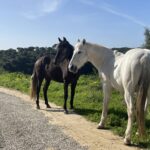
Thousands gather for music, gastronomy, and celebrations at B-Side Festival. Photo Credit: B-Side Festival
The incredible 21st edition of the B-Side Festival has, once more, transformed Molina de Segura into a vibrant stage in a massive celebration. The Murcia festival has brought together more than 20,000 people across all its activities, with a lineup that includes popular artists like Love of Lesbian, Rigoberta Bandini, Crystal Fighters, Sidonie, Sexy Zebras, Alcalá Norte, Niña Polaca and Xavibo.
Free Friday performances kick off the festivities: Thousands head to Molina de Segura
The B-Side Festival brought music to the streets, squares, and local venues over the weekend of Friday, September 4 to Saturday, September 5. The programme combined both national and international artists, as well as some emerging talents that currently shape the music sphere in Molina de Segura and beyond. The local Plaza de España and the REMO venue served as a popular hotspot for visitors to the festival to gather, sing, and dance.
Music and local tapas bring the streets to life
Friday was a free admission day, kicking off the weekend on a high note and fully dedicating Molina de Segura to vibrant and energetic live music. Gallopedro, Wings of Desire, Sidonie, and Serial Killerz provided the soundtrack for the first night, bringing together different generations, genres, and performing styles to the Costa Calida town. In particular, pop and rock music shone on the first day of the festival, culminating in a colourful opening fireworks display for the local patron saint festivities.
The first day of the programme also included the Baby B-Side by Yo Soy Ratón performance, the festival’s family-friendly offering, which once again brought music closer to the youngest members of the family with a day designed for family enjoyment.
The programme also passed through the Plaza de la Región Murciana, Plaza Santa Bárbara street and Jesuita Hernández street, with performances by Staring, Lamartumind, Sao, Vuelve Abril, Well and Regular Crowd.
High energy and universal accessibility at the main venue
As the evening of Saturday approached, some 12,000 people shifted to the REMO venue, where the concerts lasted long into the night. The lineup included pop, rock, electronic, and urban sounds, in a festival that combined some established and popular performers with electric new acts.
The festival’s commitment to accessibility was, once more, a centre point of this year’s edition of the festival. The REMO venue prides itself in its Quality Seal: Accessibility in Musical Events, a certification that shows the venue is compliant with universal criteria and ensures that those with disabilities can enjoy the musical experience as well. With this seal, the B-Side Festival has become the first major music event in the Region of Murcia to obtain this quality seal.
The festival was brought to a close by British band Crystal Fighters, who turned the main stage into an enormous dance floor with a unique blend of electronic, indie, and roots music, a sound that perfectly captured the spirit of B-Side.
The B-Side Festival: More than two decades of success in the Region of Murcia
The B-Side Festival, celebrating more than two decades of history, was successfully brought to a close in the Region of Murcia, and is already looking ahead to what is certain to be a successful next edition. Uniting music, gastronomy, and thousands of people, it is a great source of pride for residents, and fun for visiting tourists to the charming town of Molina de Segura.
The rescue says this is not the first incident in which someone has entered the property or left food for its horses. Photo credit: Alexander Sánchez
I’m sure plenty of us have seen, or been involved in, the hard work that volunteers and employees put into running an animal rescue. Countless animals depend on them every day, while huge amounts of time, effort and personal money can go into making sure those animals have everything they need.
For EquiScire, a horse rescue and rehabilitation centre in Cádiz province, that work took an alarming turn on Tuesday morning when staff arrived to find three of their rescued horses suffering from serious digestive problems.
Horses have extremely sensitive digestive systems
What initially appeared to be an isolated case quickly became a much bigger concern. Penny, the oldest member of the herd, was actively colicking when staff members arrived, but within minutes they discovered that two other horses were also suffering from acute diarrhoea. “That was when we knew something wasn’t right,” the EquiScire team told the Euro Weekly News.
Horses are particularly vulnerable to digestive disturbances because of the way their gastrointestinal system works. They cannot vomit because the muscular valve between the oesophagus and stomach prevents food from travelling back up, meaning problems in the digestive tract can become serious quickly. Changes to feed can also contribute to digestive disorders and colic, while severe diarrhoea can lead to dehydration and electrolyte imbalances.
EquiScire staff immediately began checking the feeders and water troughs for anything unusual, but initially found nothing. It was only when they walked around the lower section of the paddock that they discovered what had happened. “As we walked down the lower part of the paddock we noticed some handmade canes that had a fork-like device attached on the end of them thrown on the floor next to a prickly pear cactus that is on the other side of the fence. They definitely were not there the evening before.”
Trespasser allegedly picked prickly pear fruit
According to the rescue, the equipment indicated that at least one person had climbed through the fencing and entered the property to collect prickly pear fruit from the cactus. The mature fruit that was ready to eat had apparently been taken, while rotten and fermented fruit was left inside the paddock. Some of the horses subsequently ate it.
Prickly pear, or Opuntia, is not automatically poisonous to livestock. However, the plant can have a laxative effect and excessive amounts have been associated with diarrhoea in animals. The cactus also carries sharp spines and tiny barbed glochids which, if eaten or embedded in the mouth and digestive tract, can cause severe pain, deep ulceration, abscesses and heavy drooling.
For Penny, the situation was particularly serious because she already suffers from gastric ulcers. The sudden consumption of rotten and fermented fruit placed additional strain on her already compromised digestive system and contributed to the severe stomach problems she experienced. One of the other affected horses had eaten less of the discarded fruit and recovered within two days. India, however, became much more seriously ill.
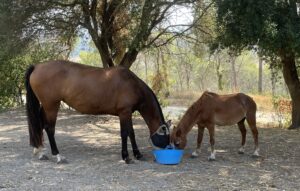
Penny and India suffered the worse effects. Photo credit: Alexander Sánchez
Existing illness made India particularly vulnerable
India and Tsuki both have piroplasmosis also known as Tick fever, a protozoal disease that affects red blood cells and can cause anaemia and other serious health problems. Eva, a volunteer, explained that while the condition can be managed, treatment does not simply make the underlying parasite disappear.
“There is no cure for piroplasmosis, only managerial treatments that keep the parasite at bay,” Eva said, explaining that the horses generally receive an intravenous treatment top-up once a year. The concern is what happens when a horse’s immune system becomes weakened.
In India’s case, the severe digestive problems meant she was unable to absorb the nutrients she needed, leaving her more vulnerable to the effects of her existing condition. “She was the worst one out of the three. She had such bad tummy issues that she was not able to absorb any nutrients, leading to her immune system weakening.” Fortunately, Eva said their vet responded immediately and India is already showing signs of improvement.
It is not the first time horses have been fed
The rescue says this is not the first incident in which someone has entered the property or left food for their horses. A few years ago, staff repeatedly arrived to find potato, onion and other vegetable peelings scattered around the paddocks. They eventually discovered that a woman who walked past the property each morning had been feeding the horses because she believed they enjoyed it. Co founder Alex told us “She said she did not know that the vegetables were toxic,”.
For the rescue, the incident highlighted a simple but important point: people should never feed someone else’s animals without permission. Even something intended as a harmless treat can cause a digestive emergency, particularly when the animal has existing health problems.
The cost goes beyond the vet bill
For a small rescue fundingits work from its founders’ own pockets, the consequences extend beyond the immediate veterinary treatment. “Our rescue is currently funded straight out of our pockets, and we put a lot of love and care into assuring all our rescues receive the topmost care,” Alex said.
“A careless, senseless act like this can put a lot of pressure on an already struggling centre and cause funds that could have gone towards rescuing other horses or covering food costs to be spent treating horses for something that could otherwise have been prevented.”
All three horses have pulled through, but EquiScire hopes the incident will serve as a warning to anyone tempted to feed an animal simply because they think they are doing something kind. The rescue is considering putting up signs asking people not to feed the horses, although locals have warned that signs alone may not stop everyone. Anyone wishing to support EquiScire can do so through its GoFundMe account or contact the rescue directly at EquiScire@gmail.com.
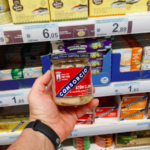
The OCU study examined 32 tins of light tuna in oil. Photo credit: Jose Rosa Vazquez
If you regularly reach for a tin of tuna when you need a quick lunch, you probably do not spend much time wondering whether one brand is actually better than another. They can look almost identical on the supermarket shelf, with the same promises of olive oil, quality tuna and an easy meal for a few euros.
But the price on the label does not necessarily tell you what you are getting. A major OCU analysis of 32 tins of tuna sold in Spain found clear differences between products, with some of the lowest-scoring options receiving just 64 points out of 100.
Three tuna products came bottom
The OCU study examined 32 tins of light tuna in oil, including 19 products in olive oil and 13 in sunflower oil. Researchers assessed everything from the tuna species and oil used to freshness, salt, labelling, the proportion of fish in each tin, physical defects and the results of professional tasting.
The lowest score went to Conservas Ortiz AOVE Eco, which received 64 points. OCU highlighted its relatively high salt content and shortcomings in its labelling, although no significant defects were found during the tasting assessment.
Next came Carrefour’s pack of tuna in sunflower oil, with 65 points. The product was marked down following the tasting assessment and because some defects were detected. OCU also noted that its competitive price did not translate into a quality level that matched the better-performing products.
Cabo de Peñas Aceite Eco scored 67 points. Its relatively high salt content and only acceptable labelling affected the result, while OCU also considered its price high compared with the quality offered.
The biggest problem was salt
Salt was one of the clearest weaknesses across the products tested. The average salt content was 1.04 per cent, while the Spanish Agency for Food Safety and Nutrition considers a food to have a high salt content when it exceeds 1.25 per cent.That does not mean the tuna tested was unsafe. In fact, OCU’s laboratory checks produced reassuring results on some of the issues consumers might worry about most.
Testing found that the fish in all 32 products belonged to authorised species for light tuna, while analysis of the fatty-acid profile confirmed that the oil used matched what was stated on the packaging. Histamine levels were low and mercury concentrations were well below the permitted maximum in every product examined.
Cheap tuna beat premium products
One of the more surprising findings was that spending more did not guarantee better tuna. For the olive-oil products, prices ranged from €11.39 to €42.95 per kilogram of drained tuna. OCU found that two supermarket own-brand products offered very good quality for less than €15 per kilogram: Sal de Plata from Aldi and Hacendado from Mercadona.
Sal de Plata received 86 points, making it the highest-rated product in the analysis, while Hacendado scored 85. Both were recognised for their quality and value for money.The findings also show why comparing the price of the whole tin can be misleading. Different packs may contain different amounts of actual tuna, so OCU compared prices according to the weight of drained fish rather than simply the size or price of the packet.
What should shoppers look for?
The organisation considers the overall quality of the products analysed to be good and says there are plenty of worthwhile options. Shoppers should pay attention to the salt content, the amount of tuna compared with the covering liquid and the information provided on the label. The study also found that good-quality tuna does not necessarily come with a premium price tag.
The important point for shoppers is that OCU has not found a safety problem with these tins. Its testing found no worrying levels of mercuryor histamine in any of the 32 products, and all contained the type of tuna and oil stated on the label. The differences were mainly in quality, salt levels, labelling, taste and value for money.
Workers putting finishing touches for school kids. Credit: Ayto
More than 4,400 children in Benalmadena are heading back to public Infant and Primary schools with much upgraded facilities, new safety measures and improvements around school entrances.
380 LED lights replaced across Benalmadena schools
Summer has been a busy one for maintenance teams, with painting, plumbing repairs, new flooring, electrical work, pruning and new benches carried out across the town. A total of 4,482 pupils are due to benefit from the work during the 2026/27 school year. One of the biggest jobs involved replacing 380 lighting points with LED units, bringing school lighting into line with current regulations.
Cleaning and pressure washing has also been carried out inside the schools and in surrounding areas, helping get everything shipshape before pupils return. Fire safety has received particular attention at CEIP Poeta Salvador Rueda, where €45,000 is being spent on detection and protection equipment, signage, fire extinguishers and other measures.
AEDs and legionella checks added
Safety work has not stopped at what parents and pupils can see. Three new contracts cover fire protection, automated external defibrillators (AEDs), and legionella prevention. Each educational centre will have an AED, while CEIP El Tomillar will have a second device.
Regular water testing and cleaning of water tanks will also take place, with quarterly checks covering taps, drinking fountains and other parts of the school water networks. Earlier this year, Benalmadena also reported progress on measures to improve comfort in schools during periods of extreme heat.
21 school areas checked for traffic problems
Getting children safely through the school gates has also been given attention. Traffic signs, pedestrian crossings, road markings, parking areas and accessibility points around 21 educational centres have been inspected.
Damaged road markings will be repainted and signs replaced or improved where required, with the Local Police and mobility teams involved. Work follows earlier changes around El Tomillar, where new traffic arrangements created a dedicated school-time drop-off area and 16 additional parking spaces.
For families, it means the new school year starts with plenty happening both inside and outside the classroom.