Connect with us

%

More Than 800 Runners Participate In AFEMAR Charity Race In San Pedro Del Pinatar

Published

on

more-than-800-runners-participate-in-afemar-charity-race-in-san-pedro-del-pinatar

More than 800 runners united in AFEMAR’s charity mental health race. Photo Credit: San Pedro del Pinatar Town Hall

Community spirit and athletic determination took centre stage in San Pedro del Pinatar as more than 800 participants laced up their running shoes for the incredible third edition of the AFEMAR Solidarity RunRún. Held on the municipality’s vibrant coastal streets, this hugely popular charity race brought together local residents, seasoned athletes, and mental health advocates in a powerful display of solidarity, camaraderie and community support.

Thrilling victories in the male and female divisions

The competition saw impressive performances across both of its divisions. In the male category, José Vicente González Arteaga crossed the finish line first with a time of 21 minutes and 4 seconds. He was closely followed by runner-up José Moreno González, while local favourite Francisco Mariano Martínez Morales, affectionately known as “Kiko”, secured a third-place podium spot for his home town.

In the female category, Esther Bódalo Lozano delivered a dominant performance to claim victory, stopping the clock at an impressive 27 minutes and 29 seconds. Caroline Brown finished in second place, while Gladys Cecilia Artiaga Londa completed the women’s podium in third position after a tough competition.

Raising vital funds for housing and youth mental health

However, the true triumph of the day was in the event’s charitable heart. All of the funds raised through registrations and community donations directly went towards AFEMAR’s ongoing social initiatives. Specifically, the proceeds will finance two vital projects: establishing a new sheltered housing facility to empower individuals living with mental health conditions, and expanding “L-mental,” a specialised support service dedicated to providing care for children and adolescents navigating mental health challenges.

A cherished community tradition driving real change

Organisers expressed deep gratitude to the hundreds of runners, dedicated volunteers, municipal leaders, and enthusiastic supporters who filled the streets with boundless energy and optimism. Combining athletics with social purpose, the RunRún event has firmly established itself as a cherished tradition in San Pedro del Pinatar, proving that when a community runs together, every step creates real, lasting, and positive change for mental health care awareness across the municipality.

%

Madeleine McCann Prime Suspect Planning Book To Tell His Side Of The Story

Published

on

madeleine-mccann-prime-suspect-planning-book-to-tell-his-side-of-the-story

Brückner maintains that he had no involvement in her disappearance. Photo credit: MET Police record

If you have followed the Madeleine McCann case for years, there is one question that has never gone away: what happened to the little girl who disappeared from her family’s holiday apartment in Portugal in 2007? Now, almost two decades later, the man German authorities identify as the main suspect is preparing to put his own version of events into print.

Christian Brückner is reportedly planning a book in which he will defend his innocence and set out his account of what happened. The development comes at a particularly striking moment, after he has also broken years of silence about where he says he was on the night Madeleine disappeared.

Brückner wants to tell his side

Brückner, 49, has begun working on a draft and has approached at least one professional writer to help with the project. According to reports, he wants the book published in both German and English and is looking for a publisher or financial backing. Sources cited by The Mirror claim Brückner is keen to tell his side of the story and believes a book could give him the opportunity to explain his version of events and defend himself against the allegations surrounding Madeleine’s disappearance. The reported plans come after years in which Brückner has largely refused to discuss the case publicly.

He has never been charged with Madeleine’s disappearance and has repeatedly denied having anything to do with what happened to her. Being identified as a suspect by German authorities does not mean he has been convicted of any offence connected to the case. Madeleine was three years old when she disappeared from her family’s holiday apartment in Praia da Luz, in Portugal’s Algarve, on May 3, 2007. Her disappearance prompted an international investigation and generated worldwide attention, with searches continuing over the years in Portugal, Spain and Germany.

He says he was close to the apartment

The reported book plans follow a recent interview in which Brückner gave a new account of his whereabouts on the night Madeleine vanished. Speaking to the Mail on Sunday, he claimed he was around 150 yards from the McCann family’s apartment. Brückner said he was on a beach near the resort, where he claims he was selling drugs.

He also said he had travelled from Spain to Portugal carrying marijuana and claimed Portuguese police stopped his van three times that night while officers were searching for Madeleine. Brückner has maintained that he was not involved in her disappearance and reportedly said he had previously kept quiet because he believed authorities were attempting to frame him. His account places him close to the holiday apartment that night, but it remains his own version of events and does not establish what happened to Madeleine.

What happened to Madeleine?

German prosecutors identified Brückner as a suspect in 2020. He has not been charged in connection with Madeleine’s disappearance. The case against him has therefore remained an investigation rather than a criminal conviction. Brückner was released from prison in Germany in September 2025 after serving a sentence for the rape of a 72-year-old woman in Portugal, an offence unrelated to the Madeleine investigation. He has also faced other allegations, which he has denied. His reported plans to publish a book could now bring his version of the case into the public eye in considerably greater detail.

There is also a financial motive being reported. Sources say Brückner sees the project as a possible way of making money, as well as an opportunity to present his account directly to readers. Whether the book is actually published remains to be seen. There is currently no confirmed publication date or publisher. For the McCann family, however, the central issue remains unchanged.

Madeleine disappeared almost 20 years ago and has never been found. A book from the man German authorities regard as their main suspect could contain new claims, explanations and his account of the night she vanished. But it would still be one person’s version of events, rather than an established account of what happened to the missing three-year-old. Until there is evidence establishing what happened to Madeleine, the biggest question in one of Britain’s most closely followed missing-person cases remains unanswered.

Continue Reading

%

Cádiz Hospital Rat Incident Raises Fresh Questions Over Spanish Hospital Hygiene

Published

on

cadiz-hospital-rat-incident-raises-fresh-questions-over-spanish-hospital-hygiene

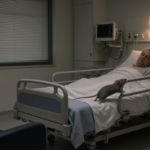
The union also says it identified a possible entry and exit point near the hospital garden. Photo credit: Ai generated image

If I was to ask you where you would expect to see a rat, I’m sure a Spanish hospital bed would probably be one of the last places you would say, particularly when you are recovering from an operation. Yet one patient in Cádiz had a very different kind of visitor during his stay, turning what should have been a routine night in hospital into a rather extraordinary encounter.

It is the latest in a string of unusual incidents involving unwanted creatures at Spanish hospitals, from insects turning up where they really should not be to reptiles making their way into patient areas. So, quite apart from the immediate disgust factor, it raises an uncomfortable question: are Spain’s hospitals doing enough when it comes to pest control and sanitation?

Rat jumps onto patient’s bed

The incident happened during Friday night, September 18, at Hospital Puerta del Mar in Cádiz. According to the patient’s relatives, a large rat somehow made its way into a third-floor hospital room. The animal initially hid behind the chair being used by a family member accompanying the patient. It did not stay there for long.

The rat eventually jumped onto the patient’s bed, where it was filmed by the family before they managed to get the animal out of the room. The patient was recovering from an operation at the time, making the unexpected visitor particularly disturbing for those present. But the incident has taken on a different significance because concerns about rats at the hospital had already been raised weeks earlier.

Staff had already sounded the alarm

UGT says it warned hospital management in August after rodents were reportedly seen in several areas of Puerta del Mar. Those areas included the kitchen, pathology, nuclear medicine and radiotherapy departments, according to the union, which also pointed to areas of the hospital basement. UGT says it identified a possible route through which the rodents could enter and leave the building, involving a drain close to the hospital garden.

Following the warnings, additional pest-control and monitoring measures were activated, with the hospital also coordinating with Cádiz City Council. The union says the checks carried out at the time found a low level of rat activity.The appearance of one inside a patient’s bedroom has therefore prompted UGT to call for the existing measures to be reviewed and for the hospital to establish exactly how the animal managed to reach the ward. There is no evidence from this incident alone that Puerta del Mar has an infestation, and UGT has not claimed that it does.

Not the only recent hospital visitor

The Cádiz rat is also not the only recent case in which an unwanted creature has found its way into a Spanish hospital. In August, two snakes were reportedly found inside the Hospital Alto Guadalquivir in Andújar, Jaén. One was discovered underneath a patient’s bed. The incidents prompted an investigation into how the reptiles had entered the hospital, involving the regional authorities and environmental officials.

Then there was a cockroach in a patients food at the Hospital Clínico de Santiago in Galicia. That incident happened on August 4 and was reported publicly in September. CCOO subsequently demanded explanations and action, while hospital management described the discovery as an isolated and exceptional incident. Additional pest-control measures were carried out afterwards.

Are standards slipping?

Three incidents at three hospitals alone do not establish that sanitation standards across Spain’s healthcare system are slipping, but it is sure enough makes you question them. Each hospital has also reported having pest-control procedures in place, and there is no evidence that these cases represent a nationwide deterioration. But the incidents do raise an awkward question for patients.

Hospitals have strict hygiene requirements precisely because people receiving treatment can be particularly vulnerable to infection and other risks. That makes the appearance of rodents, reptiles or insects inside patient areas, kitchens or food particularly uncomfortable.

In Cádiz, the most obvious question is now how a rat managed to get from wherever it entered the building to a third-floor hospital room, especially after concerns had already been raised. For the patient who was trying to recover from an operation, though, the issue was considerably simpler. He went into hospital expecting treatment and ended up with a visit from a rat and this one wasn’t there to collect his teeth!

Continue Reading

%

Spain Gardens Kitchen Cupboards

Published

on

spain-gardens-kitchen-cupboards

Anyone with a patio, terrace or garden in Spain has a narrow window over the coming days and to sort out a problem that tends to creep up between the summer heat and the autumn rains. With things slowly creeping towards wetter conditions, this dry spell could be one of the last decent chances to tackle the issue.

Why a splash of vinegar could save you hours of weeding

Ordinary household vinegar has become one of the go-to tricks for those with green fingers fancying themselves a bit of a gardener, without reaching for chemical sprays. Its usefulness has nothing to do with feeding plants or improving soil moisture. Acetic acid, the compound that gives vinegar its bite, damages plant tissue on contact, scorching leaves in a way that leaves weeds looking withered and dried out within a day or two.

Oregon State University’s Extension Service, a widely cited authority on home horticulture, confirms that this kind of treatment works on the foliage rather than the roots, and tends to be far more effective against young, recently sprouted weeds than established ones. Applying it on a dry day, before rain has a chance to wash it off the leaves, gives the acid longer to do its work.

Where should you be using this method

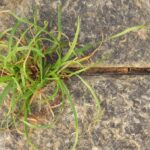
Patios, gravel paths and the gaps between paving stones are prime targets, as are the little tufts of weed that push up along the edges of terraces during Spain’s warmer months. Nobody is suggesting a general soaking of flowerbeds or lawns; this is a spot treatment, dabbed or sprayed directly onto unwanted growth rather than poured liberally around the garden.

A word of warning before you reach for the bottle

Confusing kitchen vinegar with a proper herbicide could leave you disappointed, or worse, with a ruined flowerbed. Standard cooking vinegar sits at roughly 5% acetic acid, whereas commercial horticultural versions can run at around 20%, four times stronger, and come with strict handling instructions. Oregon State’s experts are also clear that acetic acid cannot tell a dandelion from a prized rose bush, so overspray onto ornamentals, vegetables or grass you want to keep risks the same scorching effect.

Perennial weeds with deep roots, thistles and other stubborn regrowers, are especially likely to bounce back even after a good burning, since the treatment rarely reaches below the surface. Combining a vinegar spray with hand-pulling and a decent layer of mulch is the more reliable route for anyone determined to keep their outdoor space looking sharp before the rains return.

Continue Reading

Trending

Copyright © 2017 Spanish Property & News