Connect with us

%

Murcia’s €6 Million Lifeline For Young Buyers Struggling To Get Onto Property Ladder

Published

on

murcia’s-e6-million-lifeline-for-young-buyers-struggling-to-get-onto-property-ladder

The programme aims to make it easier for younger residents to purchase their first property. Photo credit: Phil Silverman/Shutterstock

For many young people in Murcia, the dream of owning a home has become increasingly difficult to reach. Rising property prices, higher living costs and the challenge of saving thousands of euros for a deposit have left many first-time buyers watching the housing market from the sidelines.

Now, thousands of potential homeowners could receive a helping hand after the Region of Murcia expanded its mortgage guarantee scheme for young buyers with an additional €6 million in funding. The extension of the ICREF Aval Joven programme aims to make it easier for younger residents to purchase their first property by helping overcome one of the biggest obstacles facing buyers: finding enough savings to secure a mortgage.

A route into home ownership

Traditionally, banks often require buyers to provide a significant deposit before approving a mortgage, with many young people needing to save tens of thousands of euros before they can even begin the buying process. The regional guarantee scheme is designed to bridge that gap by allowing eligible applicants to access mortgages with a higher level of financing than would normally be available.

Through the programme, guarantees provided by the Instituto de Crédito y Finanzas de la Región de Murcia (ICREF) can allow mortgage loans to cover up to 100 per cent of the property’s value, depending on the individual circumstances and conditions agreed with financial institutions. The aim is to give young buyers who have stable incomes but insufficient savings a realistic opportunity to purchase their first home.

Who can benefit?

The scheme is aimed at young people aged up to 40 years old, although applicants must meet specific requirements, including income limits and conditions linked to the property purchase. The additional €6 million expansion follows a request from the Region of Murcia for further authorisation to continue supporting young buyers during 2026.

The move comes as access to housing remains one of the biggest concerns for younger generations across Spain, where many face the difficult choice between continuing to rent or delaying plans to buy their own property.

A response to a growing problem

The housing market has become a major challenge for first-time buyers, particularly in areas where prices have increased faster than wages. Even when buyers can afford monthly mortgage payments, the initial costs involved in purchasing a property can create the biggest barrier.

The deposit, taxes, legal costs and other expenses can make buying a home feel out of reach, especially for younger workers and families trying to establish themselves. By reducing the need for a large upfront deposit, regional authorities hope the guarantee scheme will help more young people take their first steps towards home ownership.

Opening the door to more buyers

The expansion does not mean every applicant will automatically receive a mortgage, as approval will still depend on the requirements of participating banks and the financial situation of each buyer. However, the additional guarantees provide greater security for lenders and could allow more applications from people who would otherwise struggle to access financing.

For young residents across Murcia, the announcement offers renewed hope that owning a home may not be as distant as it once appeared. The €6 million extension will not solve every challenge facing Spain’s housing market, but for those currently saving every month while watching property prices rise, it could provide the opportunity they have been waiting for: a way through the door of the property market.

%

Suitcase Stress: The Airports Leaving Travellers Waiting For Missing Bags

Published

on

suitcase-stress:-the-airports-leaving-travellers-waiting-for-missing-bags

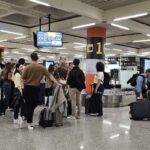
Peak holiday periods only add to the pressure. Photo credit: Daria Zelenska/Shutterstock

There are few holiday moments more frustrating than standing beside an empty baggage carousel while everyone else wheels their suitcase towards the exit. The conveyor belt slows to a stop, the lights switch off and the uncomfortable thought begins to creep in: where is my luggage?

While airlines successfully transport millions of bags every year, some airports are far more likely than others to leave passengers filing lost baggage reports instead of heading straight to the beach or hotel.

The airports dominating the list

The top of the this years ranking looks very different from previous years, with Seattle-Tacoma International Airport (Sea-Tac) taking the unwanted title of the airport where passengers are most likely to experience lost luggage problems. According to Airspace Times’ latest analysis, travellers using Sea-Tac face an estimated 1 in 33 chance of their baggage going missing, giving it a lost luggage rate of 3.06 per cent. 

The list also highlights major international airports around the world where baggage handling remains a challenge. Indira Gandhi International Airport in Delhi ranks second, with a reported 1 in 68 chance of luggage problems, followed by Brussels Airport, where the risk stands at approximately 1 in 80 travellers. 

Completing the top five are Chhatrapati Shivaji Maharaj International Airport in Mumbai and London Stansted Airport, with luggage issues affecting around 1 in 85 and 1 in 98 passengers respectively. 

Other major airports appearing in the ranking include Toronto Pearson International Airport, Dallas/Fort Worth International Airport, London Heathrow, Phoenix Sky Harbor International Airport and Amsterdam Schiphol. 

European travellers may be surprised to see some familiar names much lower down the list. Heathrow, one of the world’s busiest airports, ranks eighth, while Amsterdam Schiphol appears in tenth place. Meanwhile, Barcelona-El Prat Airport ranks 23rd globally, with an estimated baggage problem rate of around 1 in 855 passengers.

Bigger airports, bigger challenges

Before anyone swears off flying through Heathrow or Barcelona, it’s worth remembering that the rankings don’t necessarily mean these airports lose the highest percentage of luggage. Instead, they process enormous numbers of passengers every day, meaning even a relatively small error rate can result in thousands of delayed bags over the course of a year.

Every suitcase passes through a remarkably complex journey involving check-in systems, automated conveyor belts, baggage scanners, sorting facilities, loading teams and connecting flights. If one part of that chain is delayed, particularly during tight flight connections, luggage can easily miss the aircraft even when its owner does not. Peak holiday periods only add to the pressure, with airports handling record numbers of travellers during the summer months.

Most bags aren’t lost forever

Despite the horror stories shared on social media, permanently lost luggage is actually much rarer than many travellers imagine. Industry figures show that most baggage problems involve delays rather than permanent loss. The majority of mishandled bags are reunited with their owners within 48 hours, often arriving on the next available flight.

Common reasons include short connection times, missed transfers, damaged baggage tags or late-loading during busy departure periods. International flights involving several airlines are generally more vulnerable to delays than direct routes, simply because luggage has to move through multiple handling systems before reaching its final destination.

How to improve your chances

Experienced travellers have developed a few simple habits that can significantly reduce the inconvenience if luggage does go astray. Photographing your suitcase before travelling makes it easier to identify, while removing old baggage stickers helps prevent scanners reading outdated flight information.

Many passengers now also place Bluetooth or GPS tracking devices inside checked luggage, allowing them to see exactly where their suitcase is through a smartphone app. Although the tracker won’t stop baggage going missing, it can often help airport staff locate it more quickly. Keeping medication, valuables, travel documents and a change of clothes in hand luggage is another precaution that can save a holiday if checked baggage is delayed.

Know your rights

If your luggage fails to arrive, report it immediately before leaving the airport. Airlines will usually ask passengers to complete a Property Irregularity Report (PIR), which officially records the missing baggage and begins the tracing process.

Passengers may also be entitled to reimbursement for essential purchases, such as clothing or toiletries, while waiting for their luggage to be returned, although receipts should always be kept. In cases where baggage is permanently lost or seriously delayed, compensation may also be available under international aviation rules, depending on the circumstances.

Don’t let it ruin your holiday

With millions of bags travelling successfully every week, the chances are your suitcase will arrive exactly where it should. Even so, the latest rankings serve as a reminder that the world’s busiest airports face enormous logistical challenges, particularly during the height of the summer travel season.

For anyone heading abroad, a few minutes spent preparing before checking in could make all the difference if your suitcase decides to take an unexpected detour. After all, discovering your luggage has gone sightseeing without you is one travel souvenir nobody wants to bring home.

Continue Reading

%

Good News For Murcia Patients As Specialist Waiting Lists Continue To Shrink

Published

on

good-news-for-murcia-patients-as-specialist-waiting-lists-continue-to-shrink

No one wants to wait for medical care. Photo credit: Irina Mikhailichenko/Shutterstock

For anyone who has spent weeks waiting for a hospital appointment, any sign of progress is welcome news. Now, patients across the Region of Murcia are beginning to see the benefits of efforts to tackle one of the healthcare system’s biggest challenges, with waiting times for specialist consultations falling and thousands fewer people stuck in the queue.

The latest figures from the regional health service show that the average wait for a first outpatient appointment has dropped to 70 days, down from 83 days a year ago. At the same time, the overall backlog has also fallen, meaning more patients are being seen sooner than they were just twelve months ago.

Steady progress for patients

Reducing waiting lists has been a long-standing priority for the Region of Murcia, where growing demand for healthcare has placed increasing pressure on hospitals and specialist services. The latest data suggest those efforts are beginning to deliver results. Not only are patients waiting less time on average for their first specialist consultation, but the number of people waiting for those appointments has also declined, easing pressure on a system that has struggled with rising demand in recent years.

For many families, shorter waits can make a significant difference, allowing diagnoses to be made earlier, treatment plans to begin sooner and the uncertainty of waiting to be reduced.

More work still to do

Despite the improvement, the figures also show there is still work ahead. More than 83,000 people are currently waiting longer than the maximum time limits set by the regional government for outpatient appointments, highlighting the scale of the challenge that remains.

However, the overall trend is moving in the right direction. A year ago, patients were facing significantly longer waits, and the latest figures indicate the gap is gradually narrowing as hospitals continue working through the backlog. Healthcare officials say reducing delays remains a priority, with continued efforts focused on improving access to specialist care while maintaining the quality of treatment.

Encouraging signs for Murcia’s healthcare system

The improvement comes at a time when health services across Spain continue to face growing demand from an ageing population, increasing numbers of chronic illnesses and the lasting impact of pandemic-related backlogs. Against that backdrop, cutting average outpatient waiting times by almost two weeks over the past year represents encouraging progress for Murcia’s public health system. While waiting lists remain longer than many patients would like, the latest figures suggest the direction of travel is positive, with more people receiving appointments sooner and fewer patients left waiting for their first consultation.

A step in the right direction

No one wants to wait for medical care, and few would argue that the work is finished. Yet for thousands of people across the Region of Murcia, the latest figures offer genuine reason for optimism. Shorter waiting times and a shrinking outpatient backlog suggest that efforts to improve access to specialist healthcare are beginning to have a real impact.

The challenge now will be maintaining that momentum. If waiting times continue to fall over the coming months, more patients will receive faster diagnoses, earlier treatment and greater peace of mind, bringing the region another step closer to the responsive healthcare service that residents expect and deserve.

Continue Reading

%

Murcia Declares War On Pigeons As Growing Flocks Drive Neighbours To Despair

Published

on

murcia-declares-war-on-pigeons-as-growing-flocks-drive-neighbours-to-despair

The pigeons have dismissed the council’s claims. Photo credit: K Arun Singh/Shutterstock

The last time humans declared war on birds was in Australia, 1932. Famously known as the ‘Emu War’ The target was thousands of emus destroying farmland and, despite sending in soldiers armed with machine guns, the campaign ended in embarrassment after the birds largely outmanoeuvred the military (no, im not joking)! Murcia, however, is hoping history won’t repeat itself.

This time there are no machine guns involved; instead, the city council has opted for a rather different, and much safer, approach by urging residents to stop feeding the pigeons, or, in other words, siege warfare. By creating a blockade and cutting off their main food supply, officials hope to bring the growing population under control. Some of you may be wondering why this is even necessary, but the soaring number of pigeons has apparently left some neighbours at breaking point, with complaints over noise, droppings and damage to buildings continuing to mount.

A growing problem taking fight…I mean flight

The council has launched a new awareness campaign carrying the message: “Feeding them doesn’t help them, it harms us all.” Posters are being installed across the city to explain why leaving food for pigeons is contributing to an uncontrolled increase in their population and the problems that come with it. The pigeons, however, have described the councils approach as ”propaganda”, insisting the campaign’s claims are nothing more than fake news.

According to the council, many people feed pigeons believing they are helping hungry animals, but the extra food encourages larger flocks to settle permanently in urban areas. As numbers grow, so do complaints about droppings, noise, damage to buildings and concerns over hygiene.  For neighbours living in affected areas, it is becoming an issue that extends far beyond a few birds gathering in a square.

Historic buildings and public spaces affected

Murcia City Council says excessive pigeon populations can damage historic buildings and monuments, with their droppings accelerating the deterioration of stonework, roofs and street furniture. Cleaning costs also rise as larger flocks leave pavements, benches and public spaces covered in waste. 

Officials also warn that concentrating large numbers of pigeons in one place disrupts the natural balance of urban wildlife while increasing sanitation problems throughout the city. Rather than relying solely on population control measures, the council believes preventing people from feeding the birds is one of the most effective long-term solutions. 

Education before enforcement

Councillor for Social warfare (I sneaked that one in) Family and Health Pilar Torres said the campaign is intended to inform rather than punish. While Murcia’s municipal ordinance already prohibits feeding animals in public when it creates a risk to public health, the council says its immediate priority is changing habits through education. 

The campaign forms part of Murcia’s Municipal Pigeon Control Programme, which the council says follows technical, scientific and animal welfare criteria to keep pigeon numbers at sustainable levels without causing unnecessary harm to the birds. 

Falcons as a reinforcement

The awareness/siege campaign is not the only measure being used. Murcia is continuing Project Falco, first introduced in 2023, which uses fully trained and equipped angry peregrine falcons as a natural way of traumatising and dispersing pigeon flocks across the city.

Four additional troops have now joined the programme through agreements with authorised breeding centres, strengthening the city’s tactics and efforts to control pigeon numbers using natural predators rather than more aggressive methods. 

A city divided over good intentions

The debate is unlikely to disappear overnight, many residents continue to see feeding pigeons as a harmless gesture, while others argue the growing flocks are affecting everyday life and damaging the city’s appearance. Murcia City Council hopes its latest campaign will persuade people that leaving bread and food scraps behind is not helping the birds at all.

Instead, officials say, it is encouraging a cycle that allows pigeon numbers to keep growing, creating more problems for residents, more pressure on public services and more damage to the city itself. As frustration among neighbours continues to build, the message from the council is clear: if Murcia wants fewer pigeons, the first step is putting away the breadcrumbs.

Continue Reading

Trending

Copyright © 2017 Spanish Property & News