Connect with us

Travel

Gatwick stinks! Water crisis shuts toilets and bars at both terminals – passengers warned to sort essentials at home before flying

Published

on

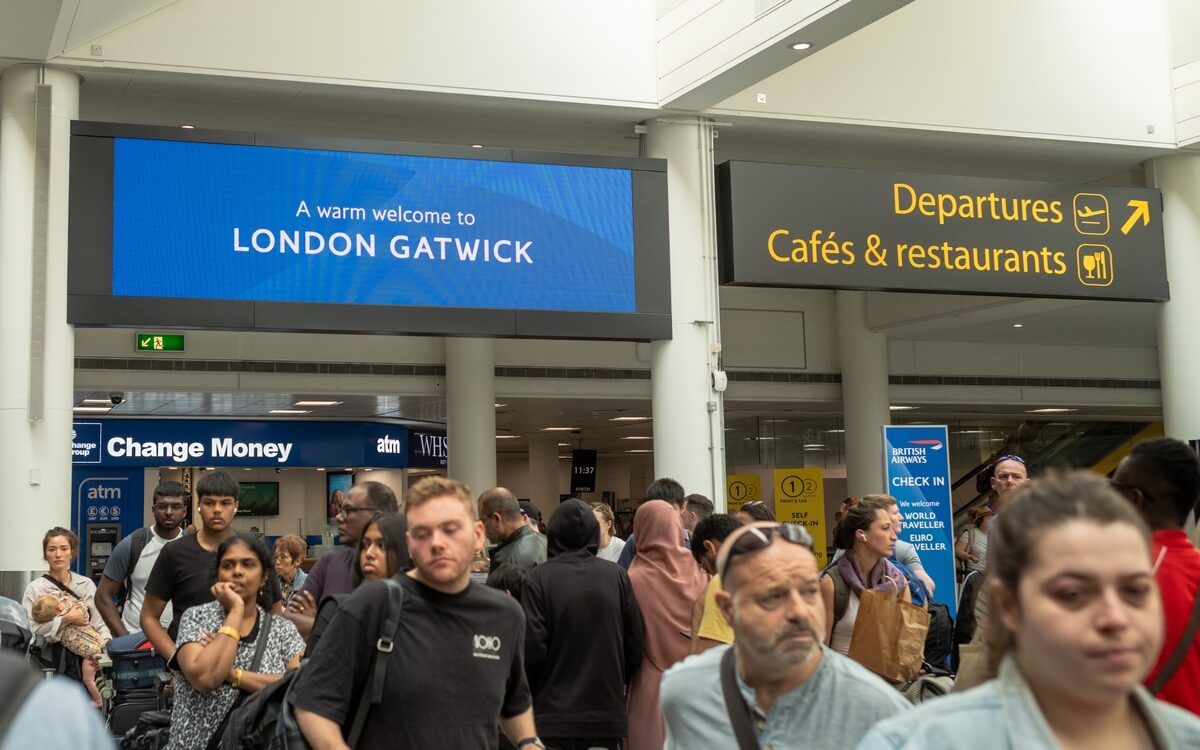
Absolute chaos hit London Gatwick this Sunday morning as a power failure somehow knocked out the water supply to both terminals, leaving passengers unable to flush toilets, wash hands or get a proper drink. Closed cafés and restaurants also reduced the amount of practical seating for passengers waiting for their gates to open.

SES Water’s Bough Beech treatment works went down, cutting running water across the airport and parts of Kent and Surrey. Bars and restaurants shut their doors because staff could not wash hands or use the taps. Shops selling packaged food stayed open, but the usual Nando’s, Wetherspoons and coffee spots had to stay closed. Bottled water was handed out, yet many passengers said they saw little of it early on.

Queues built up outside the few usable toilets. Some people ended up sitting on the floor because closed bars, cafés and restaurants kept their chairs locked away.

Passengers vent their anger on X

TalkTV presenter Julia Hartley-Brewer posted early on: “If you’re on your way to @Gatwick_Airport, it might be helpful to know that there is no running water across the entire airport. That means no coffees, no water fountains, no flushing toilets and no hand washing. Gatwick hasn’t bothered to make a public announcement about this to passengers. How helpful…”

@justnaomiyeh (12:48) said, “Of course I have to go to Gatwick when they have had no running water or flushing toilets all day. Can’t wait to pee myself in the airport.”

@MrJosephSmythe posted, Oh great, now I need a number 2! What should I do?”

@Anna__Edwards (15:27) said, replying to the airport’s update: “And you have had people here since an 11.40am cancelled flight waiting until 9pm for another and no toilets now!”

Former MP Michael Dugher added: “At least allow people to use the chairs in all the closed restaurants and bars. No water is one thing, but depriving people of somewhere to sit is another… families are having to sit on the floor…”

Others complained that this was very bad, even by Gatwick Airport’s standards, and wondered why no Plan B had been devised for such a situation by the airport management.

Airport and water firm scramble to fix it

Gatwick said staff were helping passengers, and some closed restaurants had opened just for extra seats. “There is currently no water supply in either terminal. Our staff are on hand to support passengers and provide assistance where needed,” the airport stated, adding it was working with SES Water to get things back to normal.

SES Water confirmed the power was restored by mid-afternoon and teams were treating the water before full supply returned. Low pressure or no water also hit homes in parts of Kent and Surrey. Flights kept going, though some bag-drop times were shortened and early arrivals were discouraged.

Problems could drag on – sort yourself out at home first

SES Water has not given a firm end time, and the treatment process can take a while. Disruption may stretch into the next few days.

Anyone with tickets in the coming days should do the basics before leaving the house. Use the loo, wash thoroughly, fill reusable bottles and grab snacks you can eat without needing water. Expect limited facilities once you reach the terminals and plan for longer waits around the toilets.

Gatwick remains Britain’s second-busiest airport. Passengers are used to the odd hiccup, but a full water cut across both terminals on a busy Sunday has left many fed up and wishing they had sorted the essentials at home first.

More travel news

%

“Beyond Extinguishing Capacity”: Terror As Madrid And Ávila Wildfires Merge Into One Unstoppable Blaze

Published

on

“beyond-extinguishing-capacity”:-terror-as-madrid-and-avila-wildfires-merge-into-one-unstoppable-blaze

The wildfire’s impact is spreading across central Spain with more than 24 secondary roads closed. Photo credit:@angusjf4 on X

The wildfire emergency gripping central Spain has taken a dramatic turn after it was confirmed that the fires burning across Madrid and Ávila have now merged, creating a much larger and more dangerous blaze that is pushing firefighters to their limits. The development has triggered a stark warning from Madrid’s regional government, which admits the fire has moved beyond its current extinguishing capacity. 

With crews unable to simply stop the advancing flames, the focus has shifted to containing the wildfire, protecting key areas and preventing further spread.The threat is no longer limited to those living close to the flames. A change in weather conditions is expected to carry smoke towards Madrid, potentially affecting millions of people with worsening air quality and reduced visibility in the coming days.

Fire reaches a point beyond extinguishing capacity

Madrid’s regional Environment Minister, Carlos Novillo, admitted that the wildfire has reached a stage where it is “beyond extinguishing capacity”, warning of the enormous challenge facing emergency services as crews battle unpredictable conditions. Instead of being able to eliminate every fire front, firefighters are now concentrating on containment, protecting strategic locations and preventing the flames from gaining further ground.

The merger of the Madrid and Ávila fires has created a larger and more complex fire area, with dry vegetation, high temperatures and changing winds making operations increasingly difficult. The blaze is spreading across areas west of Madrid, with locations including El Escorial, one of Spain’s most recognisable historical sites and a major tourist destination, among the areas facing the impact of the advancing wildfire.

Firefighters pushed to their limits as Europe sends help

For the crews on the ground, the scale of the wildfire has created some of the most demanding conditions they have ever faced. Veteran firefighters have described the operation as unlike anything they have experienced before, with rapidly changing fire behaviour making every intervention more dangerous. Some teams have found themselves trapped by advancing flames and forced to react quickly as conditions shifted around them.

But the crisis has also left many rural residents in Ávila facing heartbreaking decisions of their own. People living in cortijos and rural properties with animals have described being told last minute once the flames were upon them that they needed to evacuate, leaving them being abandoned and having to rely on themselves as they fight to protect their pets and livestock while flames approach their homes. 

Many have been working desperately to move animals to safety, protect their land and defend their properties while emergency crews focus on containing the advancing wildfire. For those living in isolated areas, the battle has not only been against the flames but also against the fear of losing the animals and livelihoods they have spent years caring for.

#ifburgohondo esto vivimos ayer en LA RINCONADA, abandonados a nuestra suerte, avisados con el fuego encima. Han puesto en juego vidas humanas y animales, QUE VERGÜENZA 💔 @Meteoavila2 pic.twitter.com/62K3Qmqnp9

— Ana Navazo (@blackxnitt) July 24, 2026

Europe sends reinforcements as Spain’s firefighting resources are stretched  

The pressure on emergency crews has prompted international support. Through the European Union’s civil protection response, additional aircraft have been sent to help Spain fight the blaze, including two firefighting aircraft from Italy and two from Greece. The arrival of European reinforcements draw attention to the sheer the scale of the emergency, with Spain requiring support as firefighters continue battling a wildfire that authorities admit has moved beyond normal extinguishing capacity.

At the same time, questions have been raised over Spain’s available aerial firefighting resources after reports that 15 Airbus A400M aircraft available to the government could not be used for direct firefighting operations because they did not have the necessary anti-fire kits installed.

Smoke threat moves towards Madrid

While firefighters continue battling the blaze, the consequences could soon be felt far beyond the areas directly affected by the flames. According to Meteoiberia, a change in wind direction towards northwesterly winds from Saturday is expected to push smoke from the Madrid and Ávila fires towards the capital.

The forecast warns that millions of people could experience poorer air quality and reduced visibility as the smoke plume moves across Madrid. The effects are also expected to spread to other parts of Spain’s interior in the following days. The development means that even people far from the wildfire itself could soon see the impact of the crisis through hazy skies, smoke pollution and worsening conditions outdoors.

Roads cut off as flames threaten key locations

The wildfire is also causing major disruption across central Spain, with several roads closed as emergency crews battle to contain the advancing flames. Among the affected routes are the M-512, M-521 and M-522 in the Madrid region, which have been closed due to the fire situation around the Sierra Oeste area. In Ávila, several secondary roads have also been affected as the merged wildfire continues spreading across the province.

Authorities have urged drivers to avoid affected areas and check the latest road information before travelling, as access restrictions remain in place to allow emergency services to work safely. The closures are affecting residents, commuters and emergency access routes, showing how the wildfire is impacting daily life far beyond the areas directly threatened by flames.

A wildfire threatening NASA’s link to deep space

The advancing flames have also placed the Deep Space Communications Complex at Robledo de Chavela under pressure,  a facility that plays a vital role in humanity’s exploration beyond Earth. The complex forms part of NASA’s Deep Space Network, a global system of giant antennas used to communicate with spacecraft travelling across the Solar System. The network allows scientists and engineers to send commands to missions exploring distant planets and receive the vast amounts of scientific data collected from space.

The Robledo de Chavela facility is one of only three major Deep Space Network locations worldwide, alongside sites in California and Australia, making it an essential part of NASA’s ability to maintain contact with deep-space missions. The possibility of the wildfire affecting such a strategically important site demonstrates the extraordinary scale of the crisis. This is no longer only a battle to protect forests and local communities; emergency crews are also working to safeguard infrastructure connected to some of the world’s most advanced scientific missions.

17:40 Antenas de Robledo de Chavela..

🔥 ardiendo la Base espacial de Robledo.#IfBurgohondo pic.twitter.com/bVrh6xJ3yd

— Infues Avila (@InfuesAvila) July 24, 2026

The coming days will be critical

The next few days will be decisive as firefighters continue working to contain a blaze that authorities admit has moved beyond normal extinguishing operations. With changing winds, extreme conditions and smoke expected to spread across central Spain, the impact of the wildfire is no longer limited to the areas where flames are burning.

What began as separate fires in Madrid and Ávila has now become one much larger emergency, testing firefighters, disrupting transport and threatening internationally important infrastructure as crews fight to prevent further destruction. For those on the front line, the challenge is no longer simply putting out the fire, it is stopping one of Spain’s most difficult wildfires from becoming even more destructive.

Continue Reading

EES system

Harsh and blunt warning from Ryanair that travellers need to be aware of

Published

on

By

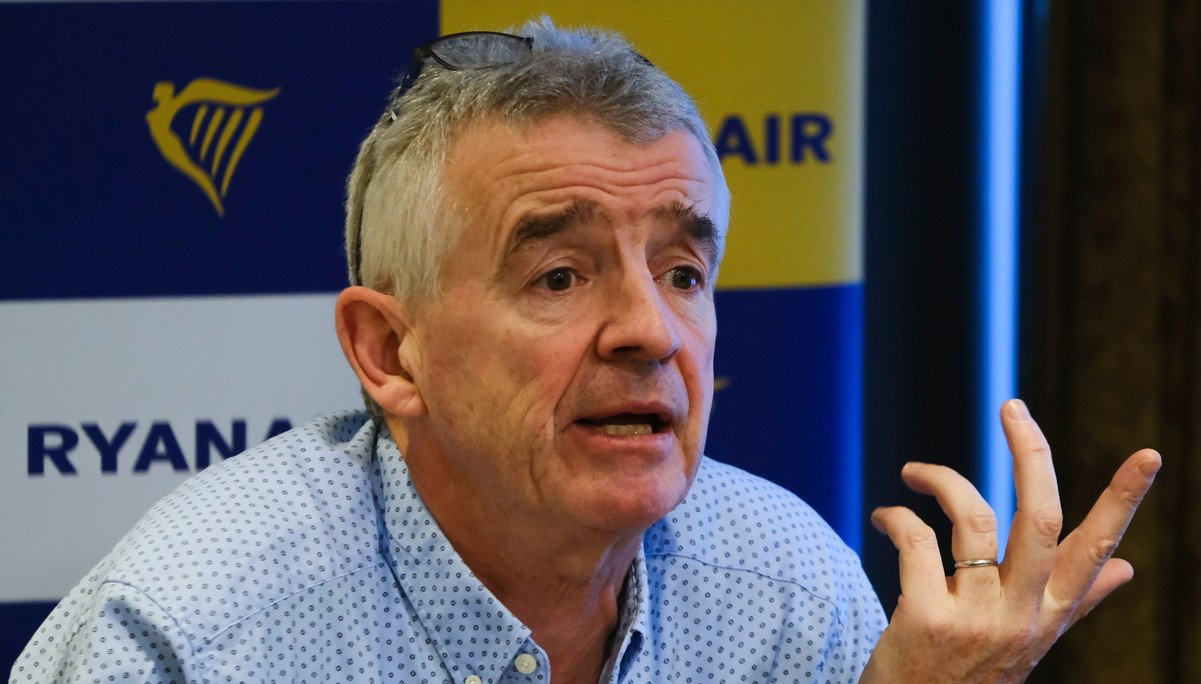
Ryanair Boss Michael O’Leary’s has a blunt warning for anyone using the popular airline to fly this summer.

What Ryanair’s boss actually said

Speaking on The Travel Expert podcast, Ryanair’s chief executive made clear that late passengers will simply be left behind. “We will not wait for anybody,” he said. “Our priority is to those passengers who are at the boarding gate when boarding starts. If you’re not at the boarding gate when we finish boarding, the plane is going without you.”

Blame for the growing number of missed flights, he suggested, lies squarely with travellers themselves rather than the airline. O’Leary used the same appearance to brand the EU’s handling of border checks “dumb”, taking aim at Commission President Ursula von der Leyen directly. Strong words, but highlighting a very real problem building at airports across Spain and Europe.

Why so many passengers are being caught out

Root cause of this chaos is the EU’s Entry/Exit System, the biometric border check that became fully compulsory in April. Non-EU arrivals, including every UK passport holder, now have fingerprints and facial scans logged on both entry and exit, replacing the old passport stamp entirely.

Queues of up to three hours have been reported at busy Schengen airports since the rollout, with holidaymakers frequently cutting it fine between clearing border control and reaching their gate. Hundreds of travellers across multiple airlines, Ryanair included, have already watched their aircraft depart without them this year.

Earlier this month, families were warned to they are not exempt from the huge border queues after Brussels rejected calls for a summer-long suspension of EES checks. Just over a week later, a strange case showing the unpredictability the new biometric system can be when the machines got confused over a set of twins.

What holidaymakers and flyers need to know

Padding out your schedule is the simplest form of protection available. Airlines and airports are now recommending arrival at least three hours before departure for flights out of the busiest airports.

Checking in online and travelling with hand luggage only, where possible, cuts out extra steps that eat into gate time. Building in a buffer for security and EES queues, rather than assuming a smooth passage, could be the difference between making your flight and watching it leave without you. Most importantly check your passport dates are inline with current EU rules.

Continue Reading

%

Pre Holiday Hacks To Save You Money

Published

on

pre-holiday-hacks-to-save-you-money

Whether you’re travelling from the UK to Spain on holiday, or vice versa, or leaving a holiday home empty for a summer break, these easy tips and tricks could help you avoid expensive surprises and hassle when you return.

Have you ever settled into your seat, scanned the in-flight magazine and started to picture that golden sand only to be hit by that familiar feeling of panic? “Did I leave something switched on?”, “Should I have emptied the fridge?”

Some take just a few seconds, and others are worth doing the day before you travel. Together, they can make all the difference between returning to a fresh, welcoming home, or an expensive problem. Many of these tips have become very popular with homeowners in Spain, with other hacks being shared as clever travel tricks by experienced travellers. Here’s what’s being recommend to add to your tickets, money, passport checklist.

Leave bicarbonate of soda in your fridge to keep it smelling fresh

Most people remember to throw away old food before going on holiday, but a little bowl of bicarbonate of soda can make a welcome difference. Leaving it uncovered inside the fridge helps absorb lingering odours while you’re away, so you won’t be greeted by unpleasant smells when you return. It’s worth giving the fridge a quick clean first, throwing away anything close to its expiry date and wiping up spills. The baking soda works best as a finishing touch rather than as a substitute for cleaning.

Try the frozen coin trick

This clever hack has become popular with travellers who leave home for extended periods. Freeze a mug of water, then place a coin on top of the ice before leaving. If there’s a lengthy power cut while you’re away, the ice will melt and the coin will sink. Even if the electricity comes back on before you return, you’ll know your frozen food may no longer be safe to eat.

Turn off the water if you’re going away for more than a few days

One of the most expensive problems homeowners face is returning to a leak that has gone unnoticed for days. If you’re leaving your property empty for a week or longer, turning off the main water supply can help prevent a minor fault becoming a major insurance claim. It’s particularly worthwhile if you’re travelling between homes in Spain and the UK or leaving a holiday property empty for several weeks.

Leave your washing machine and dishwasher doors open

Before you head to the airport, leave the washing machine door and detergent drawer slightly open. The same goes for your dishwasher. Allowing air to circulate helps prevent mould, mildew and stale smells from developing while you’re away. It’s a tiny job that can save having to deep clean appliances when you return.

Make coming home the best part of your holiday

One of the nicest travel hacks currently being shared has nothing to do with leaving, it’s about returning. Before you lock the door, change the bed, leave fresh towels in the bathroom and make sure there’s tea, coffee, long-life milk and toilet paper waiting for you. After a delayed flight or a long drive home, walking into a clean, welcoming house can make the end of your holiday feel far less stressful.

Photograph your fridge before you leave

This one applies to only a short break and may sound unusual, but taking a quick photo of the inside of your fridge can save money and reduce food waste. When you return from being away, you’ll know exactly what’s already waiting at home rather than buying duplicates.

Check your smart home devices and unplug unnecessary electronics, especially chargers

More people than ever rely on smart cameras, video doorbells, alarms and thermostats in their homes. Before leaving, make sure your devices are online, batteries are charged and you can still access everything remotely. A security camera is only useful if it’s actually recording.

Modern televisions and appliances use far less standby power than they once did, but unplugging non-essential electronics still makes sense before a long trip as it reduces unnecessary electricity use. Leave essential appliances such as your fridge connected if they still contain food, but chargers and kitchen gadgets can usually be safely unplugged.

Help your plants survive the holiday too

Instead of overwatering your houseplants before you leave, move them together into a bright room away from direct sunlight. Grouping plants creates a slightly more humid environment, helping them retain moisture for longer. If you’re away for more than a couple of weeks, consider asking a neighbour or friend to water them occasionally rather than soaking them before you go.

Think twice before posting holiday photos and don’t make your house look empty

Most people are guilty of wanting to show off their tans and pool shots immediately but sharing beach pictures while you’re away tells everyone exactly when your home is empty. If your social media profiles are public, it’s safer to wait until you’re back before posting holiday snaps. It won’t spoil the memories, but it could help protect your home.

It may seem sensible to close every curtain or shutter before leaving, but doing so can make it obvious that nobody is home. Consider leaving persianas or blinds partially closed instead of completely shut. Pair that with a lamp on a timer or smart lighting that comes on in the evening, and your property will appear much more lived in. It’s a simple way to discourage opportunistic burglars without costing much to run.

So before you pick up your suitcase, take one final walk around your home. A quick routine before you lock the door could save you from returning to spoiled food, damp smells, water damage or an expensive repair bill.

Continue Reading

Trending

Copyright © 2017 Spanish Property & News