
Affordable Housing Act
New EU law lets Spanish councils cap Airbnb and second homes: who’s protected and who isn’t

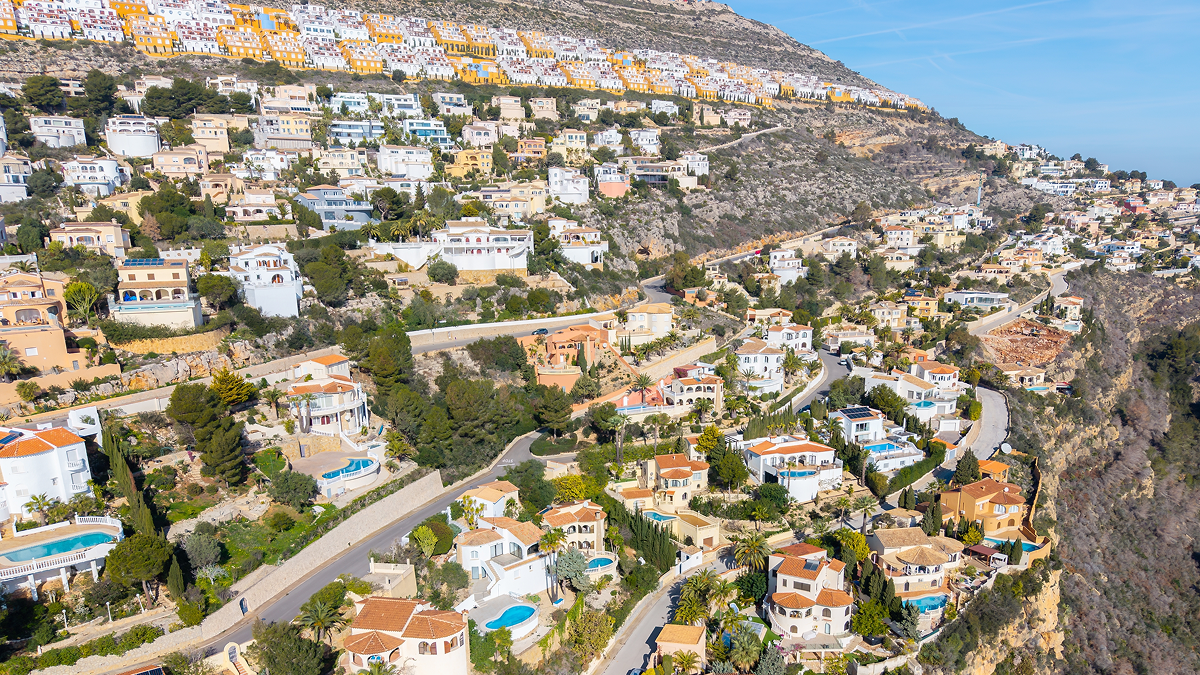
Second-home hotspots like this could be first in line if Spanish councils use Brussels’ new powers to restrict non-primary purchases. Credit: Thomas Roell / Shutterstock
In the Baleares, an average household now spends 57 per cent of its income just to cover their first year’s mortgage repayments, and Brussels has handed Spanish town halls a new legal weapon to act. Second-home owners and Airbnb hosts in the priciest regions could feel it first.
A common EU test for “housing stress”
The European Commission put forward its Affordable Housing Act on Wednesday September 9, alongside a companion recommendation on boosting housing supply. Commission President Ursula von der Leyen said the goal was to give “clarity and support to local authorities and communities, anchored in local realities.”
The Act doesn’t force any Spanish town hall to do anything, but it lays out a common EU-wide method for deciding when an area is officially under “housing stress”, and gives authorities that meet the test firmer legal ground to restrict short-term lets or non-primary home ownership without being dragged through years of costly litigation.
To qualify, an area’s average home now needs to cost at least eight years of the average person’s disposable income, that ratio must have been rising over the past decade, and the outlook must show little sign of easing over the next three years. If the ratio hits 10 years of the average person’s disposable income, the 10-year rise requirement drops away entirely.
Where Spain’s numbers already look close to a match
Spain’s national price-to-income ratio stood at around 7.5 years in mid-2026, according to the Bank of Spain, just under the EU’s trigger point. But that national average hides some stark regional gaps.
Fourteen Spanish provinces already sit above the 35 per cent mortgage-effort level the Bank of Spain treats as a risk threshold, including Baleares, Málaga, Barcelona, Alicante, Cádiz, Santa Cruz de Tenerife and Madrid. The Baleares is the most extreme case, where a typical household would need to hand over 57 per cent of its disposable income just for the first year’s mortgage repayments.
What could actually be restricted, and what’s protected
Two things could face limits in a designated stress zone: short-term letting of a property that isn’t someone’s main home, and the purchase or use of second homes and other non-primary residential property, through tools including quantitative caps, authorisation schemes or owner-occupation rules.
Before any of that can happen though, a council has to show three years of solid evidence that the activity has genuinely damaged local affordability. Two protections apply everywhere, without exception: letting out your own primary residence can never be restricted under the Act, and nobody who already owns a property before a new measure takes effect can be caught by it retroactively.
Spain already runs its own version of this
Spain has had its own system since 2023, allowing regions to declare zonas tensionadas (strained zones) where rent cannot exceed a previous tenancy’s price. It uses a different test entirely, based on rents or mortgages costing above 30 per cent of local incomes, or price rises running three percentage points ahead of regional inflation. Cataluña has been the most active, with more than 40 municipalities declared, most of them around Barcelona.
Spain will now be running two parallel systems that measure housing stress in different ways, and an area could plausibly qualify under one and not the other. Housing Minister Isabel Rodríguez has been pushing Brussels for exactly this kind of legal backing, arguing town halls need tools to regulate without the constant fear of being sued.
Barcelona’s Airbnb battle shows why councils wanted this
That fear felt by town halls across Spain isn’t hypothetical. Airbnb is still appealing a €64 million fine Spain imposed for advertising unlicensed properties, and Barcelona’s plan to phase out its roughly 10,000 licensed tourist flats by 2028 only survived after Spain’s Constitutional Court upheld it last year. The Affordable Housing Act will not fast-track Barcelona’s ban, but it should give the next town hall trying something similar a far shorter route through the courts.
The proposal now goes to the European Parliament and EU governments, who could amend it significantly before it becomes law, likely not before 2027. For now, existing owners and anyone letting out their own home face no changes to the current rules, though anyone weighing up a second property in Spain’s most stretched coastal towns now have more reason to watch what their local council does next.









Gibraltar Gears Up To Celebrate First National Day Since Historic Post-Brexit Treaty Tore Down Border With Spain

Spain’s New ‘affordable’ Housing Portal Launches With Zero Flats In Andalucia Or Madrid
More than 40,000 treasures and classic cars heading to Torre Pacheco this September
France’s famous cheeses could taste different after drought forces farmers to change cows’ diets
Krakatoa exploded 143 years ago today: Noise heard 5,000km away that shaped Spain’s south-east

54 Hectares Destroyed In Barcelona Fire As Man Arrested Over Suspected Arson


-
Abondance2 weeks ago
France’s famous cheeses could taste different after drought forces farmers to change cows’ diets
-
History2 weeks ago
Krakatoa exploded 143 years ago today: Noise heard 5,000km away that shaped Spain’s south-east
-
 %2 weeks ago
54 Hectares Destroyed In Barcelona Fire As Man Arrested Over Suspected Arson
-
cocaine2 weeks ago
‘Blazing Saddles’: bizarre discovery sparks major police operation in Spain
-
botanical garden Orchidarium2 weeks ago
Wands out in Estepona: Costa del Sol town celebrates 25 years of Harry Potter on film
-
Airport malaria2 weeks ago
Mosquito stowaway kills two Frankfurt Airport workers in rare malaria outbreak
-

 Andalucia2 weeks ago
Spain’s Expat Havens: These Are The Towns Where Foreign Buyers Outnumber Spanish Ones – Sometimes By Two To One
-
Latest2 weeks ago
‘We Feel Abandoned’: Clashes In Spain’s Ceuta As Locals Grow Tired Of Migrant Crisis