Connect with us

%

New May Bank Holidays Confirmed In Spain

Published

on

new-may-bank-holidays-confirmed-in-spain

Some workers in Spain will enjoy extra May bank holidays before summer. Credit : lazyllama, Shutterstock

Many workers in Spain may still have another chance to enjoy a long weekend before summer officially begins. After the May Day holiday, the 2026 work calendar still includes several important regional and local bank holidays, with some employees set to benefit from a three day break depending on where they live.

The most significant date for many people will be Friday May 15, when San Isidro is celebrated in Madrid and several surrounding municipalities. Because it falls on a Friday this year, workers who have the day off will automatically enjoy a three day weekend stretching through May 17.

Other holidays later in the month will affect parts of Spain including Ceuta, Melilla and the Canary Islands, although not all of them will create a long weekend.

For many employees already looking ahead to summer, May still offers a few final opportunities for extra time off.

Madrid workers could enjoy a long weekend on May 15

The holiday likely to attract the most attention is San Isidro on Friday May 15.

In Madrid city, the date appears as an official local holiday in the 2026 labour calendar, meaning employees working within the municipality will have a paid non working day.

Because the holiday falls on a Friday, many workers will automatically benefit from a three day break including Saturday May 16 and Sunday May 17.

And it is not only Madrid city itself. Several municipalities across the Community of Madrid have also included May 15 as a local holiday in their own calendars.

According to the regional list of local holidays, towns including Alcobendas, Coslada, MĂłstoles, Pinto, Galapagar, San Fernando de Henares and Navalcarnero are among those recognising San Isidro in 2026.

For people living and working in those areas, the date could become one of the final long weekends before the main summer holiday season begins.

Restaurants, terraces and tourist areas in Madrid are also expected to become especially busy during the weekend as residents take advantage of the extra day off.

Ceuta, Melilla and the Canary Islands also have May holidays

The next notable holiday arrives on Wednesday May 27. That day will be a public holiday in Ceuta and Melilla for Eid al Adha, also known as the Feast of Sacrifice, one of the most important celebrations in the Islamic calendar.

The official BOE labour calendar includes the holiday under slightly different names depending on the territory, with Ceuta referring to it as Eidul Adha and Melilla using Aid al Adha.

Because the holiday falls on a Wednesday, it will not automatically create a long weekend for most workers unless they choose to take additional days off around it.

A few days later, the Canary Islands will celebrate Canary Islands Day on Saturday May 30. That date appears as an official regional holiday across the archipelago every year.

But because it lands on a Saturday in 2026, many workers whose normal schedule already includes Saturdays off will not gain an additional day of rest.

The situation may still affect people working weekend shifts or sectors where Saturdays are treated as normal working days.

What other bank holidays are still coming in Spain in 2026

After the May holidays, the next major national holiday in Spain will be August 15 for the Assumption of the Virgin. However, that date also falls on a Saturday this year, limiting its impact for many workers. The next nationwide long weekend likely to affect much of Spain will come later in the year.

October 12, Spain’s National Day, falls on a Monday in 2026, giving many workers a three day weekend.

December may also bring favourable dates for employees. The Feast of the Immaculate Conception on December 8 lands on a Tuesday, while Christmas Day on December 25 falls on a Friday.

For many workers, those calendar details matter more than ever. Long weekends often influence travel bookings, family visits and holiday planning months in advance, especially as travel costs continue rising across Spain and Europe.

That is one reason labour calendars always attract so much attention once official dates are confirmed. And while May 2026 may not include a nationwide puente after Labour Day, some workers in Madrid and other parts of Spain are still set to enjoy an extra break before summer arrives.

%

Best Countries To Retire Abroad In 2026

Published

on

best-countries-to-retire-abroad-in-2026

More retirees are looking abroad in 2026 as living costs continue rising at home. Credit : Olena Yakobchuk, Shutterstock

More retirees are looking beyond their home country in 2026 and not only because of the weather. Rising living costs, expensive housing and pressure on healthcare systems are pushing many people to seriously consider retirement abroad for the first time. And according to the latest Global Retirement Index 2026, some of the countries attracting the most attention are not always the ones people expect.

The annual ranking, based on factors including healthcare, cost of living, residency visas, climate, housing and everyday quality of life, suggests it is still possible to enjoy a comfortable retirement without spending a fortune. In several destinations, retirees are managing to live well on budgets that would feel far tighter elsewhere in Europe or North America.

What is changing in 2026 is that retiring abroad no longer feels like a niche dream for adventurous expats. For many people, it is becoming a practical financial decision. And while countries such as Spain and Portugal continue to perform strongly, the number one destination this year is Greece.

Why Greece has become the surprise favourite for retirees

Greece climbed to the top of the 2026 ranking after previously sitting much lower in recent years. For many retirees, the appeal is easy to understand once the numbers are examined more closely.

The country offers more than 300 days of sunshine a year, relatively affordable housing in many coastal areas and a slower pace of life that continues attracting foreign residents looking to escape stress and rising costs elsewhere.

According to the report, a couple can still live comfortably in Greece on roughly €2,900 to €3,000 per month depending on the area and lifestyle.

In some coastal towns and islands, sea view homes continue to rent for between €600 and €1,000 per month, although prices have risen noticeably in recent years due to increased foreign demand and tourism investment.

Healthcare also remains relatively accessible compared with many other countries. Private insurance for couples can cost around €250 per month according to the study. But beyond finances, many retirees say daily life itself is one of the biggest attractions.

The relaxed lifestyle, slower rhythm and outdoor culture continue drawing people who feel increasingly exhausted by the pace and pressure of life in larger cities elsewhere.

Spain, Portugal and Italy still remain among the strongest choices

Although Greece took first place, southern Europe continues dominating the retirement rankings overall.

Spain remains one of the most attractive options for retirees wanting good healthcare, strong infrastructure and warm weather within Europe.

Despite rising housing prices in parts of the country, Spain still offers a lifestyle many retirees struggle to find elsewhere.

In cities such as Málaga, renting a flat near the coast may cost between €1,000 and €1,300 per month. According to the report, overall monthly living costs for one person often range between €1,800 and €2,300 depending on lifestyle.

Spain’s healthcare system also remains one of the strongest points repeatedly highlighted by expats.

Private health insurance policies can still start from relatively affordable monthly prices, especially compared with countries where medical costs are significantly higher.

Portugal also continues attracting retirees despite its rapidly increasing property market.

The country remains especially popular among foreign residents thanks to its climate, safety, healthcare system and residency visa options such as the D7 visa.

However, the report notes that housing prices near Lisbon and other high demand areas have risen sharply compared with only a few years ago.

Italy also performed strongly in the ranking, particularly southern regions such as Sicily.

According to the report, some smaller towns still offer surprisingly affordable housing while daily expenses remain lower than many people expect. For retirees searching for sunshine, food culture and a slower lifestyle without leaving Europe entirely, Italy continues holding strong appeal.

Asia and Latin America are attracting retirees looking for lower costs

Outside Europe, several countries continue standing out because of how far retirement income can stretch.

Malaysia ranked highly once again, particularly for retirees wanting modern infrastructure alongside lower living costs.

The report estimates that a couple can live comfortably there for around $2,200 per month including housing, food, leisure activities and travel.

Thailand also remains one of the most affordable retirement destinations in the world according to the ranking.

Some retirees are reportedly living comfortably on around $1,200 per month, while couples with larger budgets can enjoy an even higher standard of living.

Low housing costs, inexpensive healthcare and well established retirement visa options continue making Thailand especially attractive for foreign retirees.

In Latin America, Panama, Mexico and Costa Rica all performed strongly.

Panama continues drawing attention because of its Pensionado programme, which offers discounts for retirees on everything from transport and entertainment to healthcare and utility bills.

Mexico also remains one of the best value destinations overall according to the report.

The study suggests that comfortable living is possible there from roughly $1,200 per month depending on the location, while retirees with larger budgets can enjoy a particularly high quality of life.

Costa Rica meanwhile continues attracting retirees searching for nature, warm weather and more relaxed living conditions.

Why more people are seriously considering retirement abroad

One of the clearest messages emerging from the 2026 ranking is that retirement abroad is increasingly being viewed as a realistic option rather than an unrealistic fantasy.

For many people approaching retirement age, the decision is becoming less about chasing luxury and more about maintaining quality of life without financial pressure.

Housing costs, healthcare access, climate and day to day expenses now play a much bigger role in retirement planning than they did a decade ago.

And in several of the countries highlighted in the report, retirees say they feel they can enjoy a calmer and more comfortable lifestyle for less money than they would spend staying at home. That is one reason international retirement is no longer only attracting wealthy pensioners.

In 2026, it is becoming part of a much wider conversation about affordability, wellbeing and how people actually want to spend the next stage of their lives.

Continue Reading

%

Multi-Billion Euro Renewable Arbitration Claims Linked To Air Navigation Revenues In Spain

Published

on

multi-billion-euro-renewable-arbitration-claims-linked-to-air-navigation-revenues-in-spain

The system is funded in part through fees paid by airlines for overflight and landing services. Photo credit:J.Santaugini/Shutterstock

Spain is facing renewed international legal pressure following enforcement actions connected to arbitration awards issued after changes to its renewable energy subsidy system more than a decade ago. The dispute originates from reforms introduced in 2013, when Spain reduced guaranteed returns for renewable energy producers. The original subsidy framework had encouraged major investment in solar and wind projects by offering fixed long-term returns.

After the reforms, many investors argued that the changes were retroactive and damaged expected revenues. These claims were brought under the Energy Charter Treaty, an international agreement that allows investors to seek compensation when policy changes are alleged to harm protected investments. Multiple arbitration tribunals have since ruled in favour of investors in different cases, ordering Spain to pay compensation.

Outstanding awards and enforcement attempts

The total value of unpaid arbitration awards linked to Spain’s renewable energy reforms is estimated at more than €2.3 billion, including principal amounts, interest and legal costs. Because a number of these awards remain unpaid or contested, investors have pursued enforcement actions in courts outside Spain. These proceedings aim to identify state-linked assets or financial flows that can be targeted to recover compensation.

Recent legal activity in Belgium has drawn attention to precautionary measures affecting revenue streams associated with Spain’s air navigation system. These measures relate to charges collected from airlines for the use of Spanish airspace and air traffic services.

Air traffic management and revenue structure

Spain’s air traffic system is operated by ENAIRE, the state-owned company responsible for managing air navigation services, flight routes and control operations across Spanish airspace. The system is funded in part through fees paid by airlines for overflight and landing services.

These revenues form part of the broader financial structure supporting national air traffic operations. The measures reported in Belgium are understood to relate to financial channels linked to these charges rather than operational control of airspace or flight safety systems. Air traffic services in Spain continue to operate normally.

Legal background and international rulings

Arbitration cases against Spain have developed over several years, with multiple tribunals concluding that changes to the renewable subsidy system breached investor protections under international law.

Spain has contested several of these rulings, arguing that European Union law should take precedence over arbitration mechanisms contained in the Energy Charter Treaty. Spanish authorities have also maintained that the subsidy reforms were necessary to address structural deficits in the electricity system and reduce long-term consumer costs.

Despite these objections, enforcement efforts have continued in several jurisdictions, including courts in Europe, the United States and other regions where investors have sought recognition of arbitration awards.

Sovereign enforcement challenges

Legal experts note that enforcing arbitration awards against sovereign states is complex. Courts must determine whether targeted assets are protected by sovereign immunity or whether they can be classified as commercial revenue streams subject to attachment. This distinction is central to cases involving state-owned companies or public infrastructure revenues, such as air navigation fees.

The Belgian proceedings form part of a wider pattern of attempts by investors to recover compensation through indirect access to state-linked financial flows rather than direct seizure of government property.

Ongoing implications

There has been no disruption to air traffic operations in Spain, and flights continue to be managed under normal procedures.

However, the case highlights the continuing financial and legal consequences of Spain’s renewable energy policy reforms introduced in the early 2010s. More than a decade later, arbitration claims and enforcement actions continue to move through international legal systems.

The dispute remains one of the most significant and long-running investor-state arbitration conflicts in Europe, with ongoing implications for how energy policy decisions interact with international investment protections.

Continue Reading

'Climate Shelters'

Why Spain Is Leading Europe’s Race To Protect People From Deadly Heatwaves

Published

on

why-spain-is-leading-europe’s-race-to-protect-people-from-deadly-heatwaves

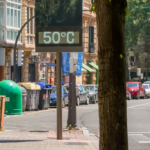
The push for climate shelters comes amid growing concern over heat-related mortality across Europe. Photo credit: Mazur Travel/Shutterstock

Spain is emerging as one of Europe’s leading countries in the development of climate shelters, with researchers and urban planners increasingly viewing the network as a critical tool for reducing heat-related deaths during increasingly severe summers.Climate shelters are public spaces designed to provide refuge during periods of extreme heat. They typically include libraries, civic centres, schools, parks and community buildings equipped with shaded areas, water access or air conditioning.

Their purpose is to offer temporary relief to residents during dangerous temperature spikes, particularly elderly people, children and those with underlying health conditions. The growing importance of these spaces comes as heatwaves become more frequent and prolonged across southern Europe. Scientists warn that high temperatures are no longer isolated summer events but part of a broader long-term climate trend affecting urban populations across the continent.

Spain becomes a European leader in climate shelter networks

Researchers have highlighted Spain, particularly Barcelona, as one of the most advanced examples of climate shelter planning in Europe. Scientific studies published in 2026 describe the Spanish approach as pioneering due to its integration of public health measures, urban planning and emergency heat response systems. Barcelona has developed one of Europe’s largest climate shelter networks, with hundreds of designated locations available during heatwaves. These include public libraries, schools, parks and civic buildings adapted to provide cooler environments during periods of extreme heat.

The system was initially designed to protect vulnerable groups, but local authorities have expanded access as temperatures have continued to rise across the city and surrounding metropolitan area. Spain’s national and regional authorities are also expanding climate adaptation measures beyond Barcelona. Increasing numbers of municipalities are now mapping public cooling spaces and integrating them into local emergency planning.

Heat-related deaths remain a growing concern

The push for climate shelters comes amid growing concern over heat-related mortality across Europe. Health experts warn that prolonged exposure to high temperatures places severe pressure on the cardiovascular and respiratory systems, particularly among older adults. Southern European countries have experienced repeated periods of extreme heat in recent summers, with Spain among the countries most exposed. Researchers note that many heat-related deaths occur not only during exceptional temperature peaks, but also during sustained periods of moderate but persistent heat.

Urban areas are particularly vulnerable because dense construction and limited green space trap heat, creating what scientists refer to as the “urban heat island” effect. Night-time temperatures in cities often remain significantly higher than surrounding rural areas, reducing opportunities for recovery during heatwaves. Climate shelters are intended to reduce this exposure by ensuring residents have access to cooler environments during the hottest parts of the day.

Why much of Europe is falling behind

Researchers argue that many European cities remain underprepared for sustained extreme heat despite increasing climate warnings. While some municipalities have introduced local cooling initiatives, few countries have developed climate shelter systems on the same scale as Spain. Part of the difference lies in geography and experience. Southern European countries have historically faced higher summer temperatures and therefore began adapting earlier.

Spain’s repeated exposure to prolonged heatwaves accelerated investment in cooling infrastructure and public awareness campaigns. By contrast, many northern and central European cities were originally designed for colder climates, leaving them less equipped to manage prolonged high temperatures. Older buildings, limited shading and insufficient cooling infrastructure can increase health risks during heat events.

Researchers also note that climate shelters require coordination between local authorities, public health agencies and urban planners, something that has progressed unevenly across Europe.

More than air-conditioned buildings

Experts stress that climate shelters are not simply air-conditioned spaces. Effective systems depend on accessibility, public awareness and strategic placement within densely populated urban areas. Studies examining Spanish climate shelter networks have shown that location is critical. Residents must be able to reach cooling spaces quickly, particularly during peak afternoon temperatures when heat stress becomes most dangerous.

Many Spanish municipalities now publish digital maps showing the location of designated shelters during heatwaves. Some local authorities also extend opening hours during extreme weather alerts.

Pressure expected to increase across Europe

Climate researchers warn that demand for climate shelters is likely to grow as European summers become hotter and longer. Urban populations are expected to face increasing exposure to dangerous heat conditions, particularly in densely populated cities with limited green space.

Spain’s experience is now being closely monitored by policymakers and researchers across Europe as governments assess how to reduce heat-related illness and mortality in the coming decades. While climate shelters alone cannot eliminate the risks associated with rising temperatures, experts increasingly view them as an important part of Europe’s long-term public health response to extreme heat.

Continue Reading
Advertisement
Advertisement

Spanish Real Estate Agents

Tags

Trending

Copyright © 2017 Spanish Property & News