
Beirut
Perpetual War In Beirut’s Suburbs: ‘I Would Move To Another Planet If That Would Give Me Peace’

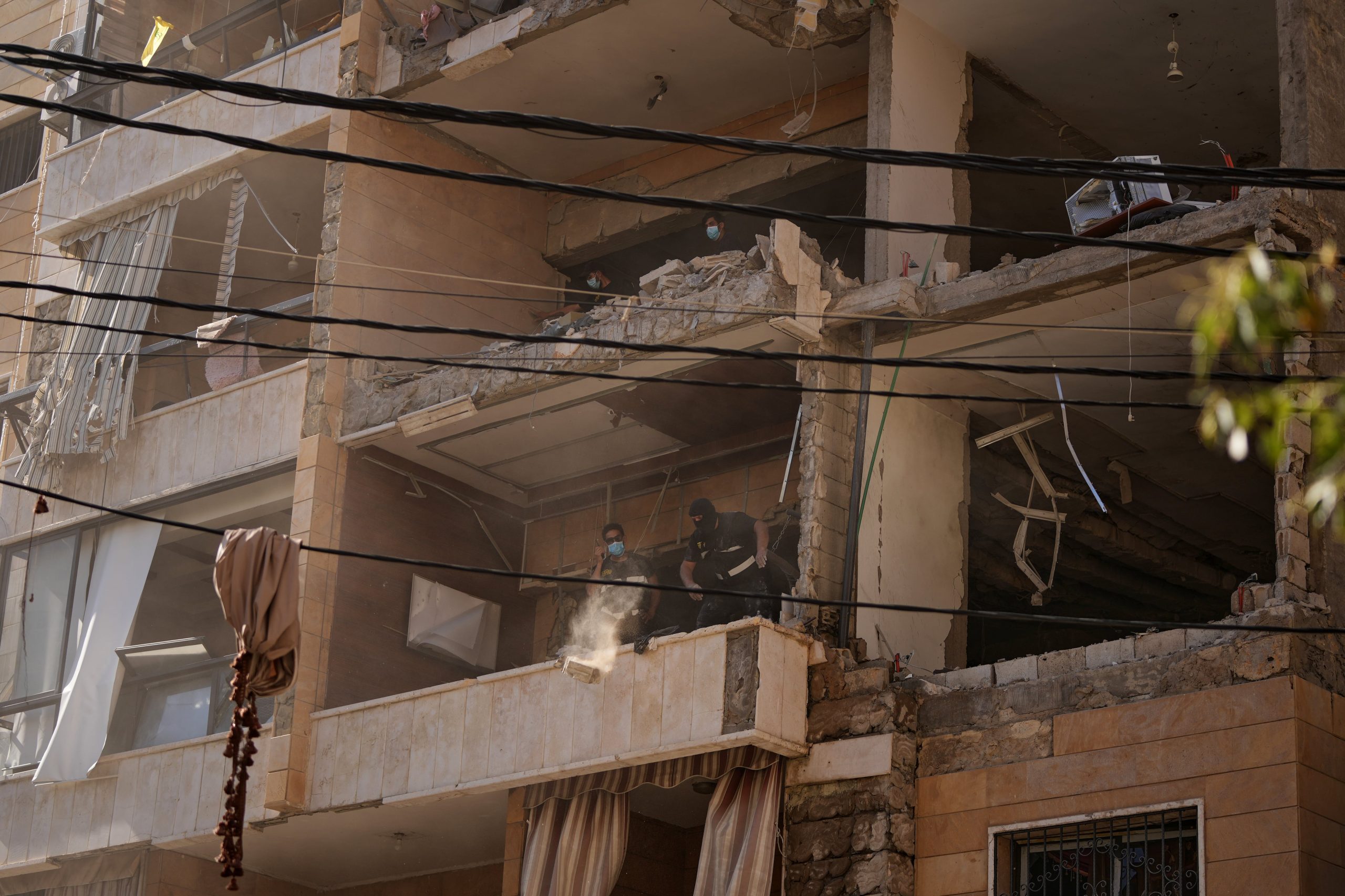
On one of the main roads out of Dahieh, the name given to the Beirut suburbs now at the heart of Middle East geopolitics, a row of streetlights bearing the same photograph of Iran’s penultimate supreme leader, the late Ali Khamenei, seem to bid farewell to those leaving the area. A few meters further on, as the city of Beirut begins, the iconography that floods Dahieh with the faces of Iranian and Hezbollah leaders — its Lebanese allies — vanishes, as does, to a large extent, the threat of Israeli strikes.
On Sunday many residents chose to flee the area, passing the images of Khamenei, whom the United States and Israel’s offensive killed on February 28 at the start of the war with Iran. The exodus was prompted by the strikes Tehran had just launched against Israeli territory, the first since it signed a truce with Washington in April, and by fear that Israel would retaliate.
The Islamic Republic justified the attacks as a response to the latest missile the Israeli army fired on Sunday at Dahieh, which for Tehran represented a red line. On Monday, after launching several barrages that were intercepted by Israeli defense systems, Iran announced an end to the strikes, conditioning that cessation on Israel stopping its campaign in Lebanon.
Under pressure from the White House, which wants to safeguard its diplomatic process with Iran, Israeli Prime Minister Benjamin Netanyahu has also said that Israel is holding off on attacks on Iran “for now,” claiming he has “prevented” Tehran from changing the rules of the conflict.
Israeli Defense Minister Israel Katz says operations in Lebanon continue. He warns that the Israeli army, which occupies 600 square kilometers (230 square miles) in southern Lebanon in its confrontation with Hezbollah, will strike the Beirut area if the militia, funded and armed by Iran, fires projectiles at Israel.
On the ground, the exchange of blows persists. Israeli forces bombed a vehicle in the ancient city of Tyre, the most populous in the south, killing eight people, including a child, in a town 40 kilometers (15 miles) from the de facto border. The Israelis also maintain a general evacuation order for the entire southern region of Lebanon, fueling a forced displacement sine die and an acute food security crisis affecting a quarter of the national population — more than 1.4 million people.
In March, Iran urged Hezbollah to break a 15-month truce, which it had observed despite Israeli bombardments, and to resume firing at Israel. Tehran thus deployed its greatest asset to respond to the offensive the governments of Donald Trump and Benjamin Netanyahu launched amid nuclear negotiations. That marked the restart of open warfare in Lebanon. Since then, the Lebanese Health Ministry has recorded 3,637 deaths — 24 more since Sunday — and 11,188 wounded. The militia, for its part, has killed 30 Israeli soldiers and two civilians.
Relief and protection
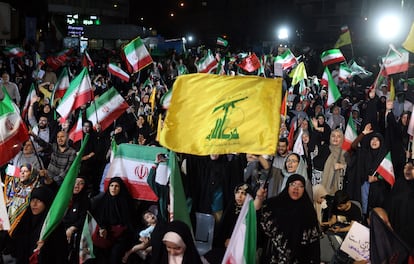
Many residents of Dahieh, now deserted and devastated after Israel’s offensives in recent years, say Iran’s missiles make them feel relieved and protected. Paradoxically, many who remained in the area on Monday celebrated as they left.
On the same day, traffic jams at intersections had disappeared. Most shops had their shutters down. And the cranes clearing debris from bombed-out homes — more than 7,900 in Dahieh, according to an institution linked to the government — were idle, with almost no passersby under the portraits that at every corner recall the local young people who have died fighting in countless wars with Israel.
“People have left,” says Hussein, a 47-year-old Dahieh resident, by phone. Especially “those with elderly or young dependents.” “It’s just my wife and me, and we have nowhere to go,” he adds. If Israel announces attacks, his plan is to take the motorcycle and leave Dahieh for a few hours, joining the crowd that on Monday was spread out in vehicles and under plastic tarps on the surrounding avenues.
They accept the risk with no other option, enduring constant tension. On Sunday they shed it, if only for a moment. Hussein shows images of the café near his home, where people played music and danced exuberantly upon hearing that Iran was acting militarily against Israel in supposed defense of Lebanon.
“This may be the beginning of the end,” Hussein predicts. “You cannot pressure the Israelis diplomatically; they only understand power,” he says, echoing arguments set out Sunday by Iran’s parliament speaker, Mohammad Bagher Ghalibaf. If Iran manages to impose a new equation where Israel is hit for every aggression against Lebanon, “the war could end soon,” he says hopefully.
Struggle for peace
Iran has been raising the stakes to present itself as Lebanon’s defender. Sunday’s attack on Israel, intended to foment friction between Trump and Netanyahu, comes as the Lebanese government negotiates with Israel over a possible definitive ceasefire under U.S. auspices.
Last Thursday, during the latest extension of the supposed ceasefire in force, the three governments issued a statement that included Beirut alongside an assertion — attributed to U.S. Secretary of State Marco Rubio — that Hezbollah is not only “the enemy” of Israel but also of Lebanon. A truce resulting from that process would include the militia’s disarmament, a demand of much of Lebanese society — as well as Israel — to break the cycle of violence. That would strip Iran of its strongest ally at Israel’s doorstep.
In addition to a battlefield, Lebanon is the site of a tug-of-war between those seeking to influence the peace negotiations. After Iran’s foreign minister, Abbas Araghchi, posted a photograph with the flags of Lebanon and Iran, U.S. diplomacy launched a counteroffensive.
On Monday, the White House’s ambassador to Lebanon, Michel Issa, met with the country’s top state leaders. “We place great importance on the Lebanese issue; it is a factor that the Lebanese must consider,” Issa said after a meeting with Joseph Aoun, Lebanon’s president, according to a statement from the presidency.
Various official statements have quoted Issa as saying progress is being made in the negotiations. Lebanese leaders are aware that the legitimacy of that diplomatic route is limited, since it has not stopped the deaths caused by Israel. Since the start of the supposed ceasefire on April 17, the Lebanese government records 3,491 airstrikes and more than 1,000 deaths.
Layla, 29, a Dahieh resident, refuses to trust anything. She has gone to northern Lebanon, away from her family. “I couldn’t bear the stress and tension of the war,” she laments.
She says Iran’s attacks on Israel have “given us some hope; Israel has the support of the strongest regimes, and we felt alone,” she explains by phone. Exhaustion, however, means that even by leaving the threatened area she cannot find respite. “I would move to another planet if that would give me peace,” she admits.
Sign up for our weekly newsletter to get more English-language news coverage from EL PAÍS USA Edition











The ceasefire that has never truly stopped the fighting between Israel and Hezbollah followed the same dynamic on Thursday after being extended in a new round of talks in Washington.
On Thursday morning, Israel’s military continued its attacks, and Israel’s defense minister, Israel Katz, has made it clear that bombing will go on and that troops will maintain their positions in Lebanon.
U.S. President Donald Trump himself acknowledged hours earlier that the ceasefire — launched in April — exists only on paper. Asked how he would define a ceasefire, he replied: “I’d say in that part of the world, ceasefire is when you’re shooting in a more moderate manner.”
In the first hours after the ceasefire was extended, Israel asserted its “freedom of action” in Lebanon, both in deeds and in words. On the ground, it wounded a family — a man, his wife and their daughter — in a drone strike on their car in southern Lebanon, according to the country’s national news agency. It has also issued a new “urgent warning to residents of southern Lebanon,” stating that it is continuing its attacks south of the Zahrani River (about 25 miles from the border) and that anyone there or traveling through the area “puts their life at risk.” In the same area, one Serbian peacekeeper has been killed and two Spanish personnel injured in an attack on the U.N. mission, UNIFIL, according to reports on Thursday.
In a statement, Katz stressed that the ceasefire is “conditioned on the prompt withdrawal of Hezbollah terrorists from all areas south of the Litani River and the creation of a demilitarized zone,” while his armed forces “will continue strikes and operations in the area for the time being,” and will keep occupying and destroying villages in areas they control (including Beaufort Castle) without allowing the population to return.
Katz emphasized that Israel retains freedom of action — “with U.S. support” — including the option to strike Beirut (after Trump forced Israeli Prime Minister Benjamin Netanyahu to back down on Tuesday) if Hezbollah attacks Israeli territory, and not only Israeli troops in Lebanon.
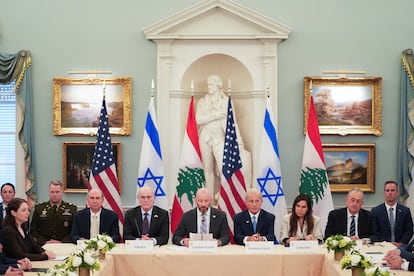
The new extension places the ball in Hezbollah’s court, according to a joint statement by the United States, Israel and Lebanon — whose government has declared Hezbollah’s armed activities illegal — released by the U.S. State Department. The text states that “the ceasefire is contingent on a complete cessation of Hizbollah fire and the evacuation of all Hizbollah operatives from the South Litani Sector.”
Hezbollah, for its part, rejects any “partial” ceasefire and demands a “genuine” full cessation of hostilities, including the withdrawal of Israeli troops from all Lebanese territory.
The main new element of the agreement is a plan to create “pilot zones” in Lebanon without Hezbollah presence, to be controlled by the Lebanese army. This could open the door to potential Israeli withdrawals, although it remains unclear how these would work or when they would begin. The two governments are due to meet again in two weeks with the aim of “reaching a comprehensive agreement,” the statement said.
The deal was reached during the fourth round of direct negotiations between Israel and Lebanon, held on Tuesday and Wednesday, and marked by insults that Trump directed at Netanyahu during one of their two phone calls, in which he forced the Israeli prime minister to back down from his plan to bomb Dahiyeh, the Shiite-majority suburbs of Beirut, after Tehran threatened to resume the war with the U.S.
Sign up for our weekly newsletter to get more English-language news coverage from EL PAÍS USA Edition

Cuidado De Los Pies: Qué Productos Usar Para Prevenir Y Soportar Las Rozaduras Este Verano

Merchandising De España Para El Mundial De Fútbol 2026: Opciones Para Todos Los Bolsillos

Game Changer For Budget Air Travel As Wizz Air Brings Starlink Wi-Fi Onboard


-
 Argentina2 weeks ago
Trump Receives Flávio Bolsonaro In The Oval Office Three Weeks After Lula
-

 Uncategorized1 week ago
Montoya vs Brundle BEEF, Newey
-

 Anthropic2 weeks ago
The IPOs Of SpaceX, OpenAI And Anthropic Threaten To Drive Wall Street To Bubble-Like Levels
-

 %2 weeks ago
Tourist Begs Police Not To Fine Her After Swimming In The Trevi Fountain During Heatwave
-

 Foreign demand1 week ago
German Demand For Spanish Property Cools After A Strong Run
-

 New Developments2 weeks ago
Luxury Villas For Sale, Estepona – ProjectL1
-

 %1 week ago
Portugal Notifies Of Temporary Suspension Of EU Border Biometric Checks
-

 %2 weeks ago
The Rising Cost Of Finding Love